
 Alexis Parker
|
Neubauer Artists LLC
Getting your Trinity Audio player ready...
|
Between biooptimism, aesthetics and the medical gray zone
Although the term sounds new and futuristic, peptides themselves are not unknown to medicine. These are short chains of amino acids — the basic building blocks of proteins — that have a signaling function in the body. By binding to specific cell receptors, peptides stimulate certain biological processes: tissue regeneration, hormone secretion, reduction of inflammation or restoration of cell functions.
In clinical practice, there have been peptides with a clearly defined role for decades, such as insulin or GLP-1 therapy, which are used in the regulation of blood sugar and body weight. However, the current interest is directed towards a much wider spectrum of the so-called therapeutic peptides, which are used in the wellness context with the aim of “optimizing” the organism — often beyond officially approved medical indications.
What does peptides actually promise?
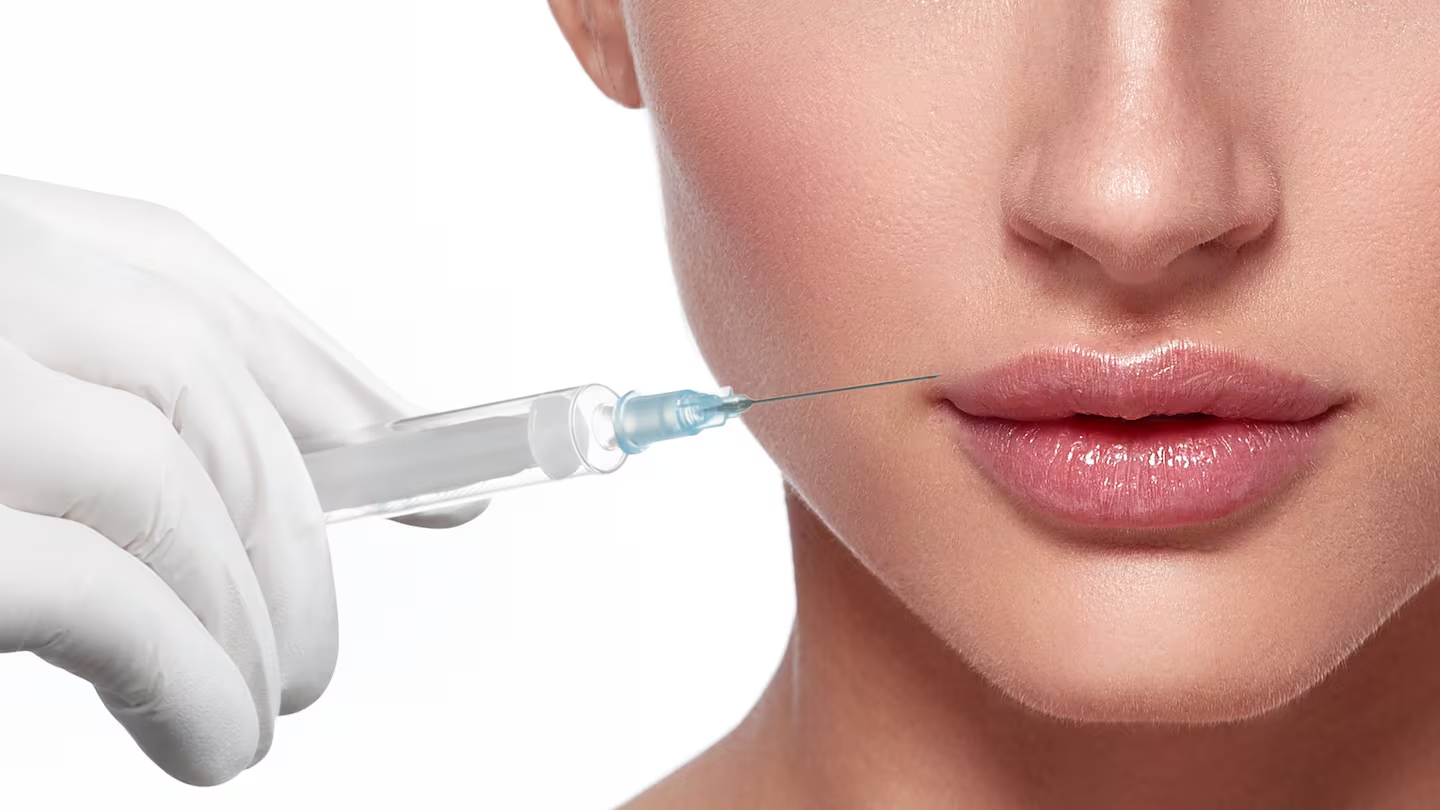
In practice, injectable peptides are most often promoted to support:
- recovery of muscles and connective tissue
- joint health and collagen
- sleep and energy regulation
- strengthening immunity
- growth hormone stimulation
- improving skin condition
- reducing systemic inflammation
Of particular interest are peptides that act as secretagogues — substances that encourage the body to produce larger amounts of growth hormone on its own, as opposed to direct intake of synthetic hormone. This approach is often described as “physiologically more acceptable”, because it does not introduce a hormone from the outside, but rather stimulates the body’s existing mechanisms.
In theory, such a model seems more moderate and safer. In practice, however, the long-term effects of regular use of these substances have not yet been fully investigated.
Aesthetics, longevity and the body as a project
The popularity of peptides cannot be seen in isolation from the wider cultural context. The contemporary wellness narrative is increasingly blurring the line between health, aesthetics and performance. Longevity is not just about a longer life span, but about extended functionality, vitality and visual “freshness” of the body.
In this framework, peptides are positioned as a tool that acts “below the surface” — deeper than cosmetics, but still in the zone of control, personalization and optimization. The injections are often administered in cycles, according to protocols that involve several weeks or months of administration, with the promise of gradual but systemic improvements.

Regulatory gray area
It is important to emphasize, however, that a large number of therapeutic peptides are used outside the strictly regulated medical framework. Many of them are not officially approved for the indications in which they are used today, but are used as so-called off-label. This means that their safety, effectiveness and optimal doses are not always supported by large clinical studies.
An additional problem is the origin of the substances. While in ideal conditions peptides are obtained from specialized pharmaceutical laboratories with clear certificates of purity and control, the market is flooded with preparations of dubious quality, especially in online sales. In those cases, users are often not sure about the composition or the sterility of the product.
Peptides are not a substitute for the basics
Despite increasingly aggressive marketing, there is agreement in professional circles on one key point: peptides are not a magic solution. Their effect, even when it exists, depends on the underlying state of health, hormonal balance, quality of sleep, diet and physical activity.
Without these foundations, injectable therapies remain a cosmetic addition to the idea of health, rather than a real support for the body. In this sense, peptides are increasingly seen as a complementary tool—potentially useful, but by no means self-sufficient.
Between hope and caution
Today, peptides occupy a symbolic place in the contemporary relationship to the body: between science and speculation, medicine and wellness, rational care and the desire to control aging. Their potential is indisputable, but so is the need for caution, information and a clear medical framework.
In a fast-moving but slow-to-regulate industry, the question is no longer whether peptides work—but for whom, under what conditions, and at what cost.





































































































































 Margaux Anbouba
 Joy Montgomery
 Hannah Jackson
 Calin Van Paris