 The Economist
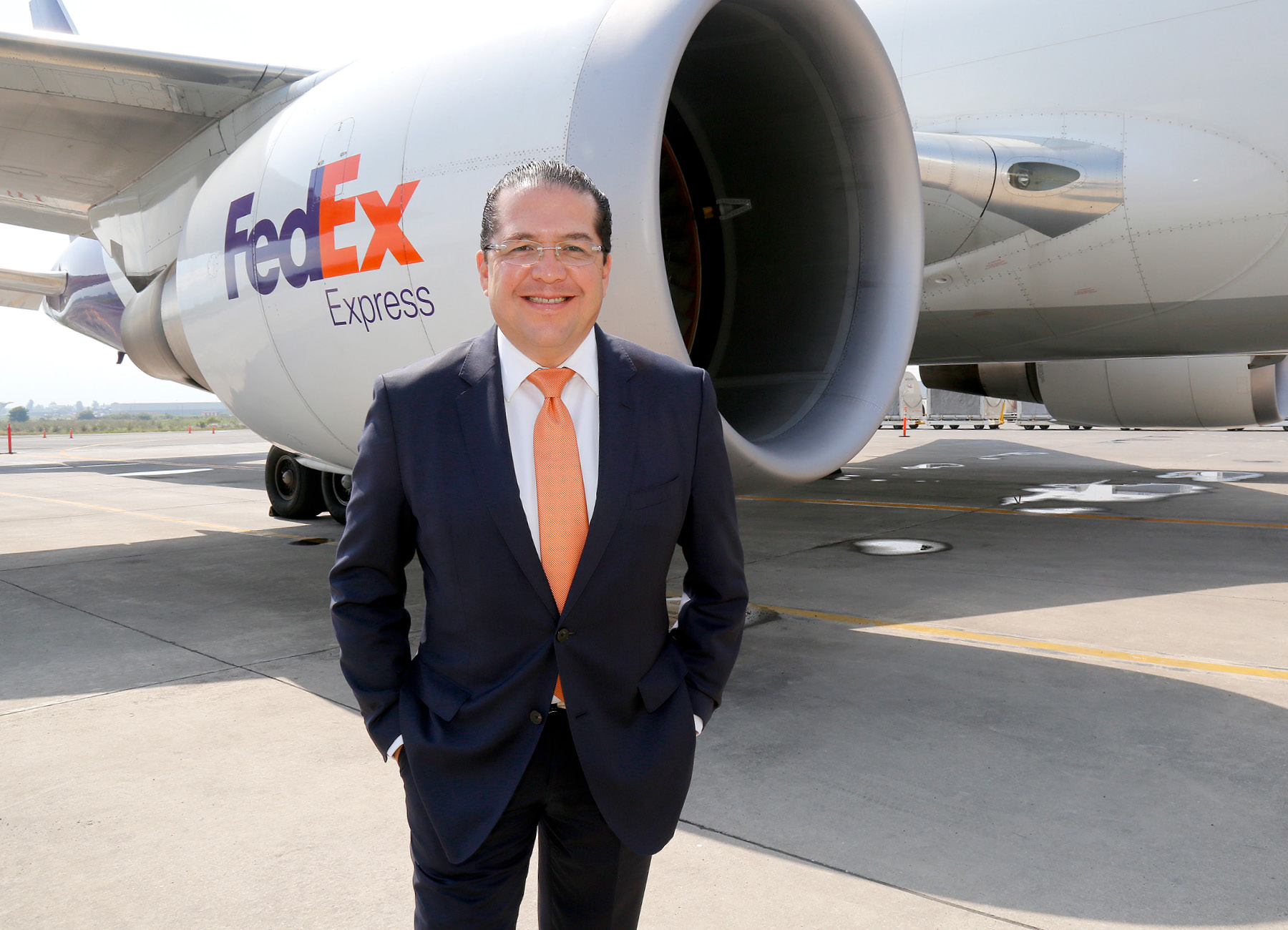
Evolution and transformation are the two most important factors in FedEx Mexico’s strategic growth vision. Led by Jorge Luis Torres Aguilar, these factors take on particular relevance, especially in a world that is changing rapidly and constantly following an event that marked humanity: the COVID-19 pandemic.
Jorge arrived at FedEx Mexico in 1991 to change the company’s history, and his career speaks for itself. His first responsibility was as a customer service agent in the call center , providing information, preparing quotes, and assisting with shipment tracking.
He later became International Cargo Coordinator to manage cargo bookings on international flights and, about 2 years later, Jorge was assigned as the lead auditor for ISO 9001 certification for all of Latin America, which he considers one of the most important achievements of his career.
His next responsibility was in the Quality and Service Assurance Area, where for seven years he was in charge of supervising all quality processes and certifications for Mexico and Central America.
In the following five years he became regional operations manager in charge of ten states of the Republic; a position that led him to become the director of operations for another ten years, monitoring the operations of collections, deliveries, warehouses, distribution centers, airports, customs and border areas.
Finally, his position prior to becoming the head of FedEx Express Mexico was for one year as Director of Planning and Engineering.
In 2011, FedEx Corporation decided to acquire MultiPack—a parcel delivery company with 70 years of experience that at the time belonged to the ADO group—and a year later, to oversee the integration process, Jorge Torres was promoted to CEO. The appointment was historic, as he became the first Mexican to lead FedEx’s operations nationwide.
“Consolidating the two operational infrastructures into one, having a single value proposition, was a process that took us about three years so that we could have a single face, a single logo, a single value proposition in the market. That was the moment when the corporation made the decision for me to take responsibility for FedEx Express Mexico,” says Jorge Torres, about that great milestone in his career.
“In 2011, we were a company with just over 1,000 employees, and MultiPack was a company with more than 5,000 employees. So, how does a company with 1,000 employees evangelize a company with 5,000? We underwent a very profound transformation process, based on generating synergies, eliminating redundancies, and consolidating two value propositions into one, launching them onto the market as a single proposition,” he adds.
The next big event in his career – so far – was the pandemic, which came to change everything for the freight transport industry.
During the COVID-19 pandemic, only 7% of economic activities were categorized as ‘essential’; the transport of goods and logistics processes were in that percentage.
The reason? Behind the thousands of packages delivered daily to the more than 31,000 postal codes in Mexico are people with specific needs, who are waiting for health or academic products. These people have become demanding customers, eager to receive their packages immediately.
“We were identified as an essential activity for ‘continuity,’ but not the continuity of commerce or the economy, but rather an essential activity for the continuity of people’s lives. We realized, we became aware of the importance, the relevance and significance of logistics processes, with respect to the transport of time-sensitive goods and products,” he states.
Confined to their homes, people found themselves needing to buy products remotely, leading to a historic surge in e-commerce. Citing the Mexican Online Sales Association, Jorge points out that transactions involving purchases made through online platforms and delivered by logistics companies “grew by 81 percent in 2020 and 27 percent in 2021. They practically increased by a cumulative percentage of 100 percent in the last two years.”
Some of those purchases included medicines, vaccines, humidifiers and oximeters, as well as a range of items to enable virtual classes, to successfully work from home and continue functioning, in addition to personal and family entertainment items.
“We were identified as an essential activity for the continuity of people’s lives.”
In the midst of the unexpected pandemic, Jorge saw an opportunity rather than a problem. “This historical juncture triggered by the pandemic and all its collateral effects has given us the opportunity to adapt to a new reality and adopt new habits, new skills, and new learning experiences, which have equipped us not just to face the future, but to define it,” says Jorge, proud of the impact his work has on people’s lives.
For him, beyond the internal logistics and the predictive model in which FedEx operates (which consists of strategically placing customer inventories in the company’s regionalized distribution centers so that same-day deliveries can be achieved), the company’s success is based on the people who work there.
“The most important element—and I say this in a completely objective way—which is the great differentiator, is the FedEx Express team in Mexico. I am very proud of the fact that for 19 consecutive years we have been part of the ranking of the best companies to work for in Mexico, Great Place to Work ,” he says.
“For 19 years we have participated in these surveys where the employee population is interviewed, surveyed and if you get a good enough rating, you are part of the ranking and if not, you are not,” he adds.
“On more than one occasion we have been the best company to work for in Mexico; we have been at the top. This shows that we are genuinely, transparently, and authentically focused on generating positive customer experiences through the interactions we have with each of them,” Jorge explains.
“There’s a principle that Mr. Frederick Smith (president and founder of FedEx) has encouraged us to follow: to ensure that after every interaction, after every transaction, both internally and externally, we make sure there’s a positive experience. Ultimately, it’s a connection between human beings; beyond the commercial and economic aspects, it’s the human element that truly matters,” he adds.
Jorge also shares how these people who work at the company operated during the pandemic, and how he was side by side with them and not from his home desk, virtually.
“I dedicated myself to traveling throughout the country, and out of the 9,000 employees I had the opportunity to meet face to face with approximately 5,000, look them in the eye and tell them that ‘being part of the 7 percent of essential activities was a privilege that gave us the opportunity to serve others, beyond being able to think about profiting, about an opportunity to do more business, because the volume doubled from one month to the next,’” Jorge comments.
“I told them I had two options: one, to go home, work from there, virtually, send them greetings and encourage them, using technological channels. I considered that irresponsible, because when there were 9,000 people, 9,000 fathers, 9,000 mothers, children, siblings, human beings working enthusiastically and heroically, I couldn’t be at home,” he adds.
“That’s why I dedicated myself to being present, to being with them, to providing this level of support and fostering in them – not only in their minds, but in their hearts – that the work they did was heroic, that it gave us the privilege of serving others, by being recognized as an essential activity,” he recalls.

The moment of right now
Following the unstoppable growth of e-commerce and the paradigm shift brought about by the COVID-19 pandemic, FedEx Mexico faces significant challenges for its future. The distribution model is one of them.
Jorge says that in the pre-pandemic world they were proud of having “a transit time of a few days”, but that now that is “unacceptable”.
“We all migrated towards next day and overnight delivery , which is still relevant. But the truth is, one of the challenges in logistics today is delivering products the same day. Even more so, in a matter of hours,” he says.
“How can we achieve that? By using predictive models to allocate inventory to strategically located regional centers across the country, so we can deliver not only the same day, but in a matter of minutes. That’s how we’re migrating, how we’re evolving, and that’s one of the great challenges we face: the growth and expansion strategy we’re pursuing as FedEx, in Mexico and around the world,” he concludes.













































































 Joy Montgomery
 Calin Van Paris
 Alexis Parker
 Marie Courtois