




|
Neubauer Artists LLC
Getting your Trinity Audio player ready...
|
They can’t actually “collaborate” on your new brand campaign.
Marilyn Monroe is probably one of the most misquoted celebrities. A quick search turns up numerous graphics with one of her famous images overlaid with something like, “Well-behaved women seldom make history”—which she absolutely did not say—in a tacky font.
One thing Monroe did, in fact, say: “Am I a commodity? I don’t look at myself that way, but I’m sure one corporation in particular has.” She said it in 1962, shortly before her death, to Life editor Richard Meryman during a conversation now encapsulated in the new book Marilyn: The Lost Photographs, The Last Interview. She didn’t say outright what corporation she was referring to, but it was likely one of the film studios; she worked most with 20th Century Fox.

Monroe was obviously aware of how she could be exploited, but there was no way she could imagine the kind of Marilyn Monroe merchandise that would come to proliferate decades later. June 1, 2026, would have been her 100th birthday, and it has arrived along with an inevitable surge of products—many of them beauty products—supposedly infused with her mystique.
A few months ago, I bemoaned the influx of PR pitches using Carolyn Bessette-Kennedy to push their clients’ products—headbands and lipsticks and moisturizers that brands and their publicists said evoked Bessette-Kennedy’s signature style. Of course, these are products that she never had a chance to use, let alone approve the use of her image to promote—an unlikely scenario based on the privacy she fiercely guarded up until her death. A few people in Allure’s Instagram comments didn’t see what all the fuss was about, citing Marilyn Monroe as an example of someone who also died tragically in her 30s and is, to all appearances, freely marketed to us. There is, however, a difference.
When Marilyn Monroe died of a barbiturate overdose on August 4, 1962, her estate was left to her acting coach, Lee Strasberg, who left it to his wife, Anna. In 2011, Anna sold the intellectual property and commercial rights to the Authentic Brands Group. In other words, while the use of Bessette-Kennedy in marketing pitches is legally questionable, there’s a team overseeing and actively licensing the usage of Monroe’s image.
But does that constitute a moral difference?
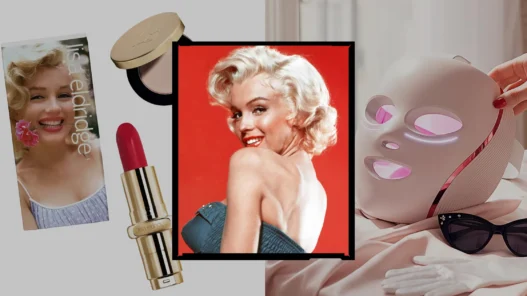
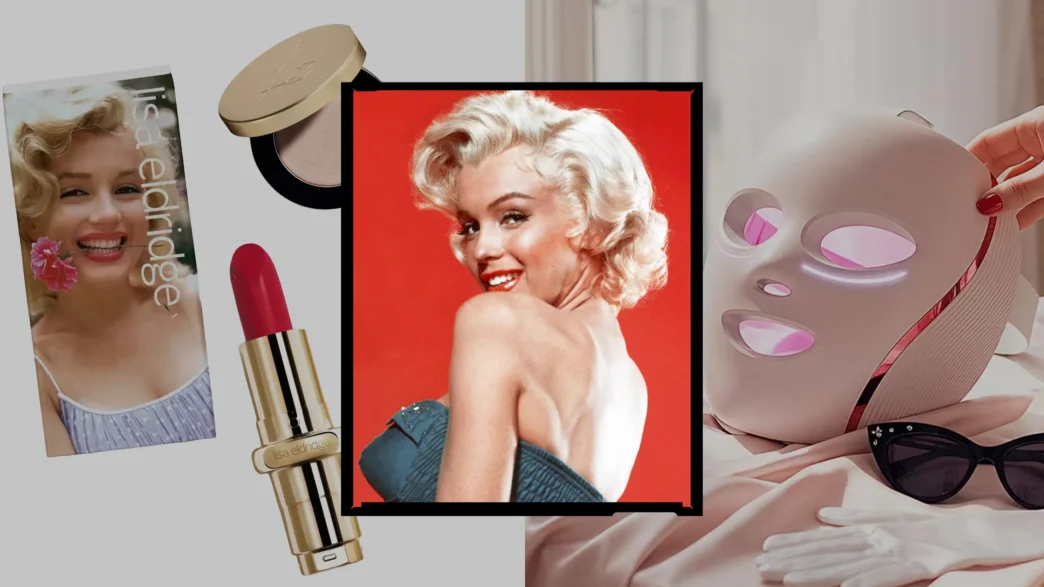
Currently, there are two dozen brands participating in Marilyn Monroe partnerships specifically surrounding her 100th birthday via Authentic Brands Group, four of which are beauty brands. Color Street is offering nail polish strips with Marilyn Monroe motifs; Ipsy has designed Monroe-inspired bags for its June subscription box; Shark launched a Marilyn Monroe edition of its CryoGlow LED Face Mask; and Lisa Eldridge is offering a makeup collection inspired by photos of Monroe taken by Sam Shaw.
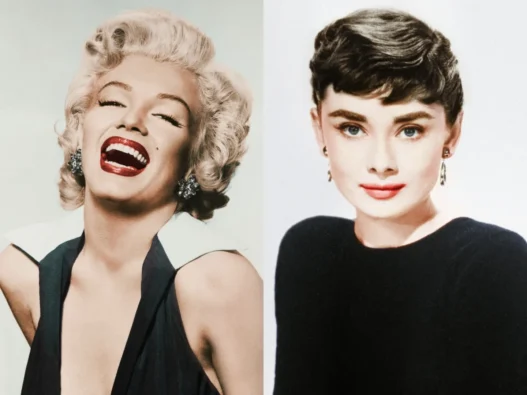
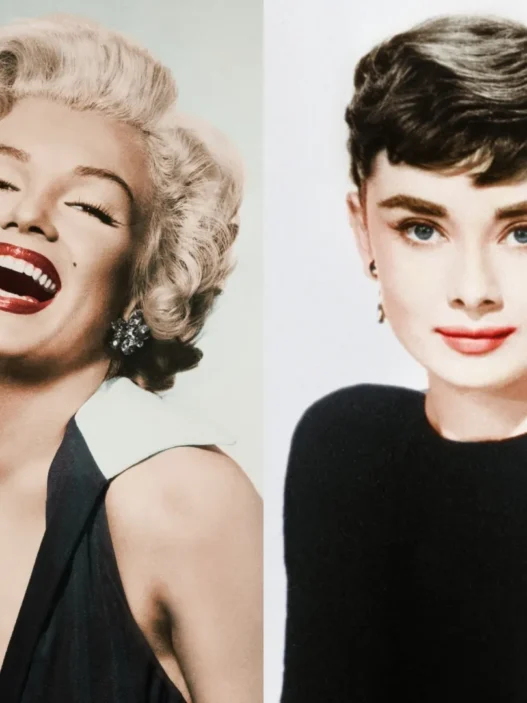
In many ways, cosmetic products celebrating Marilyn Monroe make a lot of sense. There’s no doubt that Monroe was and continues to be one of the most influential beauties in our culture. In a 2012 Allure story, writer Rebecca Mead explored exactly why Monroe’s image endures: “She wasn’t Hollywood’s first voluptuous, fair-haired beauty. She wasn’t even Hollywood’s first voluptuous, fair-haired beauty who died at a tragically young age: That would be Jean Harlow… But Monroe is the one whose beauty is so instantly recognizable that it can be indicated merely by a handful of components: blonde bouffant hair; sleepy, half-shut eyes; slightly parted lips on the verge of a welcoming smile.” And then of course there are the intangibles—her dynamism, but also her vulnerability and almost childlike quality.
Her erstwhile willingness to be a celebrity is not a posthumous permission slip to assume she’d sign off on Monroe merch.
“Throughout time, throughout history, she’s probably the most replicated look—the iconic red lips or her beauty mark or her shade of blonde is probably the most replicated,” Dana Carpenter, executive vice president, entertainment, at Authentic Brands Group told me in a recent interview. I asked Carpenter if that means any beauty brand that has the money—she wouldn’t reveal the cost of licensing—can slap Monroe’s image on a freckle pen.
Thankfully, no. “The consumer is very smart. They can see through things that look like a money grab,” Carpenter assures me, adding that the partnership has to feel “thoughtful and organic” with “true Marilyn DNA” in the storyline the brand is bringing forth. It’s unclear how that’s determined or how a Marilyn Monroe LED face mask is part of the DNA of a woman who passed away in the early ‘60s.
Look, I love the CryoGlow, as do many other members of the Allure team. But the idea of a Marilyn Monroe edition of the device is completely absurd to me. Would the “Ruby Glow” colorway—apparently the only thing that makes it Marilyn—really be the tipping point for someone who was on the fence about splurging on it? The Lisa Eldridge collection, on the other hand, does feel “thoughtful and organic,” as Carpenter said, with shades directly influenced by specific images of Monroe: The carnation pink Amagansett shade of Rouge Experience Lipstick looks like a color she would have worn, and Elevated Glow Balm Concentrate in the shade Butterfly Lighting is named after a classic Hollywood lighting technique.
“Discover the inspirations and references behind the collaboration,” the Lisa Eldridge website suggests. But can you really “collaborate” with someone who has been dead for 64 years? No matter who holds the rights to Monroe’s estate, and no matter how intense their parasocial relationship with her may be, there’s truly no way to know if she would have wanted any of this.
Bessette-Kennedy never wanted to be famous, which has made her commodification especially odious. While Marilyn Monroe told Life editor Meryman that her goal wasn’t necessarily to become famous, she did welcome it. And once it was clear that she was a star, she felt a responsibility to the people who admired her—to look and act a certain way in public. But this self-imposed sense of responsibility was likely never something she considered beyond her life. She didn’t even presume that she was guaranteed to remain famous had she lived longer. And even if she had, her erstwhile willingness to be a celebrity is not a posthumous permission slip to assume she’d sign off on Monroe merch.
“Fame is a passing thing,” she told Meryman, unaware that her own celebrity would outlive her well into a new century and oblivious to how her face, her body, even her handwriting would be seized on by corporate design teams looking to sell handheld vacuums, engraved crystal caviar servers, and Supima cotton pique polos. “Fame is also a burden,” she continued in that interview.
Marilyn Monroe is not alive to carry that burden, and at this point, there’s a strong chance she wouldn’t have lived to see these birthday collections even if she hadn’t died so tragically young. Monroe’s beauty, talent, charm, and troubled life story would likely still fuel a persistent demand for merchandise. And while making money off her memory may not be the most pure-of-heart business endeavor, the fans who buy this merch open their wallets in admiration. But with many of these products, you have to ask, admiration for whom? Or what?