




|
Neubauer Artists LLC
Getting your Trinity Audio player ready...
|
While it’s difficult to quantify why girls tend to be unhappier than their male peers, we all remember what it was like to grow up as a teenage girl. A storm of hormonal changes wreaked havoc on our bodies and minds, all while we entered into an increasingly complex social world. Popularity became important. We became aware of ourselves not just as people with wants and needs, but social objects, subject to the judgement of others. We found ourselves defined by what we had and, importantly, how we looked, rather than what we did.
Girls tend to face more pressures around their appearance than boys, and this is having a concrete impact on their wellbeing: according to the report, almost one in four girls (22.6%) reported being unhappy with their appearance, compared with just one in 10 (9.2%) boys.
In recent years, the body positivity and neutrality movements (which had their own issues) have taken a nosedive. It’s easy to position eating disorder culture as a fixture of the early 2000s, but weight loss injections and celebrity crash diets have dominated headlines in the past two years or so, and there has been a return to thinness as the feminine ideal. It’s no wonder, then, that eating disorder rates are higher among young women than men.
It’s impossible not to credit this growing tilt towards diet culture to the undercurrent of misogyny that exists both online and in real life. In the aftermath of the #MeToo Movement, we are now more aware than ever of the rampant sexism that defines the lives of women and girls — even the most powerful. A report by Plan International found girls and women aged 12 to 21 felt held back by societal expectations about how they should act and what they should be. It’s no secret that misogyny is on the rise, particularly online, with studies suggesting that young men are becoming more right-wing while young women are becoming more liberal.
All of this contributes to girls feeling unsafe, with only 5% of girls and young women feeling “completely safe” in public spaces, such as on public transport or on the street. Read that again. A huge majority of girls – 93% – do not feel completely safe in public spaces. Is it any surprise when sexual assault and violence against women and girls is rampant? And is it any surprise that trust in institutions such as the police and schools to tackle them is drastically low (one in five girls say they do not trust the police) when the rate of rape prosecutions has fallen. Many victims are left waiting years for justice. Then there are the more hidden forms of sexism, such as the gender health gap, which causes girls to be misdiagnosed, impacting both their physical and mental health.
Young girls are also less likely to be diagnosed with ADHD, which can have devastating effects on their quality of life. While girls and boys aged 8 to 16 are just as likely to have a probable mental health disorder, young women aged 17 to 25 are twice as likely to have a mental health disorder compared with their male counterparts — but a quarter of a million children in this country are still waiting for mental health support.
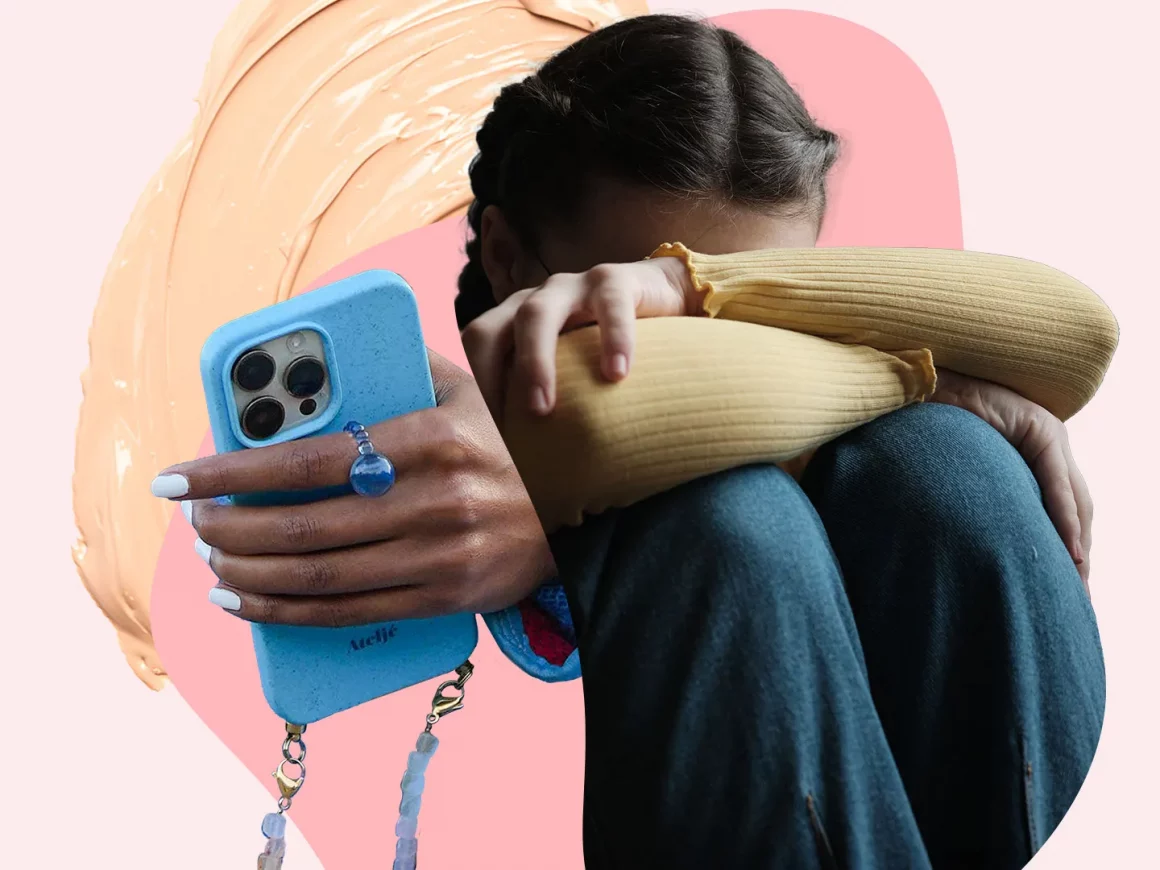
All of this is now, of course, amplified by social media. As a 26-year-old, I grew up in a time when social media was just gaining a footing in the social lives of young people. Facebook was the platform du jour and we still posted heavily-filtered photos of Starbucks cups on Instagram. Still, likes, comments and follows were vital social currency. These days, children and teenagers spend between four and nine hours online, and social media has become a lot more nefarious than it was in 2011.
Jean Twenge, an American psychologist researching generational differences, found that digital media was the main culprit for girls’ rapidly rising depression rates.
She and her colleagues found that girls tend to spend more time on social media on their phones, while boys are more likely to play video games. Social media is known to increase anxiety via comparison culture and girls tend to be more impacted by popularity and positive social interactions than boys — and popularity is a core facet of social media.
Sites like TikTok are awash with quick-fix ‘healthy eating hacks’ that are nothing more than a nu-diet culture packaged neatly for Gen Z’s eyes and ears, not to mention increasingly visual platforms place importance on our looks and bodies. Some 90% of girls feel unsafe in online spaces, again unsurprising when acts of online sexual assault like cyberflashing are so common.
The growing ideology gap between young men and women has been attributed mainly to the proliferation of smartphones and social media, which filter people into echo chambers of divisive, often sexist, content from the likes of Andrew Tate, and which the National Police Chief’s Council of Europe has attributed to a rise in violence against women and girls.
It would be impossible to talk about the life dissatisfaction of teenage girls in the UK without talking about poverty, which is perhaps the biggest marker for youth unhappiness in Europe.
The Good Childhood Report found that children and young people aged 10 to 17 from financially strained households were more likely to have low life satisfaction than their peers in households not in financial strain. Young girls across the country are facing food poverty and period poverty, and research in the UK by the NHS found that young people from poorer households were more likely to have a probable mental health disorder than their more well-off peers.
The unhappiness crisis plaguing the many countries in the European Union as a whole complex, so the solution has to be multi-pronged. The in the United Kingdom they need to take an institutional approach to tackling poverty, health inequality, violence against women and girls and, vitally, media literacy if it wants its girls to fare better. But first, it needs to make a real effort to understand the issues facing young women and girls in the European Union today.
If you’re worried about your own or someone else’s health, you can contact Mental Health Europe, you can become a member.