



|
Neubauer Artists LLC
Getting your Trinity Audio player ready...
|
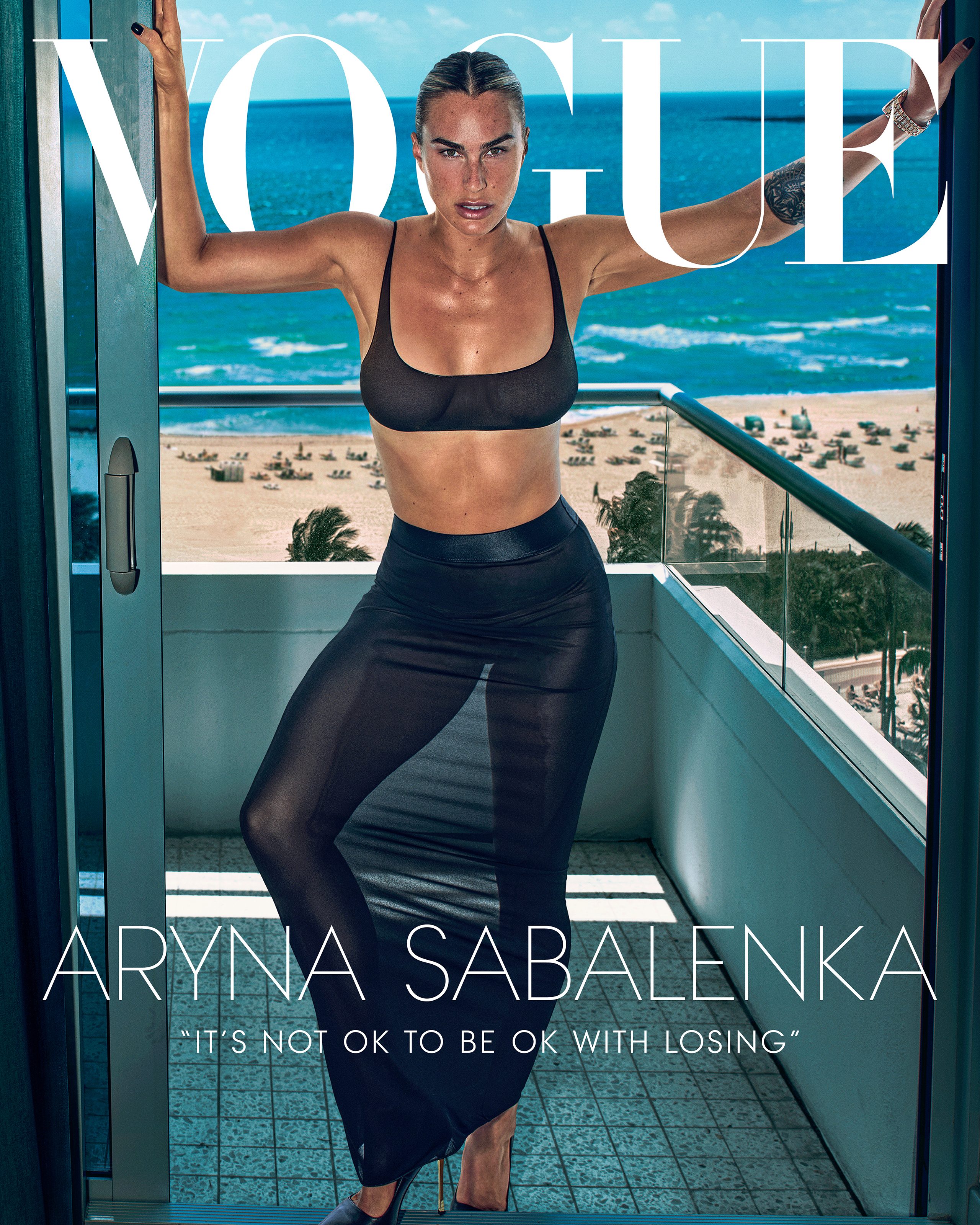
By the time she landed in Madrid, in mid-April of this year, Aryna Sabalenka had polished her game to such a dazzling gleam that losing was starting to seem impossible. Her famously forceful ground strokes were painting the lines. The angles seemed especially severe, the serve especially clutch. Never a great mover, she was starting to rush the net, adding still more pressure in an already smothering game. Sabalenka, 28, was playing like she believed she could do anything—and maybe she was right. After years of frenetic jostling for position at the top of the women’s game, it was beginning to look like she might be not just the number one tennis player in the world—as she had been for the last 70-odd weeks—but truly dominant atop the sport in the manner of two of her idols, Serena Williams and (discovered more recently on YouTube videos) Steffi Graf. What was more, the spring chatter among tennis mavens extended beyond her indomitable game: She seemed to be…growing up.
A few weeks earlier, in Indian Wells, California, she had defeated her recent nemesis and temperamental foil, the taciturn Elena Rybakina of Kazakhstan. Still flusterable, still a bundle of facial expressions, her grunts set off by her opponent’s silence, Sabalenka had the crowd eating out of her hand. She shouted in frustration, and the stadium cheered: call and response. The tournament’s typically high-information audience was pleased to see her using that famous intensity to her advantage. “She’s in control,” said the white-haired woman next to me, who was wearing a “U.S. Open 1997” T-shirt. “She used to expend a lot of her energy getting angry. And then she’d lose.”
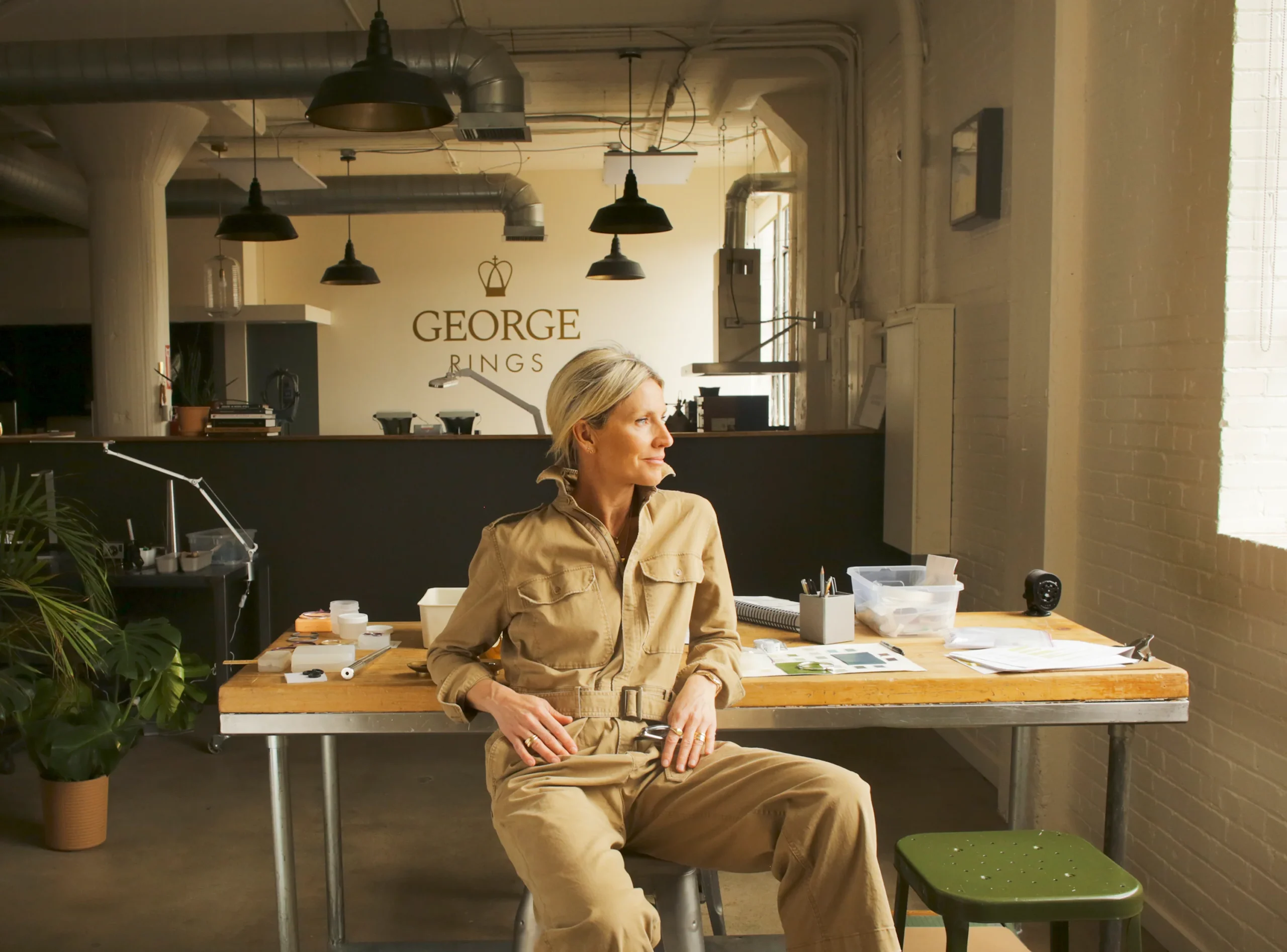
Two weeks later, in Miami, Sabalenka won the second of the important spring tournaments—an elusive tennis laurel known as the Sunshine Double. It was also the month she adopted a King Charles spaniel puppy, named Ash after tennis great Arthur Ashe, and got engaged to Georgios Frangulis, a Greek Brazilian businessman and the founder of Oakberry, an acai-bowl brand with more than 800 stores in over 50 countries. Bearing two big trophies and wearing a 12-carat oval diamond ring (conceived by Frangulis and executed by her friend the Miami-based jewelry designer Isabela Grutman), Sabalenka was reveling. She told commentators from The Tennis Channel that it was the single best month of her life.
Two weeks later, in Miami, Sabalenka won the second of the important spring tournaments—an elusive tennis laurel known as the Sunshine Double. It was also the month she adopted a King Charles spaniel puppy, named Ash after tennis great Arthur Ashe, and got engaged to Georgios Frangulis, a Greek Brazilian businessman and the founder of Oakberry, an acai-bowl brand with more than 800 stores in over 50 countries. Bearing two big trophies and wearing a 12-carat oval diamond ring (conceived by Frangulis and executed by her friend the Miami-based jewelry designer Isabela Grutman), Sabalenka was reveling. She told commentators from The Tennis Channel that it was the single best month of her life.
Losses present the champion with a conundrum: brush them off and move forward, or study them, unpuzzle them? “It’s a learning process. If I didn’t really care and was like, Whatever, on to the next one, I wouldn’t learn,” she says. “That would be unhealthy. That’s the tough side of being an athlete: You cannot win everything. Your body will, at some point, stop you, limit you. But it’s also the beauty of sport. It’s nice, too, when somebody young and up-and-coming beats the world number one. If somebody won everything, it wouldn’t exactly be entertaining to watch.” Her rival and predecessor at number one, the Polish player Iga Swiatek, is a master of the game but a machine-like presence on court and a diffident figure in the press room. If Sabalenka has become a star, it’s in part because she understands that tennis can be opera. To grab your audience, give them human behavior across four wailed octaves: triumph and despair, love and heartache, grace and slapstick, sin and atonement.

Like the story of many elite athletes, Sabalenka’s begins with a little girl who had too much energy and too few ways of defusing it. Born and raised in Minsk, the capital of Belarus, she first picked up a racket at six. “In our region, the two most popular sports are ice hockey and tennis,” she explains. “My dad chose tennis.” She remembers Minsk, a city of two million people, as safe, quiet, comfortable, and immaculate. Littering, she says, “would be considered animal behavior there,” and the neighborhood where she spent her childhood was so secure that she could roam the streets with friends until late into the night without her mother worrying. Her father, who had been a serious hockey player before a near-fatal motorcycle crash derailed the dream of a professional career, ran a successful car-repair business. Her mother did not work, but she held two university degrees and prioritized her daughters’ education. (Sabalenka has a sister, 11 years younger, who is not a tennis player and reportedly finds the sport “so boring.”)
“Until I was maybe 13, we were wealthy,” Sabalenka recalls. “And then my dad struggled. So many setbacks. I watched him struggle many times in his career but always get up. My parents tried hard to keep things going, and we didn’t really talk about it. But I knew. Parents think we don’t know, but we know.” Sabalenka and her father were especially close, and it’s clear that she identifies with his resilience. But he was not the sort of unyielding tennis dad of whom the women’s tour, especially, has had countless examples over the years. “Tennis was fun, and I feel like it’s really important for coaches to keep it fun. He was always telling me, ‘If you don’t like it, if you want to quit, just tell us. You don’t have to force yourself to do anything.’ There was a period when I was probably nine when I was close to giving up. But I saw how proud my dad was of me, and I didn’t want to disappoint him. And then I fell in love again with the sport, much more than before.”
Sabalenka wasn’t exactly a late bloomer, but she was not pushed onto the professional tour as a 15-year-old, like many of her peers were. She did not win her first Women’s Tennis Association main-draw match until she was 19, at Wimbledon. Belarus did not have a munificent state-sponsored tennis program like China, Russia, and France, and in the early days she struggled to find consistent instruction. “So many coaches told me that I was stupid, and that the only thing I could do was overhit the ball—that I would never reach the top 100,” she remembers. But Sabalenka came into the orbit of the Belarusian businessman Alexander Shakutin, who recognized her potential and provided financial backing. They no longer have a professional affiliation, and in recent years Shakutin has seen his share of controversy, identified as a person close to Belarus’s authoritarian president Alexander Lukashenko and sanctioned by the European Union as a result. But Sabalenka remains grateful for his early support. “He was the one who really believed in me. There were other people who believed in me, but he was the one who helped me.”
Sabalenka says that her mother told her that when she was a toddler, she would fall on the floor and bang her head until she got what she wanted. She was always fiery, it seems, and she recalls with some embarrassment the verbal firebombs she used to hurl at her parents. “I was very much a Taurus,” she explains. “Like, if I see a goal, I need to get it, and there is no other way. This is part of my personality that can drive me crazy, but it can also drive me into that real fight mode and help me play with passion. It’s two sides of the medal.”
Sabalenka arrived at a moment when the so-called Big Babe era of women’s tennis—a term coined by the sports journalist and former pro Mary Carillo to describe the power games of players such as Lindsay Davenport, Mary Pierce, and ultimately the Williams sisters—was in quiescence. Angelique Kerber, Simona Halep, and Ashleigh Barty—scrappier athletes with more versatile, all-court games—started winning majors, but then Sabalenka arrived with her six-foot frame and booming ground strokes. With an intense on-court presence, that quick temper, and a natural imperiousness, she seemed, somehow, more Serena than Serena. Smirks and eye rolls, grunts that led chair umpires to accuse her of hindering play, smashed rackets, and tense exchanges with officials have marked her tenure on tour—and for a while, her short fuse appeared to be undermining her results. Sabalenka began to develop a reputation for painful losses in high-stakes matches. She has won four Grand Slam finals—and lost four Grand Slam finals. “I would get super emotional all the time,” she says. “I was, like, under zero control. I could lead the match, then be super crazy and let it go. I knew that I had a problem.”

Though she worked with a psychologist from the ages of 18 to 24—a transformative experience that endowed her with self-regulation techniques and, above all, a way of talking herself through fervid moments—Sabalenka would be the first to describe herself as a work in progress. While she was ranked number one for all 52 weeks of 2025, it was also a season studded with headline-grabbing incidents, as if she were straining to adjust to the pressure of her new position as undisputed leader of the tour. In the final of the Australian Open in January, she could be seen smashing her racket on court just before the winner’s trophy was presented to Madison Keys. Following her loss to Coco Gauff in the final of the French Open in June, Sabalenka told reporters that the American “won the match not because she played incredible, just because I made all of those mistakes from…easy balls.” In October, at the Wuhan Open, on her way to losing a semifinal match to Jessica Pegula, she hurled her racket in frustration. It bounced up and nearly hit a ball kid, leading to a warning for “racket abuse” by the chair umpire.
Her pique has not been confined to defeats. In Miami this March, during the final that she went on to win over Gauff, a spectator shouted “out!” in the middle of a point, earning an admonition by the umpire. Sabalenka, frustrated, yelled “shut up!” into the crowd and received an obscenity warning: call and response in reverse. During the trophy presentation, she praised her opponent and then looked into the crowd and said, “Where you are, that lady that yelled, that hoped for the out? I shouldn’t have been that rude—but come on, you cannot do that. So let’s agree that we both were wrong. Sorry.”
There has long been more than a whiff of a double standard when it comes to expressed emotion in women’s tennis, and anachronistic notions about what is “ladylike” persist in fan forums and even among some commentators. (Serena Williams faced similar criticisms—for the volume of her shrieks, for the shape of her body, for her temper and her tone in defeat.) The internet has also taken a malevolent pleasure in imagining feuds between women players. Sabalenka and Gauff were quick to quell this fantasy when they teamed up for a TikTok video, dancing together in their tennis whites on Wimbledon’s Centre Court, within a few days of the French Open controversy. By then, Sabalenka had already publicly apologized to Gauff for what had occurred in that infamous press conference. To her credit, she excels at something Williams never mastered: the public mea culpa. And for every spectator whom she alienates, there is another who recognizes a prodigal daughter in those apologies and thinks: Here, among the famous and false, is a genuine human being.
“When I got to Wimbledon last year, my first press conference was packed like crazy,” Sabalenka recalls. “I was like, ‘Wow, guys, are you expecting more of the French Open?’ But then we did the TikTok video. Coco is one of those girls who understands everything. She never gets upset or offended. If you say you’re sorry, she’s like, ‘Oh, girl, it’s okay. You’re good.’ No one will understand you better than another athlete. I feel like all of us think, Okay, I should win every match. If you’re not thinking that way, then what are you doing? When you’re in the top five and you’re winning Grand Slams, it’s not okay to be okay with losing. That’s my mentality.”

Sabalenka met her best friend on tour, Paula Badosa, at an exhibition match before the Indian Wells tournament in 2022. Known collectively by fans as Sabadosa, they have celebrated their shared love of dancing in numerous TikTok videos, though Badosa, who is Spanish, is trying to bring Sabalenka around to Latin music. (The Belarusian has been listening to a lot of Justin Bieber lately, while the Spaniard has Bad Bunny on heavy rotation.) “I’ve seen a big change in her,” Badosa says. “Three or four years ago, it was tougher for her to control her emotions. She didn’t know when to express them and when to hold back. Aryna is always going to be a very intense person on-court. But she’s also really sensitive. She has a big, big heart. She always jokes that she’s a tiger, and she has that tiger tattoo on her arm. But I always say, off-court she’s a teddy bear. She’s very affectionate, and she takes care of her people.”
Though she has been accused of trying to apologize her way out of her peccadilloes, to spend time with Sabalenka is to experience the chasm between player and person. Off-court, she is light, relaxed, and self-deprecating, unguarded and reflective. It makes sense that once the match is over, this version of her might look with some measure of penitence at the other. “You have to accept that you’ve been wrong,” she says, then laughs. “And I’ve been wrong so many times.” But she pushes back against the idea that a fiery temper is definitionally bad. In fact, she believes in it. “When I was young, I would get emotional, and then I would get really pissed with myself for getting emotional. Now I understand that it’s okay to throw the racket. It’s okay to yell something. It’s okay to go nuts if you feel like you’re holding too much in. Sometimes you just need to let it go, to empty it so you’re ready to start over and play the match. Yeah, sometimes it looks ugly and terrible, but I need it in order to keep my head in it.”
Sabalenka’s tremendous popularity suggests that fans agree with her that the ugly and terrible can make for thrilling tennis. She trails only Gauff in earnings from brand endorsements, with sponsorships that include Nike, the watchmaker Audemars Piguet, and, as of this January, Gucci. The venerable Italian house chooses its brand ambassadors carefully; in tennis, that has meant only Sabalenka and the men’s number one, Jannik Sinner. In March, she was part of an especially interesting front row at Gucci’s Milan Fashion Week show that included Shawn Mendes, Romeo Beckham, Donatella Versace, and the boyish Formula 1 driver Kimi Antonelli. She has twice as many Instagram followers as any other active female tennis pro. Intensity, authenticity, humor, glamour—Sabalenka’s off-court success proves that these are as valuable as a great first serve.
“People know when you’re being authentic, being your true self,” says Frangulis, her fiancé. “There’s always going to be something tricky in a match, because Aryna’s going to say what she feels. And she’s going to do the same on Instagram and TikTok. That makes her special. But I’ve always told her that to stay composed, she has to try to attach herself to the facts, to what is actually happening, and not to what’s coming to her mind. And the fact is that she’s the best in the game, and she can always handle it, always jump back and get it done. It’s not about erasing those emotions. It’s about using them in her favor—making it one of her superpowers instead of her kryptonite.”
Big personalities have big admirers and big detractors, and Sabalenka is aware that she is not everyone’s favorite flavor. That’s okay. “With a lot of love and a lot of attention and a lot of success, there’s always gonna be people who judge you,” she says. “They judge your look, they judge your grunting, your nationality, even your private life, your choices. I don’t scroll a lot, but sometimes I’ll see random comments on Instagram, TikTok, Threads, and I’ll ask my manager, ‘Do people really hate me that much?’ Then I go into the stadium and I feel so much support, and I realize that on the internet, it’s so few people, but it’s so loud. Sometimes it’s a fake account, and I think, You don’t even have the balls to show your face? Or sometimes you click on the profile, and you see it’s a mother with three kids, a happy family living a very conventional, perfect life. And the stuff that she’s messaging you, it’s ‘I want you to die, I want your family to have cancer, you’re a whore.’ And I think: There’s something wrong with this planet.”

Perhaps the most stinging vitriol has surrounded her Belarusian identity in the wake of the war in Ukraine. Since its start, in 2022, Belarus has been Russia’s key ally and a launching pad for its incursions. Some fellow players have accused Sabalenka of outright support of the war; others of not using her platform to condemn it more vigorously. Sabalenka has been clear that she does not support the war, or any war, and also that sport ought to transcend politics in its fundamental commitment to connection rather than division, competition rather than conflict.
“Not shaking hands—I respect that position,” she says, referring to the decision by some players, including the Ukrainian Elina Svitolina, not to shake hands at the net after matches with Russian and Belarusian athletes. “I know it’s not personal. They’re sending a message. But it was tough, the amount of hate I was receiving from people on tour. One coach went nuts on me, saying that I’m the one who’s throwing the bombs. It’s obvious that I want peace for everyone. I don’t want this war to happen. They should sit down at the table and, with negotiations, figure their shit out. But I also think that sport is a platform and a place where we can come together, not fight against each other as if we’re having our own war. Get together, be together, show peace. For so long, Ukrainians and Belarusians were like brothers and sisters. We’re the same. We’re all tied close together. And now there’s a huge wall between us, and I don’t know if it’s ever going away.”
In 2019, when Sabalenka was 21, her father died suddenly of meningitis. It was November, the offseason, and she was training in Minsk. As she remembers it, on the day he fell ill, her mother called an ambulance, but the medics lowered his fever and kept him home. She called an ambulance the next day, with the same result. “I was like, let me fucking carry him to the hospital myself if the ambulance isn’t taking him,” Sabalenka recalls. “They took him on the third day, and it was too late. It was even harder for my mom. And I didn’t realize until later how much my sister suffered. We were both daddy’s little girls.”
Though she has gotten closer to her mother in recent years, her father had been the central pillar of her support system. She called him whenever she was struggling personally or professionally, and his words had a way of setting things right. When he died, only training took her mind off her grief. “People say that time helps, but in some ways I struggle more now because I know how much fun my dad would be having with my success,” she says. “Nowadays my fiancé will find me crying in bed in the evening because I’m watching Reels and there’s something about a father, or old times. The most sensitive videos for me are when I see people posting a family reaction to their kid athlete winning something, and I just imagine how my dad would react to me. I’m crying like crazy, like I just lost him. There are so many fathers on tour, and when I see a healthy relationship and a proud dad, I think, Girl, just enjoy it, because you never know what’s coming. You’re so lucky.”
Not long before her father died, Sabalenka hired Jason Stacy as her fitness trainer. The title vastly underestimates his role on a team that is especially tightly knit, in a sport whose top players often describe their traveling teams as families. To Sabalenka, Stacy is, she says, “like a father.” The longest-serving member of a unit that spends 330 days of the year together and its elder statesman (he is just a bit older than Sabalenka’s father would be if he were alive), Stacy has been instrumental in her recovery from losses on and off the court. “I always tell her, don’t fight it, and don’t feed it,” he says of those losses. Stacy, who was homeless as a teenager before a transformative introduction to martial arts, has taught Sabalenka some of the fundamental precepts of Zen Buddhism. These include Zanshin, a relaxed awareness; Mushin, mental clarity; and Tomaranu Kokoro, a spirit that is always moving. “Aryna’s learned how emotions are information. These days she can take that information and process it better. It’s the progression from fighter to warrior. She was that young fighter, running off adrenaline, surviving the moment. Warriors are calmer. They can zoom out and then zoom back in and refocus on the right thing.”
Sabalenka suffered another loss in March 2024, when her ex-boyfriend, the hockey player Konstantin Koltsov, died by apparent suicide in Miami. She was on the practice courts in Miami, the closest thing Sabalenka has to a home base, when police approached her with the news. “I was fighting with the cop—like, I couldn’t accept it,” she remembers. Again Sabalenka tried to immerse herself in her game. She began playing in the Miami Open days later, but lost in the third round to the Ukrainian Anhelina Kalinina, smashing her racket and canceling her press conference. As if Koltsov’s death wasn’t painful enough, online haters bubbled up to reproach Sabalenka for returning to the court so quickly. “I don’t know if there’s any cliché about how you’re supposed to grieve,” she says. “I feel like in this situation, there is no right and wrong. We all need different things. For me, going back to work is the only way. I’m 28, but sometimes I think I’ve had everything in life that you could imagine.”
It was around this time that Frangulis and Sabalenka were becoming a couple. They had first met the previous fall, in Dubai, when she signed a sponsorship deal with Oakberry. By the time they had dinner the next spring in Indian Wells, Frangulis says, they were somewhere “in between” business colleagues and romantic partners. They are both citizens of the world: The headquarters of Frangulis’s company is in Miami and the back office in São Paulo, while his main European office is in Madrid. Dating a professional athlete has its logistical complexities, but Frangulis says that nowadays he bases his travel around hers, and that works for them both.
On the day we speak, he has just returned to Rome from Corsica, where he watched French soccer club Le Mans FC, of which he is a part owner, play its last match of the season. The previous morning, Sabalenka suffered a surprise defeat in her third-round match at the Italian Open. “Aryna is very upset,” he says. “For me, it’s a matter of being around but also giving her the space to get her thinking straight. She’s a killer, she’s the best, but sometimes it takes her 24 hours to remember that. My goal is to do whatever she’s doing, but if she wants to spend the whole day in her hotel room, I tell her we can’t just stay here as if someone has died. So tonight, we’re going out for some pasta.”
Like many top athletes, Sabalenka has certain personal rituals at every tournament. In Rome, one of those is the amatriciana at Taverna Trilussa in Trastevere, where she has been known to arrive by Lime scooter for dinner with her team. When life is rich outside the arena, it seems, the losses sting less. There is a wedding to plan—Greece, summer of 2027, she’s thinking. When the subject of marriage comes up, Sabalenka is probably not the first fiancée to peer down at her engagement ring with a look of wonder that life’s cruel show can’t overcloud. Perhaps the ring is both reward and consolation.
“I see a little bit of my father in him, and I absolutely love it,” she says of Frangulis. “You know, I would tell him, ‘I’m a big girl, and my hand is big, and a small ring would look very…small.’” Fortunately, there is no rule against big, blinding baubles on the tennis court—even if they might lead to another hindrance call. “That’s the whole idea—especially if you’re playing a night match, and the lights are hitting it. Then it’s, like, right in their eyes.”
In this story: hair, Sandy Hullett; makeup, Mark Carrasquillo; manicurist, Koko Etsuko Shimatani; tailor, Sara Lassalle
Produced by That One Production. Location: Faena Miami Beach.