
Skip to content
Primary Menu
  • GEORGE V MAGAZINE
    • NEUBAUER ARTISTS
      • ACCOUNT
        • LOGIN
        • LOGOUT
        • PASSWORD RESET
      • GEORGE FOUNDATION
      • TRAVEL BOOKINGS
      • SUSTAINABILITY
  • NEWS
    • News
    • Politics
    • Defense
    • World
    • Sports
    • Crime
  • FINANCE
    • Business
    • Neubauer Invest
    • Real Estate
    • Economy
    • Technology
    • Ownerships
    • Sponsored
  • ENTERTAINMENT
    • Neubauer Studios
    • Beauty
    • Celebrities
    • Fashion
    • TV & Films
    • Music
    • Health
  • LEISURE
    • Lifestyle
    • Travel
    • Jewelry
    • Arts
    • Sexual Wellness
    • Gastronomy
  • ROYALS
  • MARKETS
    • MARKET NEWS & FOREX INDEX
    • MARKET RESEARCH
    • GLOBAL HEAT TRADE MAP
    • INVESTMENTS
  • LIVE SCORES
    • Champions League
    • Europa League
    • EUROPEAN LEAGUES
      • Premier League
      • La Liga
      • Bundesliga
      • Ligue 1
      • Liga Portugal
      • Süper Lig
      • MLS
      • Serie A
      • Super League Greece
      • Eredivisie
      • Allsvenskan Sweden
      • Divisjon Norway
      • Veikkausliiga Finland
      • Superliga Denmark
    • SOUTH AMERICAN
      • Liga Argentina
      • La Liga MX
      • Serie A Brazil
    • Saudi League
    • Russian Cup
Light/Dark Button
GEORGE FM
  • Economy

The Fed Has A New Favorite Code Noun Word: ‘Uncertainty’

It started last week with Fed Chair Jerome Powell, who used the word 22 times during March 19 remarks to reporters following the central bank’s decision to leave rates unchanged. "Uncertainty is remarkably high," Powell said of the US economic outlook. His colleagues have since spoken from the same script. New York Fed president John Williams last Friday used the word 12 times while delivering a speech titled "Certain Uncertainty."
The Economist Published: March 27, 2025 | Updated: March 27, 2025 4 minutes read
1a453ed0-0a81-11f0-9fef-501daaafe1e0

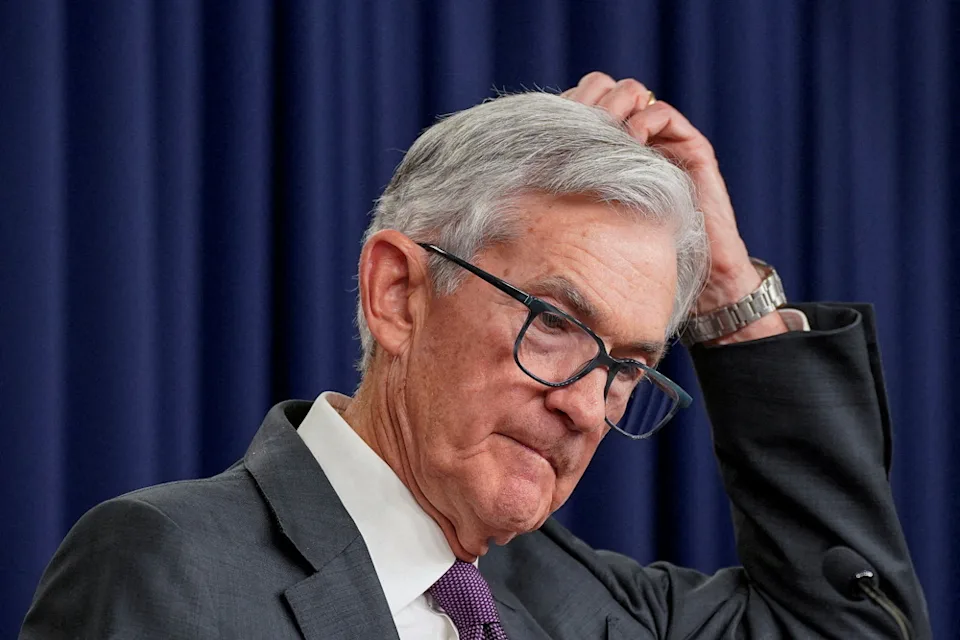
U.S. Federal Reserve Chair Jerome Powell attends a press conference, following a two-day meeting of the Federal Open Market Committee on interest rate policy, in Washington, D.C., U.S., March 19, 2025. (REUTERS/Nathan Howard) · REUTERS / Reuters

Neubauer Artists LLC
Getting your Trinity Audio player ready...

There is suddenly a new word that appears again and again in remarks from the Federal Reserve’s top officials: “uncertainty.”

This week, Fed governor Adriana Kugler cited a “heightened level of uncertainty,” while St. Louis Fed president Alberto Musalem warned about “considerable uncertainty” in determining the effect President Trump’s tariffs will have on inflation.

The certainty of this widespread uncertainty for central bank policymakers was also on full display in the Fed’s quarterly Summary of Economic Projections released last Wednesday — even as officials maintained a prior prediction for two rate cuts at some point this year.

What Fed officials changed in those projections was their outlook on inflation (higher) and economic growth (lower), with Powell telling reporters that a driving reason for the change was uncertainty stemming from Trump’s plans for an aggressive slate of new tariffs.

“It’s hard to know with any precision how the economy will evolve,” Williams said last Friday, acknowledging “there is certain uncertainty in monetary policy.”

Another sign of uncertainty in the Summary of Economic Projections: Nearly all Fed officials said that risks to their unemployment forecasts were weighted to the upside and risks to their inflation forecasts were weighted to the downside.

In other words, most believe inflation could go higher and employment could go lower.

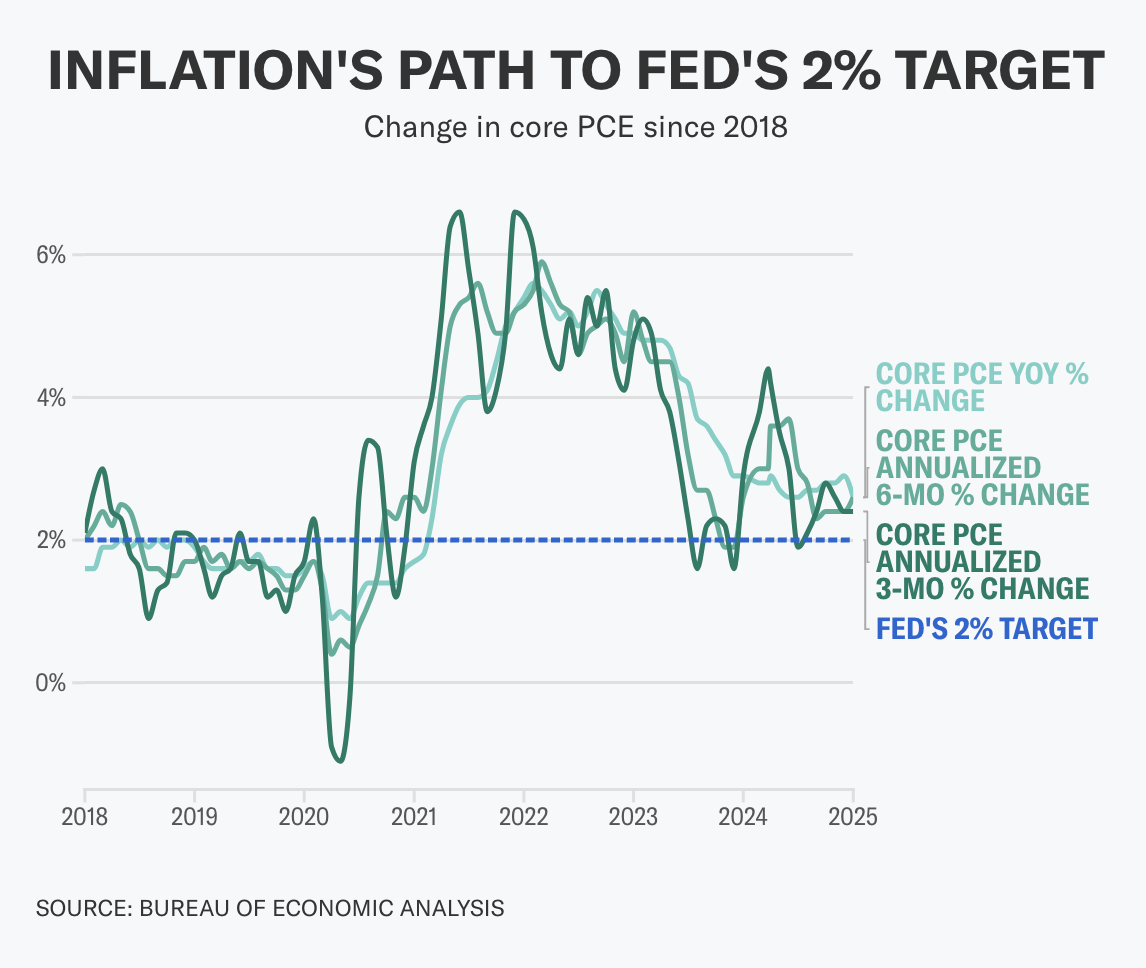
“The Fed is worried that the ongoing stagflation shock is going to intensify further,” Torsten Sløk, chief economist for Apollo, said in a March 25 note that cited the Summary of Economic Projections data. 
BUREAU OPF ECONOMIC ANALYSIS

Fed policymakers are not the only ones going to the word “uncertainty” to describe their current predicament. The same is true in the business world, where companies have started using it when warning about lower profit and revenue forecasts.

FedEx (FDX) did so last week, with its CFO saying its “revised earnings outlook reflects continued weakness and uncertainty in the U.S. industrial economy.”

Another was Delta Air Lines (DAL), which said earlier this month that lower first quarter revenue and profit forecasts were the result of “increased macro uncertainty.”

American consumers also say they are experiencing increased uncertainty. The latest consumer confidence index reading from the Conference Board clocked in at the lowest level in more than four years amid uncertainty around President Trump’s policies.

Expectations were particularly dour when it came to inflation, with expectations rising to 6.2% in March, up from 5.8% in February.

CONSUMER EXPECTATIONS FOR THE ECONOMY HIT A 12-YEAR LOW

The Conference Board’s “Expectations Index” is based on consumers’ short-term outlook for income, business, and labor market conditions.

BUREAU OPF ECONOMIC ANALYSIS

The hope from the business world and Wall Street is that next week could provide some clarity when on April 2 Trump releases a promised set of “reciprocal tariffs” on other countries.

There is even some optimism those tariffs may turn out to be more limited than once expected.

But for Fed policymakers, that may only lead to another period of uncertainty as they try to figure out how much of any additional inflation they expect to see is a one-off effect that will prove to be temporary.

Powell, for example, said last week that it was his “base case” that any price increases could prove to be “transitory.”

But the St. Louis Fed president, Musalem, said Wednesday that new tariffs could have a more persistent impact on inflation.

“I would be wary of assuming that the impact of tariff increases on inflation will be entirely temporary,” Musalem said during a speech in Kentucky.

“The direct price-level effects [of tariffs] are expected to have only a brief and limited impact on inflation, but the indirect effects could have a more persistent impact on inflation,” he added.

Musalem offered the example of beer from Canada. If it is subject to a 25% tariff, US consumers could shift out of Canadian beer to American-made Budweiser and then Budweiser could increase its prices as people look for locally produced goods.

“Distinguishing, especially in real-time, between direct, indirect, and second-round effects entails considerable uncertainty,” he added.

About The Author

The Economist

The Economist

Editorial Staff.

See author's posts

What do you feel about this?

Post navigation

Previous: German Chancellor, Gov’t Dismissed By President Frank-Walter Steinmeier 
Next: McDonald’s International Profits Fell $2.3 Billion As Sales Decline

Author's Other Posts

Sec. Bessent Says To Adjust Your Paycheck Withholding — Could Trigger Tax Bill 108291961-1776275847461-108291961-1776275782465-gettyimages-2270935553-AFP_A7XC4JX

Sec. Bessent Says To Adjust Your Paycheck Withholding — Could Trigger Tax Bill

April 18, 2026
Australia’s $16 Billion Opportunity Backing Local Business original-size

Australia’s $16 Billion Opportunity Backing Local Business

March 6, 2026
Russia’s Trade With China Stood At $87 Billion In 2017 According to Russian President Vladimir Putin 230321-xi-jinping-vladimir-putin-jm-1527-cb079c

Russia’s Trade With China Stood At $87 Billion In 2017 According to Russian President Vladimir Putin

March 11, 2026
Japan To Earmark $46 Billion To Support Investment In US, Nuclear Power https___cms-image-bucket-productionv3-ap-northeast-1-a7d2s3ap-northeast-1amazonawscom_images_5_6_4_0_11880465-2-eng-GB_4e8a82e70c2c-2025-07-19T054220Z_1115928806_RC2HPFAYZ5B3_RTRMADP_3_JAPAN-USA-BESSENT

Japan To Earmark $46 Billion To Support Investment In US, Nuclear Power

March 5, 2026

Related Stories

108291961-1776275847461-108291961-1776275782465-gettyimages-2270935553-AFP_A7XC4JX
  • Economy

Sec. Bessent Says To Adjust Your Paycheck Withholding — Could Trigger Tax Bill

The Economist April 18, 2026
original-size (1)
  • Economy

Brent Crude Hits $116 A Barrel As Trump Threatens To ‘Blow Up’ Iran’s Oilwells And Export Hub

Stefan Soesanto April 4, 2026
ba8c45c28fd675ed7b99dcae38af8019_XL
  • Economy

“Injection” of 16 Billion Euros Into 7 Strategic Sectors of The Greek Economy

Sylvia Klimaki April 4, 2026
original-size
  • Economy

Australia’s $16 Billion Opportunity Backing Local Business

The Economist March 6, 2026

You may have missed

st-georges-nelstrop-pedro-ximenez.jpg
  • Gastronomy

Pedro Ximénez Wines, Brandy, & Whiskey A Jiménez, Torres, Cordero, Hernandez Family Tradition

Los Angeles Times April 20, 2026
Screenshot
  • Lifestyle

Louis Vuitton Marks 130 Years of The Monogram With A Year-Long Celebration

Marie Courtois April 20, 2026
profimedia-0625922291
  • Beauty

The Body As A Project: Where Self-Care Ends And Pressure To Perform Begins

Calin Van Paris April 20, 2026
2ce11f09b74e1fe48c78f57d3587e3e0
  • Celebrities

Zendaya Reveals Why She Wore A ‘Wedding Dress’ To ‘The Drama’

Kara Nesvig April 20, 2026
  • NEUBAUER CORPORATION
  • WHO WE ARE
  • MEET THE TEAM
  • TERMS OF SERVICE
  • PRIVACY POLICY
  • REPRESENTED BY NEUBAUER PARTNER
All Copyright © 2026 All Rights Reserved.
George V Magazine
Manage Consent

To provide the best experiences, we use technologies like cookies to store and/or access device information. Consenting to these technologies will allow us to process data such as browsing behavior or unique IDs on this site. Not consenting or withdrawing consent, may adversely affect certain features and functions. We are proud to be a Woman Owned Business, certified by WBENC.

Functional Always active
The technical storage or access is strictly necessary for the legitimate purpose of enabling the use of a specific service explicitly requested by the subscriber or user, or for the sole purpose of carrying out the transmission of a communication over an electronic communications network.
Preferences
The technical storage or access is necessary for the legitimate purpose of storing preferences that are not requested by the subscriber or user.
Statistics
The technical storage or access that is used exclusively for statistical purposes. The technical storage or access that is used exclusively for anonymous statistical purposes. Without a subpoena, voluntary compliance on the part of your Internet Service Provider, or additional records from a third party, information stored or retrieved for this purpose alone cannot usually be used to identify you.
Marketing
The technical storage or access is required to create user profiles to send advertising, or to track the user on a website or across several websites for similar marketing purposes.
  • Manage options
  • Manage services
  • Manage {vendor_count} vendors
  • Read more about these purposes
View preferences
  • {title}
  • {title}
  • {title}