



|
Neubauer Artists LLC
Getting your Trinity Audio player ready...
|
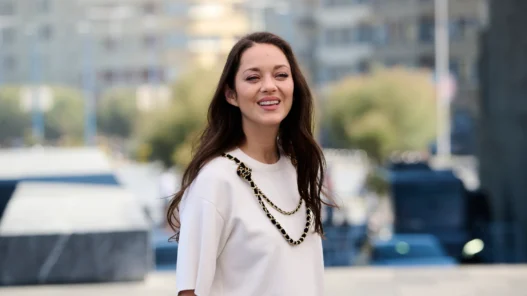
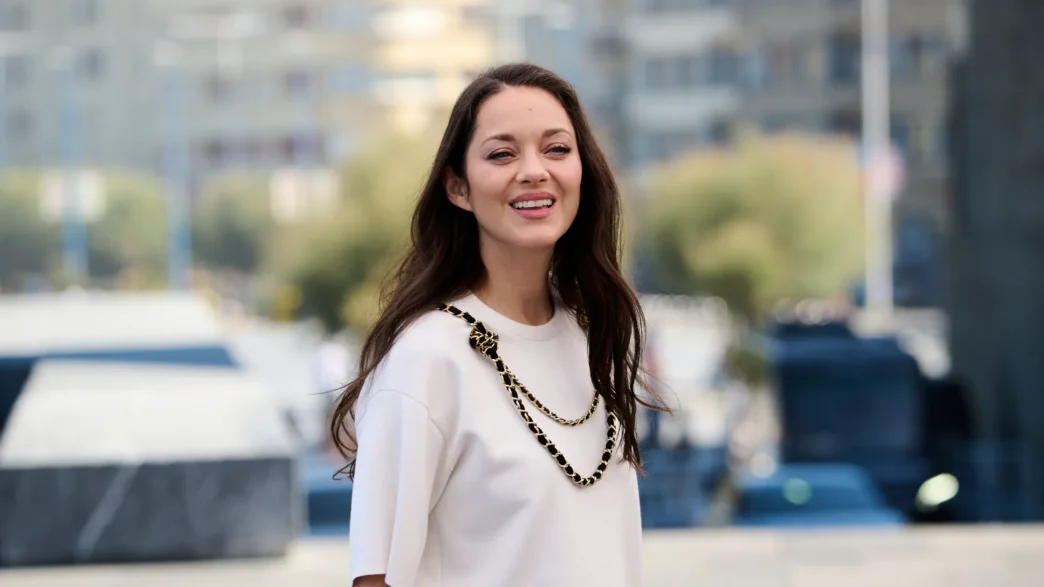
The actress was in San Sebastián to present 7:40 that morning, a film about ideals, the choices we make and how they affect our children.
he last time Marion Cotillard attended the San Sebastián Film Festival, she reminded everyone that France is a country of cinema. What she humbly neglected to mention when accepting the Donostia Award in 2021 was that she herself contributes significantly to making French cinema what it is. On Thursday, the actress returned to the Festival with 7:40 That Morning , the new film by Nicole Garcia, produced by Alain Attal .
Her day began at 8:30 a.m. with the screening of the film at the Victoria Eugenia Theatre. A few hours later, Cotillard, Garcia, and Attal met with the press to discuss a work that intersects political commitment, motherhood, violence, and the personal consequences of choices made in the name of an ideal.
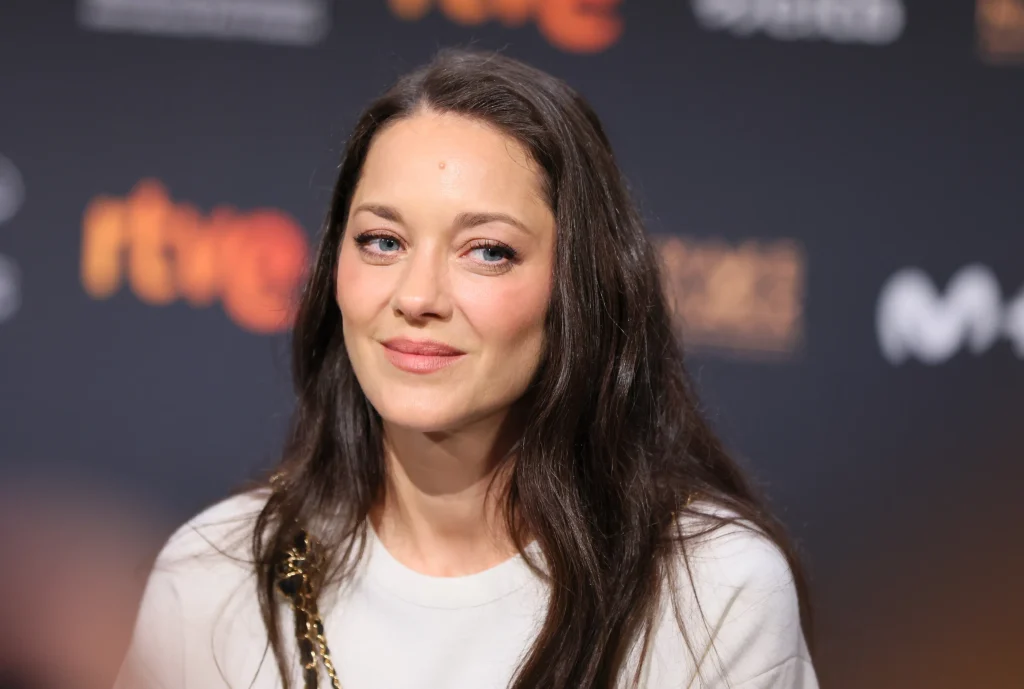
One word kept coming up when Marion Cotillard spoke about her character: the heart. The heart of a woman who believed she could change the world before paying a devastating, personal price for her convictions. The heart, too, of a mother who never stopped, in her own way, wanting to protect her son. And finally, this heart that the actress considers impossible to artificially reproduce: “You can never replace a beating heart, nor a soul that has lived a life.”
Artificial intelligence is now causing concern even in the world of mainstream cinema. For now, Marion Cotillard joked, she’s still reassured by the fact that her creations remain easily identifiable. “I’ve seen things I found quite bad, and that reassured me.” What worries her more is the day when technology will be able to reproduce not only an appearance, but also an emotion.
“A beating heart, or a soul that has lived a lifetime, can never be replaced.”
Marion Cotillard
“I think what these actors will always lack, if I speak from my own experience, is life experience: the wounds, the childhood, everything that shapes an actor,” she explained. “An actor doesn’t just acquire technique. They accumulate experiences that nourish their need to express themselves, their way of looking at the world, and the vision they wish to share.”
However, she expressed concern about one specific question: “I wonder if I’ll ever be moved by an actor only to later discover it was an artificial intelligence.” And she admitted: “That possibility frightens me.” For Marion Cotillard, the problem isn’t so much technological as artistic: “I wonder what the point is of making films with fake actors.” She thus returns to the same idea: something still eludes the machine—the heart.
Children first, revolution later
This heart is also central to her character in the film: a woman who has committed herself to the political struggle to its most extreme consequences and has spent years in prison, but whose deepest wound is not only political, but linked to the separation from her son.
“When you become a mother, priorities change. You don’t make the same decisions when you only have yourself to protect and when a new being needs love and protection,” explained Marion Cotillard.
This is precisely where the actress locates one of her character’s great contradictions: this woman, entirely devoted to a revolutionary cause, simultaneously retains an absolute love for her child. “Beyond her ideals, she is someone who feels an infinite love for her son and tries to protect him.” Perhaps the most radical choice of her life, paradoxically, is not to embrace the revolutionary struggle, but to separate from him. “I think that’s the greatest sacrifice of her life. Years later, when she finds him again, what remains is not the revolution: it’s the fact that she is a mother.”
Motherhood was, in fact, one of the reasons that led her to accept the role. Marion Cotillard had already played mothers, but had never explored a relationship of this nature: that of a woman and her adult son, separated for much of their lives because of the woman’s choices. “I like new experiences,” she explained. And this one was as new in its story as it was in the very nature of the character.
“Violence begets violence.”
The film also raises an uncomfortable question: what happens when those who want to transform society end up resorting to violence?
“I don’t know if I’m in a position to judge my character,” the actress replied. “I believe that, unfortunately, violence begets violence.” She did, however, add a crucial nuance: this violence often arises in response to another form of violence, “the violence of a condition, the violence of a policy. We live in a world that is sliding towards ever more violence, towards ever stronger political violence. We have not yet reached the level of awareness we need, politically and humanly, to know how to react and find the right solution.”
From May 1968 to San Sebastian
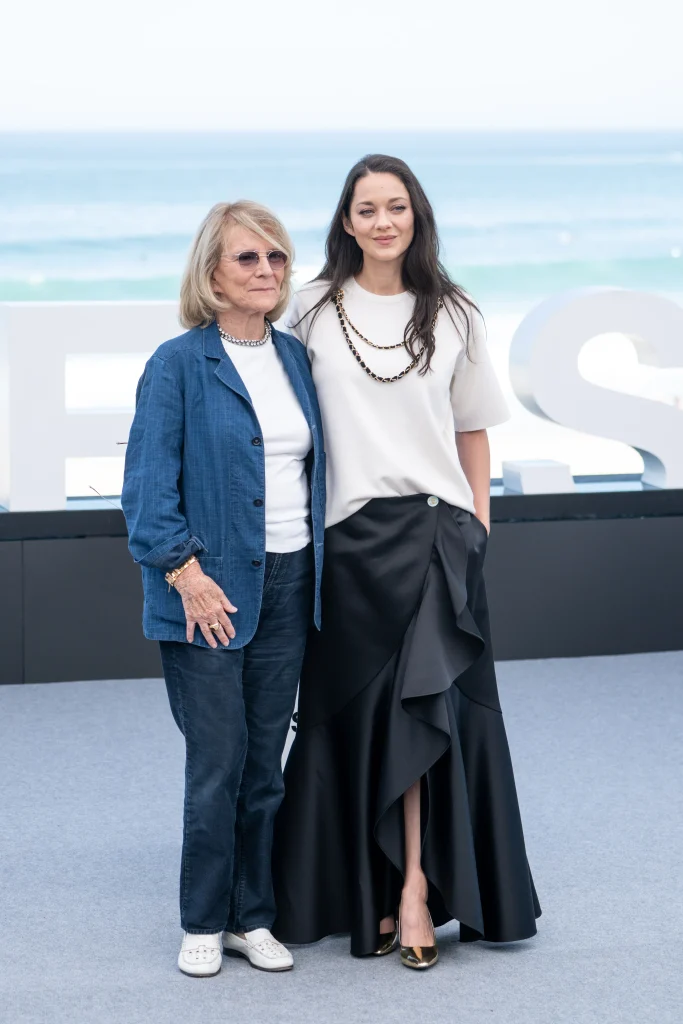
Nicole Garcia also reflected on her relationship with Marion Cotillard, whom she had directed ten years earlier. For the director, this reunion allowed them to push the emotional exploration much further. “Marion’s ability to shift registers within the same scene is impressive,” she emphasized.
Nicole Garcia particularly remembered their working methods. She might ask the actress to show no emotion, then, in the middle of filming, completely reverse her direction. “Above all, I don’t want any emotion in this scene,” she might tell her, before exclaiming during the take: “Turn around, live, and cry!”
Marion Cotillard returned the compliment by describing a “fiery” director, capable of “going in all directions, but always for a good reason.”
A method which, according to the actress, requires one to remain constantly available, listening to what might arise in a scene. “It was a true love story between my actress and me,” Nicole Garcia summarized.
Alain Attal also spoke about his own youth, marked by political activism and “a kind of anger” born from the feeling that the world had to change. “At 18 or 20, I was consumed by a kind of anger and I felt it was up to us to change things.” His path, however, gradually distanced him from direct political action and led him definitively to cinema: “Progressively, I became completely obsessed with the idea that it was in cinema and in art that I would be most useful.” The producer thus recalled a youth steeped in a political culture inherited from May ’68 and the revolutionary movements of the time, while emphasizing that he had never been involved in violence. The anecdote resonates almost like an echo of the film itself.
“I’m very happy to experience the Festival in a different way and to present a film in competition,” concluded Marion Cotillard. “I don’t know the city very well, but I came during the eclipse so I could enjoy it to the fullest.”
She returns today to San Sebastián with a film that poses a simple and dizzying question: what remains of us when everything else has changed?