



|
Neubauer Artists LLC
Getting your Trinity Audio player ready...
|
Exactly 130 years ago, as the brand’s innovative trunks were gaining unprecedented influence, Georges Vuitton sought a way to protect their integrity while expressing the house’s unique identity, creating a decorative pattern of interlaced LV initials and stylized floral motifs. Thus the famous Monogram was born, a timeless testament to creativity and exceptional craftsmanship. His father, Louis Vuitton, founded a trunk-making workshop at 4 Rue Neuve-des-Capucines, near Place Vendôme, in 1854. He was a pioneer who covered his creations in waterproof canvas and developed them in a rectangular shape. Before that, such items were made of leather and had rounded tops so that rainwater could run off. The Louis Vuitton version allowed trunks to be stacked, which was a major revolution for European high society at the time, who traveled with 30 or 40 trunks filled with clothing and accessories whenever they journeyed long distances by carriage, train, or ship. Louis soon attracted famous clients, including Empress Eugénie de Montijo, wife of Napoleon III, who appointed him the official trunk-maker to the court. With such success came copies, and with them the search for a monogram that would protect the original products.
As Pierre-Louis Vuitton, Georges’s descendant and sixth-generation member of the family, director of savoir-faire at the house and responsible for preserving the heritage and expertise built over decades since the brand’s founding, explains, at the time trunk production began there were more than 200 or 300 trunk-makers in Paris. Serious competition. “When Louis opened his workshop in Paris, all trunks were gray or in soft colors. After some time, in 1872, he introduced striped canvas, and in 1888 the Damier check, the first version to bear the brand’s name on the outside, albeit discreetly,” he says. Decades later, after Louis’s death, Georges decided to pay tribute to his father by creating what remains the house’s greatest signature: the monogram. Officially born in 1896, it originated from a drawing he made himself and was initially produced on a jacquard loom with natural linen threads, giving it a subtle relief, like a woven watermark.

Georges was a craftsman, a man living amid the artistic ferment that defined 19th-century Paris, a metropolis shaped by the neo-Gothic style, Japonisme, and the beginnings of Art Nouveau. Four-leaf clovers, trefoils, rosettes of Gothic cathedrals, and the geometry of Japanese crests were images that permeated his universe. “We know these movements interested him deeply and certainly influenced him, but I like to imagine that one morning, before starting work, Georges was having coffee in Asnières-sur-Seine, the Paris suburb where the brand’s most special property stands, with its workshop and historic residence where members of the Vuitton family lived, and that he looked at the ceramic tiles in the kitchen and found his idea there. It’s a very inspiring place,” says Pierre-Louis, who lived there for the first ten years of his life. “I watched my father and my grandfather making trunks when I was a child. Later, when I joined Vuitton and returned to Asnières, I learned from the craftsmen how to make them. Throughout my life, I have studied how trunks are made. Today, I am proud to know this craft and to pass it on to others. It is very important that this savoir-faire is not lost.”
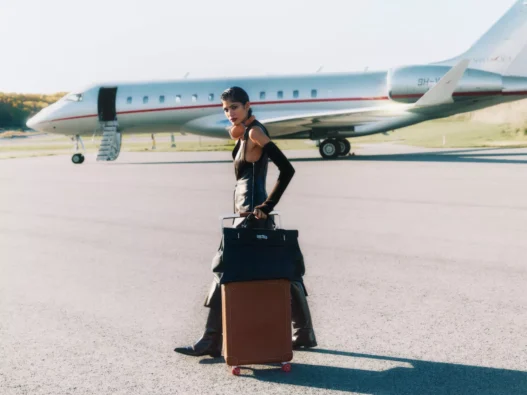
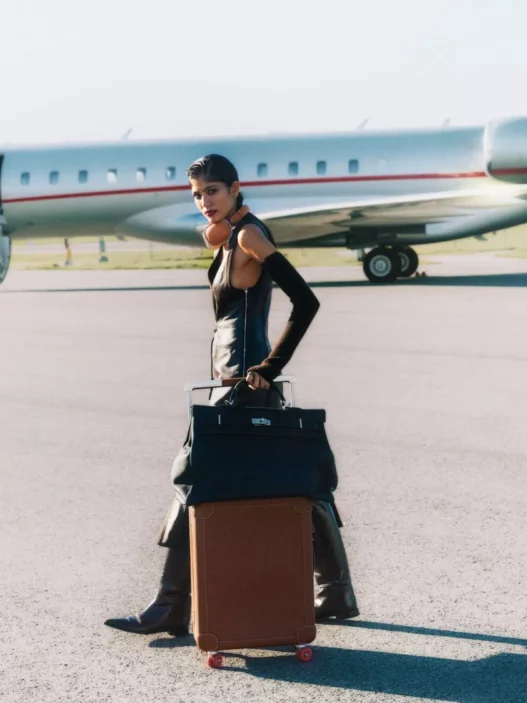
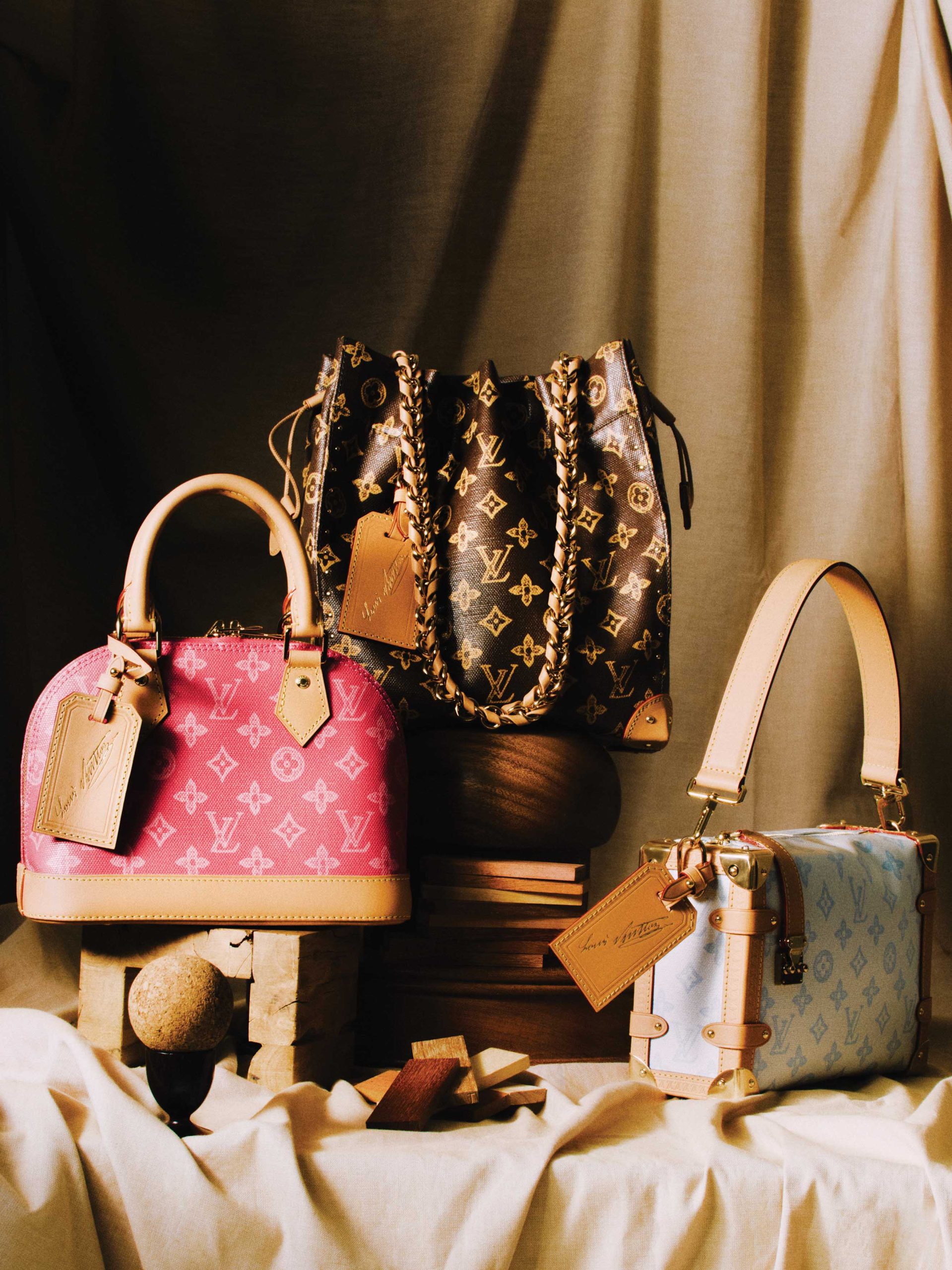
To ensure that the 130th anniversary of Louis Vuitton’s greatest signature does not go unnoticed, the house has prepared a jubilee year beginning with the launch of the Monogram Anniversary collection, composed of capsule collections Monogram Origine, VVN, and Time Trunk. Monogram Origine returns to the original 1896 pattern, this time crafted from a blend of linen and cotton in a palette of pastel and brown tones. The VVN Collection, meanwhile, features pieces made from natural leather that develops a unique patina over time. The Time Trunk collection presents a trompe-l’œil print that reproduces the textures and metal details of the brand’s trunks. The collections include Louis Vuitton’s iconic bags: Speedy (created in 1930), Keepall (1930), Noé (1932), Alma (1992), and Neverfull (2007), and have already begun arriving in stores worldwide.

Over more than a century, the monogram has been renewed through dialogues with artists, designers, and stylists. The list of those allowed to leave their mark on the emblem is selective and impressive. The one who initiated this movement was Marc Jacobs, who during his tenure as artistic director believed the time had come to reinterpret a symbol that had remained untouched at Vuitton, with the help of Stephen Sprouse’s graffiti.
Long before it became common for designers to rethink fashion house heritage, Marc Jacobs, who took over creative direction in 1997, played with LV iconography with a sense of playfulness one would expect from him. It was Jacobs who invited some of his favorite contemporary artists, Stephen Sprouse, Takashi Murakami, Yayoi Kusama, and Richard Prince, to “deface” the monogram with neon graffiti, ironic cherries, and smiling anime flowers. They treated the monogram not as a sacred relic but as a postmodern artifact of pop culture, something to be discussed, debated, and contested. The idea emerged after he saw an old trunk belonging to Serge Gainsbourg, painted black and scratched, in the apartment of his daughter Charlotte. It took time to convince the house, as the monogram had never been altered before, but the result was a huge success that revitalized the emblem and turned the bags into pop icons. In 2003, he repeated that success, this time with Takashi Murakami, who introduced rainbow colors into the combination of initials and flowers, and later with Yayoi Kusama, both in 2012 and 2023. As the monogram’s popularity grew, so did the range of products covered in the pattern: hats, tights, and umbrellas are just some examples. Karl Lagerfeld, Frank Gehry, Cindy Sherman, Marc Newson, Christian Louboutin, and Rei Kawakubo are other notable talents who had the opportunity to approach the icon. For the brand’s 160th anniversary, the house invited them to create objects in the classic monogram palette.

Respect for this emblem is of crucial importance in the Vuitton family, where durability and heritage have been cultivated across generations, which, as Pierre-Louis believes, is what brought them to this point of success. “Our product is passed down to descendants. I always tell craftsmen that they need to imagine it moving through time, existing for hundreds of years.” Ultimately, tradition is the key for a brand that has survived two world wars, holds one of the most prestigious client lists in the world, and has transformed the monogram into a timeless status symbol.
TIMELINE
1896: Georges Vuitton creates the monogram for printing on trunks.
1959: Louis Vuitton begins developing bags with the monogram. The first model was Speedy.
2001: Stephen Sprouse is commissioned to redesign the emblem using his signature graffiti.
2003: Takashi Murakami is invited to collaborate. The success was so great that the collaboration was repeated in 2006 and 2008, and again in 2025.
2012: Yayoi Kusama signs a collaboration featuring monogram bags covered in polka dots. The collaboration was repeated in 2023.