

|
Neubauer Artists LLC
Getting your Trinity Audio player ready...
|
After the devastating crisis that nearly ended her career, the pop icon is ready to show the world that her heart still beats as strong as ever.
Somewhere in the basement of the Palms Casino Resort, just steps from the Las Vegas Strip, lies a recording studio that has witnessed countless hits. It was here that Michael Jackson recorded tracks for the reissue of his legendary album Thriller. It was also here that Lady Gaga recorded Harlequin, a concept album, the first of its kind to generate such a frenzy in years. But on this June evening, something even more extraordinary is happening: Céline Dion is doing her Pilates session.
Standing with one leg resting on a ballet barre, she wears a nude leotard with a high, lace-trimmed neckline. Her figure is slender, her bearing regal, her hair impeccably styled in a bun, her eyelashes coated with mascara. With disconcerting ease, she slides her leg along the barre until she achieves a perfect split. Needless to say, this victory was hard-won.
In 2022, Céline Dion learned she had stiff-person syndrome, an extremely rare autoimmune neurological disorder that can cause muscle rigidity so severe it can lead to paralysis. At times, the pain was so intense she could barely walk. Some days, a high dose of Valium was the only way she could stand. “It’s a progressive condition. I don’t like using the word ‘disease.’ ‘Disease’ immediately sounds like an insult,” she explains, wrinkling her nose. “Like when you say to someone, ‘You’re a real pain!’”
While she has the bearing of a queen, Céline Dion also possesses the humor and energy of a Muppet character. A joke, a burst of laughter, and she’s already shifting her body into a new pose, as if she were playing Tetris with herself. The “stiff-person syndrome” that can freeze her muscles, she refuses to remain still.
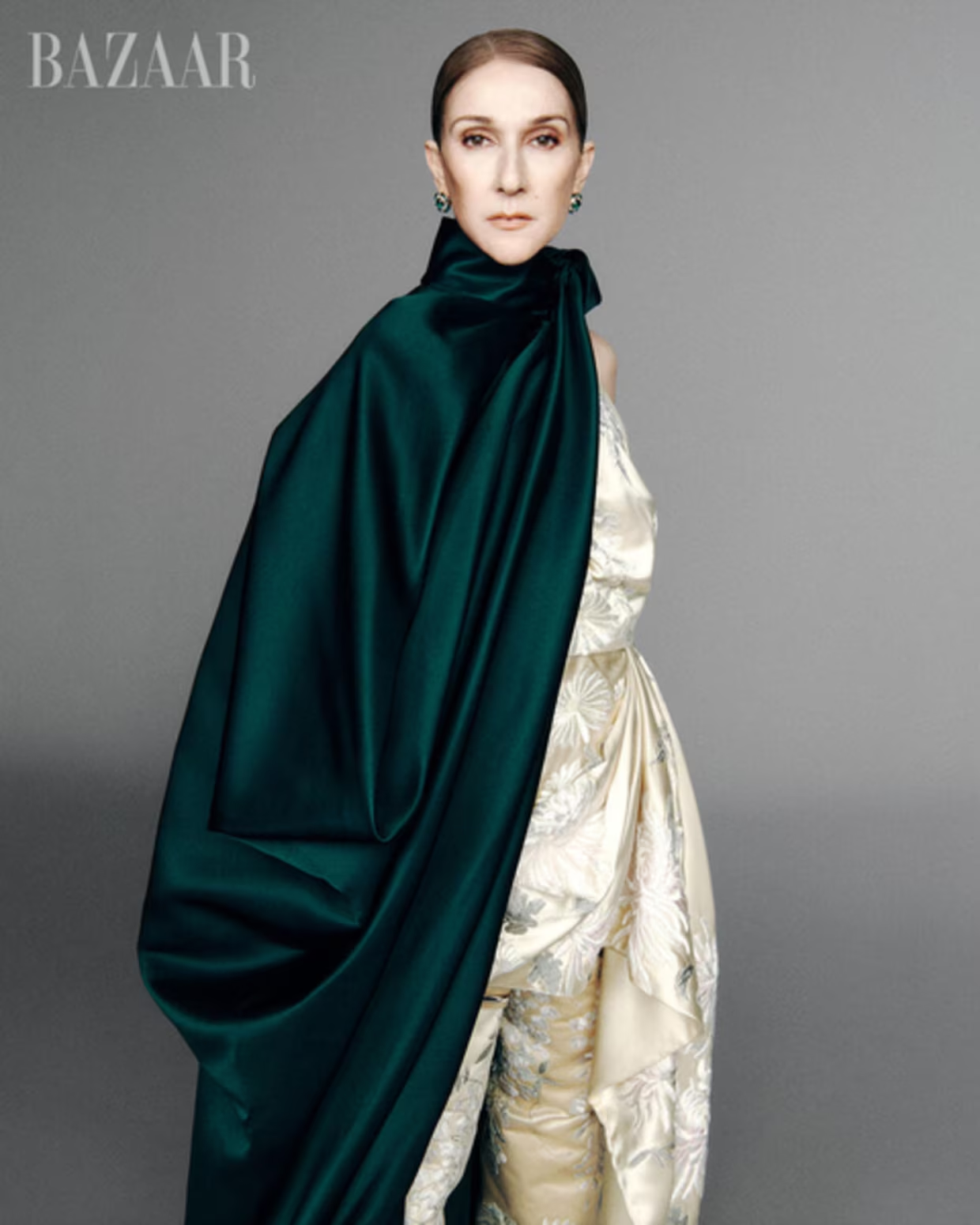
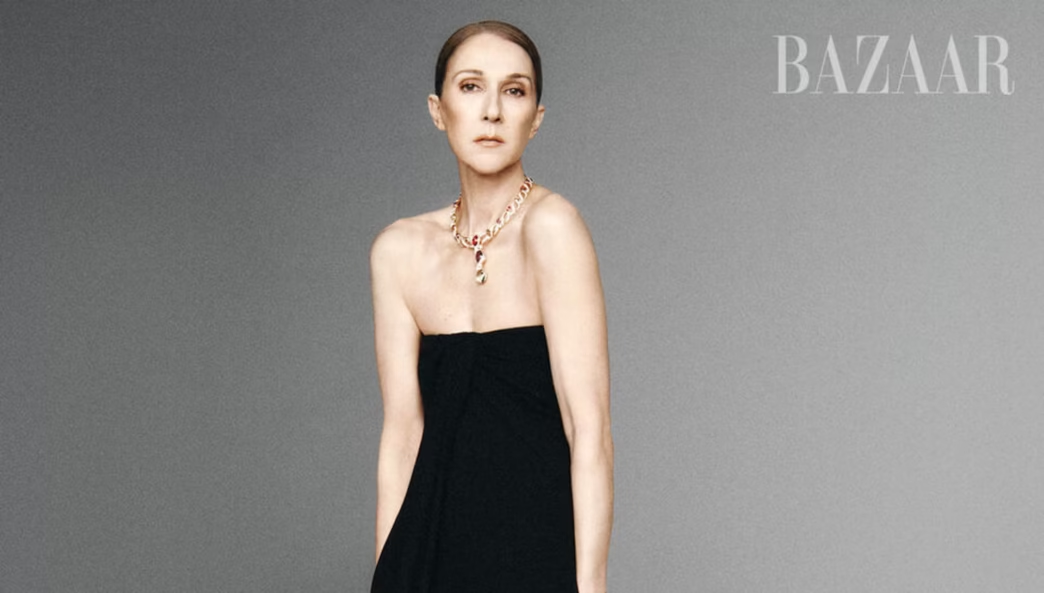
© Photographer: Robin Galiegue / Styling: Malina Joseph Gilchrist.
In many ways, this condition is a cruel twist of fate. That Céline Dion, the youngest of fourteen children, raised in a modest family in a small Montreal suburb—one bath a week!—became one of the most popular singers of all time was already a miracle . An icon for the heartbroken and film soundtrack enthusiasts, she inspires a fervor that would make the gods envious. A one in a million chance. The fact that “stiff-person syndrome” affects, according to estimates, only one or two people in a million serves as a reminder that chance can also be cruelly ironic.
The room is equipped with dumbbells, a treadmill, a reformer—the iconic Pilates machine—and a ballet barre. Her trainer, Naomi, points out that she’s becoming more flexible, which causes Céline a slight concern. “Too flexible?” she asks immediately. Fortunately, no.
In six years, Céline Dion has only performed live once: at the opening ceremony of the Paris Olympic Games . Since then, she has longed for only one thing: to return to the stage. And not just because she has been performing there since the age of 12. Disappointing her fans (she canceled concerts at the last minute without being able to give a real reason, before suspending her entire tour in 2023) made her feel like she was losing her footing, no longer trustworthy, adrift. Even more painful: she felt like she had betrayed her fans.
For seventeen years, before finally receiving a diagnosis in 2022, she lived with the symptoms of the illness without knowing what she was suffering from. When she canceled a concert, she cited sinusitis or a cough. In reality, the health problems she was facing were far more serious.
The documentary I Am: Céline Dion, released in 2024, revealed to the public what she was enduring in silence: pain that was eroding her voice, high doses of benzodiazepines to cope, and an attack of that famous stiff person syndrome that left her frozen, in tears, unable to move or speak.
For Céline Dion, giving a concert is almost a mission. Like a pact made with the talent with which heaven has blessed her. Regaining control of her body and voice – to the point of being able to announce, earlier this year, a five-week residency in Paris starting in mid-September – is nothing short of a miracle.
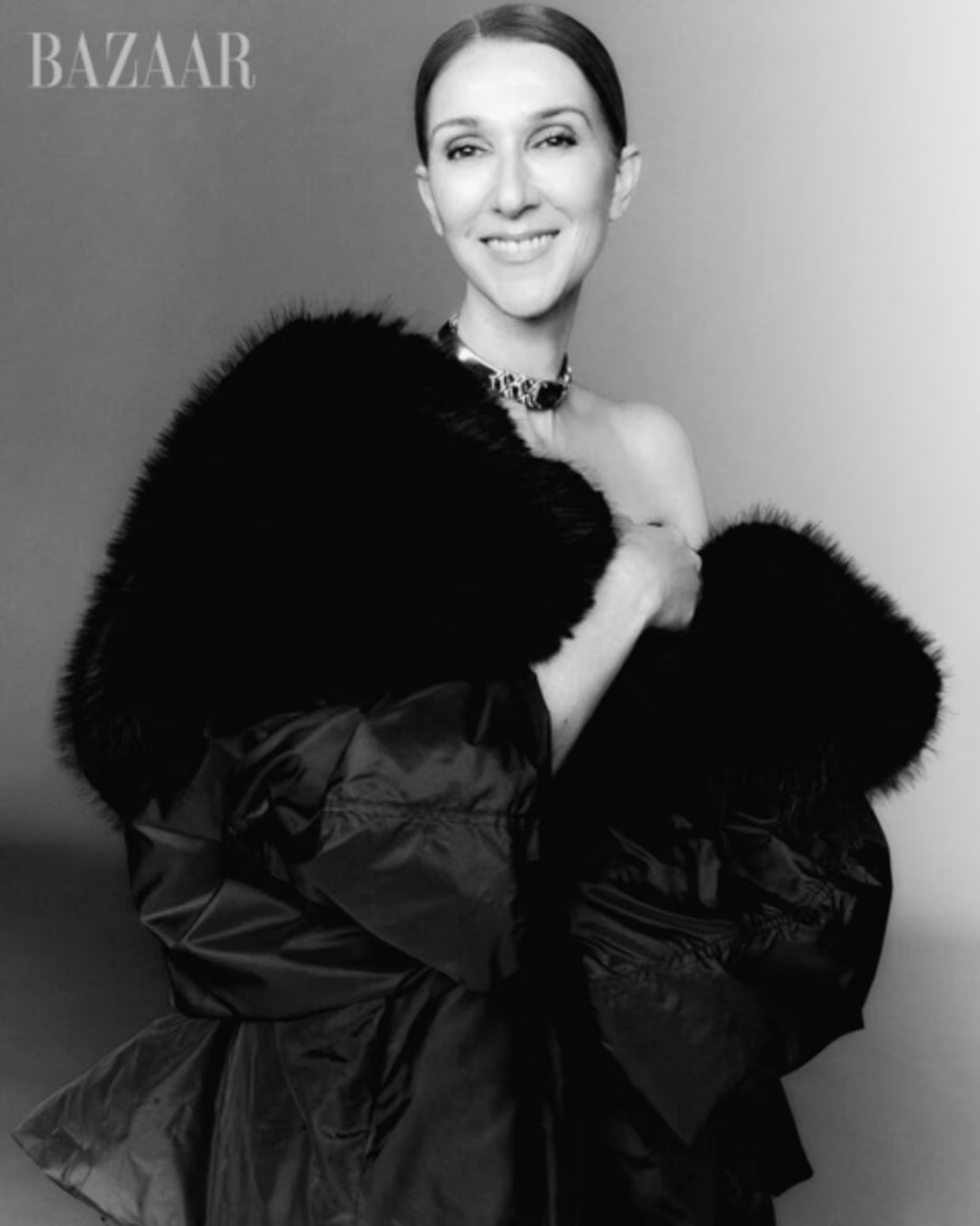
© Photographer: Robin Galiegue / Styling: Malina Joseph Gilchrist.
Once the Pilates session was over, Céline Dion sat down opposite me. She was wrapped in a thin monogrammed sweater and wore powder pink sweatpants. Beside her, a humidifier was precisely set at 23°C. John, her co-manager, showed her a photo of her sons taken during the Stanley Cup Final. Does she like hockey? “No. I love my children. It’s not the same thing.”
Now that she can finally return to the stage, it’s as if life is finally giving her back what it had taken. She announced the news on Instagram in March, giving herself, for her 58th birthday, “the most beautiful gift: to be with you again, to sing for you again .” She confided that she felt strong, enthusiastic, a little nervous too, but ready to come back. Tickets sold so quickly that a new three-week residency, scheduled for May 2027, is already on sale. “It’s been so long… I want to give them something that shows them how much I’ve missed them,” says Céline Dion.
Annie Horth, her stylist and artistic advisor, promises a “grandiose” show, supported by a monumental scenography designed to illuminate the diva’s many facets. “She can move from the intimate and romantic to a phenomenal vocal power. We therefore envision a show capable of accompanying all these metamorphoses ,” she explains.
In 2020, as the pandemic emerged, Céline Dion’s symptoms, which had not yet been diagnosed, began to worsen. For three years, she lived in seclusion, partly because she refused to let her fans see her and assume she was well, while she continued to cancel her concerts.
It was during this time that she found true peace in nature. “I love trees so much. I had this image of myself trying to disappear among the leaves ,” she recounts. Then autumn arrived, the leaves fell, and she realized she could no longer hide. The tree was bare. She felt she could no longer offer her fans what they had come to her for so many years. “I wanted to tell them: I’m sorry, I don’t have any more apples to give you.” And she understood: “But we didn’t come for the apples; we came for the tree.”
The song punctuates his thoughts, underlines his emotions, accompanies his bursts of joy.
For Céline Dion, this image was a revelation. It also says a lot about the woman she has always been: deeply sincere, unique, and endowed with a rare ability to touch others deeply . Because for her, authenticity is never an artifice: it is contagious.
Since her teenage years, Céline Dion has been regularly mocked for her music, deemed too sentimental, too tame, even “lacking in irony .” From the late 1990s to the early 2000s, her name almost became synonymous with kitsch and excess. Yet, there is something about her—beyond even her voice—that withstands the test of time and keeps her at the center of the cultural conversation. In what some consider mawkishness, others see a sincerity so powerful that it transcends trends and successive waves of cool.
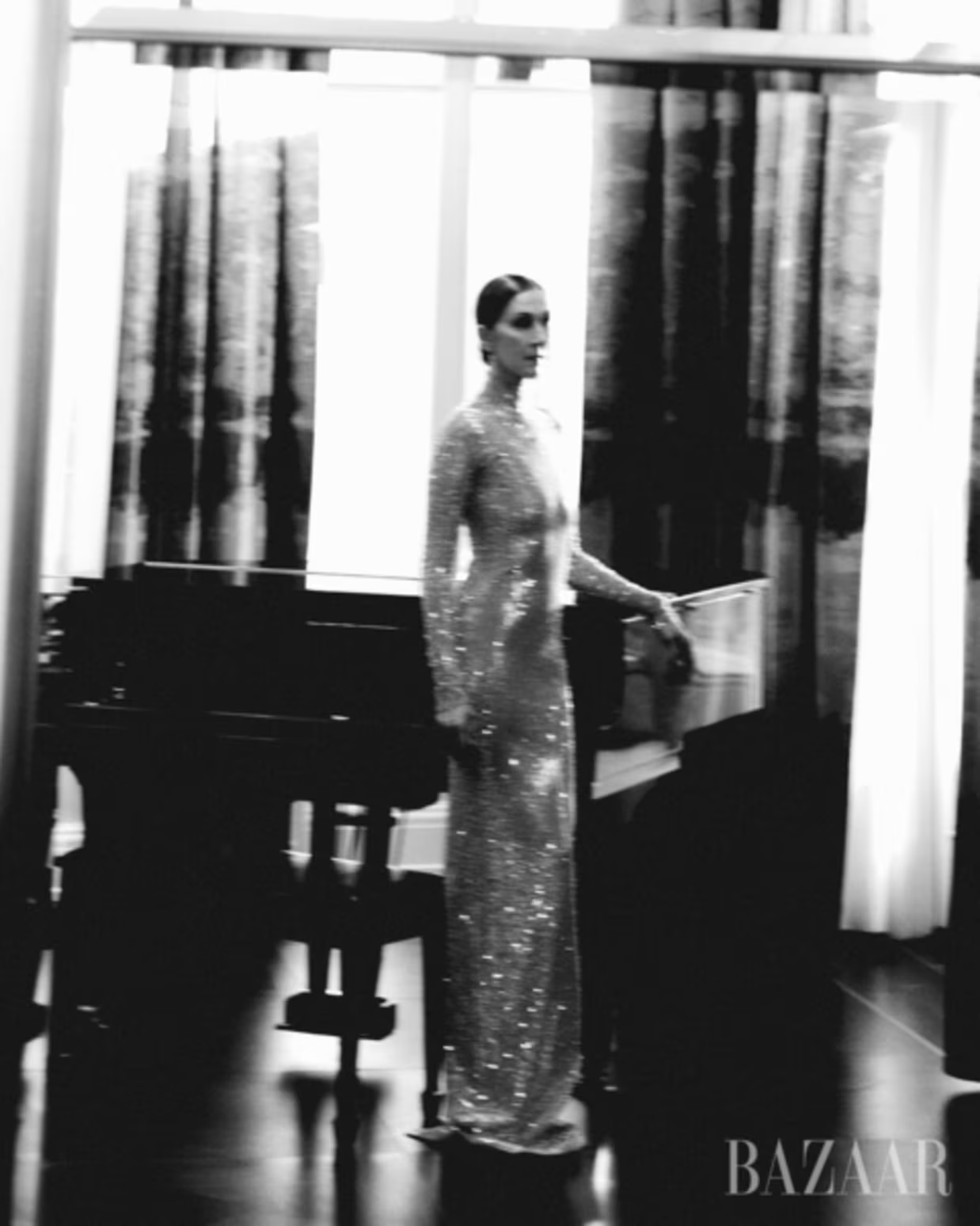
© Photographer: Robin Galiegue / Styling: Malina Joseph Gilchrist.
Born into a modest, French-speaking Quebec family, Céline Dion grew up feeling like a stranger in her own country. And yet, she has managed to unite entire audiences thanks to her unconditional love of love. For decades, her music has been a space for catharsis, a place where one can let emotions flow freely without worrying about the image one projects.
As a child, Céline Dion dreamed of becoming a gymnast after watching Nadia Comaneci achieve perfect scores at the 1976 Olympic Games. “She was the idol of every girl my age,” she exclaims, her eyes wide, with the same wonder she felt back then. “They didn’t even have enough room on their darn scoreboard to write her perfect 10, because they didn’t know how to write it down!”*
Other talents emerged, but then she became too much of a star herself to pursue that dream. So, she had to turn the page. But she set herself three goals. The first, she gets up from her chair to illustrate: “I wanted to sit up straight, but I couldn’t. I’d sit like this instead.” She rounds her back briefly, then sits back down in her chair, legs crossed. The other two goals were to be able to touch her toes and do the splits. Today, she can do all three.
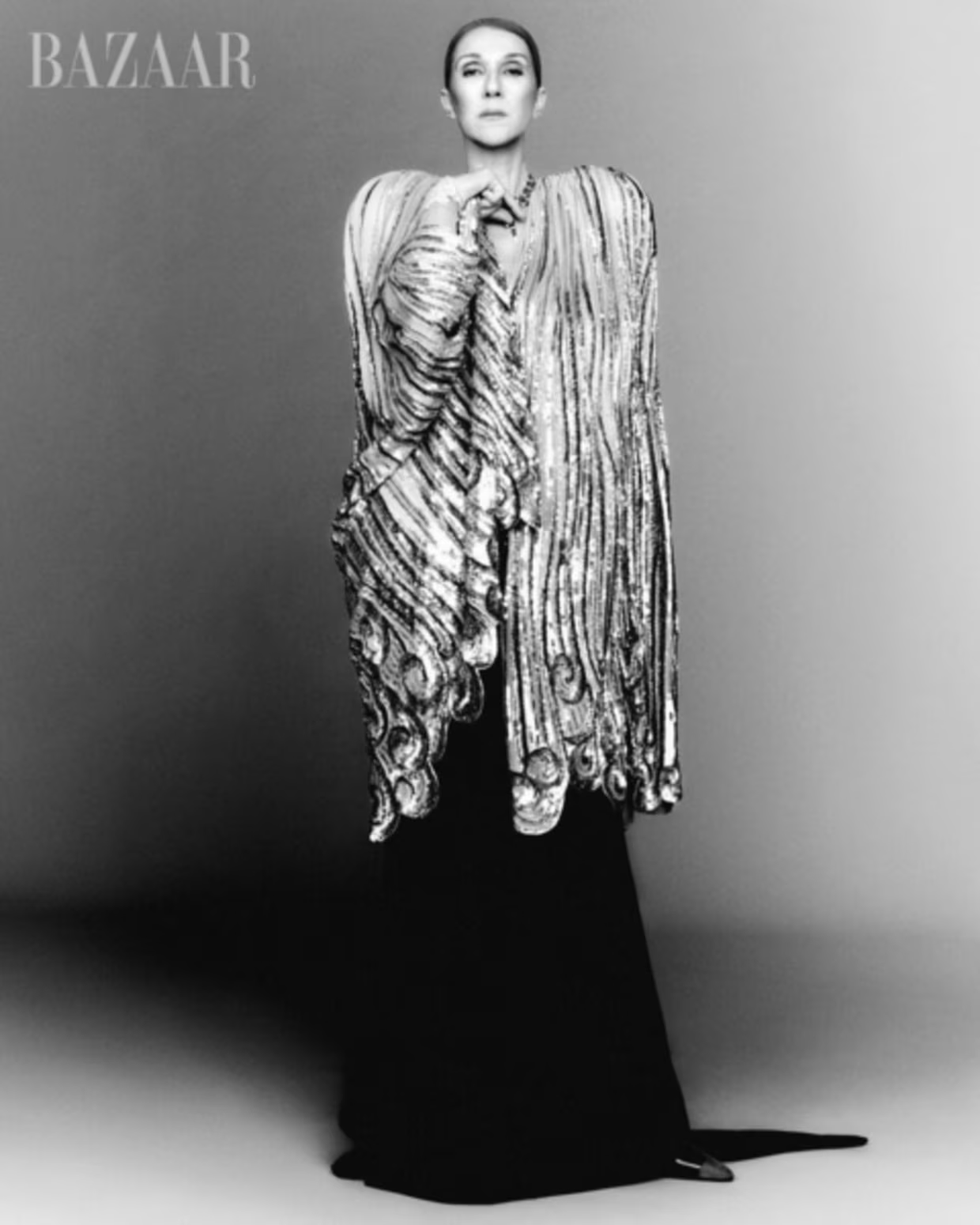
© Photographer: Robin Galiegue / Styling: Malina Joseph Gilchrist.
Celine Dion’s entire body seems elastic, starting with her face , an instrument she plays with almost as much mastery as her voice. Depending on her emotions, her upper lip curls up to her nose or juts forward as if to touch someone. Her eyebrows, meanwhile, follow every movement of her face.
To say that she has a natural instinct to sing would almost be an understatement. For Céline Dion, song doesn’t just come into play when she’s on stage: it punctuates her thoughts, underscores her emotions, and accompanies her bursts of joy. In the space of two hours, she sings everything from “That’s Not My Name ,” the high-energy electro-pop hit by The Ting Tings, to ” Here Comes the Bride,” improvised upon seeing white flowers, to Cyndi Lauper’s “True Colors” because sincerity is a value dear to her, and even “Ce n’était qu’un rêve,” her first single, written by her mother.
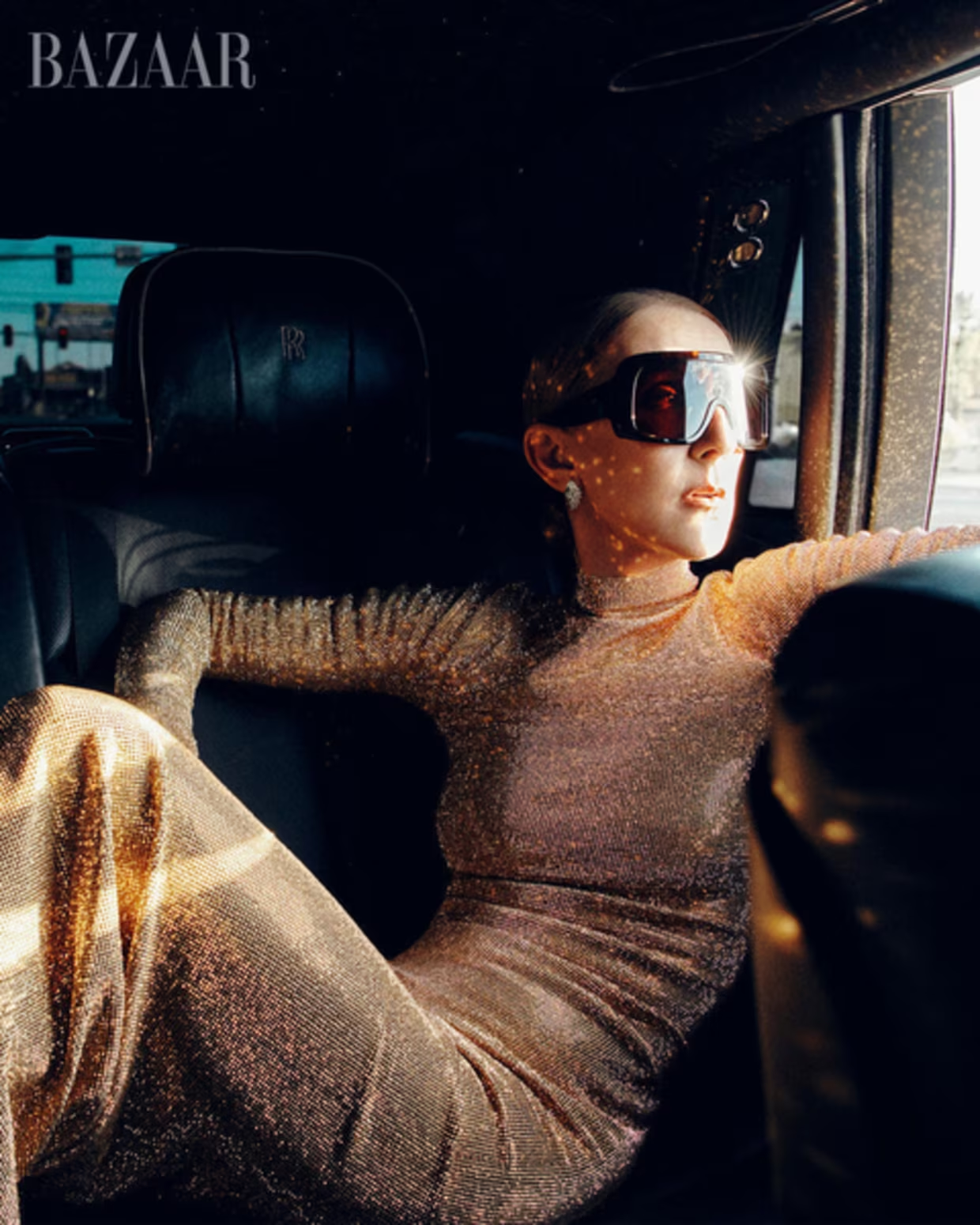
© Photographer: Robin Galiegue / Styling: Malina Joseph Gilchrist.
This also explains why, beyond her status as one of the greatest singers of her generation, Céline Dion has become an internet culture icon with memes circulating endlessly. During this interview, while talking about her love for tree climbing – “I’m a monkey” – she suddenly climbs onto the structure fixed to the wall and extends her hand to me, in a pose reminiscent of Michelangelo’s Creation of Adam.
Laying herself bare in the documentary wasn’t easy . But, after all, if she’s had such an extraordinary journey, it’s also thanks to her fans. They deserved answers; and, in a way, if she finally got hers—a diagnosis after nearly twenty years of symptoms—it’s because they allowed her to achieve her current status. “They bought tickets. They bought my records. They gave me this privilege. So the least I can do is tell them I’m alive.”
After her diagnosis, Céline Dion embarked on intensive rehabilitation : new treatments, physiotherapy, vocal therapy, immunotherapy. Lacking a recognized treatment for this disease, her foundation chose to take action: in 2024, it dedicated nearly €1.8 million to research on autoimmune neurological disorders.
To prepare for her concerts in Paris, she now does three 90-minute Pilates sessions a week and dedicates two other days to classical dance. She describes this period as a series of falls and resurrections, but also as proof of what she is capable of: she is proud to have accomplished something her body wasn’t “meant to do.” Above all, she has stopped hiding. Little by little, she is finding her way back to the stage and public life. Now that she is better, she is returning to work—with all that it entails, including the less glamorous aspects. Because she knows that her connection with her fans is a two-way street. “Listen, dear,” she says to herself, ” if you don’t want to sign autographs, if you don’t want to look your best, if you don’t want to be bothered because your pasta is getting cold, you can always stay home. But look at everything you have.”
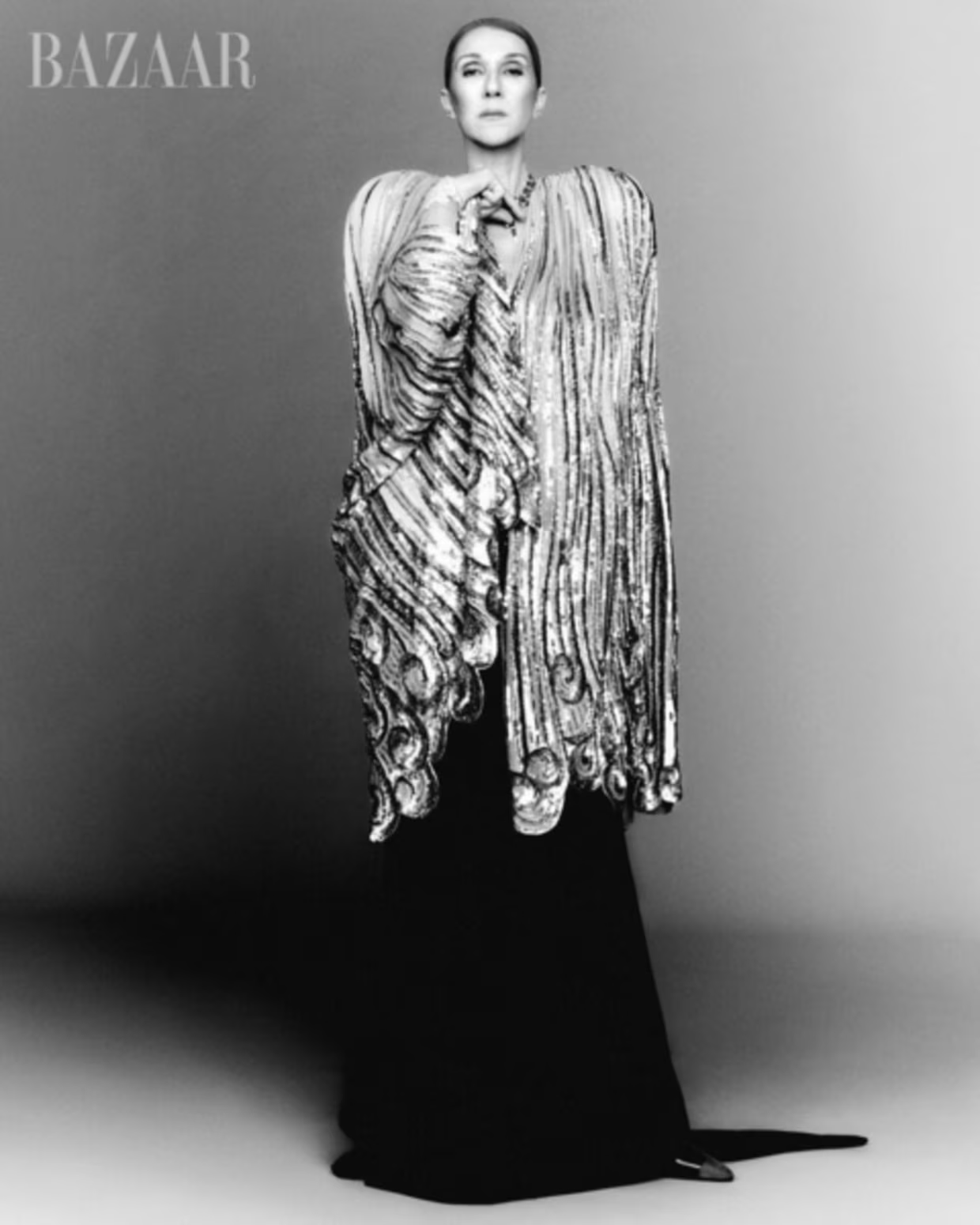
© Photographer: Robin Galiegue / Styling: Malina Joseph Gilchrist.
It must be said that, for the Dion family, singing was a family affair. Running her father’s piano bar in Charlemagne, Quebec, about forty minutes from Montreal, was another. The whole family pitched in: her brothers played piano, her sisters sang, while her mother prepared the fries, “peeling potatoes in buckets of cold water,” she describes, mimicking everyone’s actions. Sometimes, little Céline was allowed to perform a song or two before her mother sent her home. Then the regulars started calling the bar to ask if the girl would be singing that evening. “I was 10 years old and I was in a bar. I could have been arrested,” she says, laughing. ” But you know what? The police officers would come and sing with us too.” She smiles. “Back then, there wasn’t really any crime.”
Her career took a decisive turn when she met producer René Angélil , who became her manager when she was only 12 years old. They began a relationship when Céline Dion was 19. Their wedding, celebrated with great fanfare in 1994 at Notre-Dame Basilica in Montreal, was broadcast on television: she was 26, he was 52. Their 26-year age difference naturally attracted attention, but the couple remained together until René Angélil’s death from throat cancer in 2016.
At 13, Céline Dion released her first single and quickly became a major figure in Quebec, before carrying the voice of French-speaking Canada beyond its borders. In 1988, at 20, she won the Eurovision Song Contest for Switzerland – the competition did not require candidates to be citizens of the country they represented – and then began recording songs in English. Her first English-language album, Unison, was released in 1990 and confirmed her international potential.
Now, she is proud to have accomplished something that her body was not “supposed to do”.
Yet she never stopped asserting her attachment to French. She speaks only French with her three children, while they learn English and Spanish at school. The rest is history: number-one hits, albums selling millions of copies, Grammy Awards, world tours. Céline Dion became a pop icon, a diva recognized alongside Aretha Franklin and Whitney Houston , inspiring a whole new generation of great voices.
Australian singer-songwriter Sia recalls watching a filmed Céline Dion concert as a teenager. She was fascinated by how Dion imitated the sounds of each instrument around her with her voice. “At one point, she was imitating the bass solo, then the flute solo, then the guitar solo, then the drums,” she says. “That was one of the moments that made me want to become a singer.”
“My love of ballads definitely comes from her,” Adele confides. “She’s theatrical, and I love being a drama queen.” One evening, during her Las Vegas residency, Adele spotted Céline Dion in the audience and burst into tears before dropping the microphone to hug her. The fact that Adele herself experienced such a residency is also a legacy of Céline Dion. With her show A New Day…, which ran from 2003 to 2007, she profoundly transformed the concept of a Las Vegas residency. What was once seen as a refuge for artists at the end of their careers became an opportunity to create extraordinary shows capable of breaking all records. A New Day… remains the most lucrative residency in history to this day.
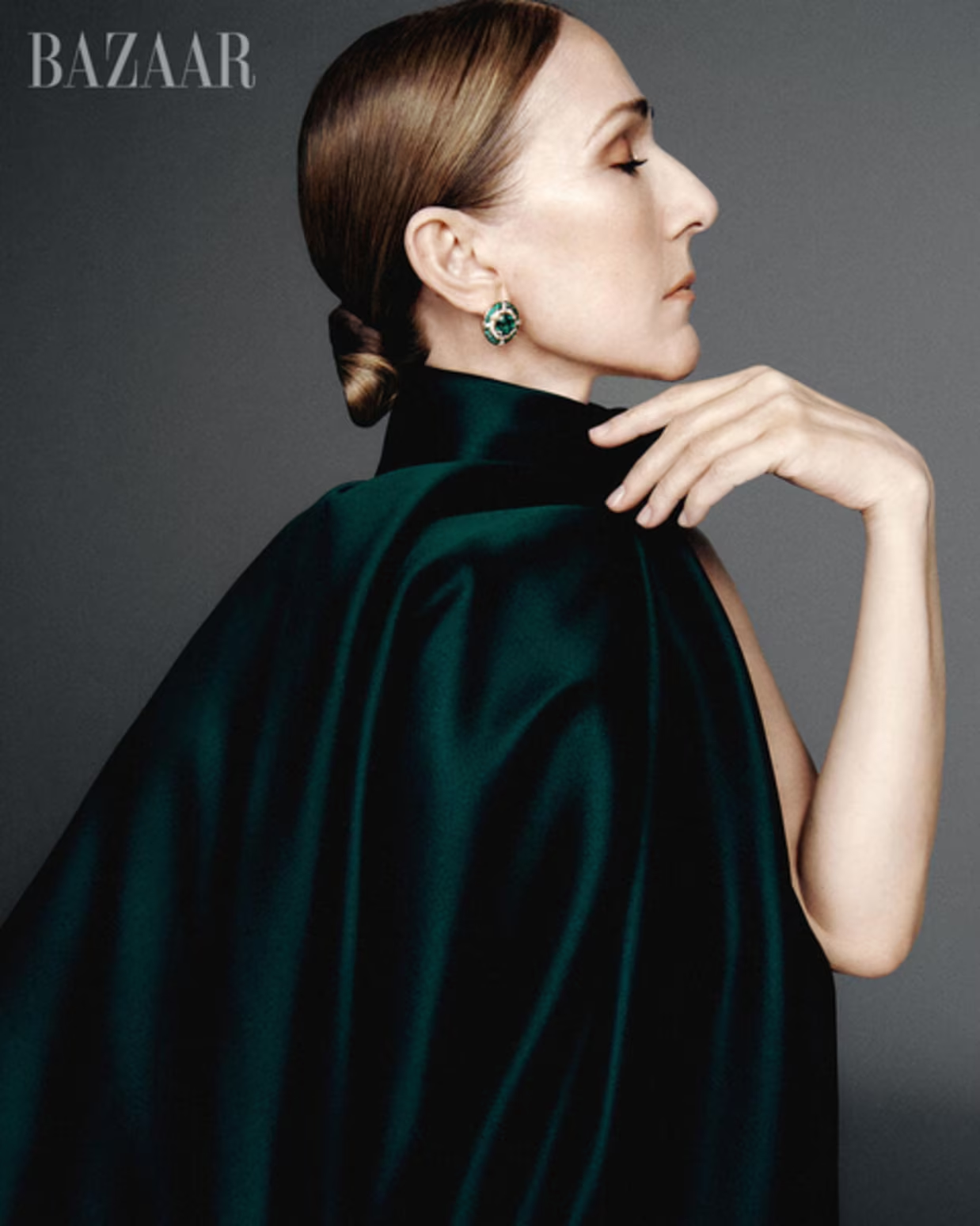
© Photographer: Robin Galiegue / Styling: Malina Joseph Gilchrist.
While Céline Dion’s life has been marked by dizzying heights, it has also been marked by immensely brutal trials. In 2016, she lost her husband and one of her brothers within two days of each other. In 2003, on the day she learned of her father’s death, she nevertheless performed that very evening. For her, there is no better way to confront her emotions than to experience them fully, surrounded by those who, for decades, have helped her stay strong. She constantly seeks her strength on stage and in the bond she shares with her audience. So, when asked what makes people love her so much, she pauses for a moment before answering: “I think it’s because I’m an open book.”
She explains that she has never known how to be any other way: if she kept everything to herself, she could neither be fully herself nor truly live. “I’m honest, and it’s not always beautiful,” she says. “ Sometimes there are happy moments; sometimes painful ones. But that’s life.”
And no one knows it better than she does. “Rather than questioning life, why not simply live it? So I live my life, or rather, I live life.”
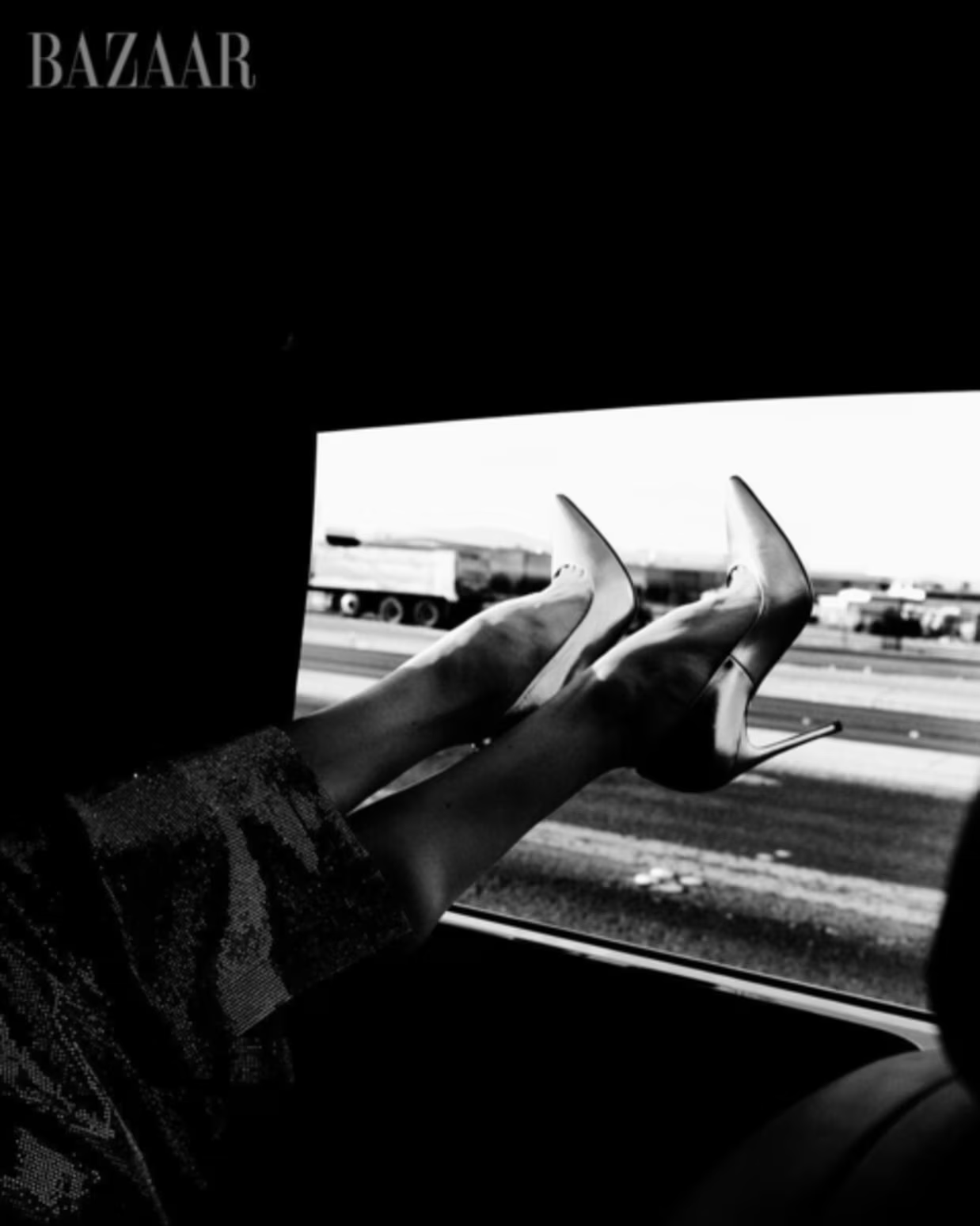
© Photographer: Robin Galiegue / Styling: Malina Joseph Gilchrist.
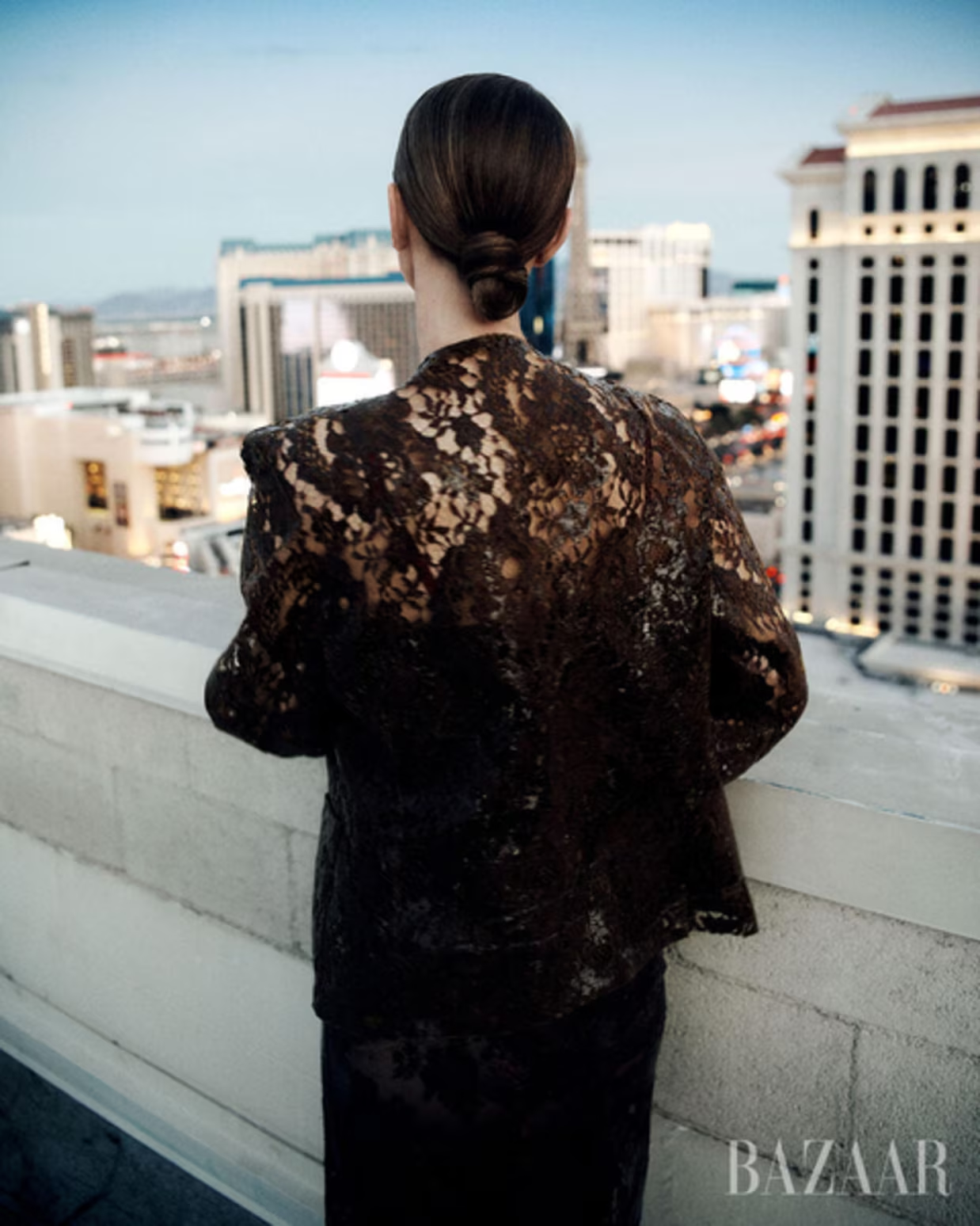
© Photographer: Robin Galiegue / Styling: Malina Joseph Gilchrist.