





|
Neubauer Artists LLC
Getting your Trinity Audio player ready...
|
EAST RUTHERFORD, N.J. — Shadows had crept across MetLife Stadium as a tedious World Cup final dominated by Spain at an absurd clip lurched into extra time without a breakthrough Sunday.
Lionel Messi and Argentina had no business clinging to hope of a second consecutive championship after failing to create a shot and or even link a few passes.
Spain’s reign hadn’t translated into a goal, however, and with each of Emi Martínez’s record number of saves for Argentina, the cruelty of a shootout lurked on the horizon.
Then came the moment Spain had waited for all afternoon — and, frankly, for 16 years since its last global title. Thirty-nine seconds into the second half of extra time, Ferran Torres thumped in an 8-yard shot and La Roja finally shattered 10-man Argentina’s spirit to claim a 1-0 victory.
Spain – already reigning European champions – edged out Argentina in the World Cup final in extra time, with former City man Ferran Torres firing home the game’s only goal.
The outcome soured the ostensible end of Messi’s World Cup career. With his team chasing Spaniards all day, Messi rarely touched the ball and didn’t have much influence at the end of a tournament in which the 39-year-old forward was better than ever.
A wildly entertaining tournament that had riveted North America over five weeks was reduced to a grueling test of endurance and wills.
But in the 106th minute, Pedro Porro lifted the ball to the back post. Nico Williams beat Nahuel Molina to the header. Martínez had committed to the ball as well, so when Williams headed the ball back, the goalkeeper was out of position for Torres’ rasping one-timer.
“I just saw the ball coming to me and I just shot with the power of all the Spanish people,” Torres said postgame.
The reigning European champions stretched their unbeaten run to 38 matches over more than two years and captured their first World Cup since Andrés Iniesta’s extra-time winner against the Netherlands delivered Spain’s maiden title in 2010.
In its seventh final, Argentina lost for the fourth time. It was attempting to become the first repeat winner since Brazil in 1962.
After scoring 19 goals in seven matches, La Albiceleste managed just two shots, neither of which was on target, and touched the ball just eight times in the penalty area. Spain had 20 shots, 12 on target and 31 touches in the box.
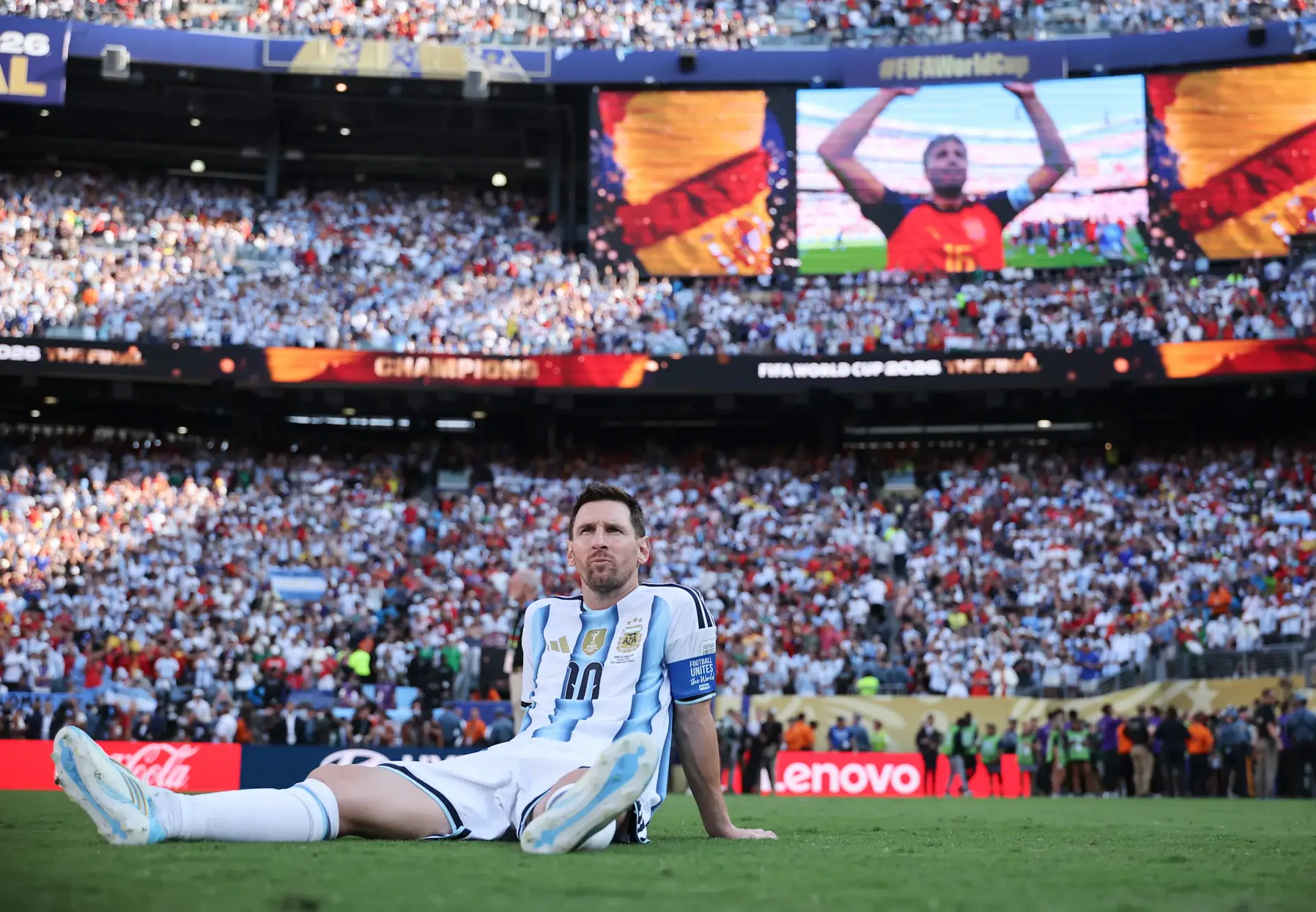
The backdrop was hardly spectacular: a soulless, suburban NFL stadium without any distinctive characteristics and nothing but gray seats. But the colors and sounds of soccer — and of a World Cup — brought the bland beast to life: Spain’s reds and yellows, Argentina’s sky blues and whites, and a tapestry of hues representing many countries that fell short: Colombian, Brazilian, Mexican, U.S. and French, among others.
The Argentines serenaded their heroes, a chorus of thousands that has followed La Albiceleste throughout the tournament; Sunday was no different. Just as they were omnipresent in every other city Argentina visited, they descended on — and commandeered — Times Square on Saturday.
Spain entered as a slight favorite, but with eight starters from the 2022 World Cup in Qatar, Argentina arrived full of comfort and confidence.
Spain’s pressure forced the issue in the opening stage. Teenage sensation Lamine Yamal had the ball in dangerous positions but didn’t test Martínez. Hard tackles set a rough tone and kept referee Slavko Vinčić on his toes.
The hydration break, for both the players and the dry pitch under an unobstructed sun, brought opportunity for the coaches to reconsider matters.
The 10-goal third-place match Saturday was for entertainment lovers; the final was for deep thinkers. Spain strangled Argentina’s promise and, through movement and interaction, began wearing down the opponent. Still, clear scoring chances were scarce.
Just before the half, Argentina lost center back Lisandro Martínez to injury and turned to veteran Nicolas Otamendi. The half ended with a whimper.
After 19 goals in seven matches, Argentina huffed into the locker room with no shots, no corner kicks, no touches in the penalty area and 35 percent of possession.
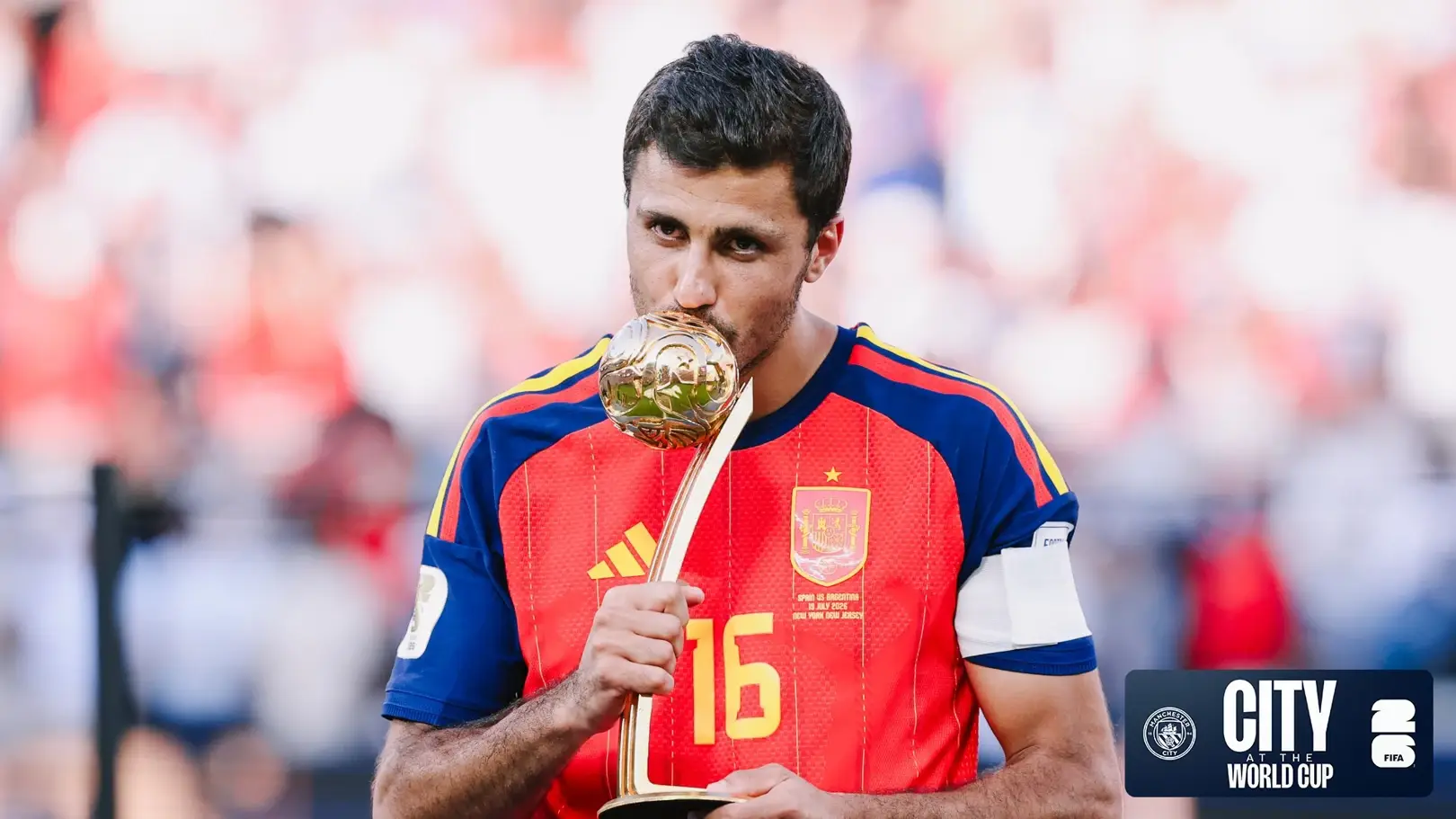
Rodri wins FIFA World Cup Golden Ball
City midfielder Rodri has won the 2026 Golden Ball, awarded to the FIFA World Cup Player of the Tournament.
Our number 16 guided La Roja to their first Men’s triumph since 2010, becoming the first City player to captain a side to World Cup glory.
Rodri featured in all of La Roja’s matches en route to glory, completing more passes, covering more distance and have more player involvements (distinct touches or participations) than any other player at this summer’s tournament.
He’s also become only the 11th man in football history to win the World Cup, UEFA Champions League and Ballon d’Or.
Having won football’s most prestigious individual prize in 2024, Rodri has now added to an illustrious trophy cabinet with the World Cup Golden Ball after winning the same award for his exploits at the European Championships two years ago.
Rodri’s Spanish team-mate Pau Cubarsi won the World Cup’s Young Player of the Tournament prize, with Unai Simon’s seven clean sheets earning him the Golden Glove.
France’s Kylian Mbappe won the Golden Boot with ten goals for the semi-finalists and 2018 winners.
But it’s our midfielder Rodri who’s won the ultimate individual prize this summer, captaining his nation to only their second Men’s World Cup triumph.
Everyone at City would like to congratulate Rodri on yet another incredible individual milestone.