

|
Neubauer Artists LLC
Getting your Trinity Audio player ready...
|
Macronist MPs are demanding a swift denial from the President of the Republic, following the revelation of racist remarks attributed to him against Prisca Thevenot.
Members of the Renaissance party have spoken out following the revelation of racist remarks attributed to Emmanuel Macron. According to the investigative program “L’Infiltré,” the President of the Republic allegedly used the term “La Paki” to refer to Prisca Thevenot, who was involved in Gabriel Attal’s campaign. Violette Spillebout, MP for the Nord department, “cannot imagine that such words could have actually been uttered,” she wrote on the social media platform X, before calling for “a swift denial .” Gabriel Attal’s spokesperson added: “Never let racism, anti-Semitism, or discrimination go unchallenged.” Her fellow MP from the Sarthe department, Julie Delpech, also reacted: “I hope they are false and that a denial will be issued quickly.” The Vice-President of the Ensemble pour la République group in the National Assembly continued on the same social network: “One thing is certain: racism can never be a joke, neither at the highest levels of government nor anywhere else.
Je découvre cet article qui rapporte des propos racistes prêtés au Président de la République, à l’encontre de notre collègue @priscathevenot. Je n’imagine pas que de tels mots puissent avoir été tenus réellement. Il faut qu’il y ait un démenti rapide. Ne jamais laisser passer le racisme, l’antisemitisme, la discrimination.
— Violette Spillebout (@VSpillebout) October 7, 2026
In its October 6th edition, the new online investigative weekly reports that Emmanuel Macron used this racist term while watching a television interview with Prisca Thevenot. The publication places this episode within a broader context of mockery attributed to the president and his entourage regarding Gabriel Attal’s campaign. The former Prime Minister’s “thousand bistros” tour, in particular, has reportedly been the subject of ironic comments at the Élysée Palace, with some stops attracting only about ten people.
“France is not condemned to choose between two extremes”

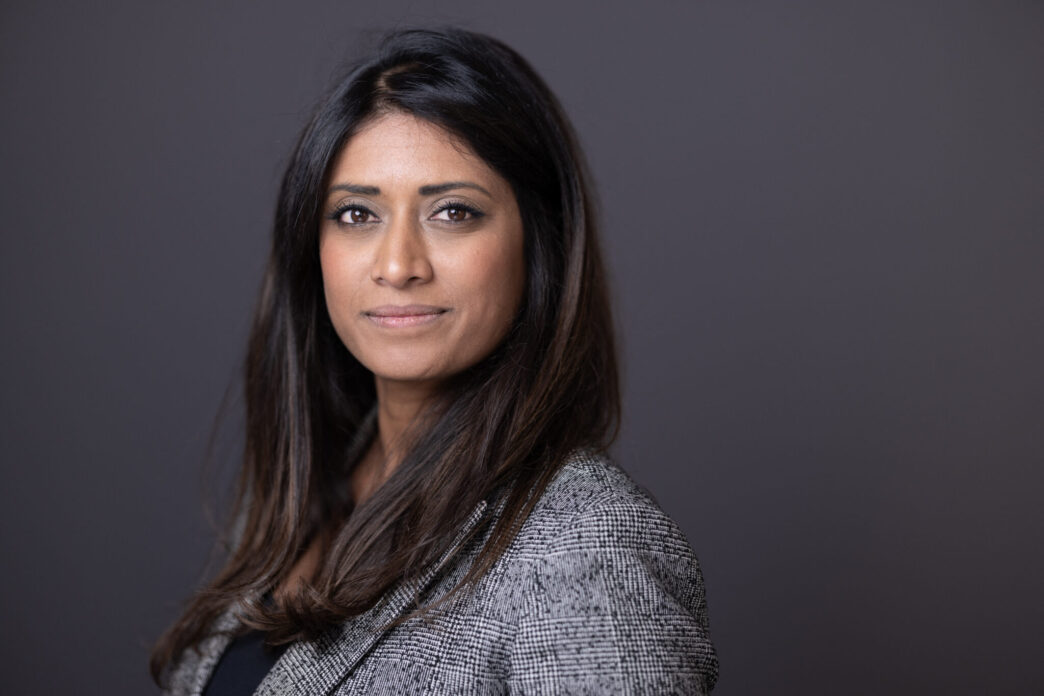
Prisca Thevenot (Renaissance), a member of parliament for Hauts-de-Seine and former minister, is the spokesperson for Gabriel Attal, a candidate in the 2027 presidential election. She outlines for us the key themes and perspectives of the campaign that this candidate will lead in the coming months. Answering questions from Jean-Philippe Moinet, she discusses both the issue of “distinguishing” between candidates within the political framework known as “the common ground” and how to create a dynamic that, she says, will convince voters and defeat “both extremes.”
Crif: What are the main themes and principles that you wish to prioritize and debate during the next presidential election campaign in 2027?
Prisca Thevenot: With Gabriel Attal, we want this campaign to be about the future. For too long, our country has been trapped in debates that pit the past against the present, when our responsibility is to prepare for the decades to come. The ambition is simple: to give the French people the certainty that their children will live better lives than they did.
This conviction is built around four main priorities. First, education. Because everything begins with it: it is the foundation of equal opportunity, liberty and fraternity, the transmission of knowledge, and preparation for the jobs of tomorrow. Second, wages, with a clear objective: to ensure that work truly pays and allows everyone to live with dignity from their commitment. Third, borders. Whether it concerns our defense, our energy, industrial, and agricultural independence, or our ability to manage migration flows with a policy that is firm, effective, and true to our values. In concrete terms: immigration that is chosen for employment purposes and no longer imposed for family reunification.
Finally, Gabriel Attal wants to make France the leading European power in artificial intelligence (AI) and disruptive technologies, because this is where a large part of our economic, scientific, and strategic future lies. Beyond these priorities, we want to put simple principles back at the heart of the debate: trust, a rejection of decline, and a focus on work, innovation, and investment in future generations. France has all the assets to succeed, provided it regains the strength to act and make courageous choices. This campaign will not be about nostalgia, but about optimism, action, and preparing for the future.
“Yesterday’s answers are no longer always sufficient for tomorrow’s challenges.”
The Crif: Regarding the recent past, is it not necessary for the “central bloc” to carry out a kind of “inventory” of the actions taken by the head of state Emmanuel Macron since 2017?
Prisca Thevenot: I believe we must always be able to look at our record with clear eyes. Since 2017, significant reforms have been undertaken. We have reduced unemployment, strengthened the attractiveness of our economy, weathered unprecedented crises, modernized parts of our country, and made difficult choices in an exceptional context. We have also updated our legal framework, notably with the inclusion of abortion in the Constitution, a major step forward in terms of fundamental rights. But clear-sightedness also requires us to recognize that the world has profoundly changed. The expectations of the French people have evolved, and the challenges have transformed, whether it be the ecological transition, public debt, sovereignty, or competitiveness.
Yesterday’s solutions are no longer always sufficient to meet tomorrow’s challenges. Therefore, in my view, it’s not about putting the past on trial, nor about denying what has been accomplished. It’s about opening a new chapter. It’s about embracing successes, acknowledging what needs to be corrected, and proposing a new plan adapted to the realities of 2027.
“Our collective responsibility is to offer a credible and dynamic alternative to extremism.”
The CRIF (Representative Council of Jewish Institutions of France): Gabriel Attal has announced his candidacy, joining Édouard Philippe and Bruno Retailleau in the political arena designated as the “common ground.” Three candidates for one platform—isn’t that unrealistic, even electorally suicidal? And how will it be possible to choose between these candidates, given that Gabriel Attal’s proposal to hold primaries was rejected by the other two?
Prisca Thevenot: I believe we must first move beyond a party-driven approach. The French will not choose a candidate because they are alone in their political space; they will choose the one who seems most credible, most reliable, and most capable of meeting their expectations and addressing the country’s challenges. It is therefore natural for several individuals to have ambitions and present their platforms. This is even the foundation of democratic life. What would be dangerous, however, is if these debates were to devolve into personal confrontations or ego clashes. The French do not want that. They have had enough. They expect answers regarding purchasing power, education, security, the future of our economy, and the technological and ecological transition.
From the outset of this campaign, Gabriel Attal has championed a simple idea: unity cannot be decreed, it must be built. It is in this spirit that he proposed the creation of a liaison committee, bringing together the Renaissance , Horizons , MoDem , UDI , and Radical parties . This committee has already met several times in recent months. Our conviction is that when the time comes, we must unite. Our collective responsibility is to offer a credible alternative to the extremes. I would, however, like to emphasize one point: before speaking of a “central bloc,” we must first determine who truly shares the same core values. Unity cannot be a mere aggregation of personalities or parties. It must be based on shared convictions.
Personally, I cannot see myself campaigning alongside leaders who defend positions so far removed from my own on fundamental issues. I am thinking in particular of women’s rights, the unambiguous commitment to abortion, equal rights, the rejection of conversion therapies, and our European commitment.
“I refuse to consider this duel [LFI-RN] as inevitable. That would be precisely to give in to the logic of decline and resignation that we are fighting against.”
The Crif: Given the state of public opinion and its radical tendencies, do you think it is possible or improbable that a LFI-RN duel will prevail in the second round of the next presidential election in 2027? And, beyond the question of the tiebreaker, how will you ensure that a candidate from the “common core” is perceived as strong and attractive enough to win the second round?
Prisca Thevenot: The French are fed up with voting against things. Against extremism. Against the worst-case scenario. Against projects of hatred and division. Gabriel Attal isn’t running to block them, but to give the French people hope again. We want to prevent at all costs a runoff between the National Rally (RN), with its antisemitic roots, and La France Insoumise (LFI), which have made antisemitism a cornerstone of their political strategy. But I refuse to see this runoff as inevitable. That would be precisely giving in to the logic of decline and resignation that we are fighting against. Yes, extremism has been gaining ground for several years. Yes, anger, anxiety, and sometimes distrust run deep. But politics isn’t about commenting on polls; it’s about offering a vision and persuading people.
Gabriel Attal wants to demonstrate that there is another way: a way that embraces reforms, that protects without promising the impossible, that prepares for the future without pitting the French against one another. That is why we do not want to run a defensive campaign, built solely against the extremes. Barriers have their use, but they are no longer enough. What will win tomorrow is a project that restores hope, that speaks of success, work, education, sovereignty, innovation, ecology, and the passing on of knowledge and values. Voters will not mobilize by default: they will mobilize if they rediscover hope. The coalition that Gabriel Attal is proposing is not limited to the political parties that have governed together. It is addressed to all French people who refuse to be left behind, who want to preserve our republican model, and who still believe that our country can succeed. Our responsibility, therefore, is to build a project powerful enough to break the stranglehold of the extremes. Not by fueling fear, but by recreating a movement of support.
I am convinced that France is not condemned to choose between two extremes. It can choose action, hope, and preparing for the future, provided we know how to embody this ambition with clarity, courage, and consistency. I firmly believe that the French people have the strength to resist, and that 2027 will prove it.
“Members of La France insoumise see Islamophobia everywhere and anti-Semitism nowhere […] since October 7, 2023, they have fostered a climate where hatred thrives […] In 2024, the RN fielded several candidates who had disseminated or relayed anti-Semitic messages.”
The Crif: Since October 7, 2023, a surge in anti-Semitic acts and threats has been recorded in France. In your opinion, how can this scourge of “atmospheric anti-Semitism” be effectively reduced, how can Marc Bloch’s great republican message be heard today, and how can all “identity-based” categorizations (referring citizens to real or supposed origins or beliefs), categorizations that lead to the worst excesses, cease to pollute public debate?
Prisca Thevenot: Marc Bloch’s message retains a particular power today. Being French is not a matter of origin, religion, or ethnic heritage: it is an adherence to a shared destiny, to values, and to a shared history. It is this conception of the Nation that we must reaffirm in the face of all forms of identity-based imposition. Yes, unfortunately, in 2026, we must still remember that antisemitism is not just another opinion: it is a crime. It is a poison that attacks the Republic itself.
Since October 7, 2023, we have witnessed an unbearable resurgence of acts, threats, and intimidation targeting our Jewish compatriots. Many today are forced to hide who they are, change their habits, and live in fear. This is unacceptable. The response must first and foremost be one of firmness. Every antisemitic act must be prosecuted, punished, and condemned unequivocally. There can be no complacency, no relativism, and no hierarchy of hatreds. The Republic protects each of its children with the same determination. We must also combat what is called this “atmospheric antisemitism.” Yes, antisemitism is becoming commonplace. Yes, it kills. And if it is growing in France today, it is also because it finds support, complicity, or culpable silence within a segment of the political discourse.
On the far left, members of La France Insoumise see Islamophobia everywhere and antisemitism nowhere. By importing foreign conflicts onto our soil and fueling a communitarian interpretation of international tensions, they contribute to fracturing our society. By minimizing, relativizing, or denying the reality of the surge in antisemitism our country has experienced since October 7, 2023, they weaken our collective vigilance and foster a climate where hatred thrives.
On the far right, the situation is just as worrying. The National Rally has been attempting a facelift for several years. But let’s not be willfully ignorant: the facts speak for themselves. As recently as 2023, Jordan Bardella declared that he didn’t believe Jean-Marie Le Pen was antisemitic, even though the latter had been convicted six times for antisemitic remarks. These statements were not clumsy; they reflected a deliberate political stance. And actions followed. During the 2024 legislative elections, the National Rally fielded several candidates who had disseminated or shared explicitly antisemitic messages. The infamous “black sheep” mentioned by Jordan Bardella. Among them was Joseph Martin, who wrote at the end of 2018 that “gassing brought justice to the victims of the Holocaust.” This was not an isolated error.
Behind the normalization process, old habits die hard. The responsibility of political representatives is immense. Words matter. They can soothe or divide. Yet, it is precisely the universalist promise of our Republic, which makes our country unique, that should guide our actions. This includes, in particular, the education system, which must teach the history of the Holocaust, the meaning of secularism, the value of debate, and respect for others. The duty to remember must be explained, reinforced, and passed on to younger generations. Works that recount our history and show the consequences of hatred must be fully utilized as educational tools.