



|
Neubauer Artists LLC
Getting your Trinity Audio player ready...
|
In the season-three premiere of Euphoria, a child on a ranch in the southwestern US scoops a mug into a bucket of raw cow’s milk and hands it to an exhausted Rue (played by Zendaya), who slurps it down and proclaims, “That’s the best f*cking milk I’ve ever had.” The milk is so utterly delicious that Rue begins to romanticize the ranchers’ life, so quaint and comforting—no internet!—compared to the chaos of her own. (She is even able to look past the ranchers’ disdain for immigrants and the women’s tradwife attire.) A fresh, cold glass of milk can do that, the show suggests; it can bring you strength and solace; remind you of something you’ve lost, and make you nostalgic for something you might not really believe in.
Can a milky perfume do the same?
Within the past decade, milk has become a more prominent ingredient in the beauty space. Glossier’s OG Milky Jelly Cleanser and the Milk Makeup brand both launched in 2016, and milk has only become more embedded in makeup, skin care, and body care since then. Hair milks, milky toners, and It products like Rhode’s Glazing Milk crowd the shelves of Ulta, Sephora, and South Korea’s Olive Young. In March, the plant-based brand Herbivore launched its Coco Rose Milky Body Mist with a campaign featuring a non-dairy moisturizing product called Glow Milk, cannily packaged to look like an old-school glass milk bottle.
The milk-inspired fragrance market has similarly exploded. DedCool launched its signature Milk perfume in 2020, at the perfect time to benefit from (and encourage) the perfume boom during the pandemic; in the early days of COVID-19, lipstick sales dropped while the skin-care and fragrance categories grew. As Business Insider noted in 2021, perfumes functioned as both a fun treat and self-care, one of many kinds of escape from reality that people sought at the time.
Perfumer Lorna McKay, who has been in the industry for decades, launching the perfumery at UK department store Liberty and co-founding the perfume information-and-subscription organization the Perfume Society, says that creating meaning is exactly why “milk” in fragrances is so interesting. “Milky is not a material or an ingredient; it’s a concept and a feeling,” she explains.
“You’ll get things like tonka, vanilla, sandalwood, and all these softening elements that will make the milky fragrance in the end,” McKay continues. “But a perfumer will make a milky fragrance—they’ll call it lactonic or all sorts of things—but there’s not a milky ingredient. It’s the feeling that the people get when they wear these ingredients.”
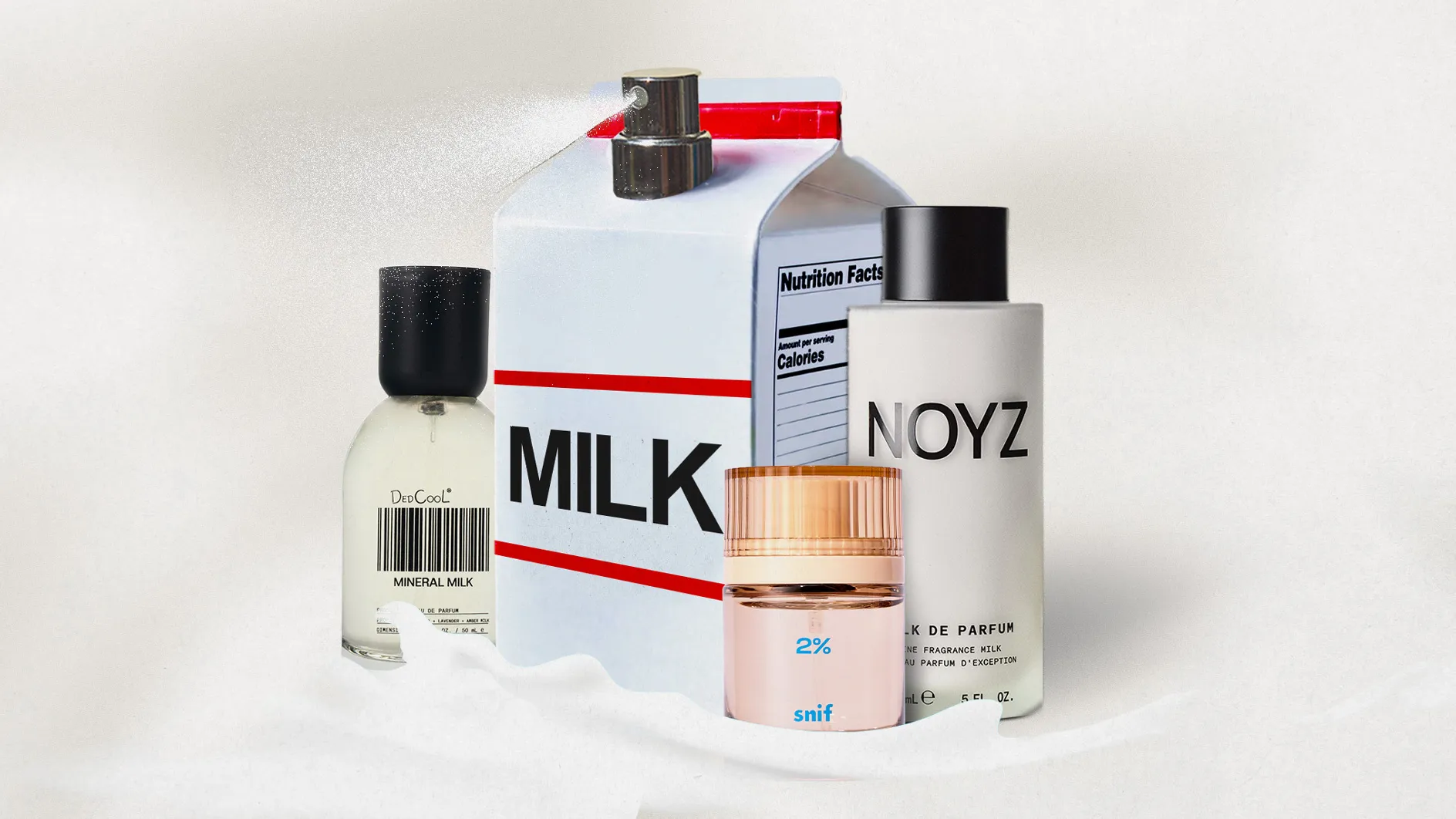
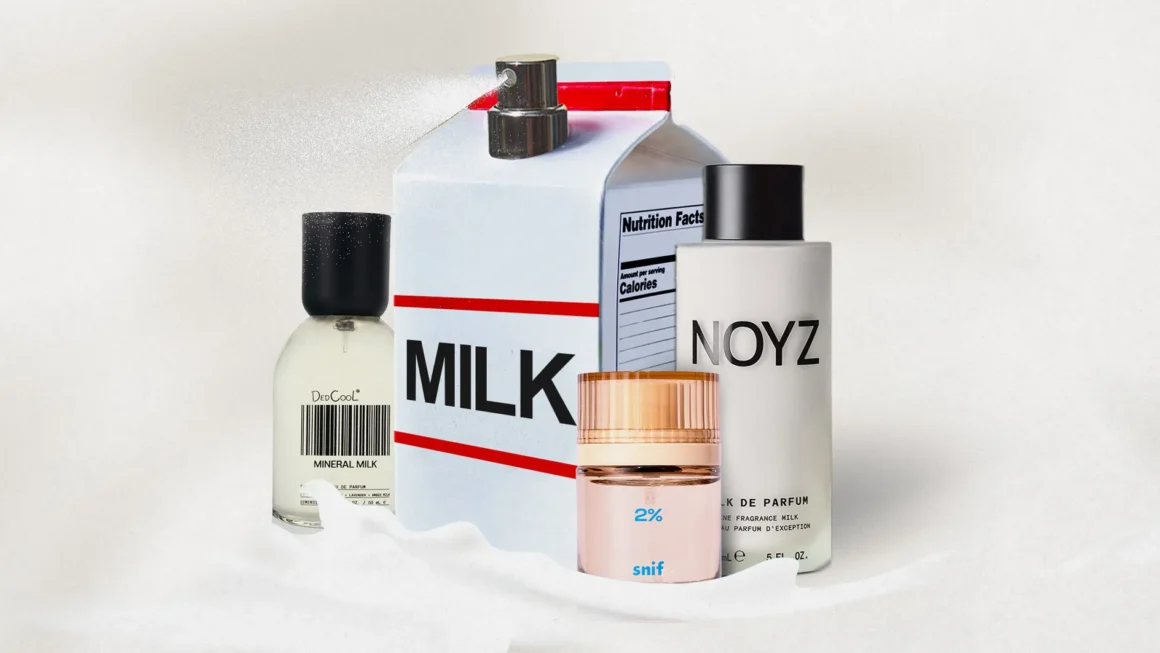
DedCool has also created Xtra Milk (an extra strong version of the OG), Mochi Milk (a gourmand), and, as of March, Mineral Milk (a summery lavender and amber milk concoction). As the brand has built out its “functional” portfolio of scents that are “designed to be layered,” more and more competitors have launched in the milk space: there’s Commodity Milk (and its new counterpart, Milk Orchid); the Nue Co.’s First Milk; Snif’s new 2%, a sweet cereal-milk scent; Bat3h & Body Works’ Milk; Dossier’s Milky White; Gudu Milk; Emma Hamsa’s Milk of Light; Arcadia by Amna’s No. 6 Milk Musk; and on and on.
That doesn’t even include milk-adjacent scents, like Philosophy’s Fresh Cream, or the variety of latte and coffee-themed fragrances out there, or products that play with the textural idea of milk. Earlier this year, the LA indie brand Noyz brought its Mylk de Parfum to market, which, Glossy noted, combines the milk-scent trend with a milky toner-esque format.
This milk obsession comes at an interesting time for health and wellness culture—and for Big Milk. Proteinmaxxing—shorthand for getting as much protein as possible, often from as few calories as possible—has become diet culture du jour. The use of GLP-1s continues to increase, with 12% of US adults taking one of these medications, as of 2025; high-protein diets are often recommended to maximize the effects of the drug (along with other key nutrients like fiber and healthy fat, which some people forget). Milk, the raw kind (which hasn’t gone through a pasteurization process to remove harmful bacteria), has also come to be associated with the popularity of “tradwives” on social media and the MAHA movement. Last year, raw-milk advocate and US secretary of health and human services Robert F. Kennedy Jr. downed a shot of the stuff in the White House.
The US dairy industry (including milk, cheese, yogurt, butter, and more) is thriving, in part because of these trends. After decades of declining interest in dairy milk, with plant milks growing in market share, 2024 saw the first increase of whole-milk consumption in years, and only the second-ever increase since the 1970s, according to the New York Times. While the number of dairy farms is shrinking, the number of cows and the amount of milk they’re producing is going up.
But as Reuters reported, proteinmaxxing and GLP-1s have fueled farmer interest in peas, lentils, and chickpeas, though we’re not seeing a flood of eau de chickpeas on Sephora shelves. “Milk,” then, as both a concept and a product, exists amid a perfect storm of cultural, political, and economic forces that could explain why we’re drinking it more and incorporating it into our beauty routines.
Milk as a source of comfort—and nostalgia for youth
Rachel Kyllo, Dairy Farmers of America’s chief marketing officer for dairy brands, has been in the milk business for 39 years. She’s seen the ups and downs of milk production and marketing, from the celebrity-laden “Got milk?” advertisements to increased competition from myriad other options such as prebiotic sodas, oat and almond milk, and energy drinks. She says DFA, a cooperative of dairy farmers focused in the US, is “thrilled to see that consumers are returning to milk,” and she has a theory about why they’re making that choice.
“I think as people are looking for a beverage that harkens back to a simpler time, and also a product that isn’t ultra-processed, it just takes them to milk,” says Kyllo, who drinks whole milk. “It’s just a simple, real, farm-to-table nostalgic kind of beverage, and then you couple that with the nutrition that folks are looking for today.”
Several perfumers and perfume and dairy experts I talked to for this story echo Kyllo’s point about the nostalgia and implicit comfort of milk, and how perfume trends often reflect what’s going on in the world. Inflation is high. The prospect of the US reaching a deal with Iran to end the war there remains uncertain, though a fragile ceasefire is holding as of this writing. ICE is still seemingly everywhere.
“When the world is uncertain and we don’t know what to do, we want to go back to our creature comforts,” says Kara Kowalski, the director of fragrance and formula development at Snif. “I know in perfumery, we say that’s why gourmands are trending, because they’re comfortable. I think, in some way, milk does that too.”
Snif’s 2%, which launched on April 10 in packaging reminiscent of the “Got milk?” mustache, smells like eating a bowl of cereal, sweet and fresh, featuring notes of lactones, fresh dairy accord, vanilla, praline, caramel, and milk-carton accord. According to Kowalski, they smell-tested numerous bowls of milk to develop the scent profile.
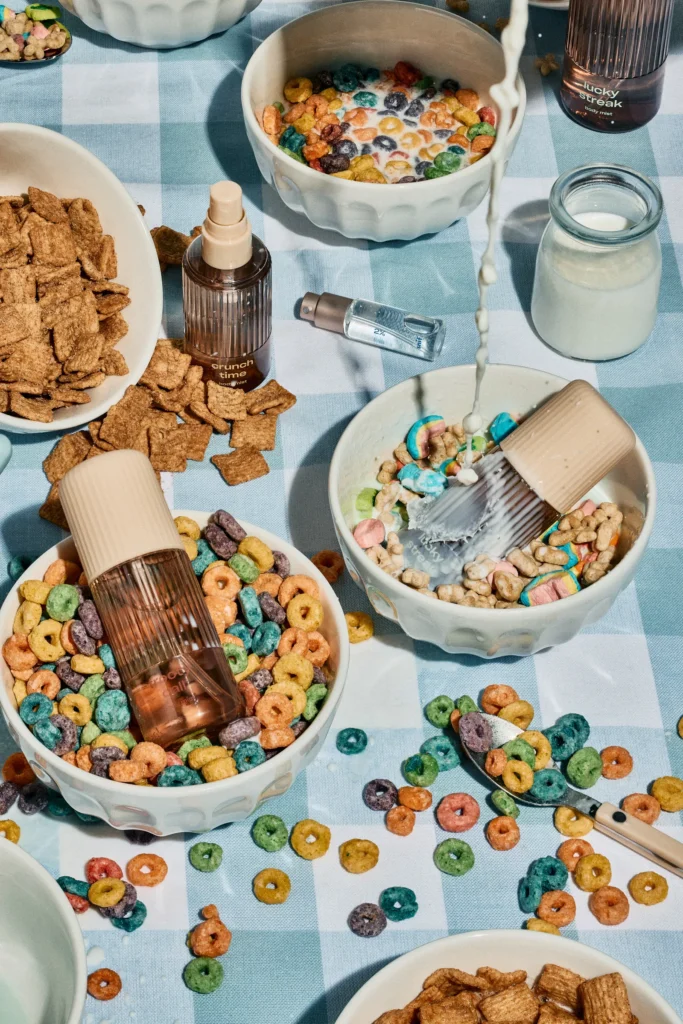
Cereal is one of the first milk-related memories Kowalski conjures up for herself. “Do you remember the Matilda movie? When she’s eating her bowl of [cereal and] milk, and that song, [“Little Bitty Pretty One” comes on,] that’s so iconic,” Kowalski recalls. She also mentions images of TV characters chugging milk straight from the carton in front of a wide-open refrigerator door. Aptly, 2% is sold alongside three new body mists that evoke Fruit Loops, Cinnamon Toast Crunch, and Lucky Charms. On the Snif website, you can assemble a “cereal bowl” shopping cart of sorts with a fun graphic.
It’s not just Matilda and her magic cereal spoon. Milk and childhood are inextricably linked from the moment a baby starts consuming breast milk or formula. The Nue Co.’s late-2025 fragrance First Milk—created by perfumer Frank Voelkl of Le Labo’s Santal 33 and Glossier You—explicitly plays into this idea with its product description: “Our first scent memory—the soft embrace of early connection.”
The product page goes on to say, “We’re naturally drawn to gourmand notes like vanilla and tonka bean because they share compounds found in milk and childhood sweets, reminding the body of when things were simple, good, and safe.” First Milk, one of my favorite milk perfumes, along with DedCool’s Xtra Milk, feels heady, euphoric, and a little sweet; with top notes of pink pepper, almond milk, and French vanilla; and base notes of amber woods, tonka bean, and cashmere woods. It makes me think of waking up on summer vacation, the whole day spread out before you, with nowhere else to be.
When I passed around a variety of milk perfumes at our morning staff meeting, our senior social media manager Jillian Selzer remarked, “Is it placebo or marketing or is it real that it smells like milk?”
Perhaps the answer is all three.
A land of milk perfumes and honey
Milk as a skin-care ingredient does have a long history, including milk soaps and creams being praised for hydration and exfoliation and the legend that Cleopatra bathed in donkey milk. The Roman emperor Nero’s wife, Poppaea Sabina, was a documented milk-bather, which Cassius Dio, an ancient-Roman historian, described as one of her “extremes of luxury,” adding that “she bestowed the greatest pains on the beauty and brilliancy of her person, and this is why, when she noticed in a mirror one day that her appearance was not comely, she prayed that she might die before she passed her prime.” Many a looksmaxxer might find that relatable.
That feeling of milk, luxurious and thick, is why Noyz’s Mylk de Parfum is particularly interesting in this space. The three-fragrance collection—Only Human, Unmute, and Detour—is less about smelling milky than it is about capturing the idea of milk, with a lavish texture at a more accessible price point. (Only Human especially feels like it’s in this same family of scents, with pink pepper and bergamot top notes, and base notes of vanilla bean, ambroxan, and cedarwood.)
“The Mylks really kind of allow you this entire experience that’s sensorial in the form itself,” says Malena Higuera, CEO of Noyz. One of the brand’s promotional images is of a person decadently smearing Mylk across their décolletage. They don’t seem to think about the amount of product being used or how much it costs. This is intentional, Higuera says, in tandem with the size and price point of the Mylks: $95 for a large bottle at 150 ml.
“[I’m Latina and] I go through a bottle of perfume five times faster than the average person,” Higuera adds, noting how culture informs her approach to the brand. “It’s so much for us, too, about how if we feel good on the outside, we actually feel good on the inside. [We’re] flipping that script about self-care in a way that it is about the micro luxuries that are within reach.”
In addition to alluding to luxury, the milk-perfume trend is also the natural offspring of three other fragrance trends: a long-standing vanilla obsession; the popularity of skin scents—which sit close to the skin and can change based on the wearer’s innate smell—over the past few years; and the act of scent layering, in which multiple scents are piled on top of one another to create something more customized and unique.
“I’d like to think that we were, like you said, early adopters in this space,” says Carina Chaz, founder and CEO of DedCool. Chaz created the original version of the brand’s Milk scent as a passion project; she was a teenager thinking of it as a hobby. “The conversation around the skin scent wasn’t really happening [yet],” she recalls. “This is 2010. Obviously, fragrance and the industry in general has changed so much. But ultimately, when this scent came to life, it was very, very light. It was very much like, if you can catch a whiff, it’s there. If you pass it, it’s gone.”
After officially launching Milk in 2020, Chaz says, the brand made a thousand units and sold out “instantly.” She chose the name not to suggest that the fragrance was a serious imitation of milk, but because it connoted softness and familiarity.
“It was a noninvasive, everyone-likes-this scent profile. It changes on everyone’s skin,” she says. Now, the scent of milk is foundational to DedCool as the brand has expanded into laundry detergents, dryer sheets, and body care. Other perfumers have taken the hint.
“A lot of brands are like, ‘Oh, we were just talking about you.’ And then they launch a milk something,” Chaz says. “I love that we get to really inform some really cool things happening in beauty…. We’re seeing a lot of milk, and it’s not only in fragrance; it’s in so many different categories in beauty. I think it makes sense. It’s something you can interpret in any way.”
Notably, DedCool is a vegan beauty brand, so it doesn’t use animal ingredients or byproducts. Fittingly, Chaz says, she used to be anti-dairy, but she’s now personally a consumer of whole milk, whole-fat yogurt, and whole-fat cottage cheese.
Veronique Lagrange, the executive director of the California Dairy Innovation Center, has a background in food science. She spends her days doing research and promotion for milk, specifically in California, and she has seen firsthand the effect of protein’s popularity on the perception of milk: “[Protein] is the number one claim on food products right now. Dairy products, overall, offer a wide variety of options that are not only less processed, but also more affordable, and things you can find in your grocery store at a whole range of prices,” she says.
It’s easier to chug a glass of milk than to find the best kind of protein powder for you, for example. But the appeal of milk goes beyond protein, too, into discussions of sustainability, how something is made, and who makes it. “I think consumers understand that milk is very much less processed, more real, more natural,” she says.
The idea of something being “real” and “natural” is, ironically, also reflected in beauty trends, but with different connotations. Whether it’s being marketed as minimalism or no-makeup makeup or clean-girl aesthetic or quiet luxury, “natural beauty” tends to mean an appearance that communicates wealth and youth.
There are also echoes of this kind of language in conservative movements. In the new Hulu Handmaid’s Tale spinoff The Testaments, some of the teenage girls of Gilead are in charge of extracting honey from beehives and bottling it into cute little artisanal jars that missionaries gift to the “sinners” of Canada as a way of espousing their belief system. Look how beautiful and natural our world is, the jars seem to communicate, so much so that it’s worth the inequality.
The desire to have the food and drink we put in our bodies be free of harmful ingredients or chemicals is a straightforward one on the surface; it can be easily weaponized, however, by people like RFK Jr., who has touted raw milk as a superfood. The New York Times reported that raw-milk sales increased 17.6% in 2024, despite FDA and CDC guidelines that caution against the potential dangers of unpasteurized milk, including food poisoning.
Recently, though, media outlets have noted that RFK Jr. has stopped publicly talking about raw milk. Apparently, he has now pivoted to being obsessed with whole milk. Meanwhile, earlier this year, the TikTok-viral Ballerina Farm, whose matriarch has been called the “queen of the tradwives,” paused production of its raw milk due to safety concerns.
Ultimately, milk—and milk perfumes—is a many-layered thing. Could the rise of milk as a drink and the rise of milk as a fragrance be connected to an obsession with protein, a desire for self-optimization, or any number of macro-cultural phenomena?
McKay, who has seen perfume trends come and go for decades, isn’t totally sold on my theory. “I think that’s taking it a bit too far, but you’ve got to ask the question,” McKay says of my slightly tongue-in-cheek idea about proteinmaxxing. But she does see a more abstract reason for why young people might be drawn to smelling milky. “I believe it’s the younger generation saying what they want and who they want to be. It’s genderless. It’s not typecasting. It’s not loud, it’s soft, and it’s finding their way. I think it’s brilliant for young people. These milky fragrances are really popular.”
Perhaps that popularity is because milk scents can mean whatever perfumers and marketers want them to mean: nostalgia or youth, nurturing or nutritious, sweet, fresh, or a little of both. A note you can build into something that is totally yours, as unique and tailored to you as mother’s milk. A little luxury after a hard day. I spray a bit of Commodity’s Milk Orchid at my desk, blissfully inattentive to whether or not it’ll annoy my coworkers. The inhale is floral and gentle, so smooth you could bathe in, so comforting I might not even be working at all.