


Skip to content
Primary Menu
  • GEORGE V MAGAZINE
    • NEUBAUER ARTISTS
      • ACCOUNT
        • LOGIN
        • LOGOUT
        • PASSWORD RESET
      • GEORGE FOUNDATION
      • TRAVEL BOOKINGS
      • SUSTAINABILITY
  • NEWS
    • News
    • Politics
    • Defense
    • World
    • Sports
    • Crime
  • FINANCE
    • Business
    • Neubauer Invest
    • Real Estate
    • Economy
    • Technology
    • Ownerships
    • Sponsored
  • ENTERTAINMENT
    • Neubauer Studios
    • Beauty
    • Celebrities
    • Fashion
    • TV & Films
    • Music
    • Health
  • LEISURE
    • Lifestyle
    • Travel
    • Jewelry
    • Arts
    • Sexual Wellness
    • Gastronomy
  • ROYALS
  • MARKETS
    • MARKET NEWS & FOREX INDEX
    • MARKET RESEARCH
    • GLOBAL HEAT TRADE MAP
    • INVESTMENTS
  • LIVE SCORES
    • Champions League
    • Europa League
    • EUROPEAN LEAGUES
      • Premier League
      • La Liga
      • Bundesliga
      • Ligue 1
      • Liga Portugal
      • Süper Lig
      • MLS
      • Serie A
      • Super League Greece
      • Eredivisie
      • Allsvenskan Sweden
      • Divisjon Norway
      • Veikkausliiga Finland
      • Superliga Denmark
    • SOUTH AMERICAN
      • Liga Argentina
      • La Liga MX
      • Serie A Brazil
    • Saudi League
    • Russian Cup
Light/Dark Button
GEORGE FM
  • Politics

The Council of The EU and European Parliament Reach Deal And Put A Ban On Forced Labor Products

The Council of the European Union and the European Parliament have reached a provisional agreement on a regulation that would prohibit products made with forced labor, and the proximity of economic operators creating those products, creating a risk.
Sylvia Klimaki Published: April 6, 2024 | Updated: April 6, 2024 3 minutes read
GettyImages-1210067705_1

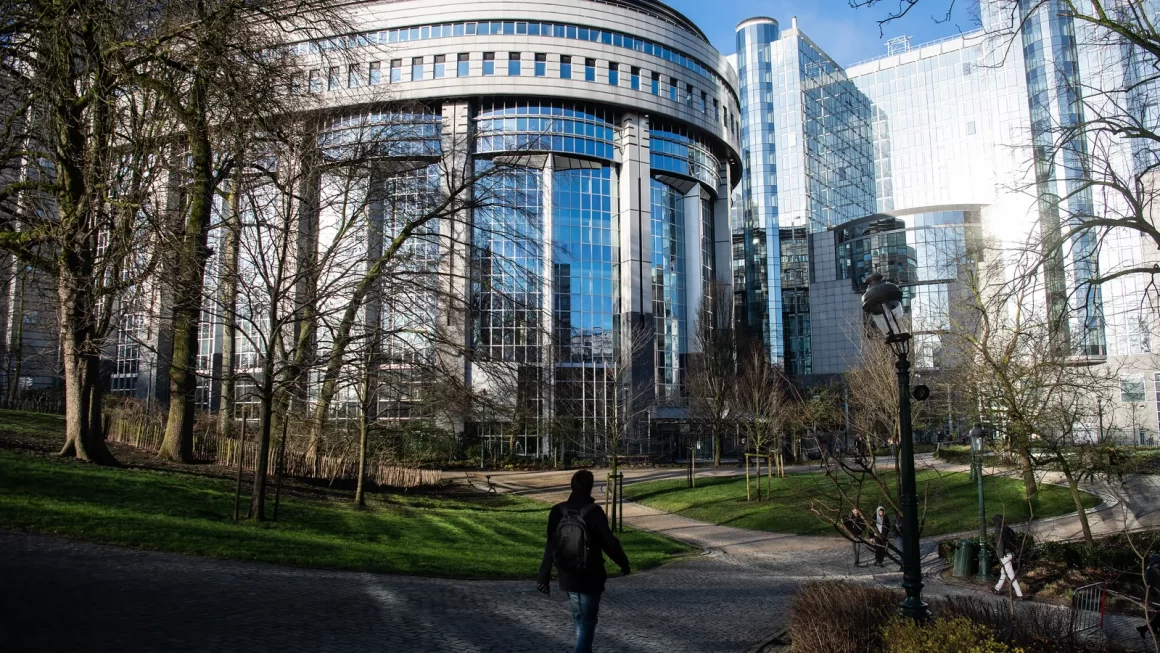
A general view of the European Parliament building. The Council of the EU and parliament have reached a provisional agreement on a regulation that would ban products made with forced labor. Leon Neal/Getty Images via Getty Images

Neubauer Artists LLC
Getting your Trinity Audio player ready...

The provisional agreement includes clarity on assessing potential violations.

The two governing bodies set criteria for how to assess potential violations of the agreement, which it called a “risk-based approach.” These criteria include the scale and severity of the suspected forced labor; the quantity or volume of products made available; the share of the parts of the product made with forced labor in the final product; and the proximity of economic operators to the suspected forced labor risks.

In addition to setting the criteria, the council said the commission will establish a database “containing verifiable and regularly updated” information on forced labor risks, including reports from international organizations.

This announcement comes as more fashion companies are seeking to clean up their supply chains, in part to keep up with pending and passed regulations in the EU and in the U.S. One such regulation in the EU is the Corporate Sustainability Reporting Directive, which requires all large EU companies to “disclose data on the impact of their activities on people and the planet and any sustainability risks they are exposed to.”

The agreement reached this week needs to be endorsed and formally adopted by both institutions, per the release. The commission initially proposed this regulation in September 2022, and the Council adopted its negotiation position on it in January of this year.

The approved provisional agreement also clarifies that if only a part of the product is found to be in violation of the regulation, only that part must be disposed of.

“For instance, if a part of a car is made with forced labour, that part will have to be disposed of, but not the whole car,” the release stated. “The car manufacturer will have to find a new supplier for that part or make sure that it is not made with forced labour. However, if tomatoes used to make a sauce are produced using forced-labour, all the sauce will have to be disposed of.”

The move follows another regulation from the EU which would make it mandatory for large companies to report and prevent the use of child labor and damaging environmental practices in their value chains.

The EU has also taken steps at regulating the textile industry. In June of last year, the European Parliament approved recommendations for a strategy on sustainable and circular textiles, which would call for textiles sold in the EU to be more durable, and easier to reuse, repair and recycle.

Meanwhile in the United States, forced labor has also been a point of concern for the fashion industry, particularly for fast fashion companies. In 2023, a group of U.S. lawmakers launched an investigation into Adidas, Nike, Shein and Temu about their compliance with a 2021 law, the Uyghur Forced Labor Prevention Act, which bans products from Xinjiang region in China, a region where China has been accused of detaining more than 1 million Uyghur people.

About The Author

Sylvia Klimaki

Sylvia Klimaki

Focusing on climate, social impact, entrepreneurship. Have conducted over 380 interviews to date for print, online and broadcast media. She is based in London, United Kingdom.

See author's posts

What do you feel about this?

Post navigation

Previous: The Regulations EU Implemented To Clean Up Fashion’s Supply Chain Poor Human Rights Practices Are Ignored By Companies
Next: ‘We’re At That Point’: Democrats Press Biden To “Change Course On” Israel and Gaza

Author's Other Posts

Eurobank Chairman George Zanias Announces Dividend After 16 Years EUROBANK

Eurobank Chairman George Zanias Announces Dividend After 16 Years

April 4, 2026
“Injection” of 16 Billion Euros Into 7 Strategic Sectors of The Greek Economy ba8c45c28fd675ed7b99dcae38af8019_XL

“Injection” of 16 Billion Euros Into 7 Strategic Sectors of The Greek Economy

April 4, 2026
Harvard Endowment Jumps To $53.2 Billion, Delivers 9.6% In Returns 1x-1

Harvard Endowment Jumps To $53.2 Billion, Delivers 9.6% In Returns

March 11, 2026
Duke Energy Partners With Brookfield Investment In Duke Energy Florida $87 Billion sr-duke-energy-florida-2

Duke Energy Partners With Brookfield Investment In Duke Energy Florida $87 Billion

March 5, 2026

Related Stories

98619eeb-e1e9-4af6-ba76-fcf6fc5359fd_443c2ffc
  • Politics

Chinese Officials Claim United States Is ‘Hoarding’ Oil

Associated Press April 18, 2026
samantha-niblett-6862387
  • Politics

British MP Wants To Bring Sex Toys To Parliament

Johanna Liander April 15, 2026
c-gettyimages-2206345748
  • Politics

GOP Rep. Tony Gonzales Announces “Stepping Down From Congress After Suicide Affair”

Los Angeles Times April 14, 2026
Noem-New-Role
  • Politics

Kristi Noem’s Removal Was About Optics, Not Policy

Kate Bolduan March 7, 2026

You may have missed

st-georges-nelstrop-pedro-ximenez.jpg
  • Gastronomy

Pedro Ximénez Wines, Brandy, & Whiskey A Jiménez, Torres, Cordero, Hernandez Family Tradition

Los Angeles Times April 20, 2026
Screenshot
  • Lifestyle

Louis Vuitton Marks 130 Years of The Monogram With A Year-Long Celebration

Marie Courtois April 20, 2026
profimedia-0625922291
  • Beauty

The Body As A Project: Where Self-Care Ends And Pressure To Perform Begins

Calin Van Paris April 20, 2026
2ce11f09b74e1fe48c78f57d3587e3e0
  • Celebrities

Zendaya Reveals Why She Wore A ‘Wedding Dress’ To ‘The Drama’

Kara Nesvig April 20, 2026
  • NEUBAUER CORPORATION
  • WHO WE ARE
  • MEET THE TEAM
  • TERMS OF SERVICE
  • PRIVACY POLICY
  • REPRESENTED BY NEUBAUER PARTNER
All Copyright © 2026 All Rights Reserved.
George V Magazine
Manage Consent

To provide the best experiences, we use technologies like cookies to store and/or access device information. Consenting to these technologies will allow us to process data such as browsing behavior or unique IDs on this site. Not consenting or withdrawing consent, may adversely affect certain features and functions. We are proud to be a Woman Owned Business, certified by WBENC.

Functional Always active
The technical storage or access is strictly necessary for the legitimate purpose of enabling the use of a specific service explicitly requested by the subscriber or user, or for the sole purpose of carrying out the transmission of a communication over an electronic communications network.
Preferences
The technical storage or access is necessary for the legitimate purpose of storing preferences that are not requested by the subscriber or user.
Statistics
The technical storage or access that is used exclusively for statistical purposes. The technical storage or access that is used exclusively for anonymous statistical purposes. Without a subpoena, voluntary compliance on the part of your Internet Service Provider, or additional records from a third party, information stored or retrieved for this purpose alone cannot usually be used to identify you.
Marketing
The technical storage or access is required to create user profiles to send advertising, or to track the user on a website or across several websites for similar marketing purposes.
  • Manage options
  • Manage services
  • Manage {vendor_count} vendors
  • Read more about these purposes
View preferences
  • {title}
  • {title}
  • {title}