





|
Neubauer Artists LLC
Getting your Trinity Audio player ready...
|
For decades, board shorts were one of the last remaining territories of a firmly masculine fashion. More than a piece of clothing, they were
an anthropological statement: the Australian surfer, the sun bleached Californian boy.

The eternal adolescence depicted in Blue Crush, the Quiksilver, Billabong, and O’Neill catalogs, the West Coast myth built on waves, pickup trucks, and an idea of freedom that always had a man’s face. As often happens in fashion, however, the history of a garment doesn’t coincide with that of its imagery. Indeed, it often outlives it.
In the 1990s, Sonia Kasparian, designing Roxy’s first board shorts, understood something the surf industry hadn’t yet grasped: women didn’t want to be spectators on the beach ; they wanted to get in the water. They didn’t want a “pretty” version of technical clothing , but the same functionality reserved for men, adapted to a different body type. What might have seemed like a design adjustment became a political gesture.
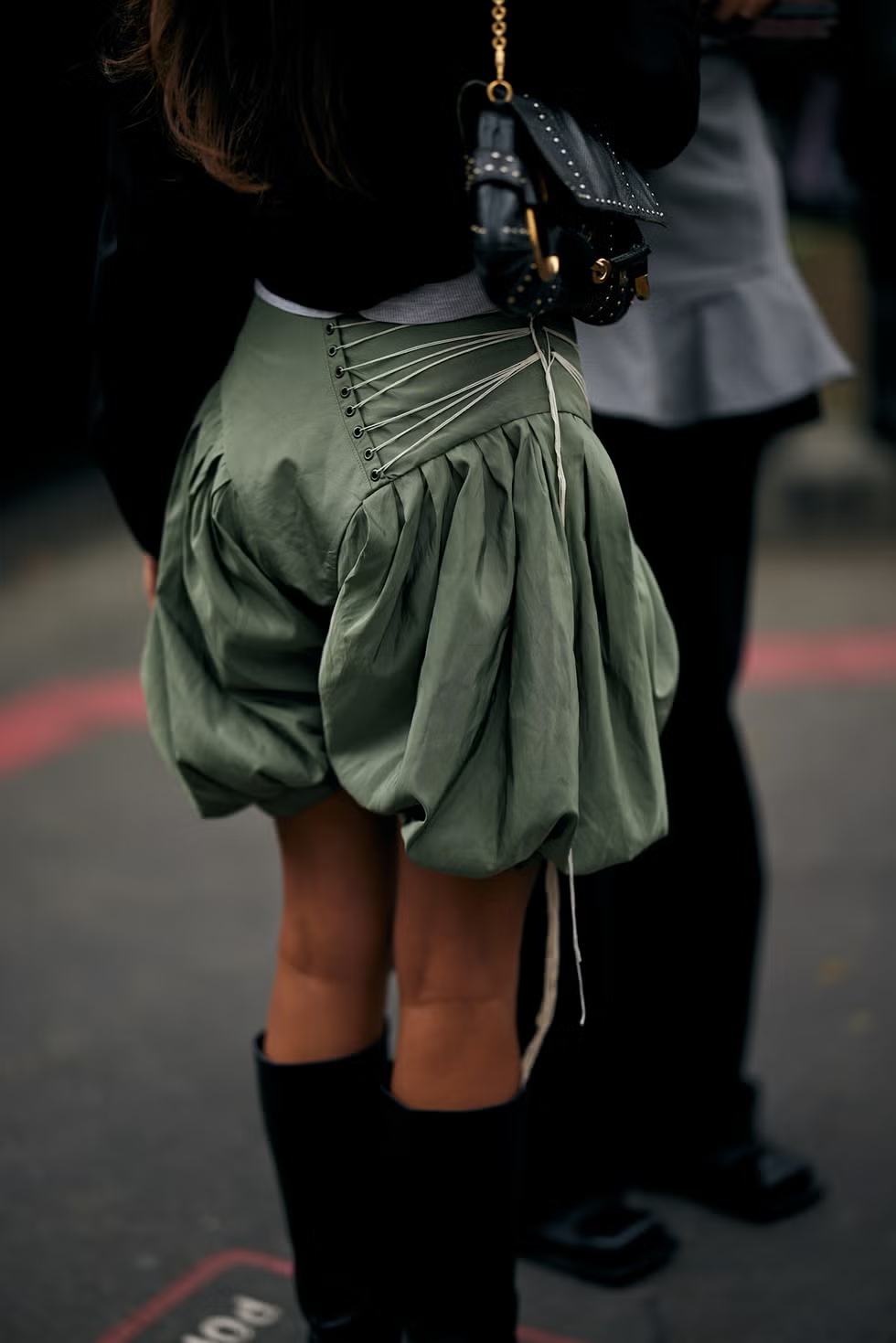
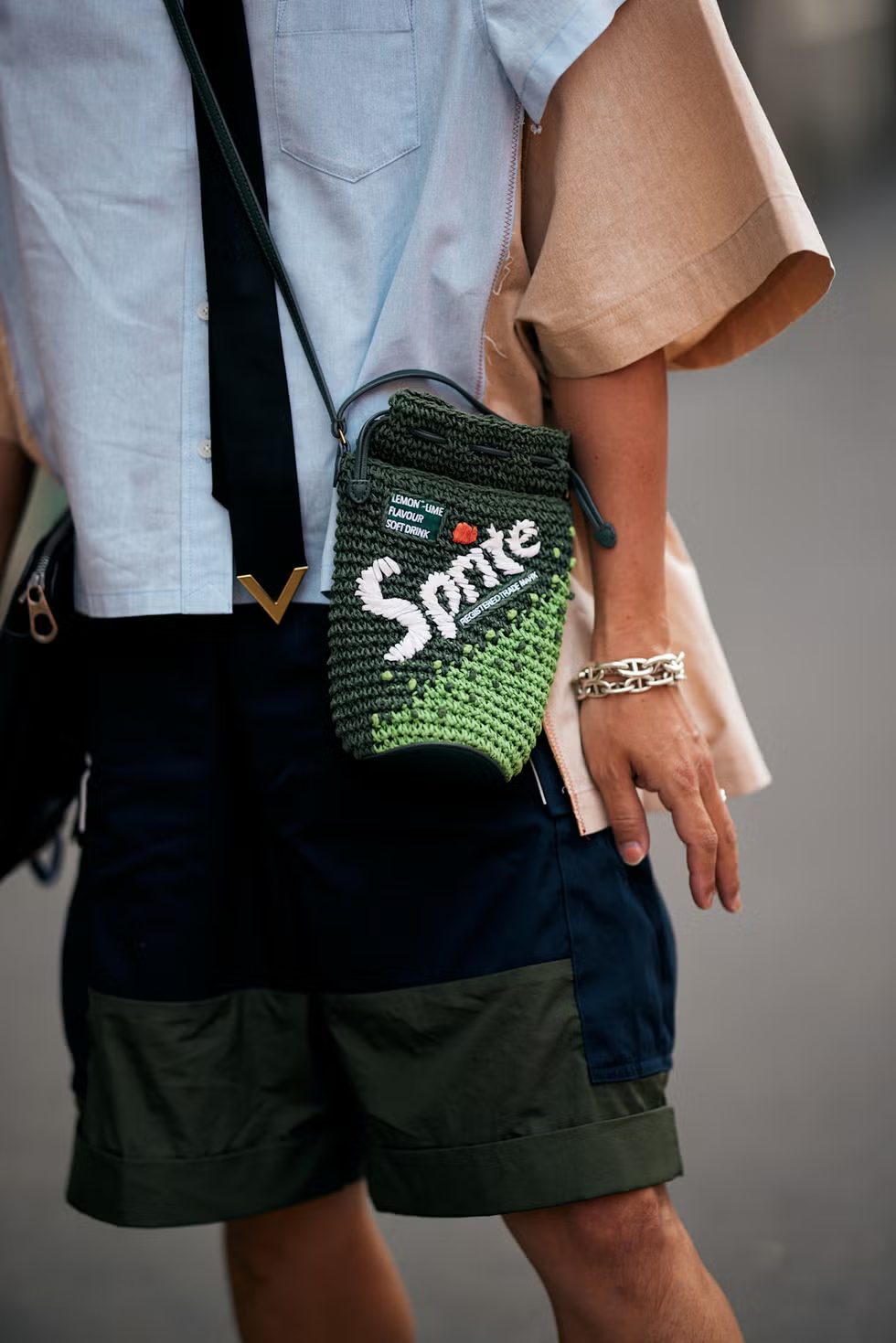
Today, thirty years later, the phenomenon has transcended the beach. Board shorts have left the Pacific for the cities. Dries Van Noten pairs them with tailored blazers and shell necklaces; Miu Miu layers them with polos, shirts, and jackets; Chanel transforms them into an exercise in beach chic. Meanwhile, fashion editors scour eBay for Billabong styles from the early 2000s, stylists buy vintage Tommy Hilfiger versions in the men’s department, while fashion houses reinvent them in taffeta.

But here’s the catch: designed to dry quickly, they weren’t born for refinement. No concessions to aesthetics, at least not at first. Only function. They have drawstrings, Velcro, oversized pockets, and disheveled proportions. It’s the opposite of polished minimalism . Fashion, however, rarely cares about function as such. Instead, it absorbs its symbolic value. Just as Yves Saint Laurent transformed Le
Smoking into a device for female emancipation and Miuccia Prada built much of her research on the short circuit between utility and desire, this technical garment has also moved beyond the confines of sport and entered that of identity construction. And perhaps that’s precisely why they work today.
There’s something profoundly contemporary about wearing board shorts with kitten- heel pumps or a tailored jacket. It’s the same logic that led the parka to enter the bourgeois wardrobe, the college sweatshirt to enter luxury collections, or the military trench coat to become a classic of the Western wardrobe. Fashion loves to appropriate functional objects and transform them into a language. The result is that board shorts are no longer just about surfing. They speak of the desire to travel light, to escape the rigidity of the traditional summer wardrobe, made up of denim shorts and miniskirts that have been repeated identically for decades. They are no longer the symbol of the “surfer bro.” The question, then, is no longer whether a woman can wear board shorts. It’s rather which one to choose.