

|
Neubauer Artists LLC
Getting your Trinity Audio player ready...
|
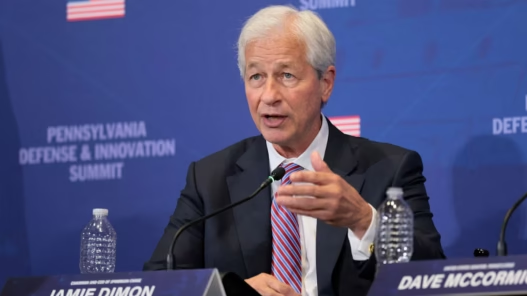
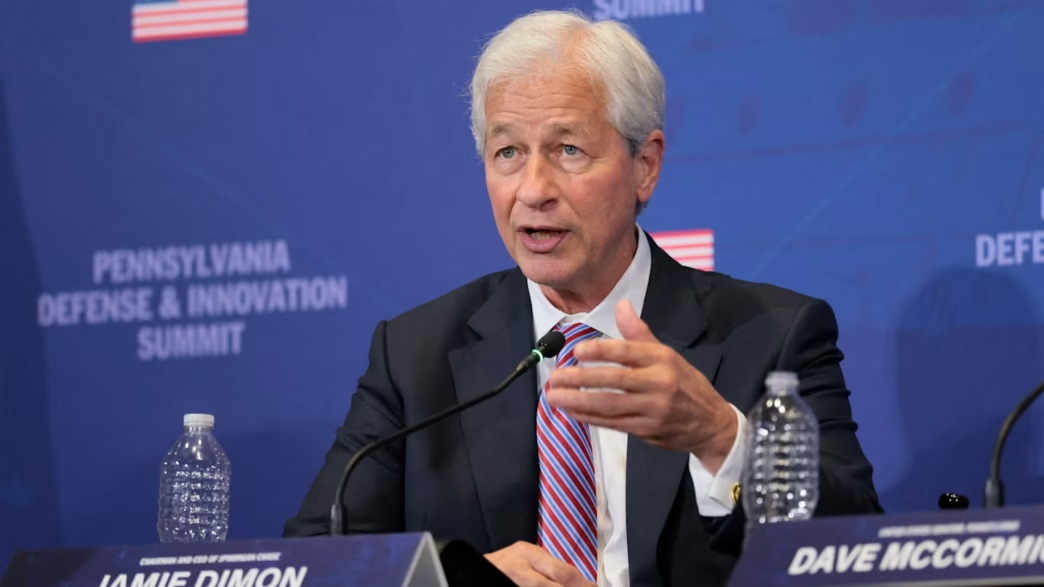
JPMorgan Chase chief Jamie Dimon has warned UK Prime Minister Andy Burnham and UK Chancellor John Healey against creating a more hostile tax environment for banks, as the financial services sector prepares to embark on a major pre-Budget lobbying campaign.
The Wall Street executive told Healey in a call on Thursday that higher taxes often drive jobs elsewhere, citing a material decline in finance roles in New York that he attributed in part to the city’s tax burden, according to people briefed on the conversation.
Dimon — one of the most influential voices in global finance — was among the bank bosses who successfully lobbied against higher taxes ahead of last year’s Budget, holding discussions with then chancellor Rachel Reeves as JPMorgan weighed plans for a new £3bn London base at Canary Wharf.
Banks could be a tempting target for Healey in his October Budget, given that the sector has been making bumper profits, with union leaders calling for higher bank taxes to fund a package of help for household energy bills.
Healey has not yet expressed a view on bank taxes but Dimon made clear that a windfall levy on bank profits or wider tax rises on wealth would be unwelcome, according to one person briefed on their conversation.
Another person familiar with the exchange said Dimon told Healey that the only way to solve the UK’s economic challenges was by encouraging growth and the only route to that was “through good policy”.
They added that his comments on tax were not specific to the UK and were not “the main part of their conversation”, describing the exchange as “very cordial”.
Dimon was among the first bank chiefs to hold an introductory call with the new chancellor, at the request of Healey’s team, the people said. Other bank bosses are set to follow next week.
Dimon’s private comments to Healey follow a public warning last month to Prime Minister Andy Burnham and his chancellor, when he said higher bank taxes could have “adverse consequences”.
“It would be one more negative on that bucket of things you got to think about,” Dimon said about the risk of Burnham raising the bank levy or corporation tax surcharge, which were imposed after the government bailed out big UK lenders in the 2008 financial crisis.
“I mean, it may sound great, ‘tax the banks’, but it’s $5bn that my shareholders paid on that extra tax,” Dimon told The Master Investor Podcast with Wilfred Frost. “I just think things like that have adverse consequences.”
One person close to Dimon’s negotiations with Reeves ahead of last November’s Budget said of the talks with Healey: “Jamie Dimon always majors on the impact of bank taxes and will want assurances that a Burnham government will back the new Canary Wharf HQ.”
Asked if Dimon had previously threatened to abort the planned office if banks were hit with higher taxes in his talks with Reeves, the person said: “‘Threatened’ is too strong a word. But of course any business takes into account the fiscal environment before making final decisions about investments.”
JPMorgan revealed the plans for a new building at its Riverside development in Canary Wharf the day after Reeves’ Budget, stressing that it would depend on “a continuing positive business environment in the UK”.
Rules introduced after the 2008 financial crisis mean banks operating in the UK already pay additional taxes, including a levy on their balance sheets and a surcharge on profits in addition to standard corporation tax. However, bank profits have surged in recent years thanks to higher interest rates and there are concerns in the City that this could make lenders a target for an even more punitive UK tax regime. The Trades Union Congress has urged Healey to increase the surcharge paid by banks, set at 3 per cent above the 25 per cent corporation tax rate, to help cut the cost of living for voters.
However, several bank bosses have already come out strongly against the prospect of a higher tax burden on the sector.
Santander chief Ana Botín told the FT in June that the UK’s bank tax regime made “no economic sense”, adding: “If policymakers are looking for sectors earning outsized returns, there are other places to start.”
Senior officials from Sir Keir Starmer’s former Labour administration this week urged Healey not to derail an economic recovery through higher taxes on business or a big expansion of borrowing.
Miles Celic, chief executive of lobby group TheCityUK, said: “Ministers and officials need to treat the private sector as a partner in attracting investment and boosting growth. They need to do things with industry, not to it.”
The Treasury said: “The chancellor meets with senior representatives from sectors across the economy on a regular basis, including the financial services sector.” JPMorgan declined to comment.