




|
Neubauer Artists LLC
Getting your Trinity Audio player ready...
|
Two decades after her first capsule collection caused a sensation, Stella McCartney returns to H&M with must-have pieces and a renewed commitment to offering a more environmentally conscious wardrobe. A look back at this second chapter.
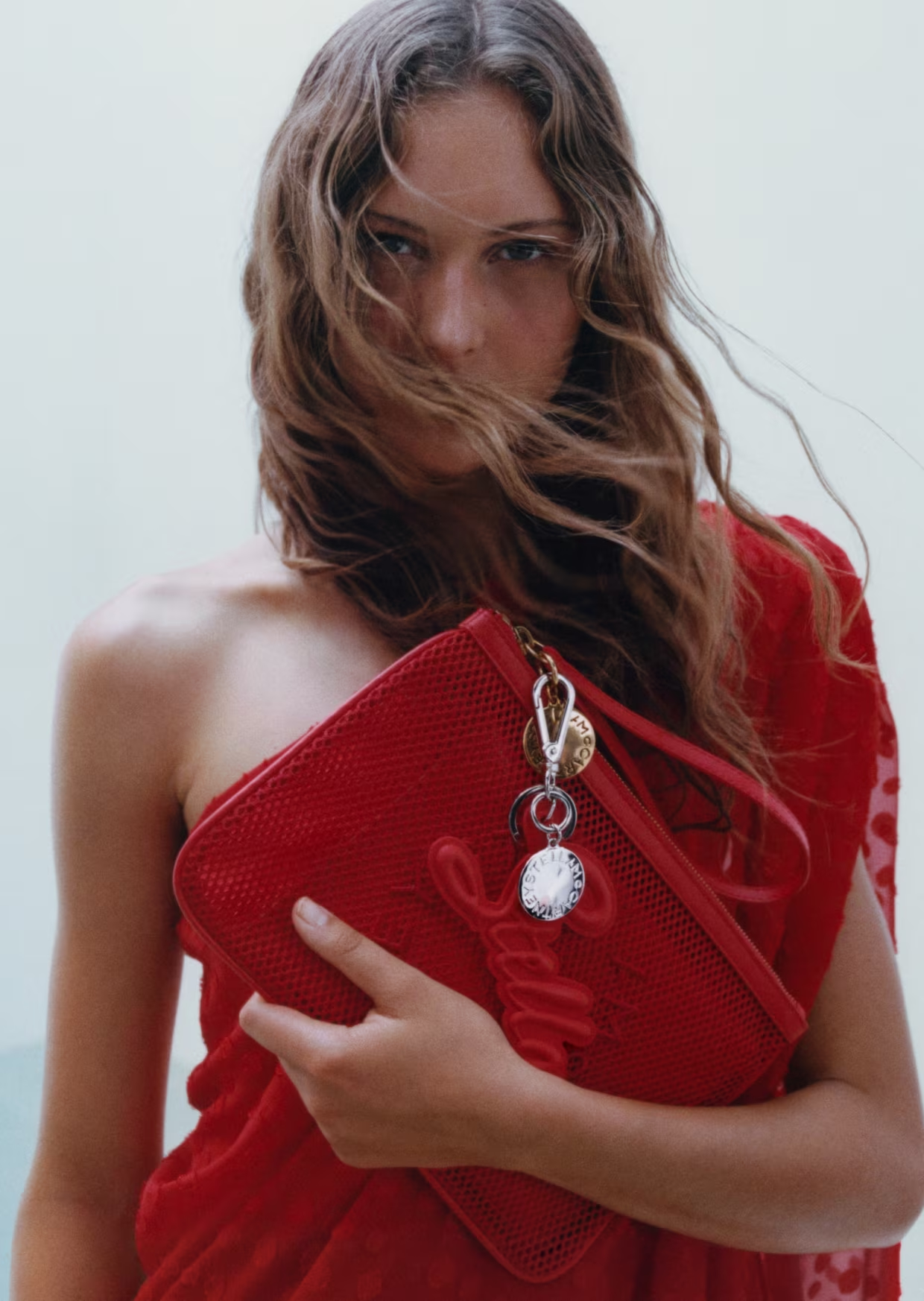
Chronicles of an “eco weirdo.” In 2005, Stella McCartney embarked on a then-uncommon practice, partnering with the giant H&M. She was the second designer to take part. Iconoclastic, as her nickname suggests, she was already advocating for less harmful, eco-responsible fashion before the term existed. She managed to add this dimension to her collection, an unprecedented feat on this scale. The success was phenomenal, and the memory still moves her, even from the other side of the screen. In her taxi speeding through London, the designer discusses, via video call, the second chapter of this collaboration, which arrives in stores on May 7th. A capsule collection reflecting the achievements of Stella McCartney and her unique brand in the world of luxury, brimming with technical innovations and recycled hits from past collections.
George V Magazine: In going through all your archives to develop this new collection, what surprised you most about your work?
Stella McCartney: What surprised me was realizing that some of the pieces have become quite iconic. Everything moves so fast here, and it’s easy to forget the standout pieces. Bringing them all together in a single collection is definitely what I’m most proud of. It really made me feel like I have a place in this industry, beyond just fighting for the planet. My role is so closely associated with sustainability these days that people can forget I’m a fashion designer. There can be moments of doubt; you have to fight to exist when you’re a relatively small company compared to the major players, without paying celebrities or influencers… So, realizing that we’ve produced iconic pieces is very gratifying and reassuring, for my team members as well. I feel like it’s strengthened our bonds. And I can’t wait to see people wearing them on the street. I get so embarrassed when I see someone wearing a Stella McCartney piece. I’m capable of throwing myself at them and shouting, “But that’s a Falabella!”
GVM: When your first collection was released, was it seeing passersby wearing your creations that made you the proudest?
SM: No, I think it was the front page of the Financial Times. The next day, there were these images of customers fighting over parts… I thought to myself, “This is brilliant!”
GVM: How did your first conversation with H&M about eco-responsibility go?
SM: That was 23 or 24 years ago. The word didn’t even exist; nobody worked that way. I agreed to the collaboration on the condition that we did things properly. What I find difficult as a luxury brand is that when you operate a certain way, the more you raise the standards of your suppliers and your manufacturing, the more you act responsibly, the more taxes and penalties you incur. And the price goes up. I feel this is a conversation that concerns everyone, everywhere, all ages, backgrounds, and genders. I’m always frustrated by offering prices that aren’t easily accessible to the majority of people who genuinely care about what they consume. That’s why we did it the first time. Sustainability was a requirement, and they achieved it, which was a miracle at the time. And it all sold out within hours. I was really surprised, and it gave meaning to what I do, to realize that it resonated with people. It was a starting point for H&M, but they continued in that direction, which is what made me want to do it again and go even further.

GVM: You often say that sustainability is a matter of innovation and longevity. Could you name a piece that you’ve kept as your first collection and an innovative detail?
SM: I kept everything from the first collection! As for innovation, I have to say I was really happy to see these glass crystals made from 80% recycled materials. There were some in the first capsule collection, but they weren’t recycled; it was impossible at the time. It might not seem like much, but it’s an incredible achievement. I’m very proud of it. We also use recycled metals, in the Falabella chain, for example. Metal is a real problem in the industry because its use is very polluting, and no fashion house is interested in how to recycle it… We’re ticking all the boxes; I’m super proud, nobody else is doing this!