

|
Neubauer Artists LLC
Getting your Trinity Audio player ready...
|
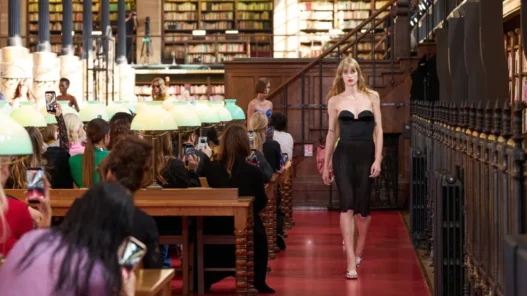
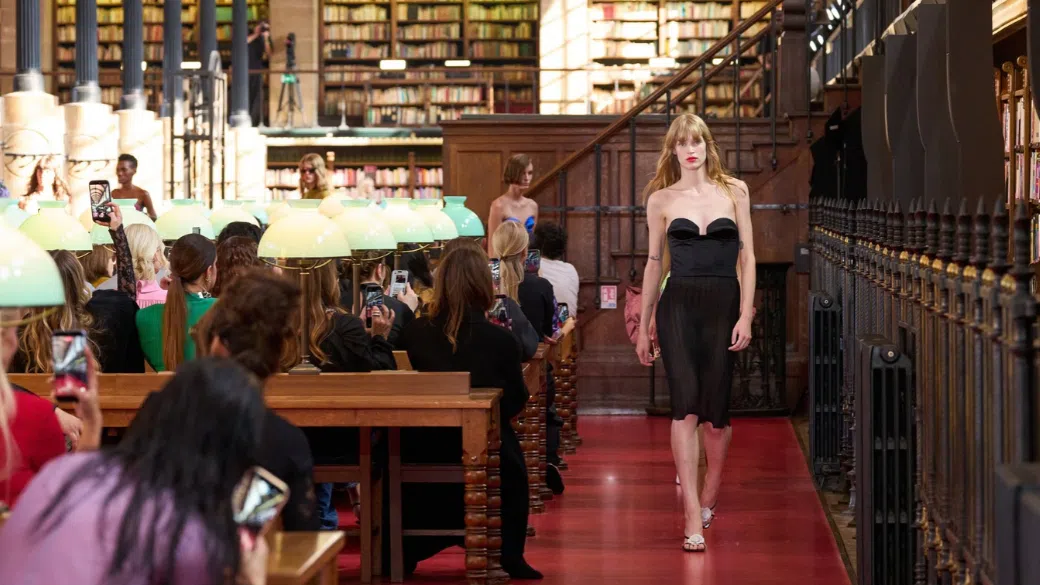
There are clothes you buy because you need them, and then there are clothes that exist because they make another life imaginable. Alessandro Michele has always understood the seduction of the latter. For his Valentino spring/summer 2027 showcase, he gave that instinct a name: Antibiblioteca.
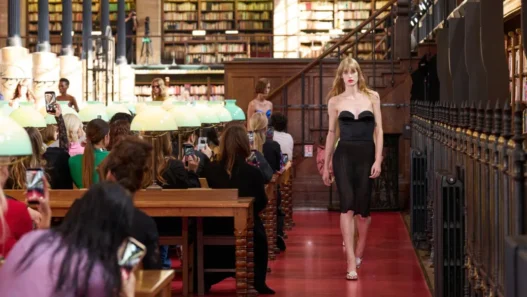
Staged inside Paris’s Bibliothèque Sainte-Geneviève, the collection borrowed from Lebanese-American professor Nassim Nicholas Taleb’s idea of the “antilibrary”, as well as parallel inspiration provided by Italian medievalist and philosopher Umberto Eco’s vast shelves of unread books.
Guests were even asked to arrive with a book, new or from their own shelves, to be donated afterwards. The theatre, then, began before the first look appeared. The value of an antilibrary lies in everything it still contains: knowledge undiscovered, stories unopened, possibilities held in reserve. Michele makes the same argument for fashion. A dress does not need to be worn until it falls apart to have meaning, because sometimes its value is in the fantasy it preserves, the person it allows you to imagine becoming, even if only for a moment.
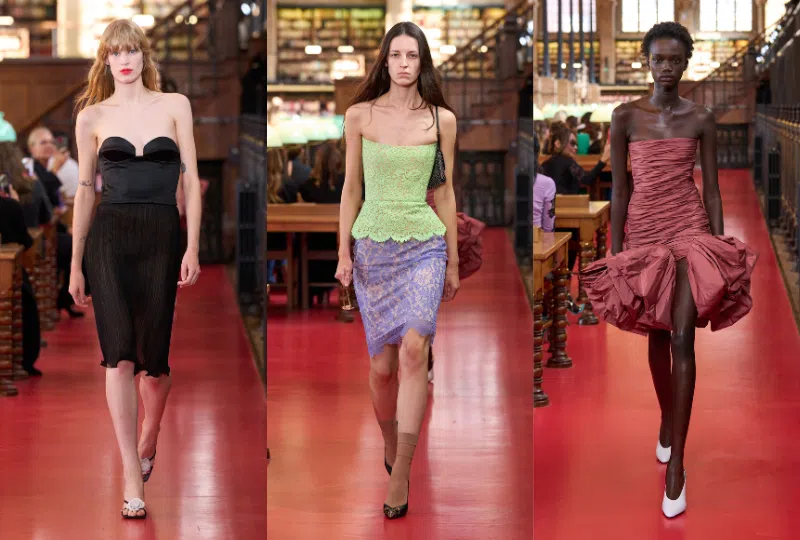
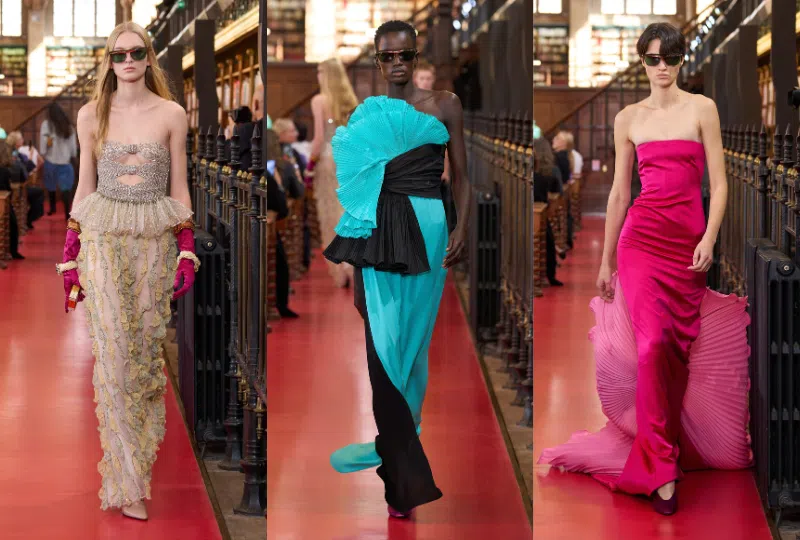
It is an especially fitting proposition for Michele, a designer whose clothes have never exactly been accused of lacking imagination. Since arriving at Valentino, the question has been how his instinct for accumulation might coexist with the House’s beloved sense of polish. This season, the answer came through editing. The opening stretch of jewel-toned satin bustiers felt almost startlingly bare by Michele’s standards, their seamed cups and exposed shoulders paired with knee-length skirts in crinkled crepon, floral dévoré and leather. For once, the eye had somewhere to rest.
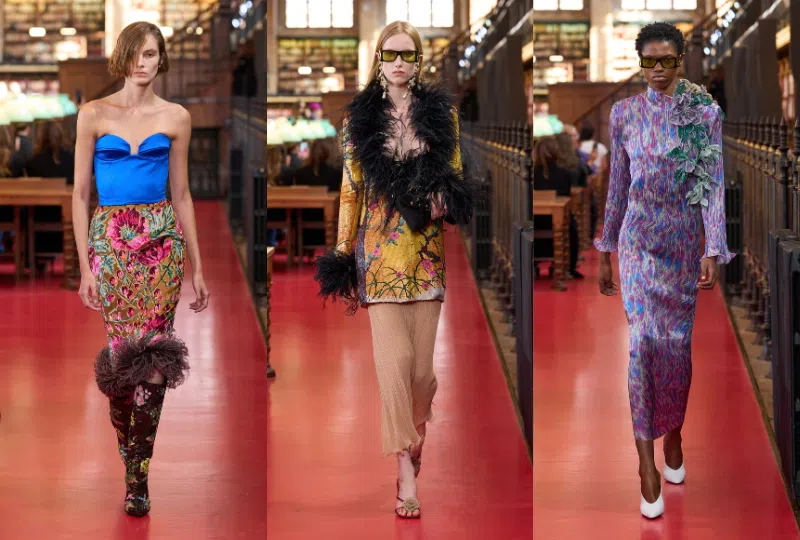
That breathing room gave the oddness more punch later on, when a checked men’s shirt wandered into a bustier-and-skirt proposition, or an ’80s-ish jewel-buttoned blazer met lace cycling shorts. Elsewhere, a webby lime-hued mohair knit was thrown over red lace, as harem trousers in a gnarled purple fabric disappeared into heavily sequinned boots. None of these pairings were particularly interested in good behaviour, though the point was less shock than collision: private taste interrupting the good manners of a grand Roman house.
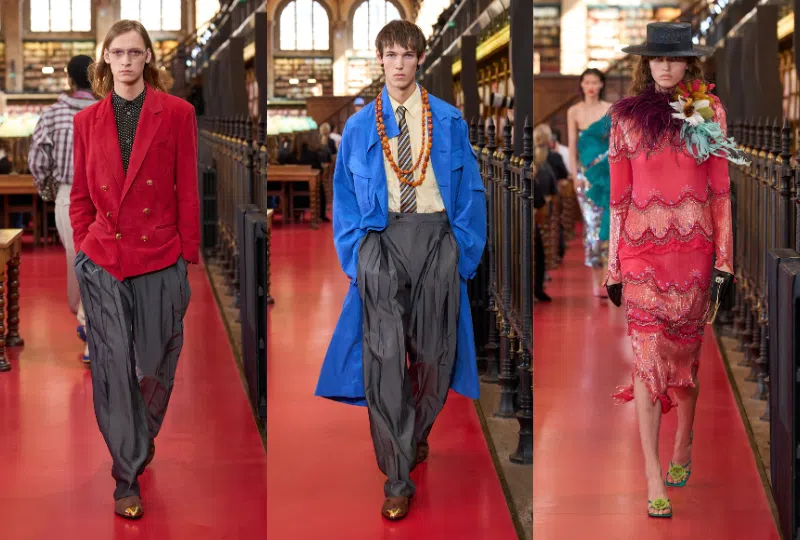
Colour operated with similar disregard for etiquette. Fuchsia satin, acid lime, cobalt, forest green and bruised purples bounced against chocolate browns, charcoal tailoring and dusty neutrals. Texture did even more talking, just look at how the satin gleamed against lace or the way embroidery and sequins turned surfaces into moving fireworks.
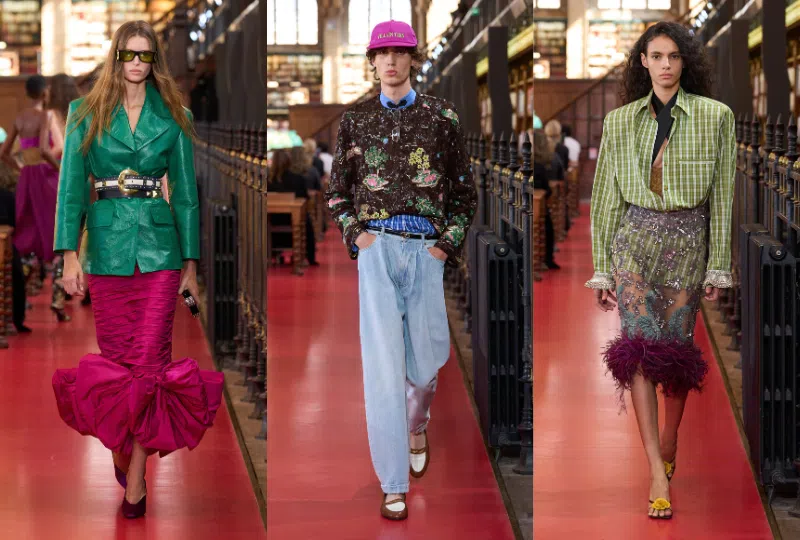
The menswear was allowed to be looser still. Double-breasted jackets were misbuttoned so they scrunched at the waist, silk boxers rose cheekily above trouser waistbands, and baseball caps emblazoned with the phrase “Villain Teen” punctured any lingering sense of propriety. It was Michele at his most instinctive: using wrongness as a styling tool and a way of provocation.
Yet the humour worked because the clothes beneath it remained precise. Remove the irony and there were substantial jackets, generous trousers and pieces that understood the appeal of being dressed without looking overly arranged.
Eveningwear, though, is where the conversation between Michele and Valentino Garavani felt most fluent. There were ornate gestures familiar to Michele, including rhinestones, ruffles and great accumulations of jewellery, but also moments of almost startling restraint. A pair of satin columns saved their drama for the train; a fuchsia gown unfurled into an enormous pleated rosette behind the body. Best of all was a black velvet dress plunging to the navel, its severity disturbed by a messy stack of gold and pearl necklaces. Valentino’s glamour was still there, only loosened and redefined by Michele.
There is, of course, something deliciously perverse about a luxury brand defending the beauty of clothes that may never be worn. After all, we have seen so many designers returning to the vocabulary of the wardrobe, utility and function this season. In his own vocabulary, Michele is arguing for fashion’s less practical life. His press notes describe the runway as a “visual antilibrary”, a reservoir of silhouettes and sensibilities whose worth extends beyond use. The idea could easily become an intellectual alibi for excess, but it mostly works because the collection itself has learned when to stop explaining.
The designer has not abandoned eccentricity, fantasy or the thrill of ‘too much’. Far from it, instead, he has simply created more space around them. Antibiblioteca proposes a wardrobe full of doors, some we may never open, some leading to lives we may never live, and each possibility making fashion all the more fantastical because of the infinite possibilities.