


|
Neubauer Artists LLC
Getting your Trinity Audio player ready...
|
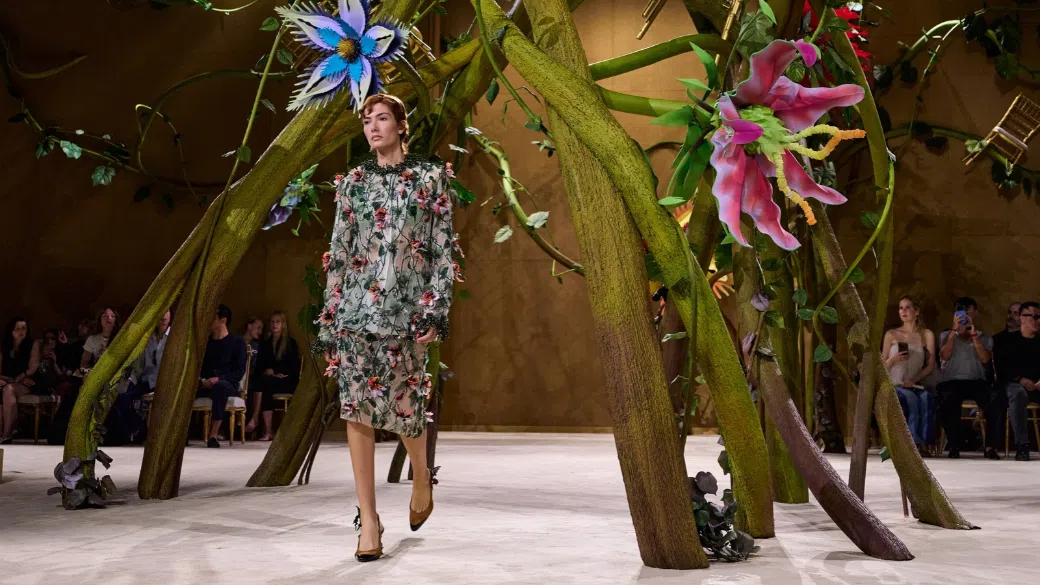
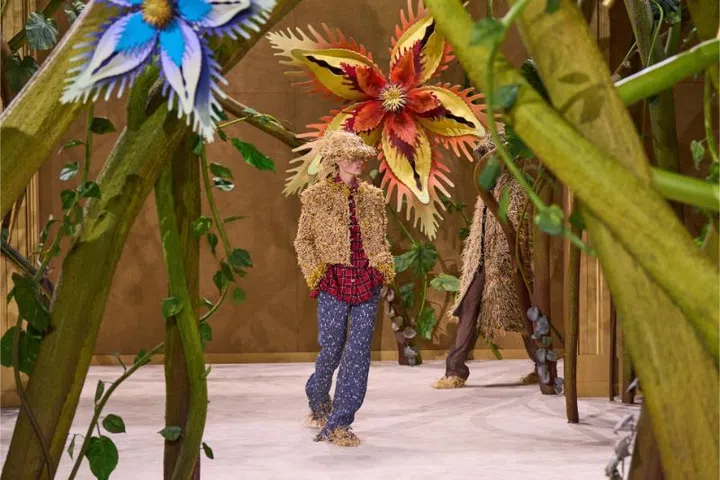
It was a moment that would knock the breath out of anyone entering the Grand Palais: a massive beanstalk sprouting up to what could have been the high heavens, as if all those fairy tales you read as a child were suddenly manifested in front of you.
At Chanel’s fall/winter 2026 haute couture show, the garden had gone slightly feral as Matthieu Blazy built an overgrown world informed by myths and lore, where scarecrows wandered among couture clients and familiar House codes acquired a storybook strangeness. Even the shoes participated in the fantasy: classic Chanel pumps came balanced on heels resembling golden eggs and bean-shaped pearls, as if Jack descended his beanstalk and somehow stumbled into the Chanel atelier.
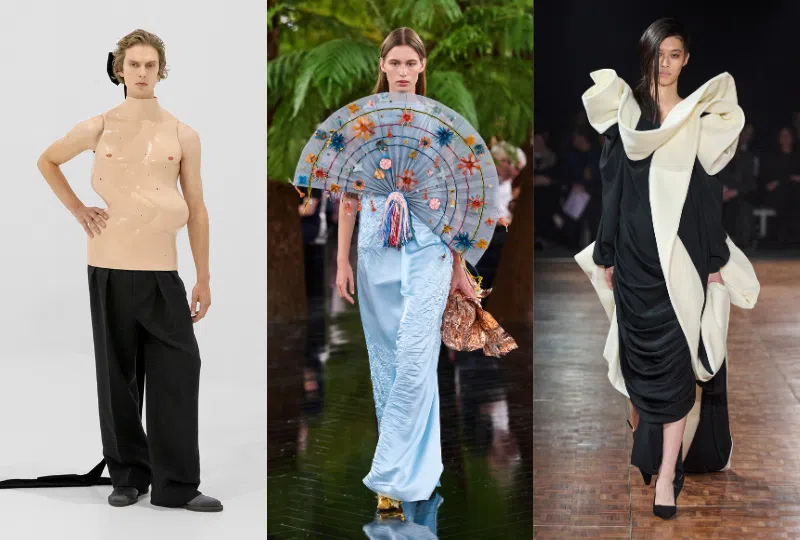
Elsewhere in Paris, things were getting weirder. At Hodakova, straggly wigs, chair parts and household textiles migrated onto the body. Duran Lantink’s work for Jean Paul Gaultier warped tailoring until Stetson hats, jackets and shirts seemed to have forgotten where they belonged, and come couture, he transformed dresses into tulle sculptures that burst forwards rather than the traditional sideways.
Then there was Schiaparelli, where Daniel Roseberry sent out glossy silicone forms that resembled human skin alongside inflated black tendrils and strange aquatic appendages, and a dress that glowed under dim light. The body remained recognisable, although increasingly only just.
The Psychology of the Double Take
Distort a body or put an everyday object somewhere it plainly does not belong and that prediction fails. The result is a powerful “wait, what am I looking at?” response. Surrealism knows how to weaponise the double take.
It has been doing so for a century. André Breton published the first Surrealist Manifesto in 1924, formalising a movement preoccupied with dreams, chance and the unconscious. Its origins were shaped by the psychological and cultural wreckage left by World War 1, and its suspicion of rational order was hardly accidental. By the 1930s, Breton viewed surrealism as a revolutionary project capable of challenging oppressive systems, while figures associated with the movement became involved in leftist and anti-fascist politics as authoritarian regimes tightened their hold across Europe.
ADVERTISEMENT
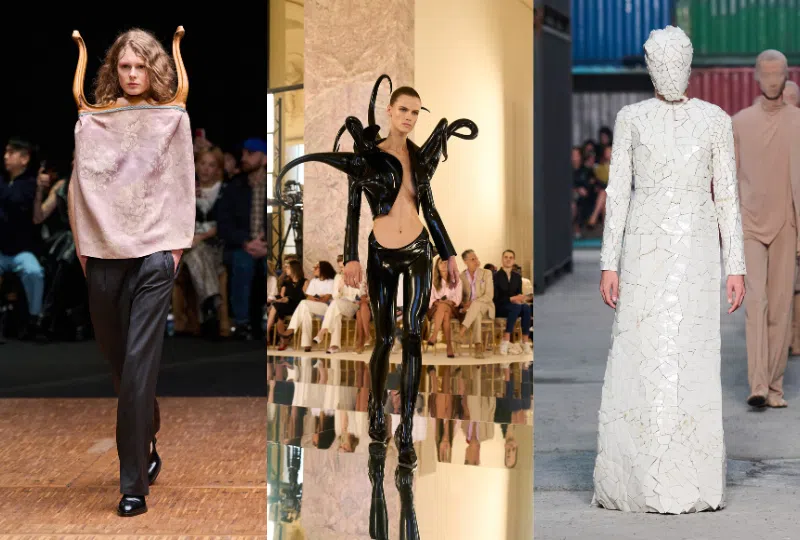
Photo: Launchmetrics/ Spotlight
Fashion proved unusually receptive to this way of thinking. Elsa Schiaparelli worked with Salvador Dalí and Jean Cocteau to translate Surrealist displacement into clothes that could actually be worn. An upside-down shoe became a hat, while ribs and vertebrae pushed through the surface of the Skeleton Dress, and the Tears Dress rendered wounds through trompe-l’œil. Their humour came with an edge because here, an ordinary thing in the wrong place suddenly became erotic, unsettling or simply ridiculous. Sometimes, even all three.
The comparison with 2026 requires some restraint. A funny handbag is not evidence that fashion has collectively mounted the barricades, and declaring every strange skirt a political gesture would give the industry rather too much credit. Still, the conditions surrounding this revival are difficult to ignore. The particulars have changed dramatically since the interwar period of Madame Elsa’s time, yet the sensation of established order becoming less reliable has an uncomfortable historical familiarity.
Taken together, fall/winter 2026 revealed an unmistakable appetite for the surreal. The common thread lies in that split second when the eye registers something familiar and the brain realises the rules have changed.
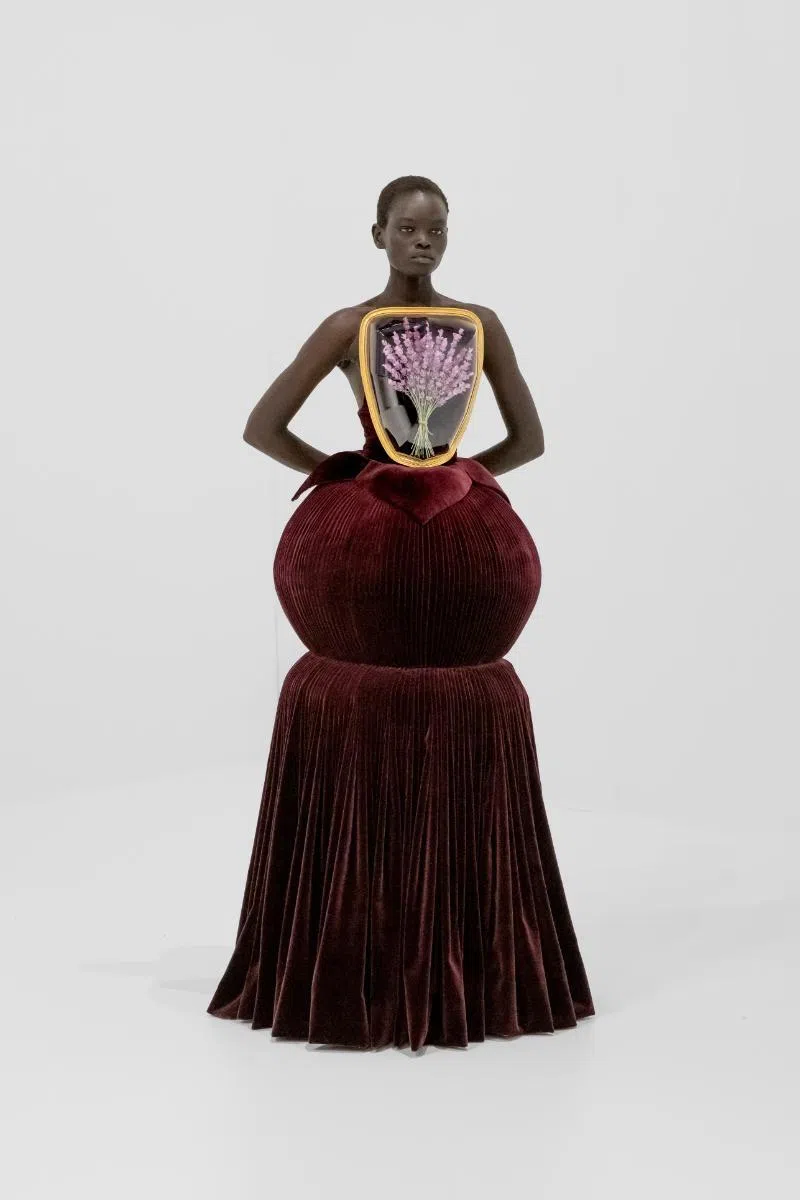
Photo: Launchmetrics/ Spotlight
According to fashion psychologist Dr Dion Terrelonge, that small moment of confusion is precisely why surreal imagery is impossible to ignore. Our brains, she explains, are constantly predicting what we are about to encounter.
Terrelonge sees a psychological connection. When reality becomes undesirable or unstable, she says, fantasy provides access to an alternative. Imagination can become protective during traumatic situations, offering somewhere for the mind to travel when physical circumstances cannot easily be changed. She describes contemporary audiences as feeling somewhat “untethered”, living in a world that resembles the one they knew while AI and livestreamed hardship have made it feel perceptibly altered. “This is the uncanny,” she says. Fashion, in turn, gives that sensation form.
Functionality in Absurdity
Hodakova’s fall/winter 26 collection made a particularly persuasive case for the power of familiar things gone awry. Designer Ellen Hodakova Larsson began with the idea of home and the different selves that exist within it. Domestic objects consequently escaped their expected roles, as a rug turned into a capelet or chair legs entered garments. Models carried mirrors and wore white looks made from bedsheets. A bra made from two teacups was funny on sight, yet the collection’s strangeness came from recognising every ingredient before seeing it recomposed. It recalls the original surrealist fascination with displacement, where removing an object from its expected context gave it a new charge on the runway.
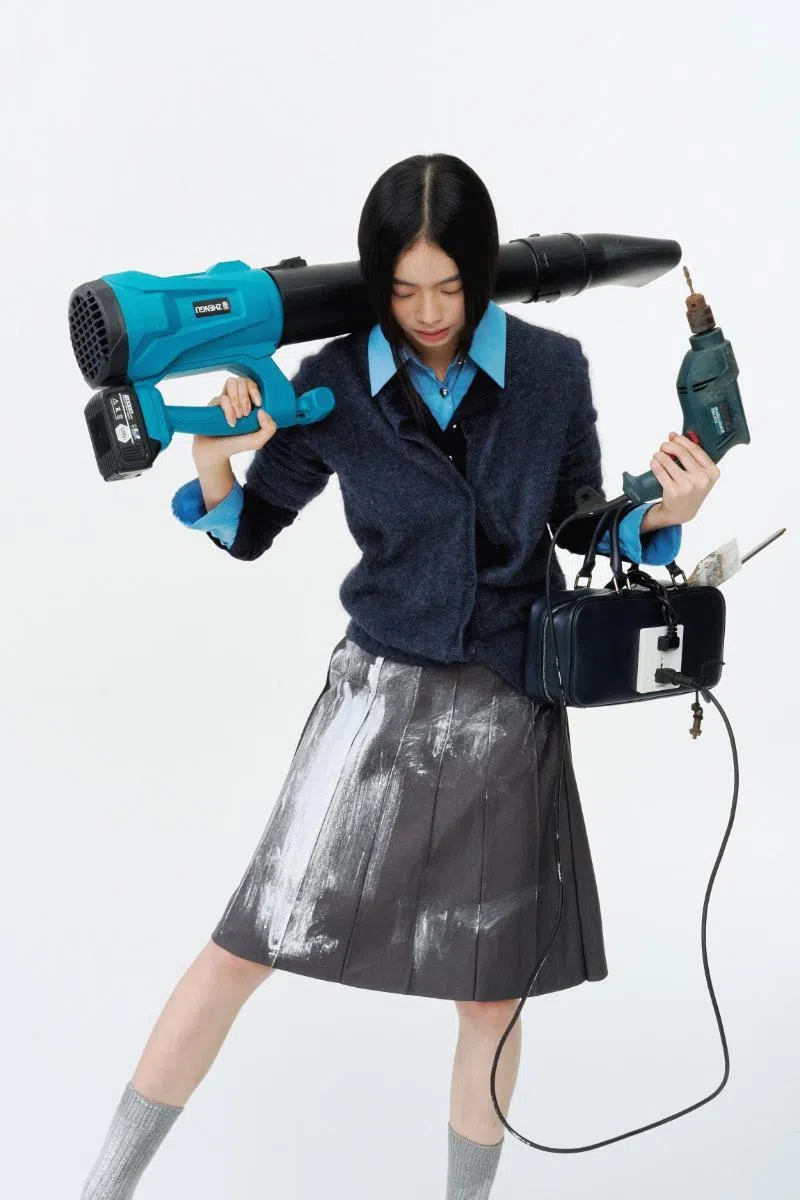
Hong Kong accessories designer Logan Chan has a phrase for a similar impulse at PabePabe: “functional surrealism”. Daily life, he argues, already provides ample source material because it has become “ridiculous enough”. His bags take objects we barely register and give them new jobs: the brand’s Flute bag incorporates playable wind instruments into its construction, while its On-Off bag comes fitted with an actual light switch that can be clicked back and forth. For Chan, humour is central to the exercise. Fashion can take itself rather seriously, and PabePabe’s proposition is that something can still be chic while being genuinely amusing. As he puts it, many brands today “lack joy and are becoming too similar”. Its absurdity requires serious leatherwork, but Chan enjoys making everyday objects into bags through methods that are almost perversely difficult.
Dream Craft Made Real
Therein lies another reason surrealism feels particularly potent now. We have become remarkably hard to impress on a screen. Digital manipulation has made impossible imagery mundane. AI can produce bodies that melt into furniture or handbags sprouting limbs before breakfast, occasionally with an extra finger thrown in for free. A physically impossible-looking garment presents a different proposition because somewhere, somehow, somebody has had to solve it.
Photos: Launchmetrics/ Spotlight
Lantink pushed that problem almost literally onto the body at Jean Paul Gaultier. His fall/winter 2026 ready-to-wear collection started with tailoring and displaced its familiar components: a man’s jacket became a skirt, while a shirt collar expanded into a bonnet tied beneath the chin. His couture debut went further, as traditional corsetry collided with 3D scanning, giving model Leon Dame a warped torso that appeared digitally glitched despite existing in three dimensions. Tulle erupted from sculptural forms; jackets migrated to improbable parts of the body. Here, couture’s old techniques suddenly found themselves negotiating with shapes that looked as though they belonged on a corrupted screen.
Schiaparelli’s couture show approached the same tension from a darker direction. Roseberry imagined the unknown depths of the ocean alongside a possible future in which human beings and AI begin to merge. Silicone was poured into sheets and manipulated into body-moulded corsets and boleros, giving skin an eerily manufactured finish. One model appeared almost crustacean-like; another grew inflated black tendrils. Yet some of the collection’s strangest effects depended on very human labour, including hand-applied feathers and minute embroideries. The fantasy may have looked futuristic, though its physical existence depended on the stubborn realities of hands, material and technique.
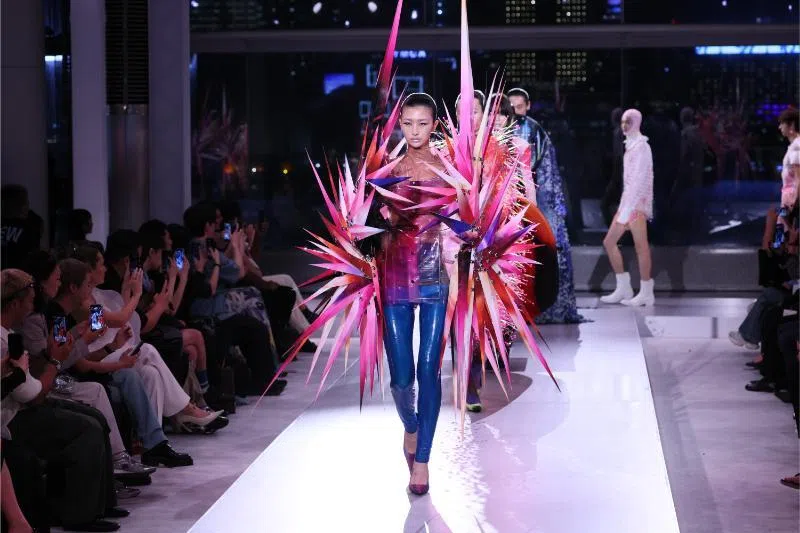
Photo: Launchmetrics/ Spotlight
That tension is increasingly interesting to Kit Wan. The Hong Kong designer readily cites René Magritte as an influence, although he describes his own process through the act of connecting things that appear unrelated. His recent “Mutant Mythology” collection brought what he calls “industrial futurism” into conversation with “essential romanticism”, with nature providing another route into the story. Wan approaches clothing like sculpture, gradually finding shape through construction rather than treating the body as a fixed template.
For a designer whose work has often been associated with technology and science fiction, his response to the current digital landscape is unexpectedly analogue. Wan says he has found himself looking backwards towards forgotten craft and handwork. Books, nature and knowledge passed between generations currently hold greater appeal than pushing deeper into the digital. He expects those worlds may eventually meet again. For the moment, slowing down offers its own kind of creative solace.
His process also complicates the romantic idea of the lone designer conjuring strange worlds from thin air. Wan places enormous importance on the artists, dancers, set designers and other collaborators surrounding his studio. During his recent Hong Kong show, a casting problem hours before curtain forced the team to reconstruct one of the closing looks. Wings and breastplate components were grafted onto a jacket, creating an “Angel” turned mutant through necessity. The accident became part of the fantasy because surrealism, after all, has always left a little room for chance.
Making the Impossible Real
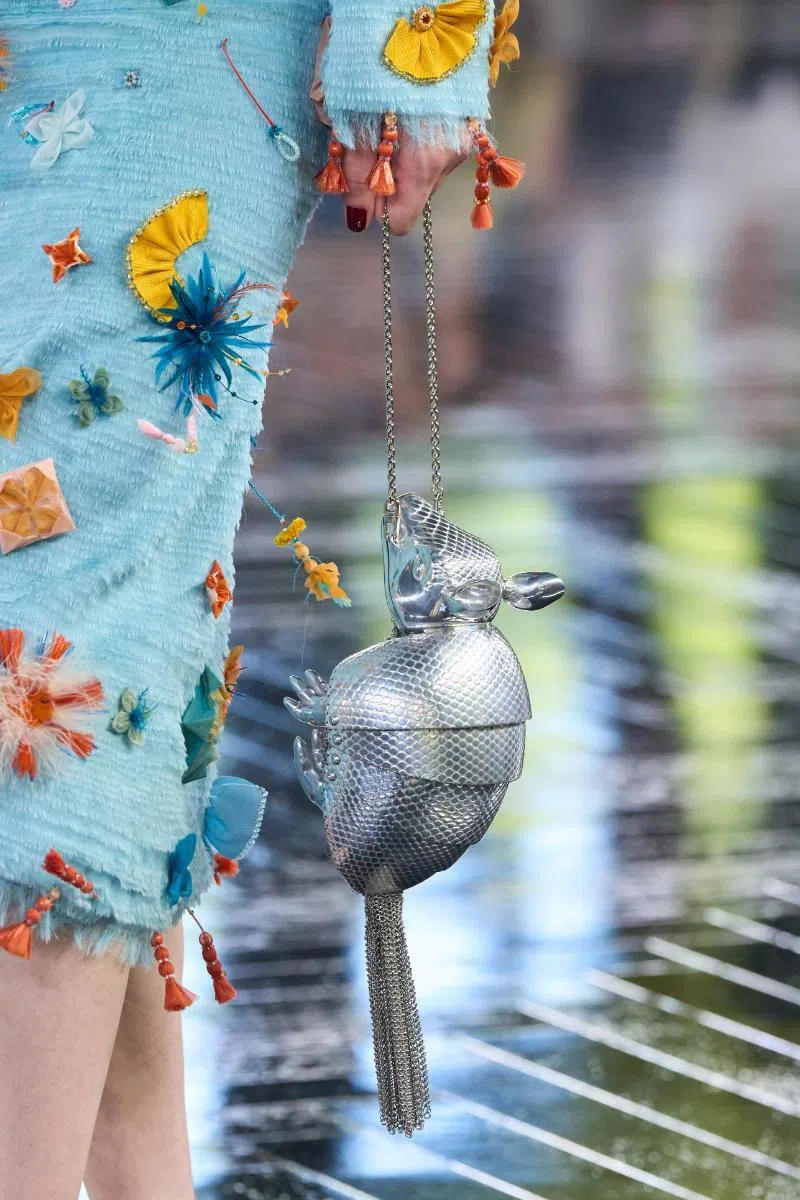
Photo: Launchmetrics/ Spotlight
Physicality matters here too. Terrelonge mentions that encountering an improbable object in real life demands considerably more cognitive attention than seeing the equivalent digitally. We already understand that pixels can be manipulated into almost anything. A strange object occupying the same space as us creates a harder problem for the brain to solve. It cannot simply be dismissed as an effect.
Perhaps that helps explain why fashion has become such fertile terrain for the current surrealist mood. Its extremity is suddenly useful again and the enormous expenditure of skill required to make an impossible proposition functional gives fantasy a weight that an image generator cannot replicate. Even Chanel’s gentler fairytale world relied on minute embroidery and exacting construction to make its fictions persuasive. The magic works because somebody had to figure out the engineering.
Chan sees humour as central to PabePabe and the larger movement, particularly when so much of fashion can begin to feel homogenous. His belief that something can be “chic and fun at the same time” sounds simple, yet there is something refreshingly unruly about refusing solemnity when luxury often takes itself too seriously.
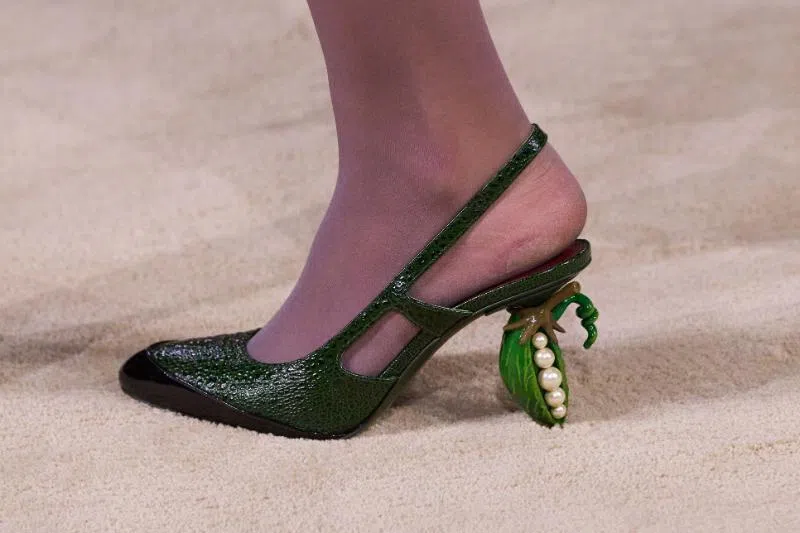
Photo: Launchmetrics/ Spotlight
There is no reason to assume every designer working this way has politics on his mind. Wan deliberately keeps his distance from market trends, while Chan describes responding to the world through his own sense of humour. Their answers are revealing precisely because the connection is indirect. And reality currently supplies plenty to work with.
Chan perhaps puts it most succinctly: “Maybe reality itself feels more surreal now.”
That might be the nearest explanation for our current out-of-reality state of fashion. The industry has found itself in a world where the uncanny no longer belongs exclusively to dreams, and designers are responding by giving strangeness a physical form. A teacup leaves the kitchen for the chest, just like how a human torso bends sideways. Silicone learns to impersonate skin, and the familiar survives each encounter, although its meaning comes back changed. Yet, where the impossible has become remarkably easy to fake, fashion has discovered a more satisfying trick: making it real.