









|
Neubauer Artists LLC
Getting your Trinity Audio player ready...
|
I met Matisse one evening at a cabaret. Sent by the newspaper which, at that time in my life, was kind enough to cover my living expenses, I had gone, without much hope, to Boulevard de Belleville to spend the night.
Although I arrived early, I was not the only one standing around outside the entrance to the room, above which a motionless zebra, emerging from the wall halfway up, and which seemed to have dipped its muzzle in a barrel of acid, was looking at me with its crazy gaze.
Filled with the prejudices of the ignorant, I had expected to see American dancers come here to live out their Belle Époque dream with quavering voices, low-heeled mules, and peacock feathers up their backsides. But I soon discovered that, far from being a tourist attraction as I had imagined it, the cabaret scene, in the vein of the Lapin Agile and other pre-war cellars where Aristide Bruant held court alongside the wolves, this cabaret, at least, didn’t wallow in glitz and glamour, and seemed to have, instead of a star, neither a survivor of a variety show nor a made-up version of Sinbad the Sailor with a smile frozen by the spotlight, but, let’s put it bluntly, the prince of lunatics in this town, with, all around him, from act to act, the most furious and unhinged court.
They were throwing knives to melancholic tunes, spinning in hoops 4 meters above the ground, singing songs where the tears of the drunk people on the balcony fell on the heads of the drunk people below and scattered like little crystal rosaries.
The Prince began his introductory act with the phrase: “The more you drink, the funnier I am”, so the small crowd crammed onto the poorly aligned wooden chairs, who had come to laugh, did not need to be asked twice.
In the fourth act, just after a drag queen with a body electrifying with magic had begun breathing fire—which didn’t stop her from sending the most famous notes of The Magic Flute soaring through the flames —I noticed. I noticed that the Prince, in yet another costume change, was now wearing something that awakened a previously unknown part of me. High-waisted trousers that hugged him and flowed down his slender legs in a straight, flowing cut.
Sitting in the second row, I could smell its scent, mingled with the perspiration of the galaxy of bodies in the room. It was latex. Or rather, no, rubber. The shock was violent; I shifted space-time to rediscover that first fetishistic verse in the history of French poetry, the end of the first stanza of Rimbaud’s “Mes petites amoureuses,” which I had always interpreted as the description of the erotic tension exerted by the contact of a tongue with matter, the tongue of a tree that itself produces matter, that perhaps drools and licks it in the same movement. Ultimately, poetry doesn’t concern itself with explanation, and to better grasp the moment, I replayed that fragment in my mind once more.
A tearful hydrosol washes away
the cabbage-green skies:
Beneath the drooling slender tree,
your rubbers
Simply that image of a tree whose buds appear, dripping onto the waterproof clothing of the young girls to whom Rimbaud is speaking, that image kept coming back to whip my blood. That, and the vivid pleasure of tinkering with the inner tubes of the neighborhood bicycles as a child, when that was all there was to do, when a functional pedal-powered vehicle represented as much freedom as it took strength to ride it.
I slowly made my way back to the room, gradually re-inhabiting the space and wondering what attracted me most, whether it was the object itself or its scent. I wasn’t naive about the power of attraction certain clothes could have over me, since fashion is a grand game of fetishism, and the symbolism or totemic charge of a pair of Louboutins or TNs is no longer a secret to anyone. But this was unexpected, and very powerful.
I understood from the start that one of the challenges of the show, a veritable colony of eccentrics, was to wear as many different outfits as possible, and that this required calling upon a number of designers. Mine, the one I was looking for, was named Matisse.
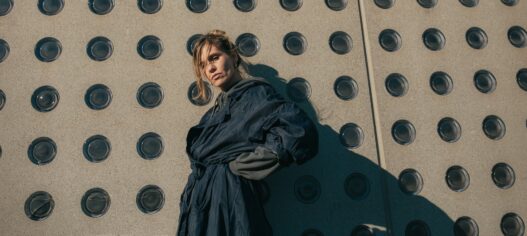
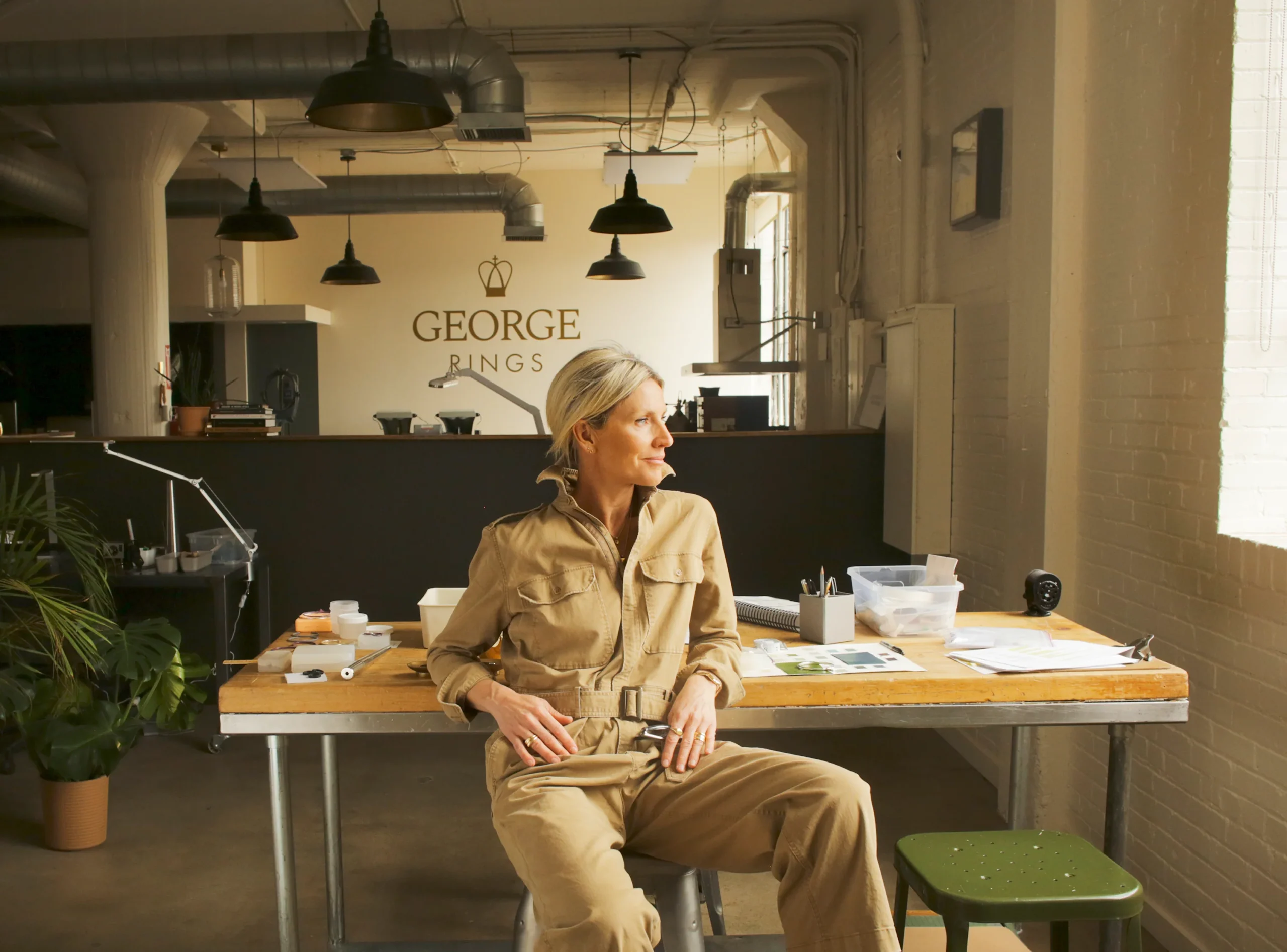
With early 21st-century technology providing all the necessary communication tools for a meeting, all I had to do was enter her name into the search bar of one of the three apps that dominate my phone, and about an hour after the show ended, we had an appointment for the next day. She told me it was at her studio, located in the courtyard of a former brick factory, with an unobstructed view of the train departures from the Gare du Nord. So I arrived on time and stepped into the wide elevator shaft, closing the door with a grimace, to reach the fourth floor, where Matisse awaited me, draped in an incredible, deep, cosmic black, without knowing for sure whether it was a dress or something else less conventional.
Conventional was certainly not the word that came to mind when describing these places where I found, still lingering despite the high ceilings, the smell of rubber from the day before that had brought me here.
On the racks on either side, motorcycle suits, corsets, backpacks and accessories that were more like gas masks, the reappropriation of certain objects whose initial function was diverted to let deviance speak, than simple finery.
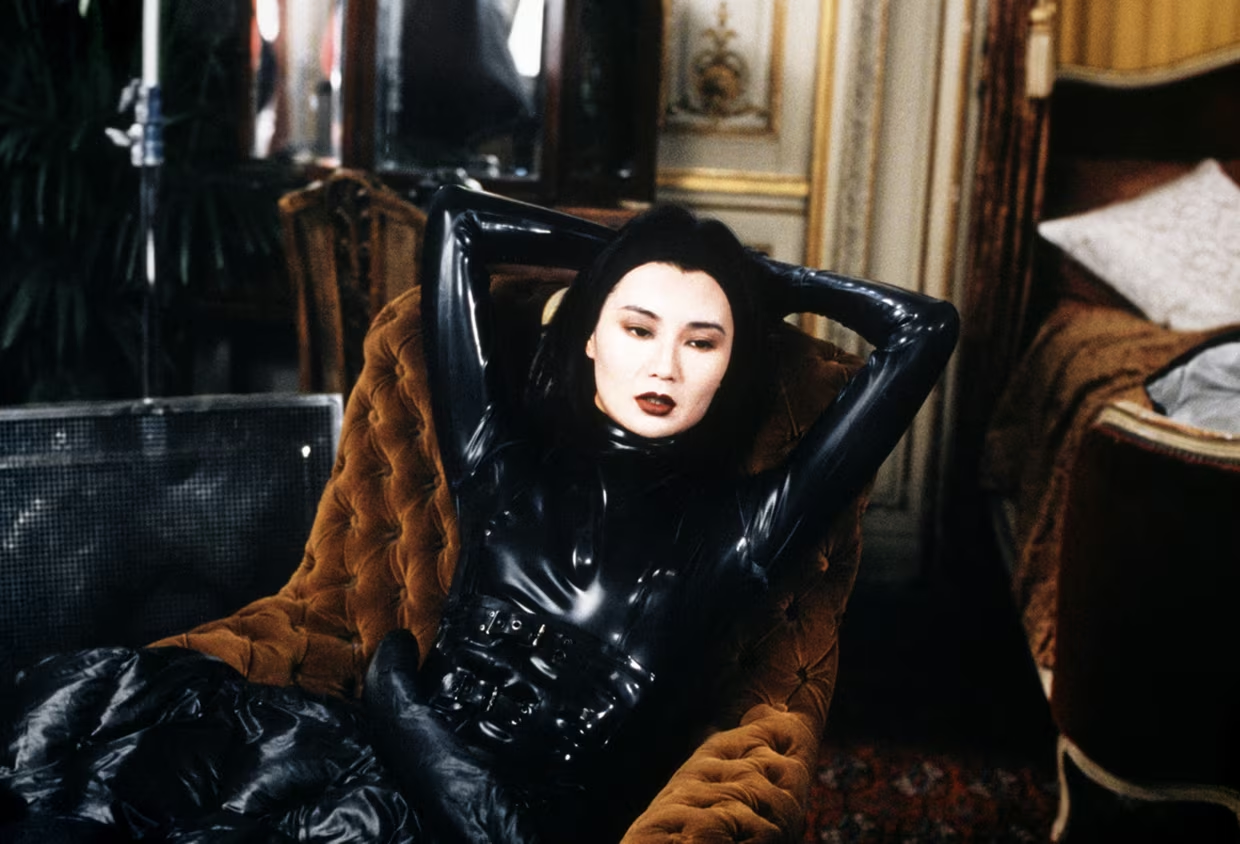
The whole thing showed me, far from being a crude set of erotic games for adults, a certain talent devoid of fear in materializing on a human scale an entire universe of fantasies, an ennoblement through cuts of what is ordinarily perceived as disturbed, disturbing.
Sitting face to face, I listened to Matisse talking to me, explaining the almost theological basis of his pieces.
“– For me, it is an uncontrollable resurgence of the need we have to fight against an economic system that poisons us, in which we live while fighting it.
– You mean, like a form of resistance?
– Initially, no. Of course, there’s an element of transgression in embracing a fantastical universe that challenges traditional models. But since it’s also about commerce, about the market, all of that is swallowed up by the system to become a product, a totem. It’s a vicious cycle. Is it primarily the process that reduces our relationships to mere market exchanges, that turns us into commodities worshipping the object in contact with our bodies more than the body itself? Or is it fetishism that compels us to behave like commodities, to become objects and to merge with them?
– But how do you differentiate between this condition of submission to the powers of the economy and the act of resistance induced by fetishistic practice?
– It’s a matter of conscience. In reality, everything today reflects the fetishistic nature of humanity. It’s simply that late capitalism knows how to exploit this part of us by imposing its own objects of fascination on us for commercial purposes: the iPhone, sneakers, the car. But becoming aware of this fascination, the erotic, neurotic tension it contains, is the beginning of something interesting.
– What do you mean? Explain it to me.
– It is at this moment that we reconnect with the creative impulse of the soul. We realize that this energy within us is being diverted towards false desires, so we begin to search for what truly attracts us, and to find it, to circumvent this exploitation, we begin to create.
– If I understand correctly, for you, it is by discovering one’s submission to the object, to the garment, that one emancipates oneself from it, since one begins to invent, to search for oneself the most invigorating place to be, and therefore to be free from being?
– Yes, exactly. It is also through clothing that we form a community, and the pieces I create are aimed at those who are aware of their position in this power dynamic, and who, through this awareness, form a community.
– What do you mean by community?
– The circulation of the same frequency of love between a number of people, linked to a common culture.”
It had the merit of being clear, and I realized that an overly sexual interpretation of Matisse’s creations would simply be an admission of weakness in the face of the poetic libido contained within his pieces. It was my task to find the means to live up to the power offered, and thus avoid debasing it in spaces of overly predictable mental projections.
It was something else entirely, and I was now touching that world whose door had opened one evening, through the summoning of a sensory memory where, just as Proust saw his Aunt Léonie’s universe unfold with the ingestion of a tea-soaked madeleine, I experienced through scent the reminder of the brutal snap of attraction I felt for a material and my buried desire to inhabit it with my body. Seeing me lightly touch a set of four jumpsuits that reminded me of a motorcyclist’s, mechanical version of the Four Horsemen of the Apocalypse, Matisse, with an amused smile and an indulgent gaze that sees the strange chemistry activating within another and transcending them, stubbed out her cigarette in the glass ashtray placed before her before offering me these words as one would offer a key: “Would you like to try one on?”