



|
Neubauer Artists LLC
Getting your Trinity Audio player ready...
|
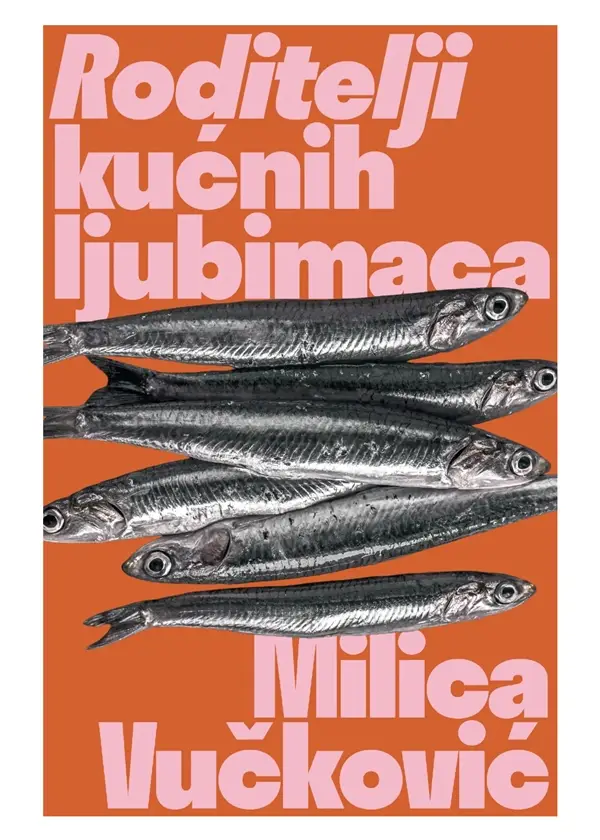
We all know that moment on a journey when the sea first comes into view around a bend. A profound sense of pleasure and joy washes over you when you know that a period of feeling good lies ahead. The news that Milica Vučković was publishing a new novel with Laguna brought a similar feeling. Many readers of contemporary Serbian literature, myself included, began counting down the days until they could finally hold Roditelji kućnih ljubimaca in their hands.
Following her exceptionally well-received story about love and upbringing, about Eva and Viktor, and the great success of her novel Smrtni ishod atletskih povreda, this time we have been given an intimate, almost confessional story. It feels as though it was written in a single breath, driven by an urgent need to set down on paper that brief but important journey from child to human being. The novel opens with a quotation from Isidora Sekulić, just as the previous one began with the words of Ivo Andrić. From the very first pages, it becomes clear that these quotations are not there by chance. They serve as an introduction to the manuscript, but also as a reminder that no story ever emerges entirely on its own.
In conversation, Milica Vučković tells me that quotations matter because they return us to the collective knowledge, language and culture on which we constantly rely. Everything we do rests on what our language and culture have inherited, something we must always return to and remain grateful for, the author explains. When it comes to choosing the quotations themselves, however, she admits that the process is often unplanned: Sometimes it is a matter of chance. Sometimes quotations simply present themselves spontaneously. They find me, not the other way around.
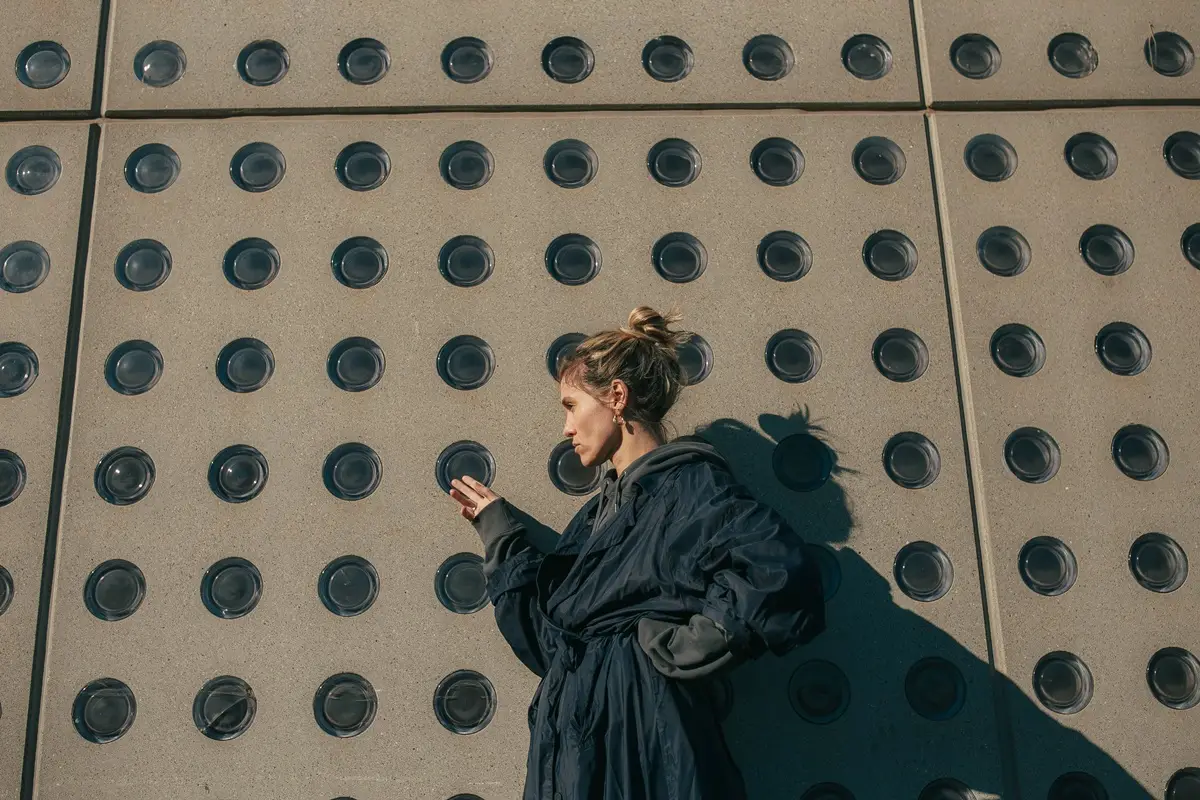
From the very first pages, Milica Vučković reveals that what the reader is holding is not merely a novel, but a memory book belonging to its protagonist, Beni. In our conversation, she revealed that Beni was the one who set the story in motion, while her role was simply to encourage him to tell it: Beni complained to me at the beginning of the novel that he had been told he must never write a memory book. I encouraged him to write it and stood guard for him. Every time I got into the car and took the wheel, which I do very often, every day in fact, he was there beside me. In the novel, we simply switched places.
Following Beni, the reader quickly realizes that time in his world is not measured in the way we are accustomed to. It begins one minute before the alarm goes off, one minute before the light above his aquariums comes on. It is not measured by anniversaries with his partner Emili, milestones at work or the number of years spent at the same company. None of that. His time is defined by sleepless nights, the miles he drives and the hours he spends preparing himself to call his mother, along with the reasons that call once again never happens. The car becomes the only place where he can be alone with his thoughts, far enough away from everything, including the statistics on plane crashes that he knows so well.
As I read Roditelji kućnih ljubimaca, one of the things that most caught my attention was the variety of people who pass through Beni’s life. He is almost constantly meeting and getting to know someone new, those who remain for only a few pages and those who leave a much longer-lasting mark. Each encounter feels like a small shift on his inner map.
When I ask how much other people change us and whether this novel is, among other things, a story about the diversity and complexity of human existence, Milica answers simply: Literature itself is an ode to human existence. She adds that writing is, for her, a way of expressing gratitude, but also that encounters with others always become encounters with ourselves. A human being is a mirroring creature, she says, and exists always and only in relation to another.
I thought about that sentence for a long time. At first glance, there is nothing in it that we have not heard before, something Milica herself acknowledges in her answer. But that is precisely where I see its significance, because the most important truths are rarely new. They are simply spoken at the right moment. Our relationships with others truly are a mirror in which we recognize ourselves every day. Sometimes it is clear and pristine, sometimes clouded or shattered, but the condition in which we leave it is up to us. Most importantly, we should remember that a mirror can always be cleaned and made to shine again.
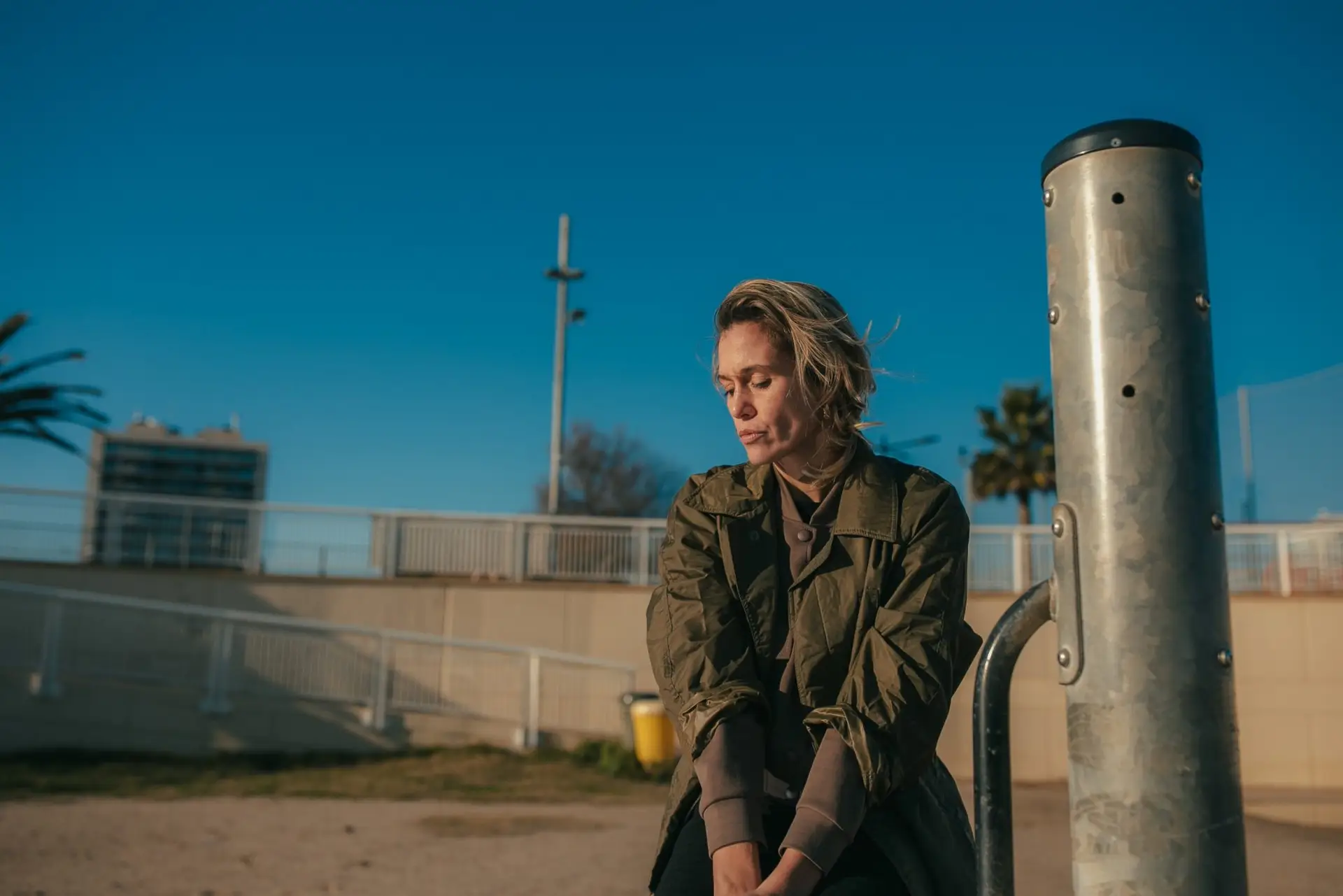
Speaking of relationships brings us to love, which in the novel can also be treated as a separate entity, a character in its own right that runs through the story, holding all the protagonists together and bringing them back to one another. The love in the novel is romantic, platonic and parental, but it can also be recognized in our relationships with plants, small things, animals and the people who are only just entering our lives. It is not always gentle, clear and unconditional, nor does it necessarily manifest itself in the way we expect love to look within relationships. Is this portrayal of love also a reflection of your personal view of it, I asked Milica.
“You could say that. Now you are psychoanalyzing me,” she replies. “The relationship a person has with love is the relationship they have with themselves. I assume that my characters and I have many things in common, including the way we understand love. To me, love is the most incredible thing in the world, which certainly means that I consider it complex and, of course, different from Hollywood and fairy-tale stereotypes, as well as from contemporary post-capitalist mantras claiming that love means putting yourself first. Love is a space for compromise, for understanding another person, for pushing boundaries, for persistently getting to know yourself through someone else. It is not selfishness and comfort, nor is it doling out love only to the extent that suits us and does not disrupt our well-being. That is how one loves plants or pets, not another person. For one person to love another is difficult, the most difficult thing of all, but it is possible.”
Through the boy Petar, little Teo, different parents and approaches to upbringing, and even through the way people relate to their pets, the novel continually poses the same question: what does it mean to care for another living being, and what consequences are left by the way we were, or were not, loved while growing up? When I ask how important children really are as a theme in this novel, Milica answers with great precision: The central theme of this novel is children, or rather that brief but important journey from child to human being. We see the protagonist from both perspectives. That journey is doomed to failure because I believe that no one can pass through childhood unscathed. The only question is whether we will use our experience as an excuse to be inhuman or as motivation to become human. That is precisely what Beni persistently tries to do every day: to be human. To me, there is nothing sadder than unloved and neglected children. I believe that everything wrong with this world begins there.
After that answer, it became clearer to me that Beni’s memory book is not merely the story of an adult man trying to find his place while moving through an endless journey. It is a novel that bravely takes us back to the beginning, reminding us that we become adults long before we realize it, through the ways in which we were seen, loved and protected as children.
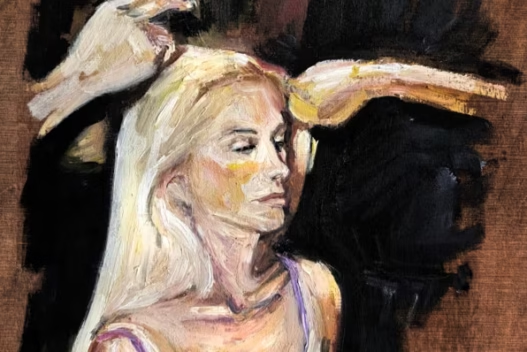
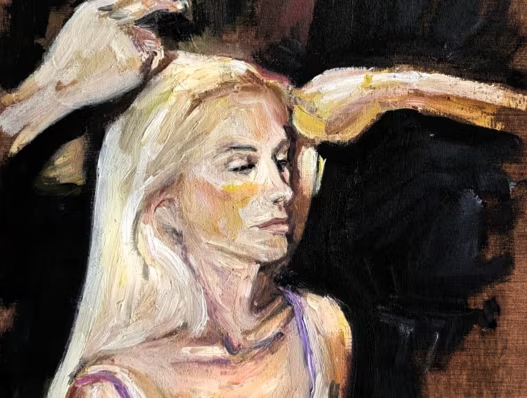
As the conversation slowly drew to a close, I could not resist raising with Milica the relationship between the visual and the textual in her work, and asking how she relates to her characters, first on a visual level and then on an inner one. Her protagonists are not only psychologically convincing, but also rendered with exceptional vividness. Their physical appearance, movements, facial expressions and minute details almost become scenes before the reader’s eyes, which may not be surprising given that Milica Vučković is a visual artist. Do you first see your characters and their lives in shots and sequences, or do they immediately take on a literary form? My visual impressions are very strong. That is simply how I perceive the world, so I have often been told that my formal training as a visual artist comes through in my writing. I am glad if that is the case.
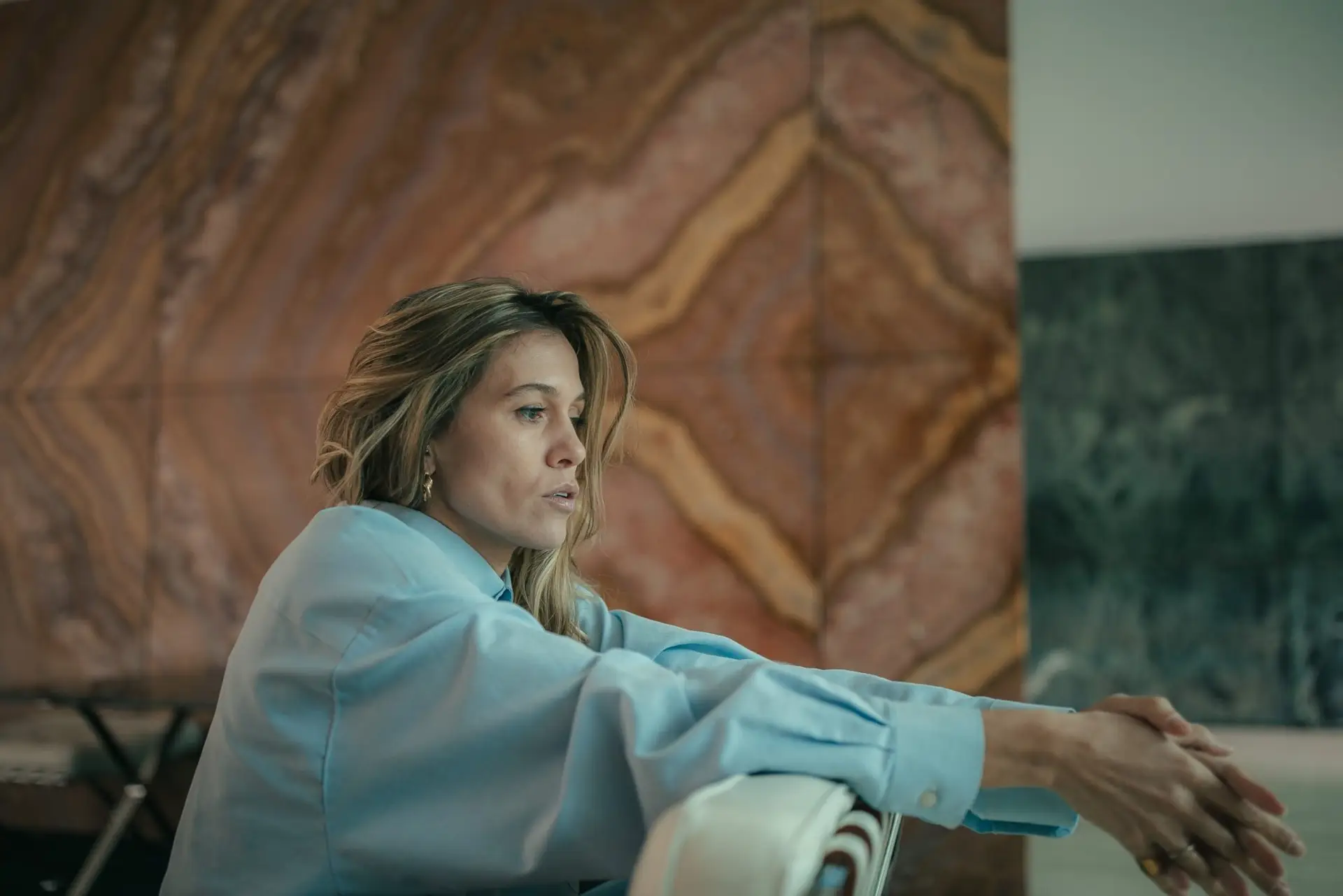
I was equally interested in what a writer’s relationship with the people they have created looks like. Despite the understanding she offers them, does she ever judge them? “People judge what they do not understand. To create my characters, I first have to understand them completely, which means that I must not judge them,” she said briefly and directly. What held me most firmly within Roditelji kućnih ljubimaca were the moments when the characters surprise both themselves and the reader. These are the scenes in which it no longer feels as though the writer is guiding them and keeping them within the bounds of what is expected, but as though they themselves are discovering the path they must follow. That is why I asked Milica what the moment looks like, during the writing process, when a writer allows a character to follow their thoughts and impulses all the way through. Is that where freedom lies? Should writers restrain their characters and keep them within the boundaries of what is “possible and probable,” or should they allow them to venture to the very edges of their sleepless nights, leaving whatever happens there precisely where it occurred, in that night? Her answer spoke not only about writing this novel, but also about art today, at a time when the question of whether artificial intelligence can replace human creativity is being raised with increasing frequency. You have used a wonderful word, one of my favorites, and that is expected, or rather, unexpected. To me, that is one of the most important characteristics of art, particularly today, in the age of artificial intelligence. I have no fear whatsoever that it will be able to replace art completely, real art, because it does not know how to create the unexpected. It operates with what it already knows, with the expected, with what has “already happened.” And if we say that “everything has already happened,” the task of any art form is to present it in an unexpected way, to allow something controlled yet accidental to occur, something capable of surprising and exciting you.
As I closed the book, it seemed to me that the essence of Roditelji kućnih ljubimaca was contained in that very word: unexpected. Literature finds its greatest strength not in what happened, but in the way it leads us to see events differently, which is why this novel is a serious exercise for the imagination.