






|
Neubauer Artists LLC
Getting your Trinity Audio player ready...
|
Five perspectives, five decades, one Balearic island. Ibiza has never been a single story, only what each person wants to see. A look at five works that capture its multifaceted life.
“Ibiza 76”, by Walter Rudoplh
Walter Rudolph, an advertising photographer sent by the airline Iberia, arrived on the island in 1976. His aim was to create desire, not to document. His subjects, eager to be seen and desirable, played along. Intended for a travel brochure, his images were initially intended to have a short lifespan. Fifty years later, they were republished as historical documents by Emma Salahi, a gallery owner in Ibiza specializing in the island’s forgotten archives. Published in April 2026, the book revisits this process of mythologizing, transforming what was, at the time, merely a marketing tool into an archive.
“Ibiza 76” by Walter Rudolph, published by Agony + Ecstasy.
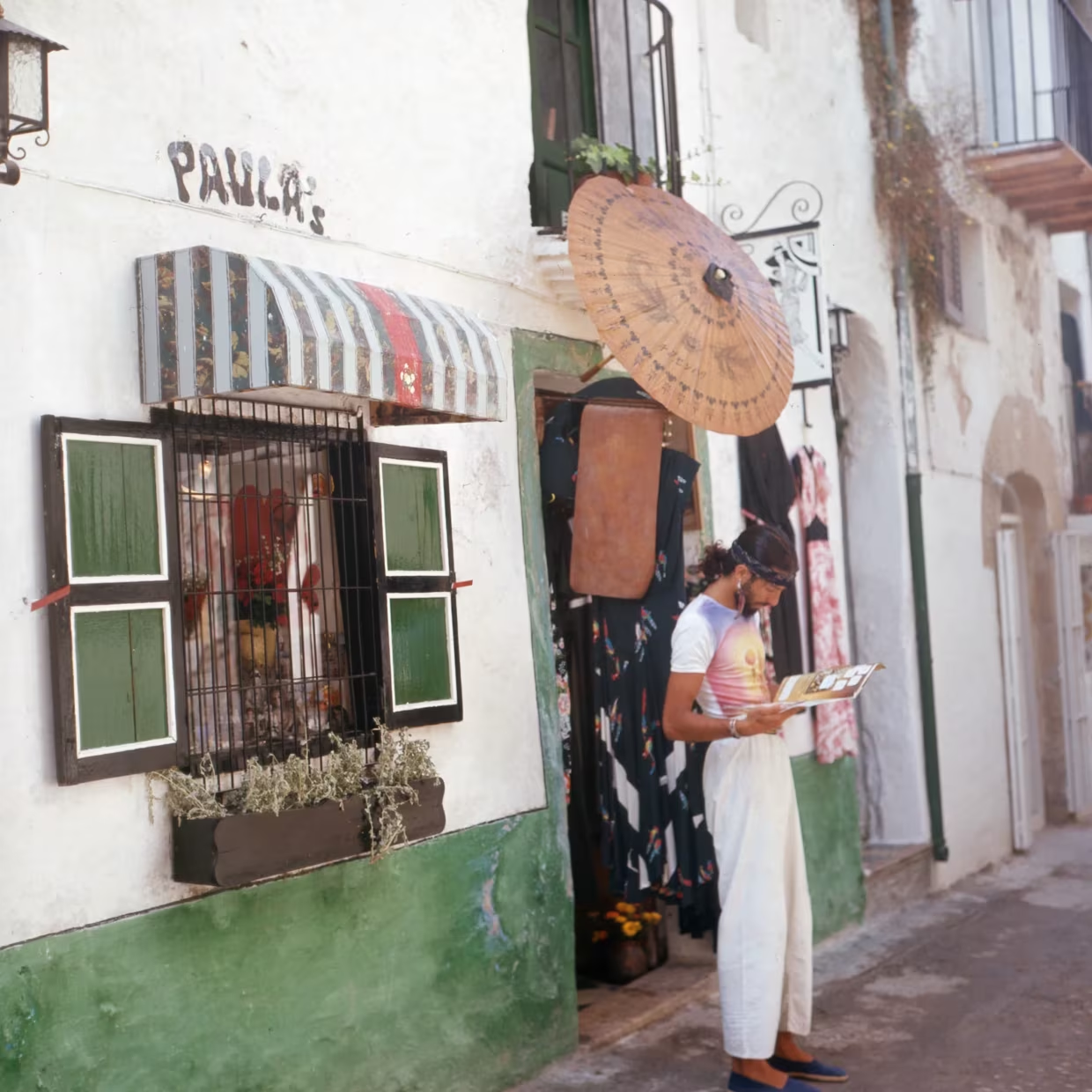
“Ibiza 76” by Walter Rudolph, published by Agony + Ecstasy in April 2026.
© Walter Rudolph – Agony + Ecstasy
“Oriol Maspons: Ibiza” , by Oriol Maspons
Oriol Maspons never photographed Ibiza for a client. A leading figure in the revival of Spanish photography under Franco, he discovered the island in the 1950s and returned every summer from the late 1960s to the late 1980s, camera in hand, but on vacation. Nudes, beaches, parties—nothing commissioned, simply personal archives. His son recounts that, even in the 1980s, Maspons felt the island had lost its soul, despite having known it for thirty years. Published in 2024 by IDEA in a limited edition of one thousand copies, with a preface by his son, the book captures less an island than a laboratory of customs, where locals, expatriates, and the first rebellious tourists mingled—an island of permissiveness in a Spain that offered little of it, closed in on itself, and already threatened in the eyes of its chronicler.
“Oriol Maspons: Ibiza” by Oriol Maspons, published by IDEA.
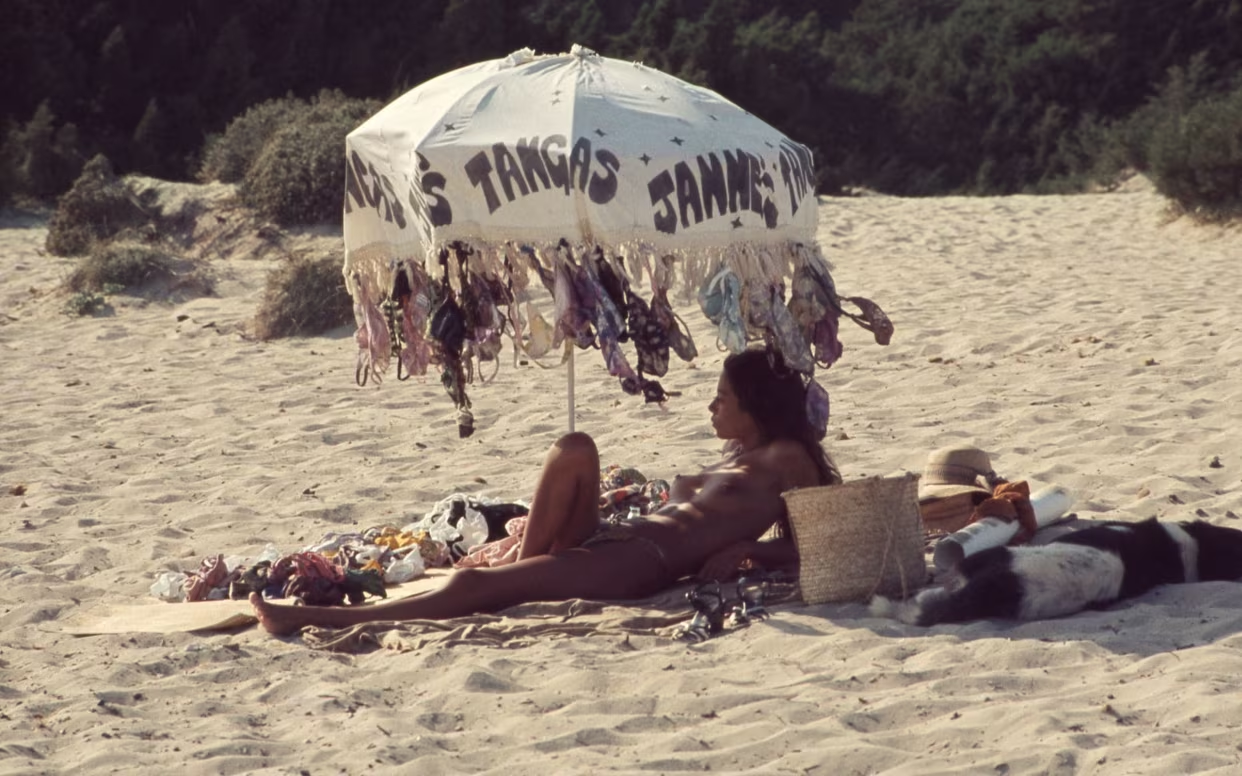
“Oriol Maspons: Ibiza” by Oriol Maspons, published by IDEA in 2024.
© Oriol Maspons – IDEA
“Ibiza ’89” , by Dave Swindells
Dave Swindells knew he was photographing an ending, not a second one. Nightlife editor for Time Out London, he arrived in Ibiza in 1989, precisely for the last season that the Amnesia and Ku clubs would remain open-air; rooftops would arrive in 1990. But that summer also marked something else: British promoters and DJs began to invest in the local scene, a prelude to the English invasion of the nineties. His photos show an era when free entry was still possible at the start of the season, an Amnesia without a VIP area (the club now has four), a slightly ecstatic (in the illicit sense of the word) energy, a festive hedonism bathed in the glow of sunsets. Reissued five times, sold out five times: nostalgia sells well.
“Ibiza ’89” by Dave Swindells, published by IDEA.
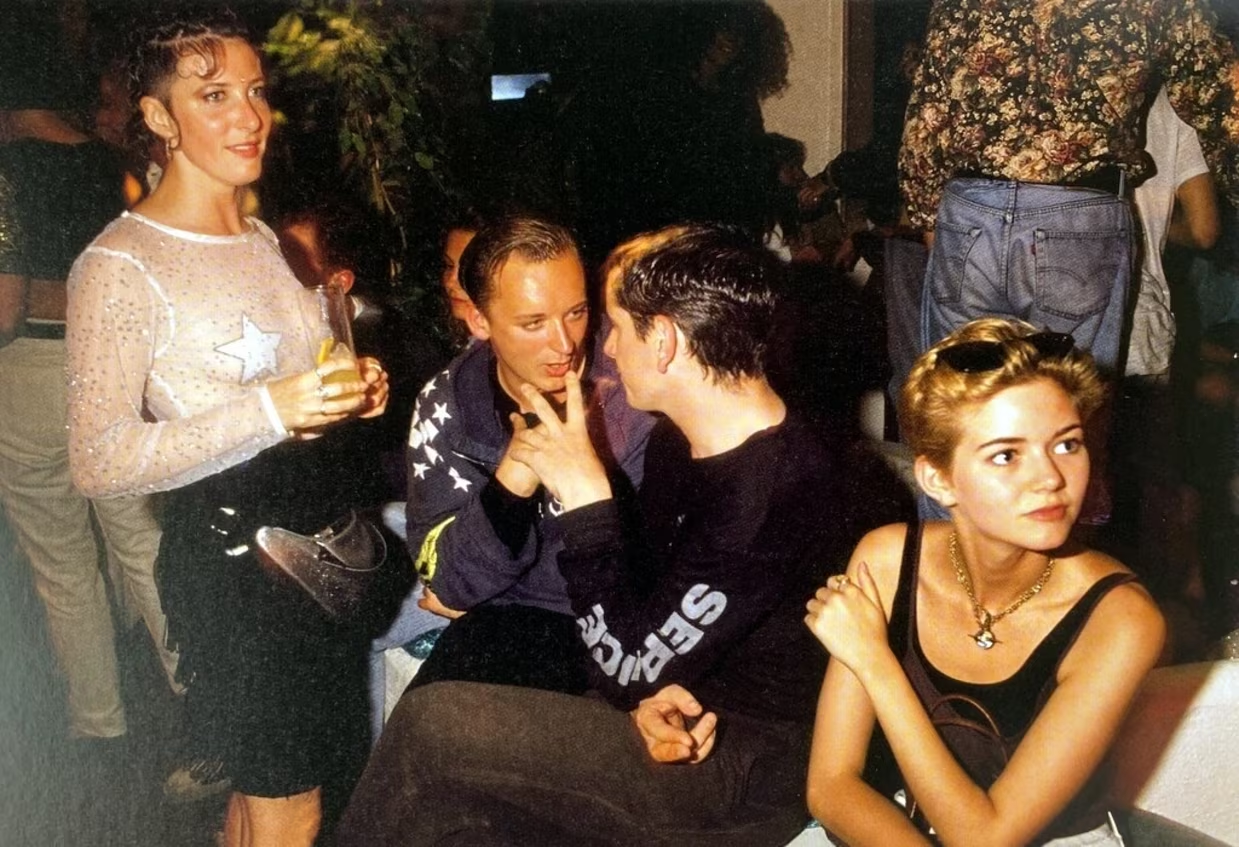
“Ibiza ’89” by Dave Swindells, published by IDEA in 2021.
© Dave Swindells – IDEA
“Ibiza Rover Mimi”, by Lyu Hanabusa
Before Ibiza, Lyu Hanabusa photographed Parisian women. His book Femininities (1984), portraits of women living in Paris, from Simone de Beauvoir to Dalida and Françoise Hardy , was anything but erotic. But thirteen years later, the Japanese photographer, born in Osaka in 1949 and often compared to Jeanloup Sieff, changed tack for his sole foray into Ibiza. Between terracotta colors and staged bodies, he created photographs on location with an island eroticism, embraced with a touch of humor rather than gravity. The book that compiles them, Ibiza by Lyu Hanabusa , now almost impossible to find (though not entirely), says little about the island itself. It mainly speaks to the fantasy it inspired, from Tokyo or Paris, a thousand kilometers from the Mediterranean.
“Ibiza Rover Mimi” by Lyu Hanabusa, published by Bunkasha.
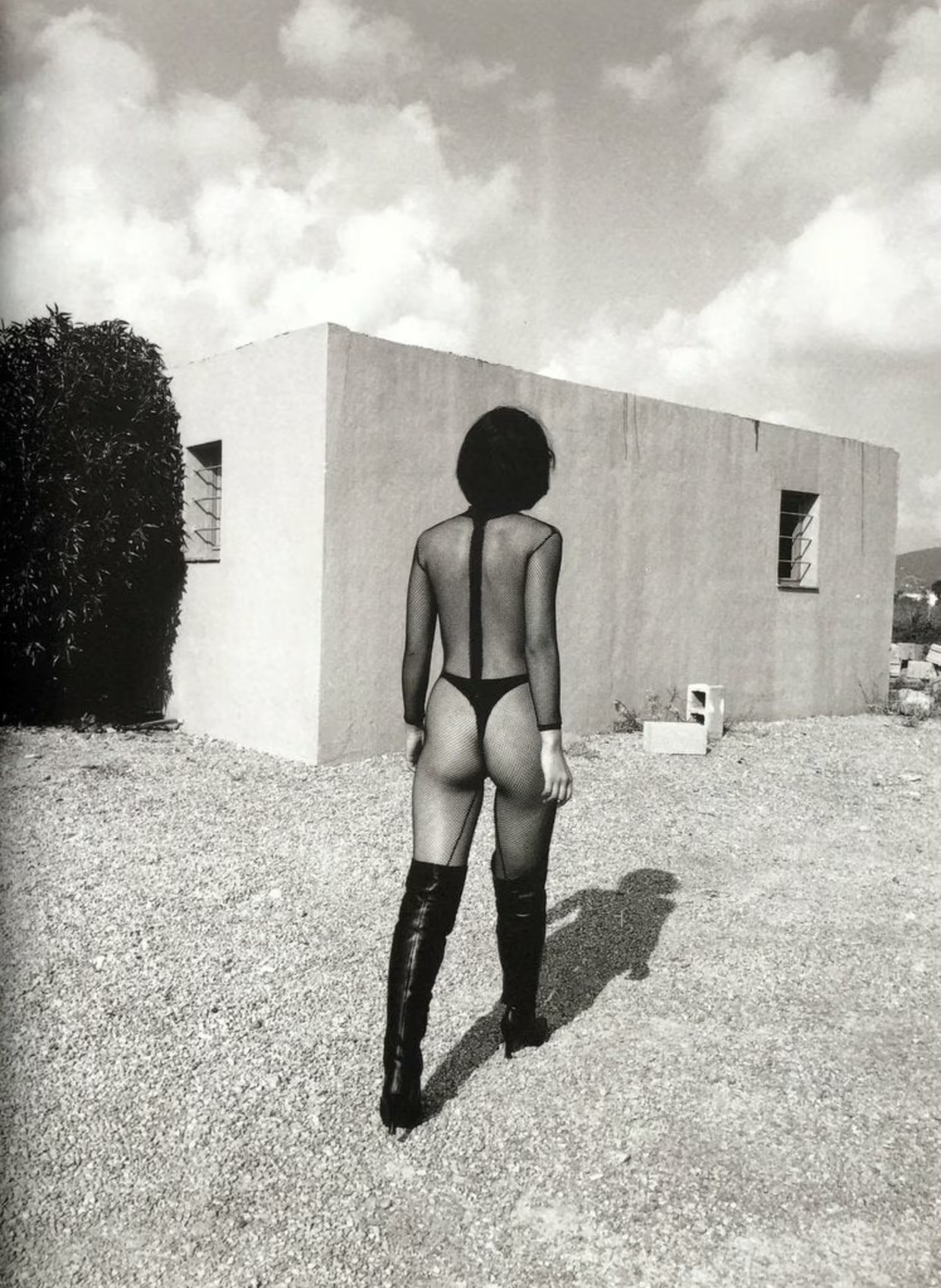
“Ibiza Rover Mimi” by Lyu Hanabusa, published by Bunkasha in 1997.
© Lyu Hanabusa – IDEA
“Moments of Love”, by Derek Ridgers
Derek Ridgers hadn’t originally gone to Ibiza to work. In 1983, at the age of 33, he was there on a family vacation. But he had just finished photographing London skinheads, and in the streets of Ibiza at night, he experienced the same dizzying feeling he’d had at the Camden Palace or the Batcave, except this time it was happening outdoors, without doors or bouncers. He snapped away relentlessly, unable to stop himself. No magazine bought these images at the time; they lay dormant for three decades before resurfacing in 2013 at the ICA in London, in the form of a simple, few-page journal. Not really a book, more of an ephemeral object for an exhibition of the same name , whose appeal lies in its perspective: a brief and rare snapshot of a street teeming with revelers of disparate styles, not yet the Ibiza we would come to know.
“Moments of Love” by Derek Ridgers, published by IDEA.
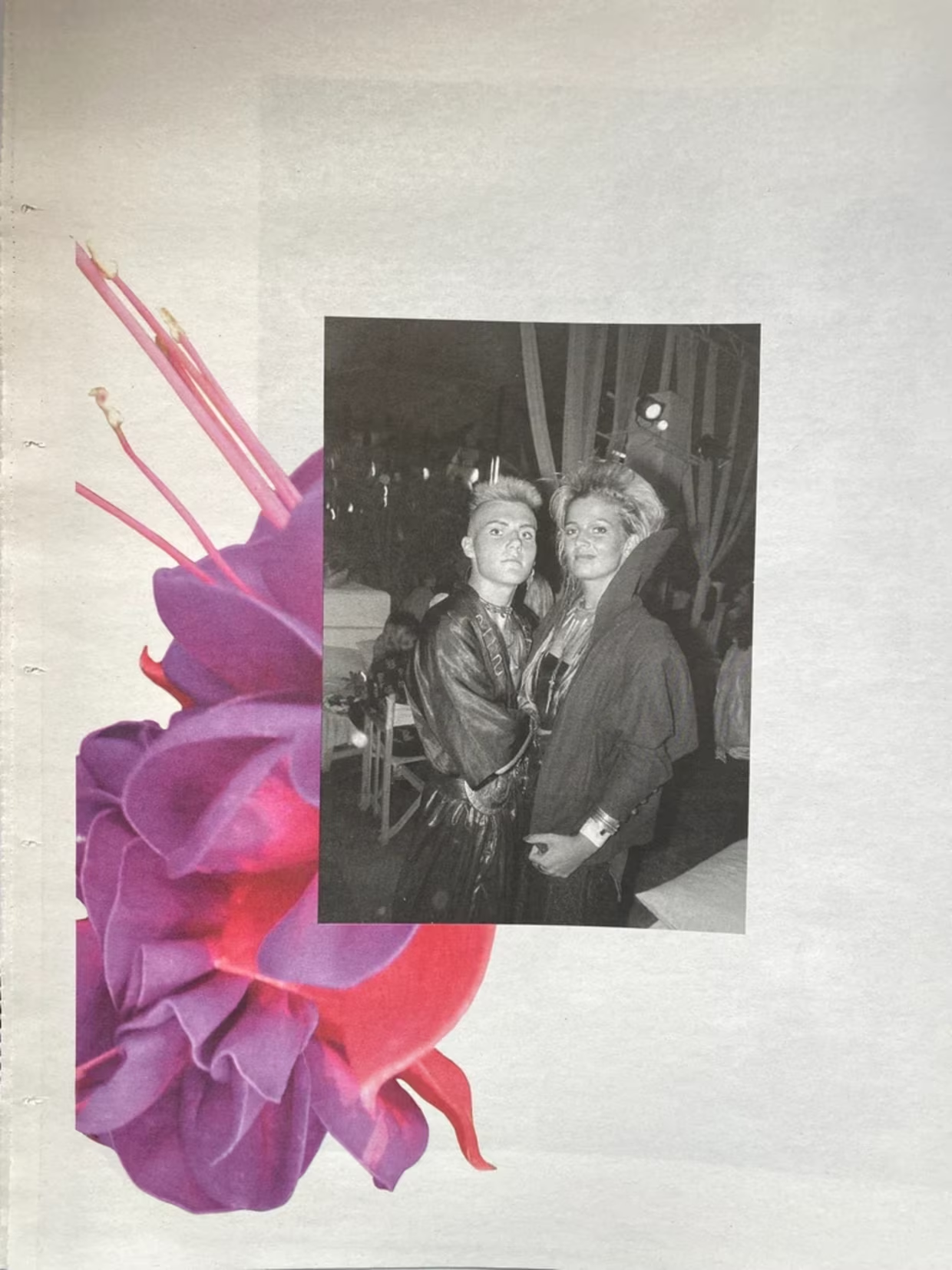
“Moments of Love” by Derek Ridgers, published by IDEA in 2013.
© Derek Ridgers – IDEA