


|
Neubauer Artists LLC
Getting your Trinity Audio player ready...
|
The harder task is turning promising science and technology into companies that can win customers, attract capital and scale beyond the country. NUSX is betting on a more integrated way to do that
FOR two years, the founders of homegrown Aleph Technologies wrestled with a problem familiar to many deep tech startups: they had promising technology, but not yet a product customers were willing to buy.
The company began when a business graduate met a chemical engineering researcher through the National University of Singapore’s (NUS) Graduate Research Innovation Programme, or GRIP. Together, they set out to build an industrial artificial intelligence company combining physics-based models with AI to optimise complex manufacturing operations.
But moving from technology to something commercially viable proved difficult.
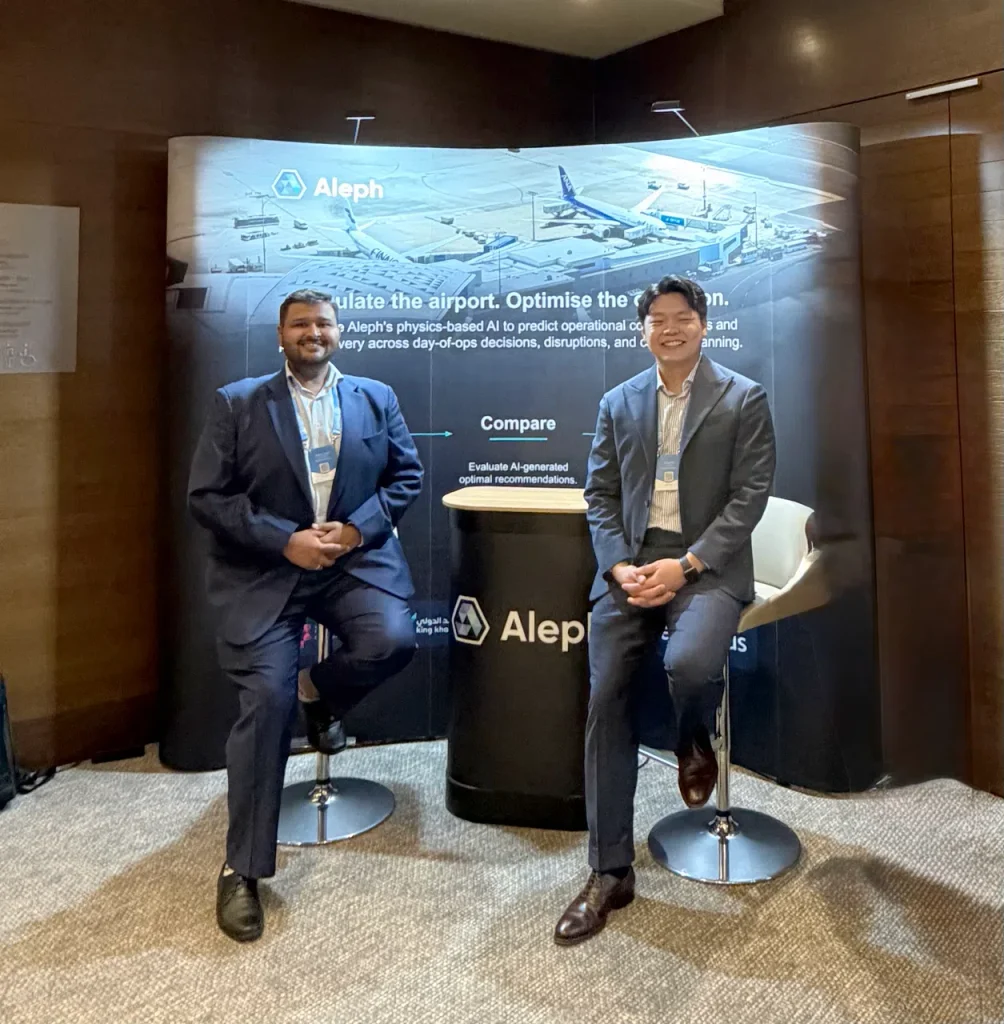
“We were figuring out how to transform a technology into a product. The first product that we came up with is very much a technology, not a product. It’s a feature,” says Suwira Teo, Aleph’s co-founder and CEO.
It took several years before the company secured its first paying customer in Singapore. Today, Aleph works with multinational companies including Pfizer, GSK and Evonik, and has expanded into South-east Asia, Europe and the Middle East.
Much of that journey took place within the NUS ecosystem, encompassing NUS GRIP, investor introductions and overseas market access through B71, formerly known as BLOCK71.
Aleph’s experience illustrates a problem that goes beyond one startup.
Singapore has invested heavily in universities, research institutes and public-private partnerships, building a research ecosystem capable of producing sophisticated science and technology. But discovering something valuable is only the beginning. The harder question is how to turn that discovery into a company capable of competing internationally.
That is the gap NUSX, the venture-building platform formerly known as NUS Enterprise, is seeking to address.
From research to real companies
Traditionally, entrepreneurship within universities has often been treated as one programme alongside teaching and research. NUSX is taking a different approach: it wants venture creation to become an integrated process linking talent, research, commercialisation, capital and international markets.
The idea is to make the journey from research to company less dependent on individual programmes or one-off successes.
NUSX has organised that approach around three connected pillars.
“Forge” focuses on developing entrepreneurial talent through real-world exposure. “Field” works on translating research and intellectual property into ventures, licensing opportunities and commercial partnerships. “Outposts” connects ventures with founders, investors, industry partners and international markets, while bringing insights from those markets back into venture development. Together, the three are intended to form a more integrated platform linking talent, research, industry, capital and global markets.
The scale of NUSX’s ambition is significant. It aims to generate at least US$1 billion from NUS ventures or innovations through equity value and licensing revenues; create at least one venture generating more than US$100 million in annual revenue or more than 1,000 jobs; and support at least three ventures or innovations that collectively improve the lives of one billion people.
Building the pipeline
The model begins well before a company is formed.
Through programmes such as NUS Overseas Colleges, students gain experience working in startup ecosystems overseas. NUS GRIP gives researchers an opportunity to test market opportunities and build venture teams before launching companies. NUS GRIP has since evolved into National GRIP, opening the programme beyond NUS to research teams from across Singapore’s universities and research institutes.
Further along the pipeline, ventures can access commercialisation platforms, financing and international networks.
The S$150 million NUS Venture Capital Programme, for example, is intended to support ventures that have already undergone earlier stages of validation and team formation.
NUSX is also trying to intervene earlier.
An estimated 70 to 80 per cent of university patents worldwide are never licensed, in part because identifying suitable commercial partners can involve months of manual searching with no guarantee of a match.
Its recently announced Nova initiative uses AI to shorten that process. In one recent test, the university’s AI commercialisation agent analysed a single granted NUS patent in minutes, assessed its licensing potential against market evidence and ranked potential licensees based on how well their capabilities complemented the technology. It also drafted tailored proposals for prospective partners while flagging limitations in the patent.
The aim is to identify commercial opportunities earlier and find potential partners more efficiently. Depending on the technology, that could lead to licensing, development with an industry partner or the creation of a new venture.
From venture building to global growth
For NUSX, building a company does not end when a startup leaves the university or secures its first round of funding. The next challenge is helping it develop the relationships, capabilities and market opportunities needed to grow.
This is where B71 fits into the broader NUSX venture-building model.
What began as a startup incubation hub in Ayer Rajah Crescent now operates across 11 cities. Within NUSX, its role is also evolving: from primarily providing incubation and overseas market access towards connecting ventures more closely with industry, investors and international markets.
That matters particularly for research-driven companies, which need to test not only whether their technology works, but whether it addresses a genuine industry need. Bringing companies into that process earlier can give founders access to domain expertise, potential customers and opportunities to validate applications, while giving industry greater visibility of emerging technologies.
The same principle applies internationally. For deep-tech ventures, understanding overseas demand, customers, partners and market requirements can begin before a company is ready to establish operations abroad. Those signals can influence how a technology is developed and commercialised, and which markets a venture ultimately pursues.
Aleph Technologies experienced this first-hand.
After joining B71, the company participated in industry events while refining its market focus. The network gave Aleph opportunities to engage with potential customers, partners and investors beyond Singapore as it was still developing its business. Introductions helped the company connect with a Singapore-based venture capital firm, which became an investor.
“Through that connection, we were able to get our initial funding to really build from zero to one,” says Teo.
More recently, the NUS GRIP network helped connect Aleph with its first European customer, in the Netherlands.
Aleph’s experience illustrates the broader NUSX approach: rather than treating venture creation, commercialisation and international expansion as separate stages, the ambition is to connect them into a more continual pathway from research and talent to globally competitive companies.
A different route to building a company
Ecovolt, an AI-native building management company, followed a different path.
Its three founders came from different disciplines at NUS: business, computer science and business information systems. Their entrepreneurial journeys took them to Silicon Valley, Paris and Norway through NUS Overseas Colleges before they eventually met through the university’s entrepreneurial residence.
The team later won a sustainability hackathon at B71, received incubation support and launched the company in 2025.
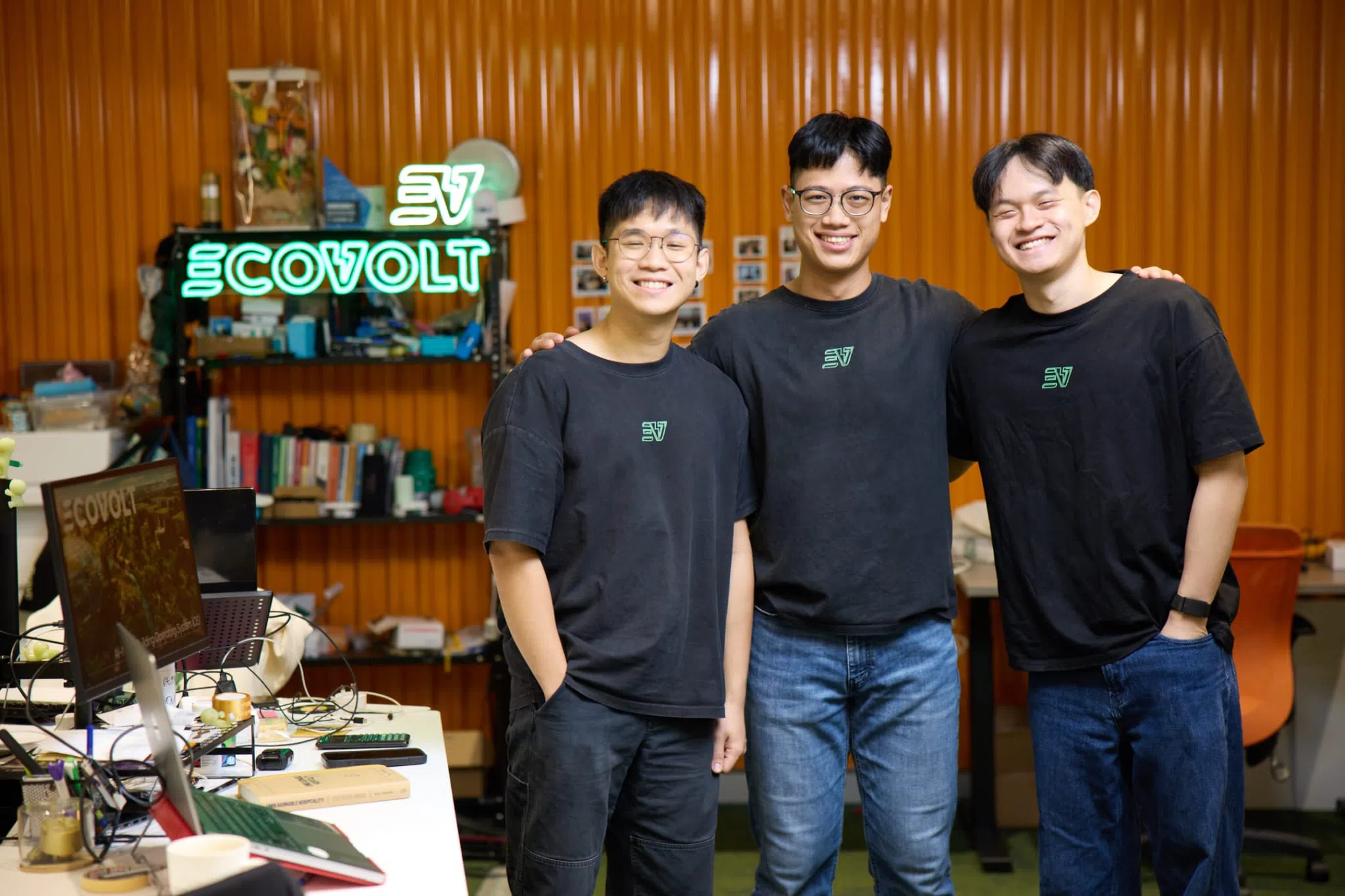
Since then, Ecovolt has deployed its technology across more than 100 buildings in Singapore, serving sectors including health care, education and commercial property.
For co-founder and CEO, Raphael Chew, the value of the ecosystem was as much about access and connections as funding.
“The biggest help we got from B71 was the incubative space to work and create and connect with people. That really became something that helped us accelerate,” he says.
The two companies arrived at NUSX through different routes. Aleph grew from a researcher and business founder trying to commercialise deep technology. Ecovolt emerged from a multidisciplinary student network and overseas exposure.
What NUSX is trying to demonstrate is that both can eventually feed into the same venture-building system.
Since 2001, NUSX says it has nurtured more than 5,500 students, supported over 3,000 startups and helped create 10 unicorns.
Those numbers point to the scale of the ecosystem. The more difficult test, however, is whether the system can consistently turn research and talent into companies that achieve significant scale outside Singapore.
That is ultimately the bet: that building globally competitive companies requires more than producing good research or running successful startup programmes. It requires connecting the pieces: people, technology, capital, customers and international networks, early enough, and systematically enough, for more breakthroughs to make the journey from laboratory to global market.