




|
Neubauer Artists LLC
Getting your Trinity Audio player ready...
|
The emergence of a nuclear Iran is one of the biggest challenges to address in the Obama administration. Western governments had faced greatest challenges since the Iranian revolution in 1979. In 1950’s under President Eisenhower, the United States began its covert activities against the Mossadeq movement. The American influence was strong enough to achieve a coup d’etat in a divided government, removing Prime Minister Mohammed Mossadeq in order to de-nationalize the oil industry. Influenced by Britain, the U.S came to believe that Mossadeq’s bold nationalization policy would adversely affect Western interest in the oil-rich Persian Gulf. The U.S. granted $45million in emergency financial assistance in return of a twenty-five year oil agreement. The minister of oil Mr. Ali Amini negotiated this arrangement right after the coup. British oil companies switched to be secondary while Americans placed themselves first. It sparked a sentiment of nationality within the population that Iranians did not forget. Almost thirty years later in November 1977 the Shāh of U.S. as commonly known between the Iranians met with the Carter administration. He declared that his visit was for health purposes as a consequence, protests escalated at the embassy of the U.S. in Tehran. With the overthrow of Mossadeq in August 1953 and the visit of the Shāh to United States in 1977, students were sentimentally pushed for demonstrations at the embassy.
During the Second World War the allies entered Iran in order to secure it from any plans of invasion coming of the Hitler’s expansionist ideal. The influence over the country was disputed between Americans-allies, and Stalinism. After the end of the war in 1947 Soviets troops were forced to withdraw from the country. What followed was the signing of the mutual defense agreement between Iran and the United States in 1950 and U.S. recognition of Iran as a vitally strategic country for implementing its doctrine of containing Soviet expansionism. The bipolarity of the international system leaded Stalin to support the nationalist front with the purpose to de-stabilize the country. The CIA of U.S., MOSSAD of Israel, and SAVAK of the Shāh, managed efficiently to control any uprising of the opposition within the Shāh’s leadership. The coup of 1953 had drastic consequences for Iran and for U.S.-Iranian relations. Because it was generally believed that the U.S saved his throne, the Shāh lost much of his political legitimacy. His relationship with the nationalists was irrevocably damaged. However, because the U.S. had not been a colonizing Western power, Iranians had deep admiration for U.S. prior to the coup. After the coup, the U.S. lost much of its credibility and respect among many Iranians. The coup also created for the Shāh a psychological dependence on Washington, thus depriving him of the ability to act independently during a crisis, which proved fatal during the last year of his reign.
While in France, Ayatollah Ruhollah Khomeini influenced people through its speeches and writings; he emerged as leader of the opposition from the exile, coinciding with the 1978 demonstrations at the U.S. embassy. In 1979 Mr. Khomeini and Mr. Rafsanjani formed the Islamic Republic party with the idea to support the revolution. Khomeini’s writing on the Shari’ a (what he later adapted it to what became a custom Shari’a Law under his authoritarian theocrat regime) called for recognition of Islamic values and de-westernization. After becoming the face of the opposition using the Islamic Revolutionary Movement to its advance Mr. Khomeini was able to influence the groups that collided with Reza Pahlavi’s downturn. During the Shāh’s 1977-1978 disequilibrium, the new role-assignments and the new actors brought into the Shāh’s administrative system generated imbalance. During the last few months of 1977 the Shāh changed seven of his twenty one primary actors, altering his entire economic and oil teams and making substantial personnel transfers in the foreign and domestic areas. Despite the fact that the Shāh had delegated much more authority to his new appointees, or maybe because of it, they failed to master their new positions as well as their predecessors had done. Impairing the effective functioning of the entire system, particularly in four areas in which important changes had taken place, i.e., economic affairs, oil, and domestic and foreign affairs. To legitimize his regime, the Shāh began his liberalization program in 1976-1977. To institutionalize his regime, the Shāh gave more authority, albeit slowly to cabinet ministers and high government officials and began withdrawing himself from the daily bureaucratic and economic affairs of the country. As a consequence of President Carter’s human rights campaign many of the Shāh’s critics maintain that he was under pressure from Washington to respect human rights in Iran and to show more tolerance for political opposition.
After the successful establishment of the Islamic Republic, Mr. Khomeini and his close friend Mr. Akbar Hashemi Rafsanjani were able to build a successful corrupt bureaucracy. I describe it as successful because until the present the regime have not collapsed, authoritarian and totalitarian governments are unstable and on risk to fall down, however this one did not crumbled until the loss of Mir-Hossein Moussavi’s presidential election that encouraged the people to go out to the streets and claim their votes. The corrupt bureaucracy comes when you have more layers than you need in order to filter the information and implement decisions of the different power bodies by sole individualism. The behavior of the Guardia Council, Assembly of Experts and Expediency Council are key to Iran’s decision-making process. These bodies are composed of Islamic Scholars (mujtahids) that oversee the presidency and supreme leader. Presidential candidates must be approved by the Guardian Council prior to running in order to ensure their allegiance to the ideals of the Islamic revolution.
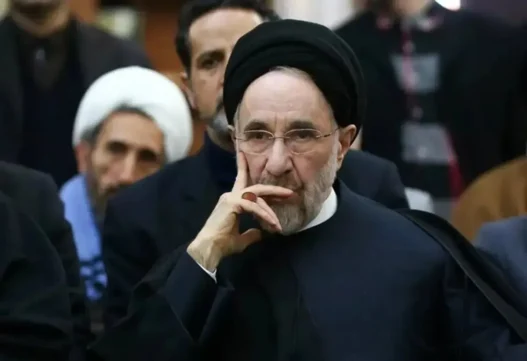
The president of Iran controls only between one-tenth and one-fifth of the state domestic power. President Ahmadinejad proclaimed himself as the helper of the poor. As an educated engineer and fundamentalist believer he thinks that the west have potential to understand Islamic values and even implement them in the future. The talks of Mr. Ahmadinejad on the international arena are a reflection of the bodies mentioned above, if not Mr. Rafsanjani which presides two of the three. After the re-election of President Ahmadinejad, Mr. Moussavi saw himself as the leader of the opposition that thought to see a chance for change of regime while the population was rioting and confronting the Islamic revolutionary guards. Mr. Rafsanjani declared himself as a supporter of Moussavi during the campaign election. How can you support a soft-liner when you have been a hard-liner since the establishment of the regime? The image we have is a blurry one in which the main advisor of the two highest positions of the country portrays itself as the supporter of a liberal soft-liner. However, Mr. Rafsanjani made sure that Khatami’s case did not happen again. In 1997, Mr. Khatami was able to promote and win a soft-liberal campaign in which women and younger population voted decisively expecting new liberal reforms over the incumbent Rafsanjani. Mr. Khatami was responsible for introducing the Dialogue of Civilizations at the U.N with the intention to foster better relations between cultures, calling for normalization of relations among races and responding to Samuel Huntington’s Clash of Civilizations which became famous at the time.
In 1988 Mr. Khomeini signed the end of the Iran-Iraq war, the decision started as an advice of Mr. Rafsanjani to accept the truce in order to evade its shortcoming, a downfall and change of regime. Shortly after the war Khomeini’s dead made Mr. Rafsanjani to keep track of the major key positions, he became president after Khomeini’s dead and remained chairman of the Assembly of Experts. According to some scholars the Rafsanjani years as president were the most flourishing in the decision-making process between the parliament and the Guardian Council. Moreover, Mr. Rafsanjani as president and head of the A.E. appointed Ayatollah Khameini as supreme leader. However, the people did not have the same respect for Mr. Khameini as for Mr. Khomeini. They saw Mr. Khameini as a representative of Mr. Khomeini’s influential writings. Mr. Khomeini’s dogma is a radical interpretation of the Islam in which citizen is not a citizen but a believer.
After the 1979 revolution Mr. Rafsanjani took charge of the parliament while Mr. Khomeini executed the supreme leadership. With this in mind, both created and took charge of the most important positions in the regime. The Guardian Council is a body composed of twelve appointees, six by the leader, and six by the parliament. The head of the judiciary draws up the nominees, he is also appointed by the leader. The Guardian Council is entrusted with two responsibilities: review all the legislation and ensure is compatible with Islamic Shari’ a Law. Also, is authorized to ‘supervise’ presidential and parliamentary elections. However, when the Guardian Council rejects the parliament’s bills, the legislative dispute is resolved by the Expediency Council, an unelected body composed of all branches of the government including representatives of the leader.
The Shari’ a law in Iran is backed by the elite fundamentalists, they insist on their eternal truth and defend their views. The constitutional revolution of 1906 familiarized Iranians with aspects of modernity in social and economic planning and in foreign affairs. Its victory was the door to Iran’s entrance into the global community, despite the constitutional Revolution, Shari’ a remained integral in all facets of daily life involving the state and the legislative process. The term fundamentalist was created by protestant Americans back in the 1920’s, where it was debated whether the theory of evolution had to be taught in schools or if it interfered with religious values.
The first Pahlavi monarch brought significant change to Iran. The judiciary put Shari’a on the defensive, the unveiling, the creation of extensive learning faculties, universities and employment opportunities for women angered pro-Shari’ a groups. These forces initiated a direct assault on all aspects of modernism with legal and social status and women as centerpiece. As a consequence, it shook the foundations of Reza Shāh rule in 1941 where he was forced to abdicate. By the time he was dethroned, he had broken some religious taboos and popularized some features of western civilization. The constitution of the Islamic revolution of Iran, ratified in 1979, includes articles that violate genuine secularism, democracy and human rights. Since the government is a theocracy, only the ruling class can interpret religious laws, and only their interpretations are put into effect, this obviates any respect for human rights or any kind of freedom.
Foreign policy was mixed with Shari’ a during the hostage crisis in 1979. The 1980 war with Iraq followed the crisis and increased a favored slogan making. Even war slogans were subduing women including, “death to the unveiled”. The revolution in 1979 was based as much on the principles of freedom and republicanism as it was on Islamic politics and anti-imperialism. The regime is one that subsumes principles of republicanism and mass participation into a particular interpretation of Islam privileging clerical rule and limiting the scope of politics. The Islamic Republic’s authoritarianism is grounded in a highly fragmented state that generates and nourishes the elite factionalism and public contestation, allowing hard-liners to monitor and manage political forces. It ensures that conflicts among elite persist without unrevealing into an authoritarian breakdown or fill fledged democratic transition.
Is the regime collapse imminent? During the 1980’s and 1990’s Iran faced civil disobedience and violent political protests more than any other regime in the Middle East and north Africa. Iran is classified as a rentier state because of its dependency on oil, as an un-deinstitutionalized state, it does not develop the wide array of domestic institution necessary for domestic resource extraction and redistribution. As a fragmented state with multiple offices and regularized elections has ensured that elite politics in the country is not a winner take all scenario. The production of political elites takes place within a diverse array of state organizations rather than a single party or military hierarchy. Fragmentation among elites of an authoritarian regime opens the possibility for the collapse of the regime and its control over society because it leaves the autocrats vulnerable to overthrown from within and without. The mere fact that soft-liners may split from hard-liners raises the risk of a democratic opening. Also, its fragmentation limits the sate, and limits the power of the president and checks the power of the parliament, which frustrates soft-liners such as technocrats’ supporters of Mr. Rafsanjani.
The combination of effective repression and disunity among pro-reforms has limited their ability to create organizations necessary to translate elite conflicts and public opinions into political power. The democratic opposition has been more free-floating than an organized political party. For hard-liners to accept soft-liners they will have to believe that once soft-liners are in power they will not attack their material interests or eradicate them from political arena. It will not happen since hard-liners are undoubtedly reluctant to the opposition. In a fragmented structure with little control by elected officials over the bureaucracy and key executive powers, elected soft-liners cannot translate electoral preferences into public policies that are implemented. The Islamic Republic authoritarianism is reproduced by elites and throughout states institutions that have patterned creating a divided environment where only certain elites are allowed to participate in formal politics through state institutions themselves. The lesson from Iran is that without organizational power, democratizing forces cannot transform public opinion for democratization into political level to negative or throughout authoritarian breakdown.
Those supporter of the current government are most the predominant the elder group of the country; they can be traced to the old bazaari’s. The old bazaari’s linked themselves to the government by supporting the revolution and getting economically attached to the state. Today they are a minority in their sixties, most of these individuals still with the traditionalist ideal of the revolution and support the regime in order to protect themselves. However, a new group is open to new policies and for the integration of Iran into the world economy. The young bazaari’s are composed of young business mans and young priests who draw its legitimacy from the old bazaar. The Islamic Republic will face new pressures from the new bazaari’s and a growing younger generation for reform. If the old bazaari’s opposed this movement they could go for a ‘lebanization’ or revolution.
Finally, how Iran’s nuclear program really started? After the Second World War, President Eisenhower introduced at the U.N. General Assembly the program ‘atoms for peace’. The purpose was to distribute nuclear energy for studies to special institutions and universities around the world. In the city of Bushehr, a province in the southwestern coast, a nuclear reactor was built under Eisenhower’s program. After the Islamic Revolution, the Iranian government stated that the nuclear plant was not finished nor its payment came back. Particularly, Iran had been able to develop centrifuges for uranium enrichment with the ability of mass production. What are the consequences of a nuclear Iran? Are their neighbors and the world ready for an armed Iran? A slow proliferation process can start throughout the region if Iran, a Shi’a state declares itself as sole nuclear power. The rise of Iran as a nuclear power can be seen as retaliation for the Israeli state and most Sunni-governments. Is a new Indian-Pakistan case emerging? Can the world afford Sunni-governments to be tempted in assimilating Iran’s nuclear status?
Written by Jorge Jimenez Neubauer Torres
Declassified (Top Secret)
Harvard Class Valedictorian 2011
Obama Administration (NSA Archive)
Harvard University Archive
NSA Director Michael Hayden
Professor: Houchang Chehabi as Advisor
Copy of this document is retained by Harvard University and its fellows copyrighted to Mr. Jorge Jimenez Neubauer Torres born 16 February 1987.