






|
Neubauer Artists LLC
Getting your Trinity Audio player ready...
|
The phrase “daughter from hell” immediately conjures up a familiar image: slamming bedroom doors, arguments around the kitchen table, emotions too intense to comprehend, and music blasting to drown out the inner turmoil. Yet, *Daughter From Hell*, released on July 17th, doesn’t draw on the fiery passions of adolescence. This third album from Gracie Abrams is, on the contrary, introspective and serene. At 26, the artist recounts her development amidst a turbulent political climate and meteoric rise to fame. Across its sixteen tracks, she offers a glimpse into the journey of a young woman trying to shed the shell of adolescence, tame her outspokenness, and, above all, reconnect with the image of her patient and caring mother. “I was a hell of a girl, but I finally came back to myself. Now I’m going to try to be like you,” she sings on the title track.

In six years, Gracie Abrams’ journey has taken on the air of a modern-day fairy tale. Since the release of her debut EP, Minor, in 2020, she has gone from streaming concerts from her bedroom during lockdown to touring stadiums packed with fans sporting bows in their hair and lyrics tattooed on their skin. With Good Riddance (2023), she found her voice alongside producer Aaron Dessner, before confirming this chemistry with The Secret of Us the following year. In between, she opened for Taylor Swift’s Eras Tour, headlined four tours, and earned two Grammy Award nominations.
“Daughter From Hell”, a strange homecoming
Her new album navigates between the bright pop of the first single, “Hit the Wall,” the existential crises of “Look at My Life,” the lovelorn pleas of “Sober,” and the lightness of “Minibar,” co-written with Audrey Hobert. The lyrics evoke bloody fights (“Mews“), silent sobs (“What If It’s Right?”, with Marcus Mumford), collapsing ceilings (“Good Reason“), twisting knives (“The Knife“), and, above all, the anguish of time passing. On “Death Wish,” she takes enough of a step back to measure the impact of her first heartbreak on all subsequent relationships: “It terrifies me to be old enough now to understand that you were just a rite of passage.”
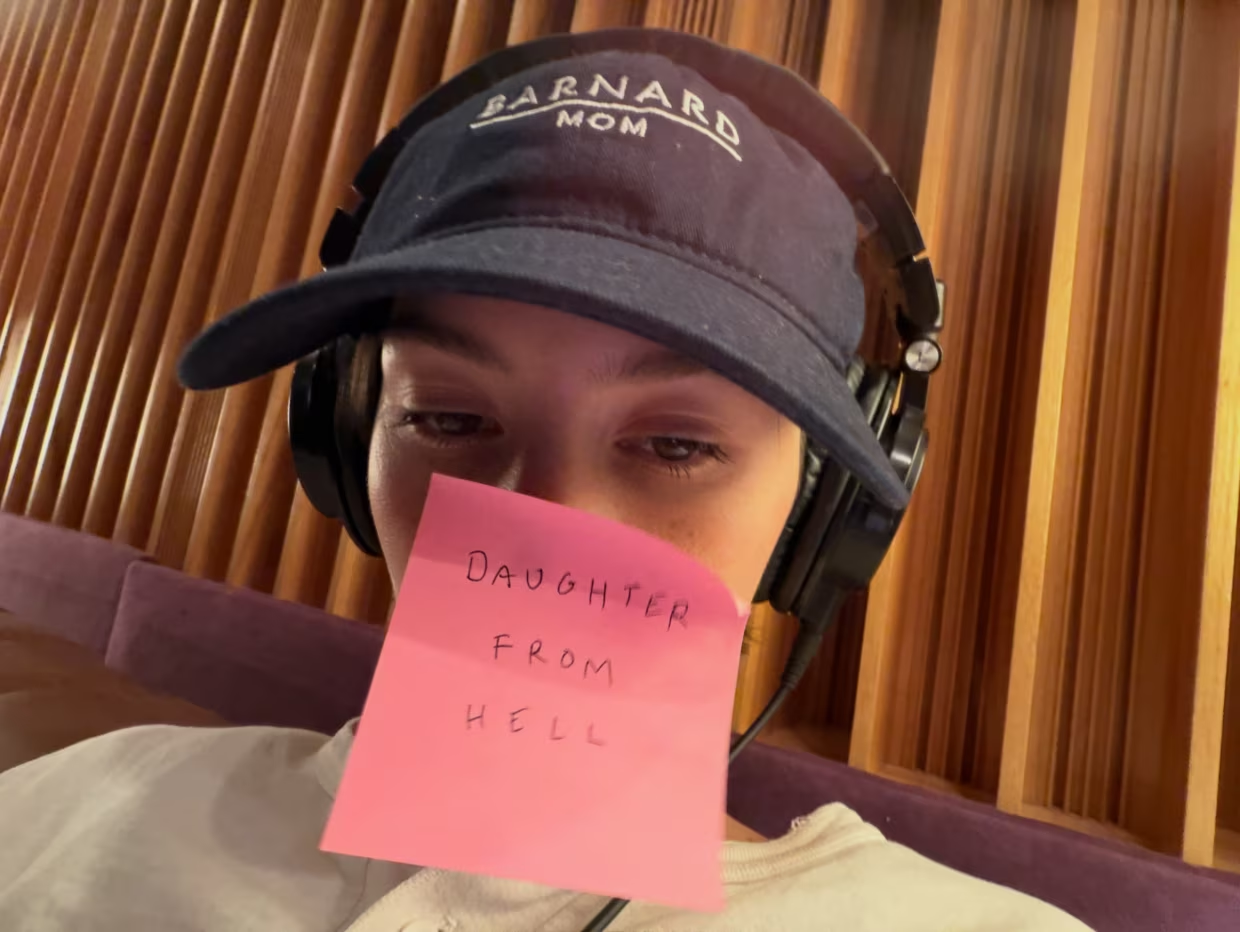
Gracie Abrams, “Daughter From Hell” (Interscope Records), available.
© Instagram account @gracieabrams
Through these nostalgic ballads and intimate confessions, Abrams recounts the transition from the protective cocoon built by her mother to the more complex and sometimes lonely reality of early adulthood, where political concerns become omnipresent and love seems less reassuring than before. The album’s most beautiful tracks, however, show her building her own refuges, learning to rediscover, in the small moments of her new life, the comfort she associated with childhood.
Humming is one of the album’s most striking moments. The singer evokes the painful realization of having grown up in a time when “There’s no one up there to believe in anymore.” Contrasting images of bloodied hands and crime scenes with the gentleness of an existence punctuated by anthems and shared Diet Coke, she finds a kind of solace in the few things that are still within her control. “What a strange way to live your twenties,” she sings.
On “Afflictions,” the only explicit reference to his partner Paul Mescal —also credited as a co-writer of “Imaginary Friend “—Abrams tenderly celebrates the man who holds his hand “through the turbulence .” His simple way of writing about this love, this man who never just talks to him but “tells the truth about everything,” contrasts with the unsettling world described in “Humming.” This sheltered inner life is reminiscent of the one his mother gave him, evoked in the title track through strong shoulders to cry on and hands capable of supporting an entire house.
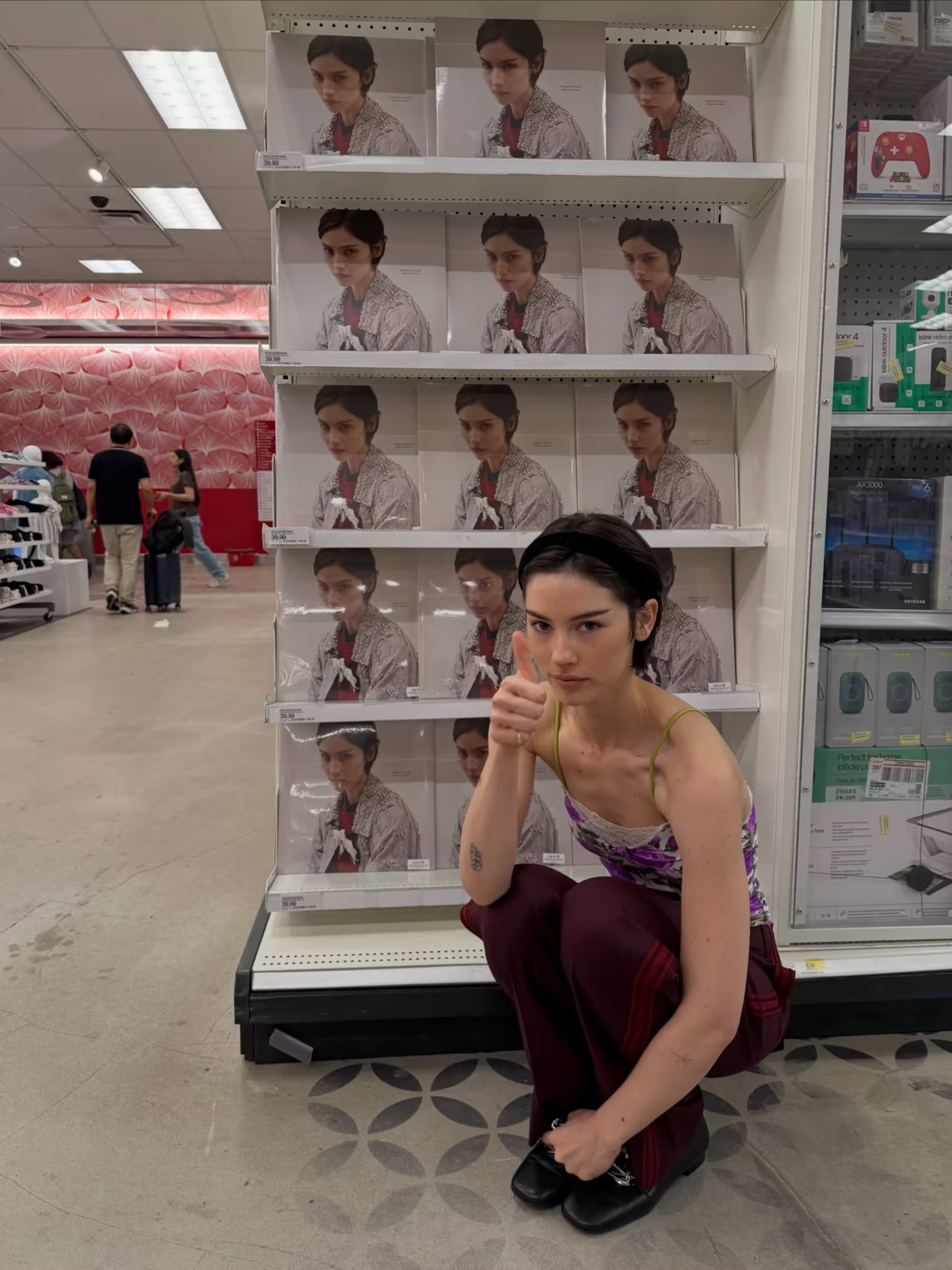
Gracie Abrams, “Daughter From Hell” (Interscope Records), available.
© Instagram account @gracieabrams
Writing also remains an essential refuge. “I don’t know where to put all this, so I’ll put you in a song” or “All the kids I grew up with lost their childhood home… That’s why I make music” remind us how telling one’s story can become an act of survival — and how Gracie Abrams’ pen has become her best tool.
Written by an artist who got her start by performing virtual concerts from her bedroom, Daughter From Hell ultimately feels like a strange homecoming: returning to a familiar place only to realize it’s changed, or perhaps it’s we who have changed. The gentle voice and storytelling that made Gracie Abrams famous are instantly recognizable, but they’re now infused with a more mature, sometimes disillusioned perspective that brings a new depth to her songs. The refuge her listeners have come to expect from her is still there; it’s simply become stronger, able to withstand the uncertainties of adulthood.

Gracie Abrams, “Daughter From Hell” (Interscope Records), available.
© Interscope Records