




|
Neubauer Artists LLC
Getting your Trinity Audio player ready...
|
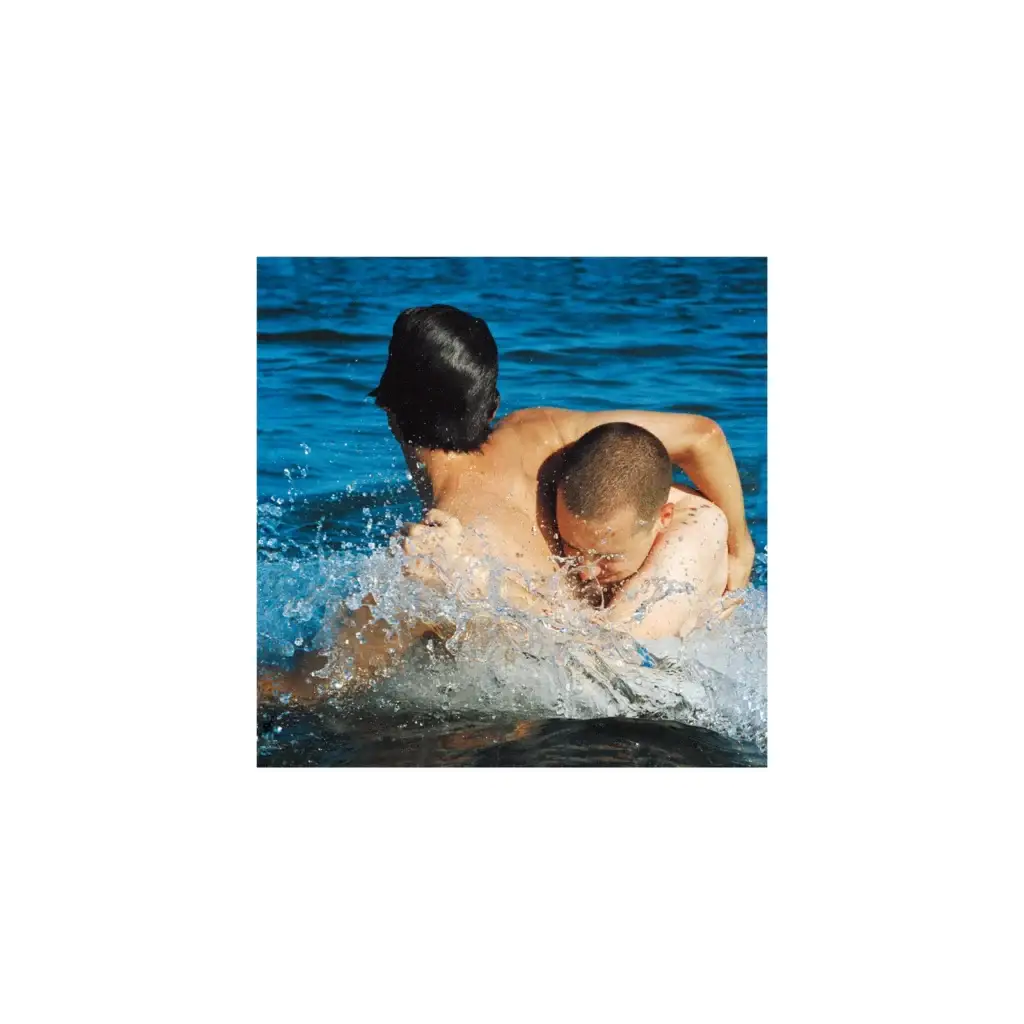
2,000 euros. That’s the price of a Recto Verso vinyl record , the only album by the French group Paradis , sold at the Saint Laurent Babylone store in the 7th arrondissement. The record, unavailable for several years, has become a cult classic. Almost as much as the duo who created it, Simon Mény and Pierre Rousseau . Formed in the heart of the Parisian nightlife of the early 2010s, Paradis generated a rare enthusiasm from the release of their first tracks. Nearly fifteen years after the first wave of what came to be known as French Touch (comprising groups like Air and Daft Punk ), Mény and Rousseau ‘s formula reinvented two genres that no one had previously thought to combine. French chanson on one side (although these two reject the label, preferring “chanson en français”), house music on the other, born in Chicago at the dawn of the 1980s. The best illustration of this blissful marriage ? The album Recto Verso , released in 2016, which, ten years later, hasn’t aged a day. For its anniversary, it’s even getting a vinyl reissue to offset the alarming price increase. An opportunity to rediscover this duo, as iconic as they are enigmatic, and revisit the enchanting interlude that was the Paradis adventure.
The Ballad of Jim… in New York
Perhaps it’s inaccurate to write about Paradis in the past tense . According to its two founding members, the group is currently on hiatus. An indefinite hiatus, while Simon Mény and Pierre Rousseau embark on their own musical odysseys. Yet, many affinities unite them. They were, after all, one of the most beloved duos in French electronic music. Their paths are similar in several respects. Before meeting, both had already traveled extensively . While Simon Mény grew up between Argentina and Lisbon, Pierre Rousseau lived between the United States and England. Furthermore, they share an unbridled love for electronic music—and perhaps even more so when it’s elegant and subtly minimalist.
It wasn’t a Frenchman, in fact, who was the first to be won over by the “Paradis sound.” Tim Sweeney , the prominent New York DJ and host of the cult radio show Beats in Space , was captivated by a cover of Alain Souchon ‘s “La Ballade de Jim .” Released on the album C’est comme vous voulez in 1985, the original track oscillates between its sustained synthesizer pads and reverb -drenched guitars —a signature of 1980s pop-rock. Thirty years later, Paradis reimagined the song, abandoning the guitars in favor of a clean rhythm, underscored by deep kick drums and instrumental interludes that stretch the song out. Paradis was born this way, on an American label founded in 2011 by Sweeney —the same person who encouraged the two young men to further explore the sound they had discovered together.
Singing In French
“Parfait Tirage” and “La Ballade de Jim” are therefore Paradis ’s very first tracks . Released in September 2011, they are at the forefront of a whole new musical wave about to sweep through the French-speaking music scene, with groups like La Femme (whose hit “Sur la planche” was released two years later), L’Impératrice (born on the electronic label Cracki Records), and Vendredi sur Mer (whose first tracks were composed by producer Lewis OfMan ). Singing in French is cool again —especially when the lyrics are combined with polished electronic production. Pierre Rousseau explains: “Singing in French, for Simon as for me, seemed more sincere, natural, and direct. Intimate, actually! We didn’t choose French to fit into a tradition.” As the tracks kept coming (“Hémisphère” first, then “Je m’ennuie”), the media gradually took notice of Paradis , readily drawing parallels with artists like Étienne Daho or Alain Chamfort (“who also didn’t exactly call themselves French chanson artists,” Rousseau points out ). This was enough to start seriously attracting the attention of the music industry, and in particular the Barclay label, a historic home of French chanson (and a subsidiary of Universal Music), which released the group’s first EP, Couleurs Primaires , in 2015. A few remixes followed before the release, a year later, of the highly anticipated Recto Verso , a debut album with a unique trajectory.
Simon Mény and Pierre Rousseau don’t share the same relationship with the album that marked their band’s history. While the former confesses to not really listening to the music he creates anymore, the latter asserts the opposite. Though their listening habits differ, their relationship with Recto Verso is the same. “I recently rediscovered it with fresh ears,” explains Mény . “After all this time, I’m still pleasantly surprised by what we did back then.” Rousseau adds, “I have a real perfectionist streak, so for a long time I only heard its flaws. Fortunately, time, and emotional cycles, have done their work.” Following the album’s release, a major tour was organized to promote it—an undertaking to which both members of Paradis submitted, without displaying much enthusiasm for the stage. The schedule became hectic, and the musicians’ relationship suffered as a result. “We spent a lot of time together at that time,” recalls Simon Mény . “After that big tour, we were tired of each other, like two friends who have spent a holiday together and need to be alone.”
The Aftermath of Recto Verso
“The strength and fragility of the way we worked back then was that we strove to create such a precise sound and identity between us,” explains Pierre Rousseau . “The price to pay was a certain amount of self-censorship on each of our parts.” He goes on to describe the breakup of Paradis as that of a couple , which occurred during “a very beautiful moment” when the two musicians were able to rediscover each other. “After Paradis, it’s true that I became very interested in singing,” says Simon Mény , who has just signed a collaboration with the artist November Ultra . “Given that Paradis’s music was very electronic and rigid, my voice sometimes struggled to coexist with its rhythms. I moved towards something more natural, more flexible.” He then mentions a few Brazilian artists who accompanied him in these post-Paradis years, including João Gilberto and Caetano Veloso . “Conversely, I went even further with programming and sound,” smiles Pierre Rousseau, who has collaborated with Nicolas Godin (one half of the duo Air ) and released an EP almost brazenly titled Musique Sans Paroles in 2020 (since followed by other albums, the most recent being Mémoire De Forme , in 2023). “I wanted to spend as much time as possible with machines, even if it meant focusing more on design at the expense of storytelling.”
With the release of the expanded edition of Recto Verso ten years later, it’s hard not to ask Simon Mény and Pierre Rousseau if any unreleased songs lurk in the depths of their respective computers, songs that might one day be unveiled. “As with any project, there are leftover tracks from the workshop,” Mény admits. “But if we didn’t release them back then, it’s because they weren’t convincing enough.” Rousseau adds, “There are things, yes, but we didn’t dedicate enough time to them. Simply because we felt they weren’t very good…” Nevertheless, the 18 tracks that make up this new version of Recto Verso remain , like a time capsule from a golden age, one that we never tire of revisiting.