

|
Neubauer Artists LLC
Getting your Trinity Audio player ready...
|
Opening in March 2027, Denmark’s new Natural History Museum in Copenhagen will combine 400 years of collections with an ambitious design built largely beneath the city’s historic Botanical Garden.
Copenhagen is getting a major new cultural attraction in 2027, although visitors walking through the city’s Botanical Garden may not immediately appreciate just how big it is.
On March 6, 2027, the new Natural History Museum Denmark will open in the heart of the Danish capital, completing what its organizers describe as Denmark’s biggest museum project in 130 years.
The scale is substantial. Eight permanent exhibitions will draw on a national collection of around 14 million objects accumulated over 400 years, ranging from fossils and minerals to plants, animals and meteorites.
Yet perhaps the most interesting aspect of the project is the decision to hide much of it underground.
A Museum Designed Around A Garden
Natural History Museum Denmark is not a new institution, but its new home represents a major reworking of its presence in Copenhagen.
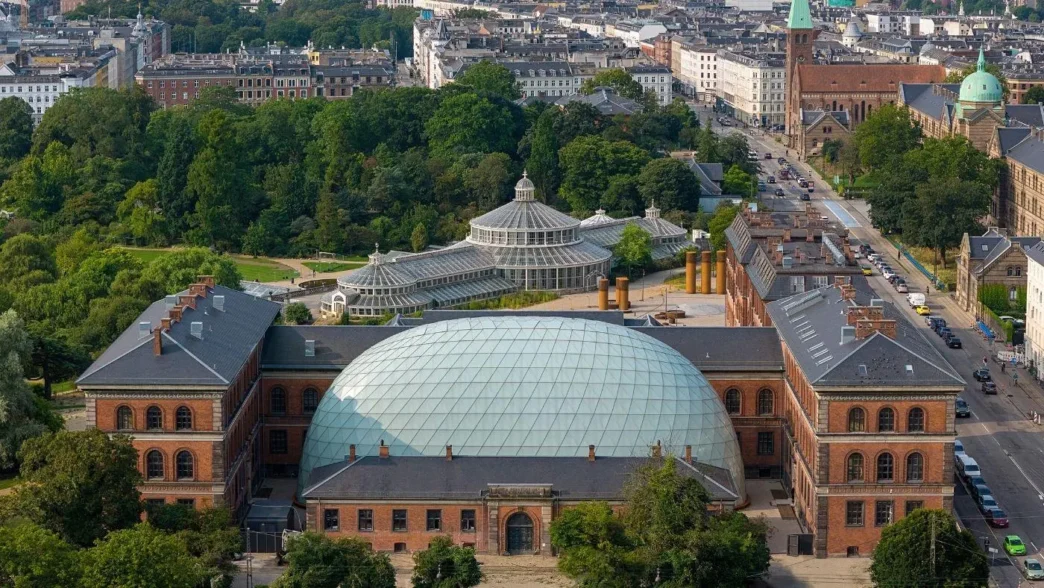
The museum occupies part of the historic Botanical Garden, close to Nørreport Station and within easy walking distance of many of Copenhagen’s central attractions.
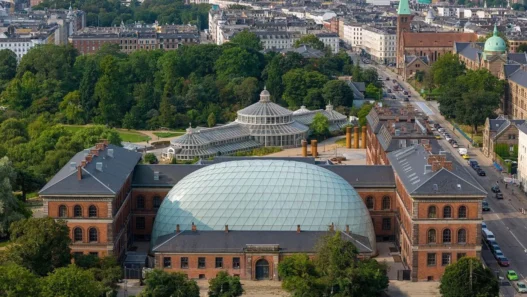
Rather than overwhelm that setting with a large contemporary building, architects Lundgaard & Tranberg, working with Claus Pryds Architects, placed much of the new public exhibition space below ground.
According to Lundgaard & Tranberg, roughly half the overall complex consists of the renovated and refurbished Sølvtorv buildings dating from 1890. The other half is new construction, including underground exhibition halls.
Above them, the landscape continues across the roof, helping integrate the museum with the Botanical Garden.
It is an unusual approach to creating a new city landmark. Instead of competing with its historic surroundings, much of the architecture deliberately disappears into them.
That doesn’t mean everything is hidden. New structures emerging from the landscape provide the museum with a contemporary identity, while the Ocean Hall will be among its most distinctive architectural elements.
Daylight will also reach the subterranean galleries through skylights. Architect Lene Tranberg said the intention is for visitors to retain a connection with the landscape above while moving through exhibition spaces inspired by natural phenomena.
Eight New Natural History Exhibitions
The architecture is only half the story. The new museum will open with eight permanent exhibitions: Universe, Earth, Life, Denmark, Arctic, Biodiversity, Humans and Ocean Hall.
Together, they are designed to put the natural world into a much broader context than a traditional collection of fossils and stuffed animals.
The subjects stretch from the origins and development of the planet to human life, contemporary biodiversity and the oceans. Denmark and the Arctic are given dedicated exhibitions, adding a distinctly Nordic perspective to the wider story.
Those exhibitions will draw from one of Denmark’s most important scientific collections. Natural History Museum Denmark holds approximately 14 million objects collected over four centuries, including animals, plants, fossils, minerals and meteorites.
The Botanical Garden adds another dimension. Its living collections contain thousands of plant species, making the garden itself an extension of the visitor experience rather than simply an attractive setting for the museum.
In a press release, museum director Nina Rønsted said the broader goal is to strengthen the connection between people and nature at a time when nature is under increasing pressure and many people feel disconnected from it.
A New Addition To A Copenhagen City Break
The museum’s location could prove just as important as its scale. Major new attractions are often developed beyond historic city centers where there is more room to build. Natural History Museum Denmark is doing the opposite.
It sits beside one of Copenhagen’s established green spaces, just minutes from Nørreport, one of the city’s busiest transport hubs. Rosenborg Castle is immediately beside the Botanical Garden, while the National Gallery of Denmark is also nearby.
That makes the museum easy to incorporate into an existing Copenhagen itinerary without devoting most of a day to reaching it.
It should also provide another strong indoor option in a city where many visitors naturally concentrate on architecture, design, royal history and food.
Copenhagen already has an impressive museum scene. What makes this addition particularly interesting is the combination of scale and restraint: millions of objects, eight major exhibitions and an ambitious new building that, for much of the time, visitors won’t even be able to see from the garden above.