




|
Neubauer Artists LLC
Getting your Trinity Audio player ready...
|
Once feared in olden tales, fairies are re-emerging as seductive vixens in today’s booming romantasy genre—blending romance, myth, and power in stories that captivate modern readers.
Romantasy, a genre that fuses romance with the supernatural, has quickly become a publishing phenomenon. At its core are stories where passion and peril collide, often set in worlds ruled by the fae—supernatural beings drawn from European myth. But these are not gentle winged figures. They are enigmatic, seductive, and powerful, capable of both desire and destruction.
A booming genre with global impact
The explosive popularity of romantasy is best illustrated by the success of A Court of Thorns and Roses. Following the announcement of two new books, the publisher’s stock rose by around 20 percent—highlighting the genre’s commercial power.
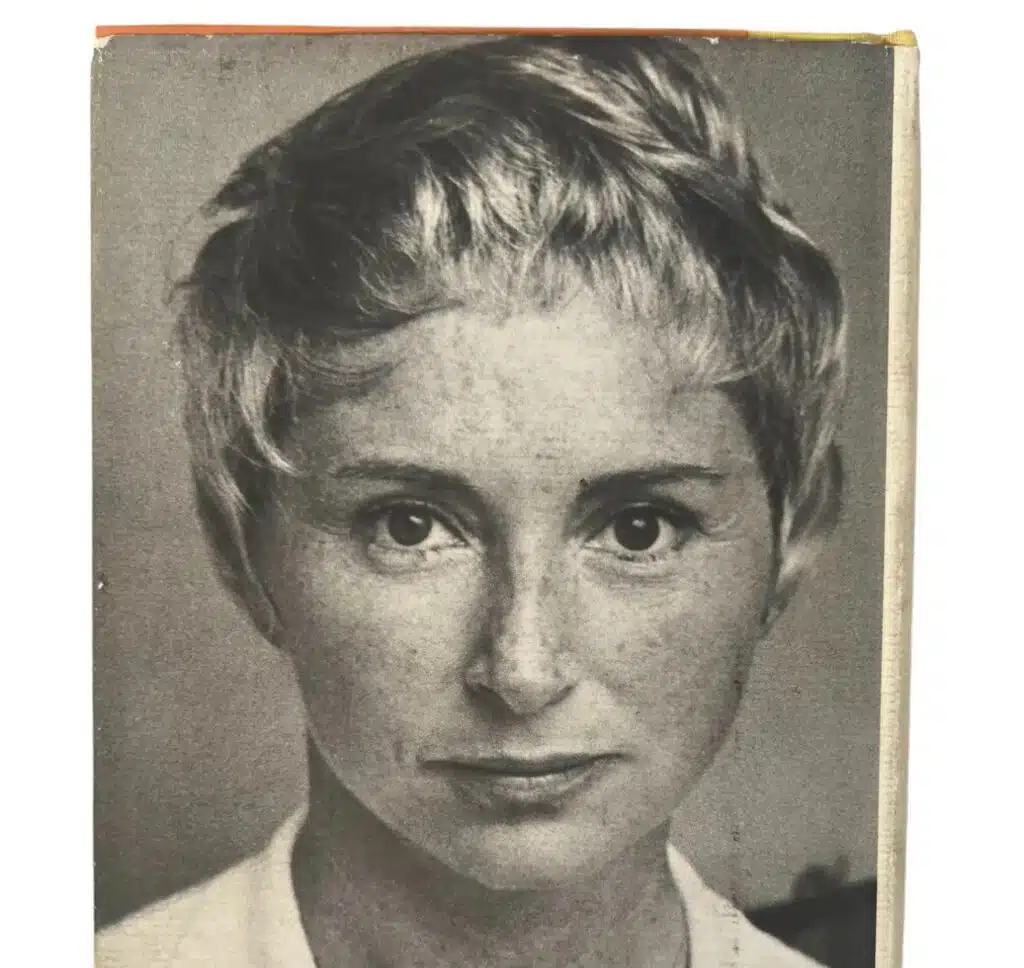
Its author, Sarah J. Maas, is considered one of the most influential writers today. Her books have been translated into 40 languages and have sold more than 70 million copies worldwide. Her success is part of a broader rise in what is often called “fae romantasy”—sometimes dismissively labeled “fairy romance,” but increasingly recognized as a major literary force.
What is romantasy
At the heart of these stories is usually a female protagonist who must survive and evolve in a dangerous, magical world filled with trials. These worlds are often inhabited by fae—fairies or nature spirits rooted in myth.
Within them, the heroine forms a romantic bond with a character who is both captivating and threatening. Readers frequently describe books by how “spicy” they are—a term that refers to the intensity of their romantic or erotic content, ranging from subtle tension to explicit scenes.
The ancient link between fairies and desire
The connection between fairies and sexuality is not a modern invention. It runs deep through European folklore. Historian Francis Young notes that in early myths, fairies often appear as beings who seduce humans—men and women alike—leading them into relationships that blend attraction with danger.
A striking example is the 16th-century Scottish ballad Tam Lin. The story follows Janet, a young woman who meets a mysterious man in a forest—a setting traditionally associated with temptation and the supernatural. While their relationship is not described explicitly, Janet’s pregnancy makes clear that a sexual union has taken place.
What sets the story apart is its reversal of traditional roles. Janet is not a passive figure. She returns to find Tam Lin and ultimately takes on the task of rescuing him from the Queen of the Fairies. To do so, she must hold him tightly as he transforms into a series of terrifying forms. In many versions, the ordeal ends with him appearing naked in human form—a scene rich in symbolic and physical intensity.
The tale challenges conventional narratives, linking sexuality with the supernatural as both a dangerous and transformative force. Its influence continues today: Maas has cited Tam Lin as a key inspiration, even referencing it directly through the name “Tamlin” in her series. In this sense, romantasy does not invent new themes—it reimagines enduring ones.

Seductive and deadly: folklore across Europe
These themes are not limited to Britain. Across Northern and Western Europe, folklore presents supernatural beings as both alluring and threatening.
In Scandinavian traditions, for example, the skogsrå—a forest spirit—appears as a strikingly beautiful woman who enchants those who encounter her. Yet beneath the surface lies something sinister: in many stories, her body reveals animal traits, such as a tail or a hollow, tree-like back. Relationships with her are never innocent; those who succumb to her charm are believed to meet death or ruin.
Similar figures, such as the huldra, combine seductive beauty with a deeply dangerous nature. In these stories, erotic attraction is a force that can deceive, trap, and ultimately destroy.
Elsewhere in Europe, the legend of Melusine—a mysterious water spirit—follows a familiar pattern. She enters a romantic relationship with a human under strict conditions. When those conditions are broken and her true form is revealed, the union collapses, often with tragic consequences. The story reflects a recurring theme: relationships between humans and the supernatural are both desired and doomed.
According to researcher Kelly Fitzgerald, similar narratives are especially prominent in Irish folklore through figures such as the selkies—seal-women who can transform into humans and form relationships with men. Yet their connection to the sea remains fundamental. If they recover their seal skin, they return to the ocean, leaving their human lives behind.
Across these traditions, one idea remains constant: the supernatural is not innocent. It is a force that attracts and tests humans—and often punishes them.
From feared spirits to “cute” icons
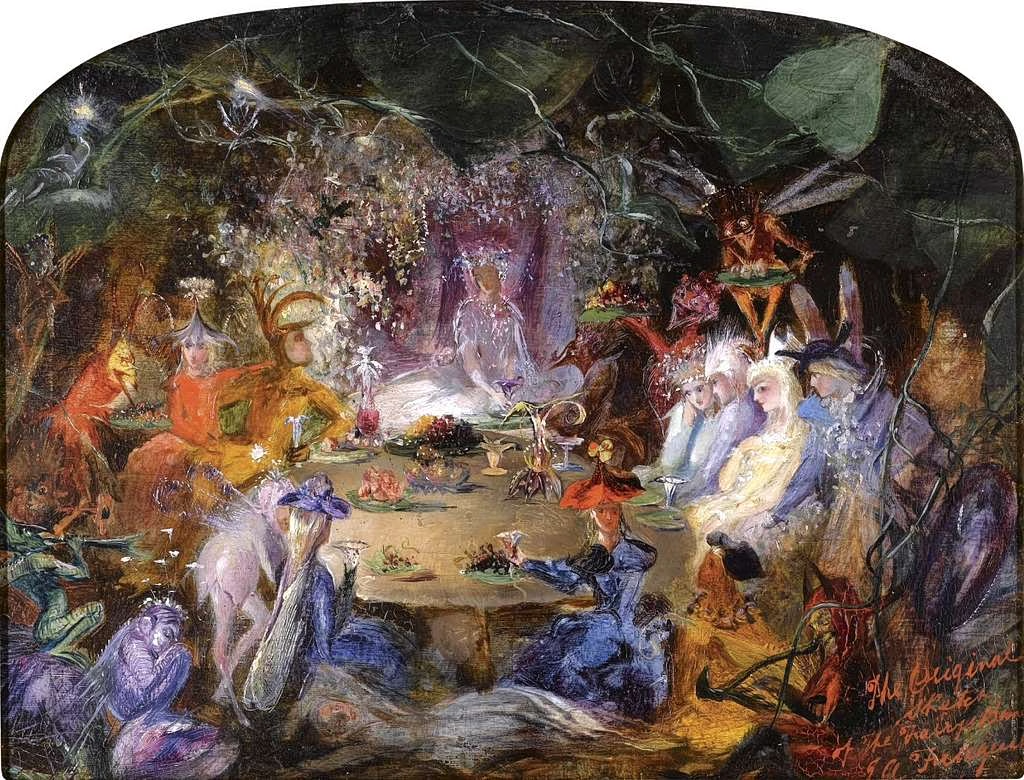
The modern image of fairies—tiny, winged, and sprinkled with magic dust—is a relatively recent invention. Until the early modern period, fairies in folklore were anything but harmless. They were unpredictable, often vengeful, and capable of leading humans astray or causing harm.
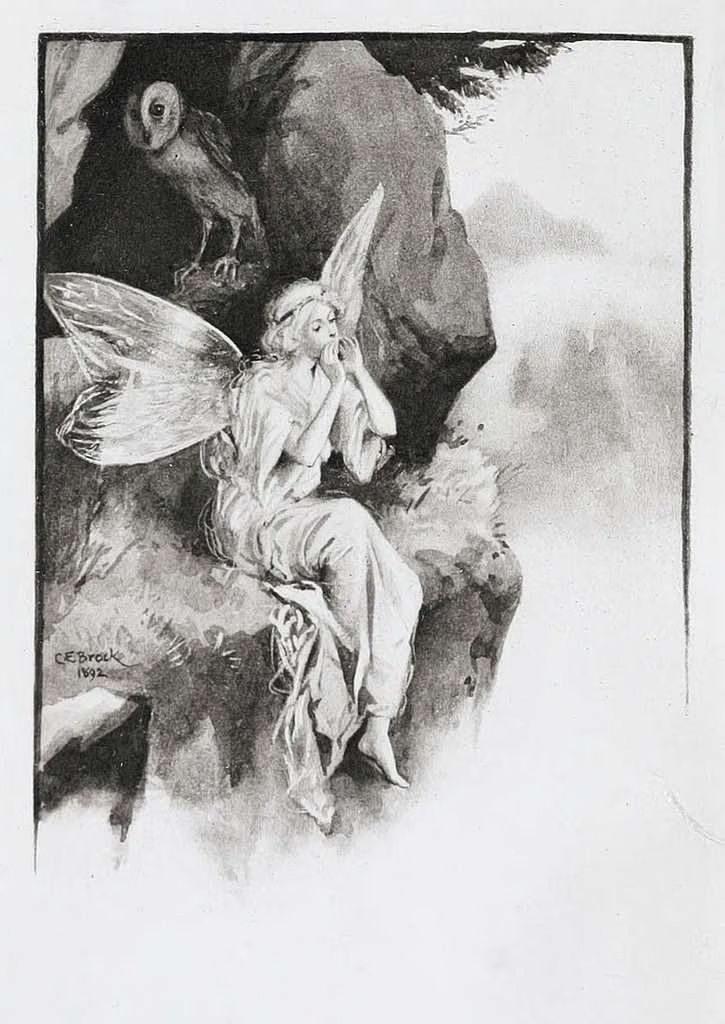
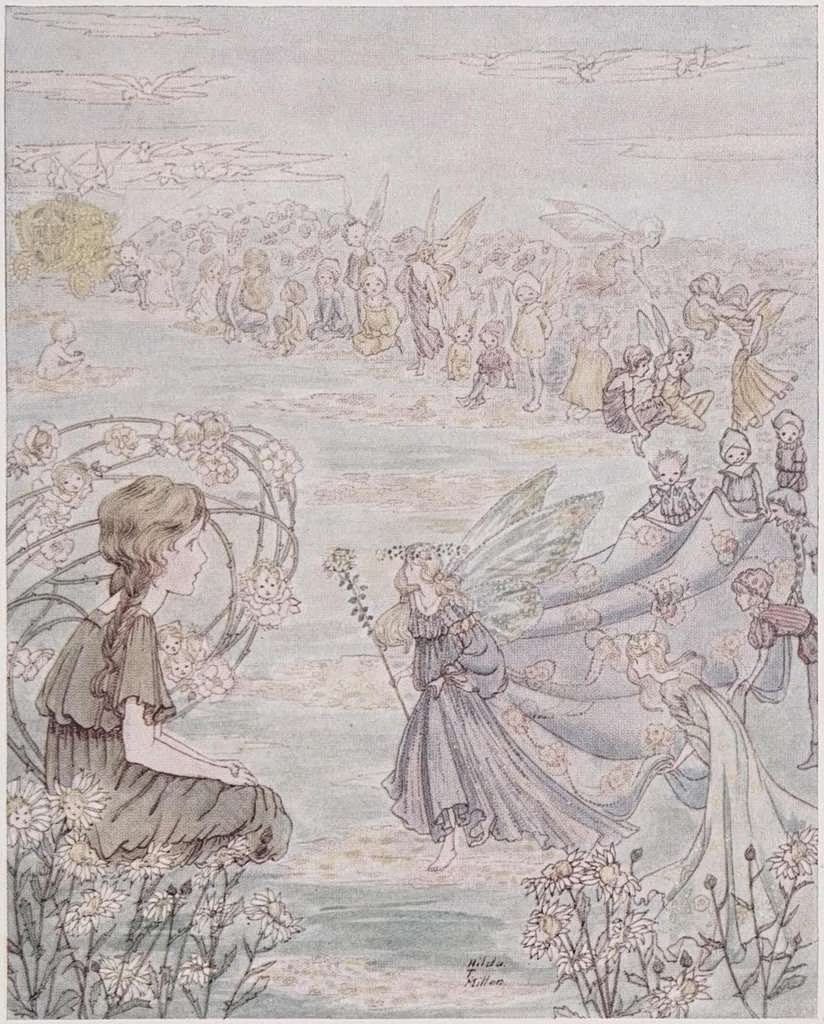
This shift began in the late 18th century and peaked in the 19th, largely through art and literature. Writers and painters, particularly in Britain, reimagined fairies with wings, small bodies, and softer, more appealing features. These traits did not originate in folklore but were artistic creations that gradually shaped popular imagination.
At the same time, industrialization, urbanization, and the rise of scientific thought distanced people from older beliefs. As rural life—where such spirits were once thought to dwell—gave way to more rational worldviews, fairies transformed into safer, almost decorative figures.
The darkness never disappeared
Yet traces of their older nature never fully vanished. A telling example is Tinker Bell from Peter Pan. On one hand, she embodies the modern “cute” fairy—small, bright, and charming. On the other, she displays jealousy, selfishness, and cruelty, particularly toward Wendy.
This duality reveals something essential: even in their most innocent forms, fairies retain echoes of their darker past. That tension—between attraction and danger—may be what makes them so enduringly fascinating.
Why romantasy resonates today
The surge in romantasy appears closely tied to a desire for escape. These stories combine intense plots, fantasy worlds, and romance, while placing strong emphasis on female strength and autonomy.
As publishing analyst Katie Fraser notes, these are not simply “romantic” books but fully developed narratives with rich plots and complex characters. Publishers such as Mills & Boon have long demonstrated that romance can serve as a powerful form of imaginative escape.
Ultimately, the success of romantasy may lie in its ability to tap into something timeless: humanity’s attraction to the unknown, the forbidden, and the mysterious—forces that have captivated the human imagination for centuries.