






|
Neubauer Artists LLC
Getting your Trinity Audio player ready...
|
Researchers at Tel Aviv University have developed a chip that avoids DNA sequencing, paving the way for earlier diagnoses and real-time monitoring.
Israeli researchers have developed a simple, rapid, and $60 blood test to diagnose lung cancer without the need for expensive DNA sequencing.
In a peer-reviewed study of 103 participants, the test accurately identified 93% of stage 2 to 4 lung cancers, while ruling out cancer in 90% of healthy control subjects. Using fluorescent light, scientists analyzed chemical patterns on fragments of DNA circulating in the blood.
The work was led by scientists from the Tel Aviv University School of Chemistry, in collaboration with JaxBio Technologies, as well as by doctors from the Bnai Zion Hospital Centers in Haifa and Sheba, near Tel Aviv.
To make sure you don’t miss any of the news,Receive today’s front page in your email
“Lung cancer is one of the deadliest and most common cancers,” explains Dr. Abed Agbarya, director of the oncology department at Bnei Zion Medical Center, author and lead clinical researcher of the study. In a Zoom interview with The Times of Israel , he elaborates: “Most people reach the later stages of the disease. Provided the disease is detected early, surgery is possible, and a complete cure can be achieved. The five-year survival rate would be significantly better.”
The study was published in the peer-reviewed scientific journal Nature Precision Oncology.
A larger trial is currently underway in several hospitals in Israel and Europe, where clinicians are evaluating the researchers’ specially designed chip and using it for patient monitoring. This trial phase is expected to be completed by mid-2027.
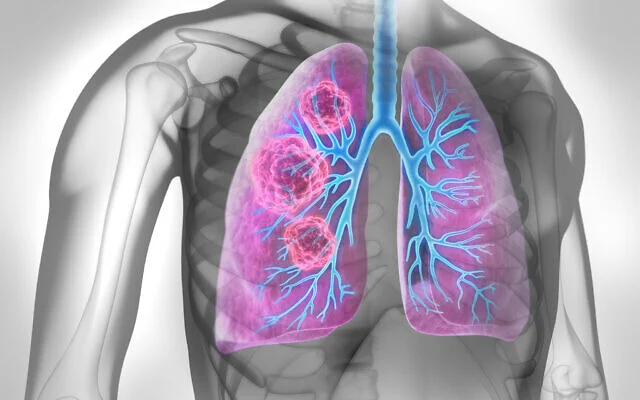
Early lung cancer often goes undiagnosed
Lung cancer is the leading cause of cancer-related death worldwide, with nearly 1.8 million deaths annually, according to the World Health Organization (WHO). Approximately 2,000 Israelis die from this disease each year.
Because early-stage lung cancer rarely presents symptoms, the vast majority of patients are not diagnosed until after the disease has spread, which significantly reduces their chances of survival.
“Many people with undiagnosed lung cancer arrive at the emergency room during the winter with a cough that produces blood and shortness of breath,” explains Mr. Agbarya. “They present with symptoms of COPD and emphysema. Up to 60% of patients are diagnosed with lung cancer at advanced stages.”
Mr. Agbarya points out that the Israeli health package offers low-dose chest scans, but less than 20% of patients get screened.
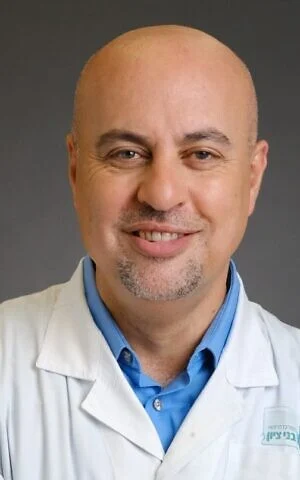
“This figure is the same everywhere in the world, not just in Israel,” he points out. “Patients don’t want to get tested. That’s why we want to detect lung cancer in people early, before they develop symptoms.”
Mr. Agbarya began by approaching Dr. Yuval Ebenstein, of Tel Aviv University, through the 8400 Health Network, a group of nearly 400 leading researchers, executives and clinicians working in the health technology and biotechnology sectors in Israel.
He specifies that he was responsible for the clinical aspect of the research, and Mr. Ebenstein for the chemical and technological development of the blood test.
“We combined chemistry and physics to find solutions,” Ebenstein explained in a Zoom interview with The Times of Israel . For the purposes of this study, he and his team combined chemistry and genomics, the branch of biotechnology that applies molecular techniques and high-throughput DNA sequencing to map and analyze complete sets of genes.
“We discovered that chemical modifications of DNA were characteristic of certain tumors,” he continued. “We invented a chemical reaction that makes these chemical modifications glow.”
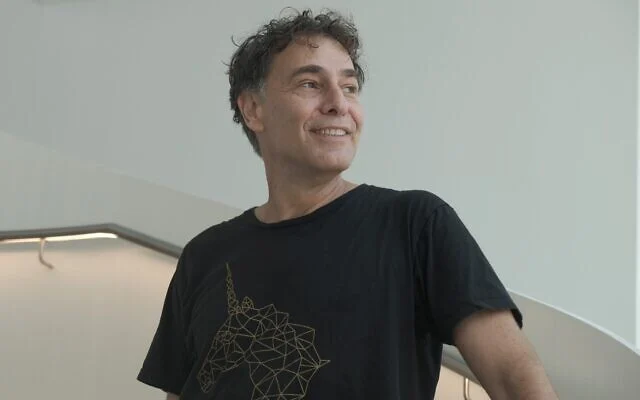
“We collected a set of small DNA molecules from the bloodstream,” Ebenstein continued. “We labeled them and tracked the light they emit, which reflects the chemical changes induced by cancer.”
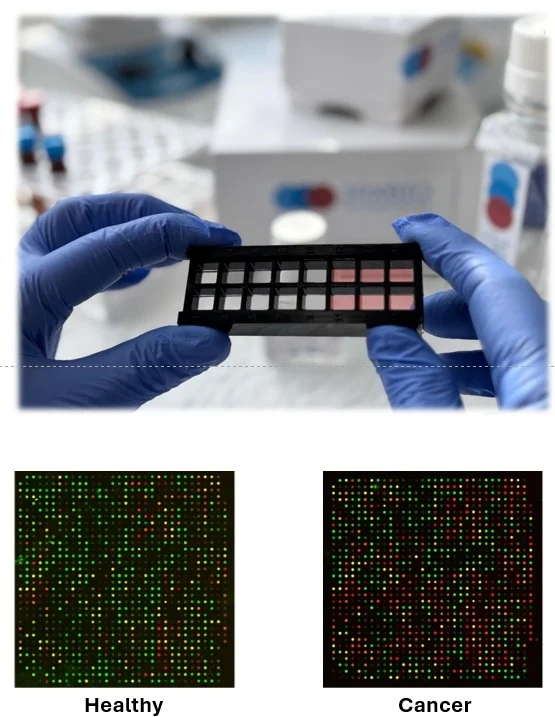
The researchers then placed these light-emitting DNA molecules onto a specially designed glass chip.
“Each point emits a different level of light depending on its chemical composition and the extent of the chemical modification,” he explains. “The grid on the glass resembles a small QR code.”
The next step is the computer part, explains Mr. Ebenstein, during which scientists link the light pattern to the disease profile.
“We were then able to accurately detect lung cancer at stages 2 to 4,” he points out. “It’s a blood test, and a very inexpensive one at that. It doesn’t cost thousands of shekels.”
The method also made it possible to successfully differentiate between the two main subtypes of lung cancer: adenocarcinoma and squamous cell carcinoma.
“The test is designed to provide solutions for low-income countries because it is very simple and does not require much infrastructure,” explains Mr. Ebenstein. “We hope it can be integrated into routine blood tests.”
A “truly ingenious” solution
Dr. Ari Raphael, head of translational oncology at the Davidoff Cancer Center at Rabin Medical Center, told The Times of Israel that lung cancer is “the deadliest cancer in the world, precisely because it is rarely detected in time.”
Mr. Raphael did not participate in this study.
“What I find truly ingenious about this study is its ability to identify cancer-related DNA changes through a simple blood test, without costly sequencing,” he continues. “It detects stage 2 to 4 cancers with a sensitivity and specificity greater than 90%, correctly identifying patients and rightly excluding healthy individuals.”
Mr. Raphael adds that “a quick and affordable tool like this, even at these stages, could greatly help both in diagnosis and in monitoring treatment.”
He points out that it has only been tested on about a hundred patients.
“The real challenge ahead is proving that it works at stage 1, when curative treatment is most accessible,” explains Mr. Raphael. “That’s the hurdle every liquid biopsy must overcome before it can be used in clinical trials.”
“I feel that this is my mission.”
For Mr. Agbarya as for Mr. Ebenstein, research has a profound personal importance.
Mr. Ebenstein’s interest in this work arose from the diagnosis of his father-in-law, who was suffering from a preliminary stage of multiple myeloma, a blood cancer.
“That’s how I became interested in this study,” he confides. “I realized that the technologies we develop in the laboratory are the right tools for monitoring cancers.”
Mr. Agbarya explains that he felt compelled to get involved in the research because lung cancer accounts for 29.2% of cancer deaths among Arab Israeli men, compared to 18.1% among Jewish men, and 42% of adult Arab men are heavy smokers.
“In the North, in Haifa and Nazareth, where I work with these patients, I see that they don’t have the means to travel to the center for treatment,” he continues. “They need someone who will dedicate themselves to them and bring them new treatments. I feel that this is my mission. I want to care for my community, protect them, and diagnose them in the early stages of their illness. They need this support.”
He adds that during their research, he and Mr. Ebenstein became friends.
“Yuval [Ebenstein] was one of the first people I called to announce that my son had been admitted to the Tel Aviv University medical school,” says Mr. Agbarya.
“Despite the terrible years we have lived through, and what we are still experiencing, we are working together on projects. We will always keep hope alive.”