







|
Neubauer Artists LLC
Getting your Trinity Audio player ready...
|
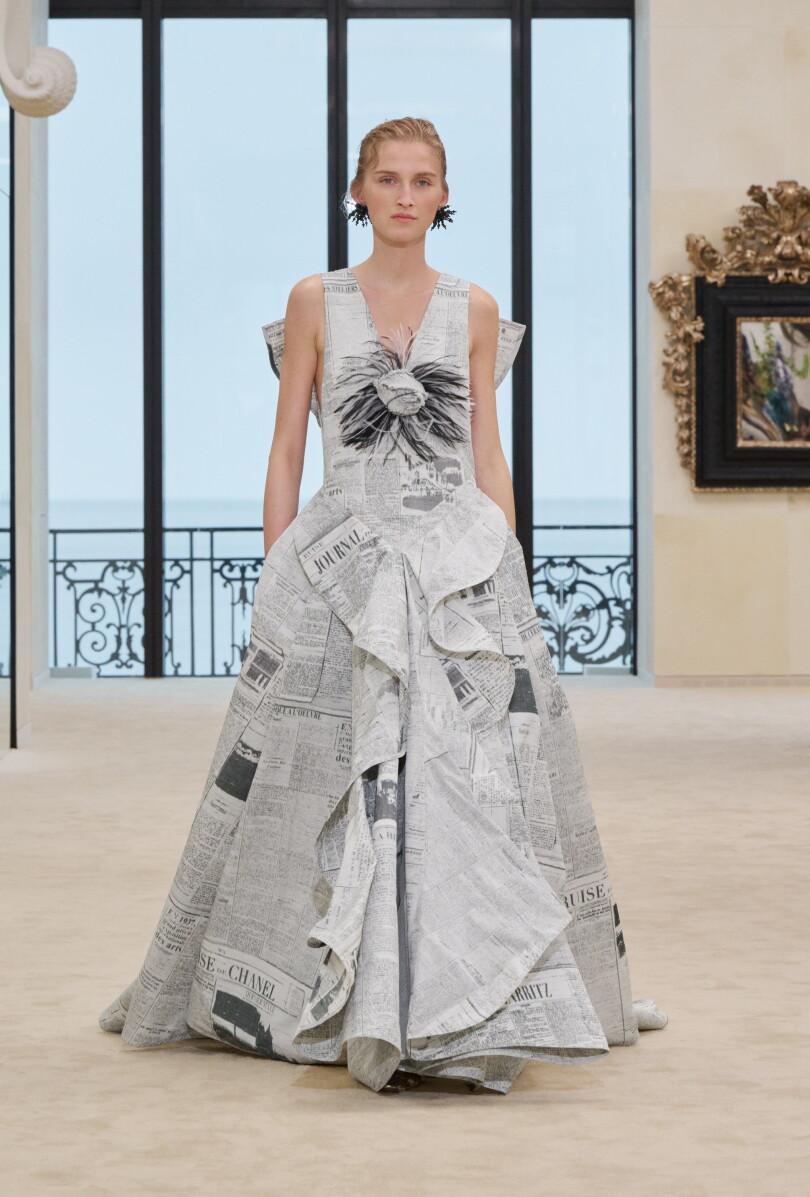
Matthieu Blazy’s first Cruise collection was unveiled in Biarritz within the stunning setting of the Art Deco casino, entirely redesigned for the occasion. A jubilant artistic statement and a return to his roots, since it was in this very city that Gabrielle Chanel established her first couture house in 1915, and with it, a new vision of womanhood.
The Belle Époque blends with Art Deco, the narrow streets winding their way to suddenly open onto the ocean, its waves breaking on a pristine beach or crashing against the rocks, lending this majestic landscape a certain drama. As early as 1850, a woman fell in love with the Basque coast: Empress Eugénie, wife of Napoleon III, née Montijo, found in this modest fishing village the sea air she missed at Court, and the Spanish influences so dear to this native of Granada. She had the sumptuous Villa Eugénie built there, now the Hôtel du Palais, attracting in her wake kings, queens, aristocrats, artists, and, in 1915, a certain Gabrielle Chanel, another legend of this unique resort.
Bodies in motion, swimmers, sailors, sun-kissed strollers—Coco observed them, captured them, before translating this vitality into clothing: soft jersey, fluid lines, silhouettes freed from constraints. She herself savors the wind, the sun that awakens her skin and, after immersing herself in the water, the taste of salt on her lips.
Within the Villa Larralde – which the company had just bought – a stone’s throw from the casino and the beaches, she then set up her boutique, her sewing workshops, and her apartment. Igor Stravinsky, Jean Cocteau, and Pablo Picasso readily paid her visits, participating in the artistic effervescence and the unbearable lightness of being that reigned in the city.

More than a century after Coco, Matthieu Blazy doesn’t seek to recreate the era; he dreams and magnifies it. In the casino, transfigured into a palace of black and ivory mirrors, reality seems to waver. Like the famous staircase on Rue Cambon in Paris, the walls reflect silhouettes endlessly, as if past and present were echoing each other.

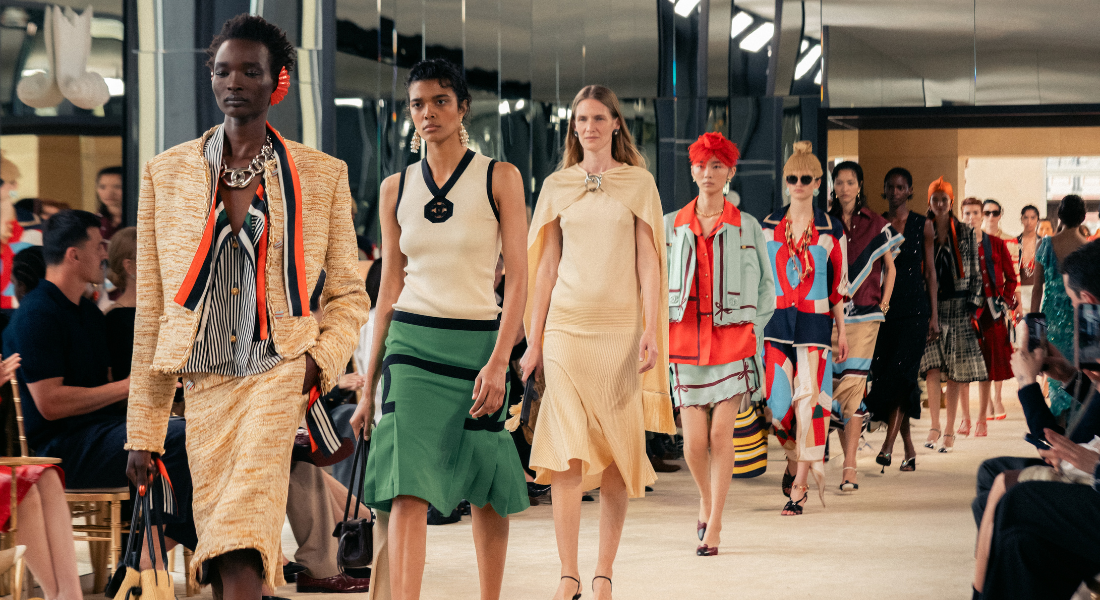
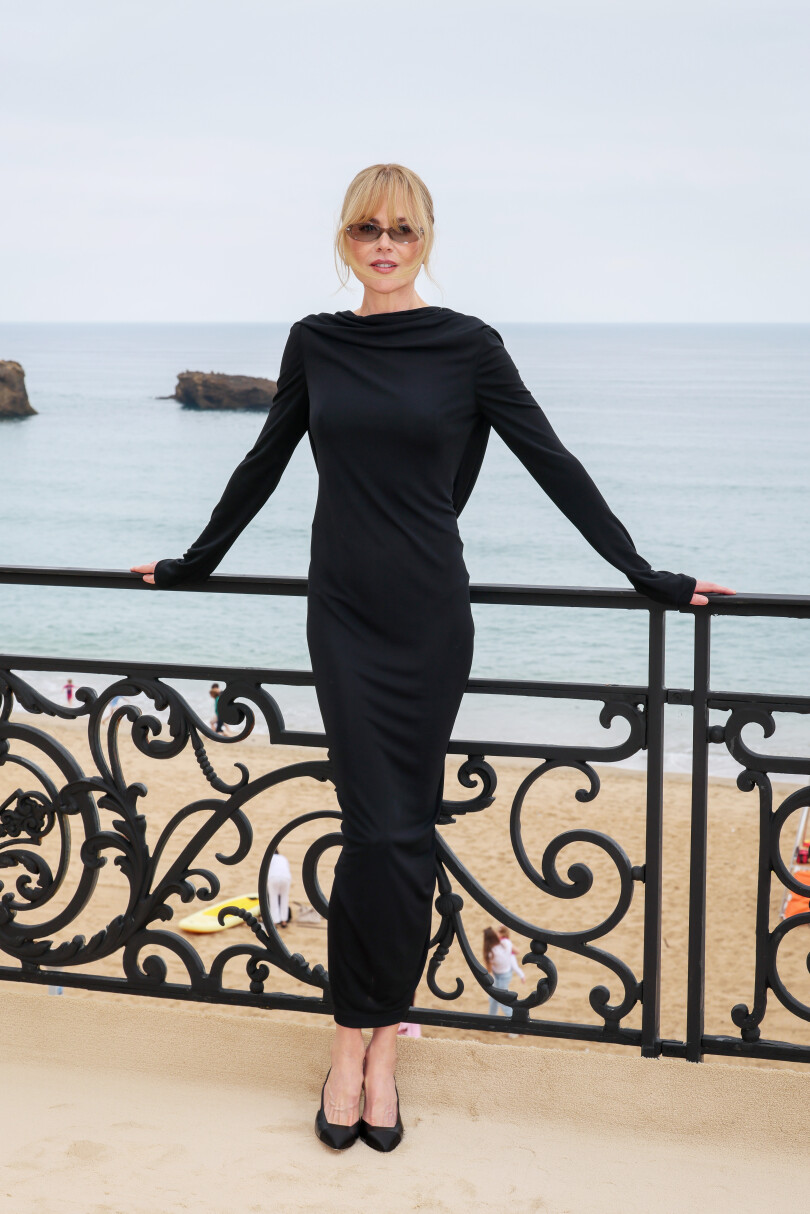
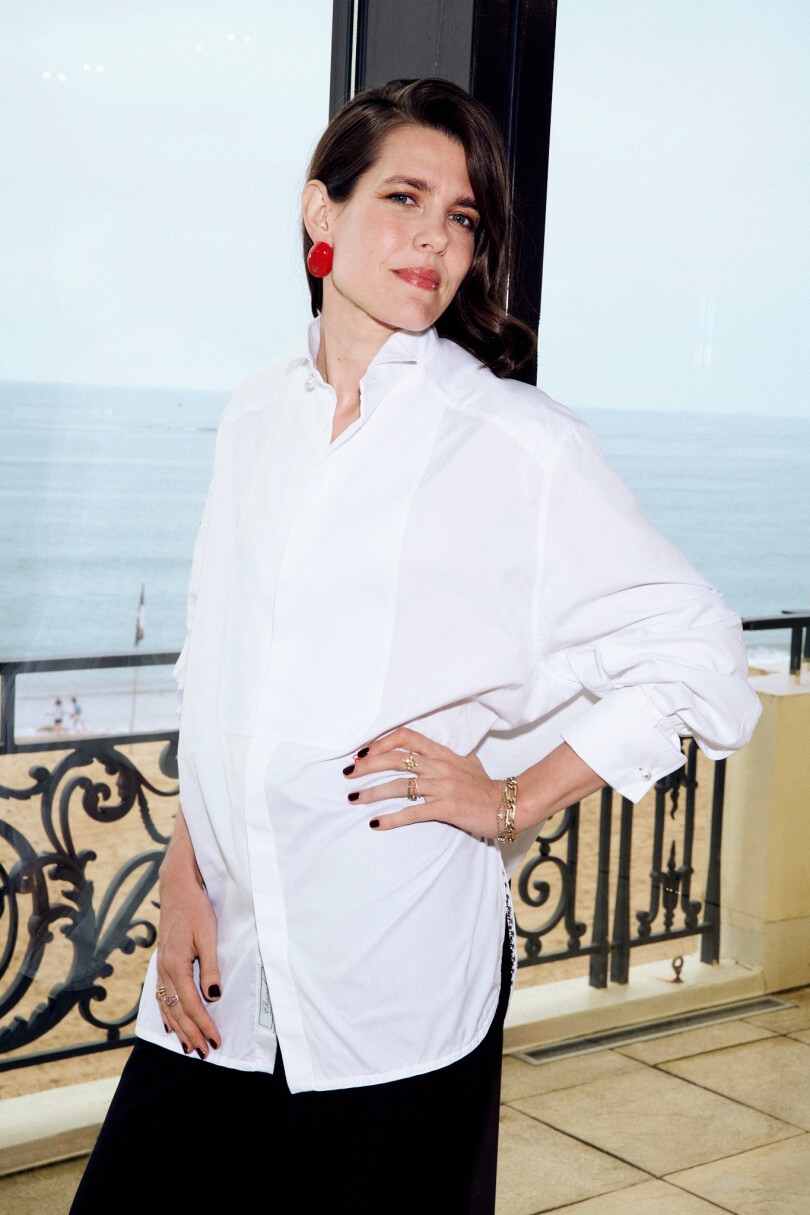
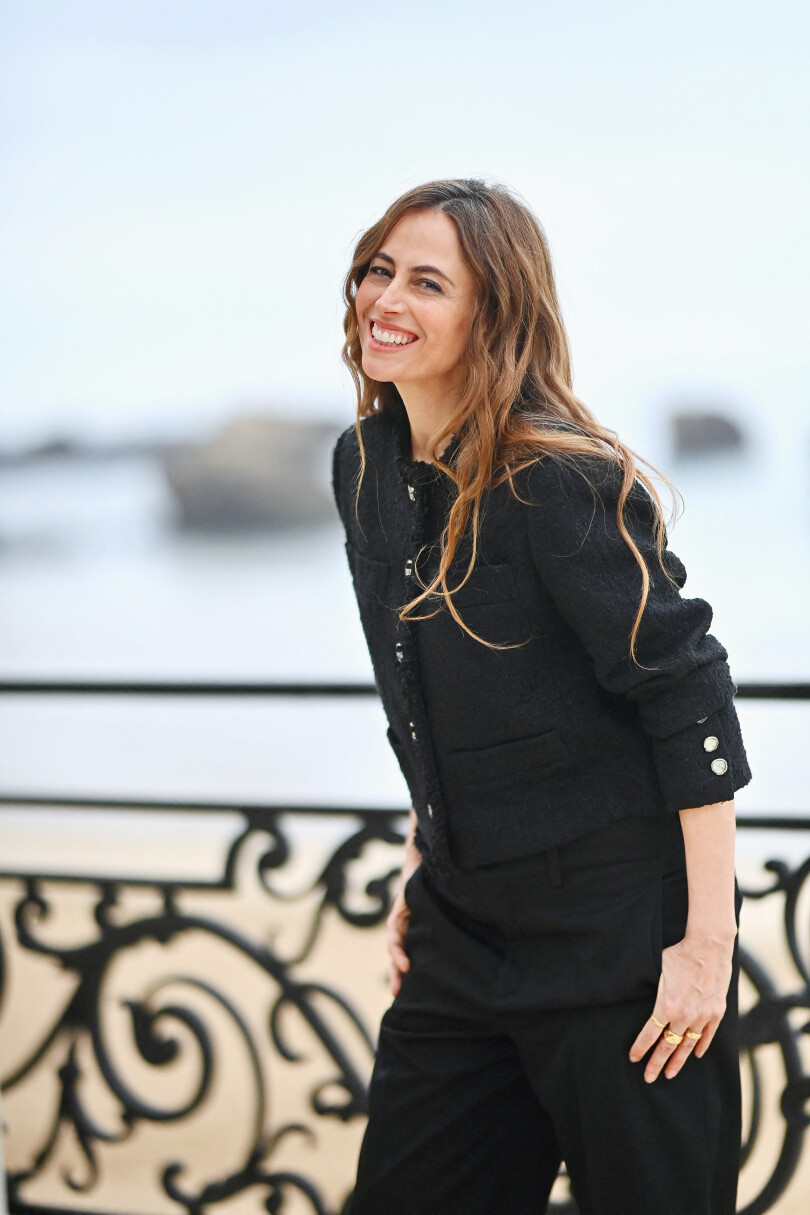
The show begins. Nicole Kidman, Charlotte Casiraghi, Marion Cotillard, as well as Tilda Swinton and Sofia Coppola, are captivated. Seventy-nine appearances follow one another like fragments of a kaleidoscopic story. Nothing is static. Everything flows, mingles, transforms.
Basque stripes, in long, vibrant hues of color, run throughout the collection: Espelette pepper red, deep greens, ocean blues, or sunny yellows contrasted with black. They evoke the beach, old tents, summers past, but also a kind of joyful, carefree disorder that Blazy embraces.
The diversity of the models also charms the observer. There’s no obsession with youth or unhealthy thinness; they showcase their unique skin tones, ages, and styles, seeming to embody every possible facet of femininity. This celebration of diversity culminates with model Kaya Wilkins, five months pregnant, dressed in a low-waisted skirt suit that reveals her rounded belly beneath a black bra.

The wardrobe, however, abolishes boundaries. Sportswear and work clothes converse with evening gowns, sailor jackets give way to polo shirts, and swimsuits are subtly hinted at beneath sensual fabrics and materials. Sandals are reinvented as simple heel lifts, leaving the soles bare to better feel the natural forces of the earth.
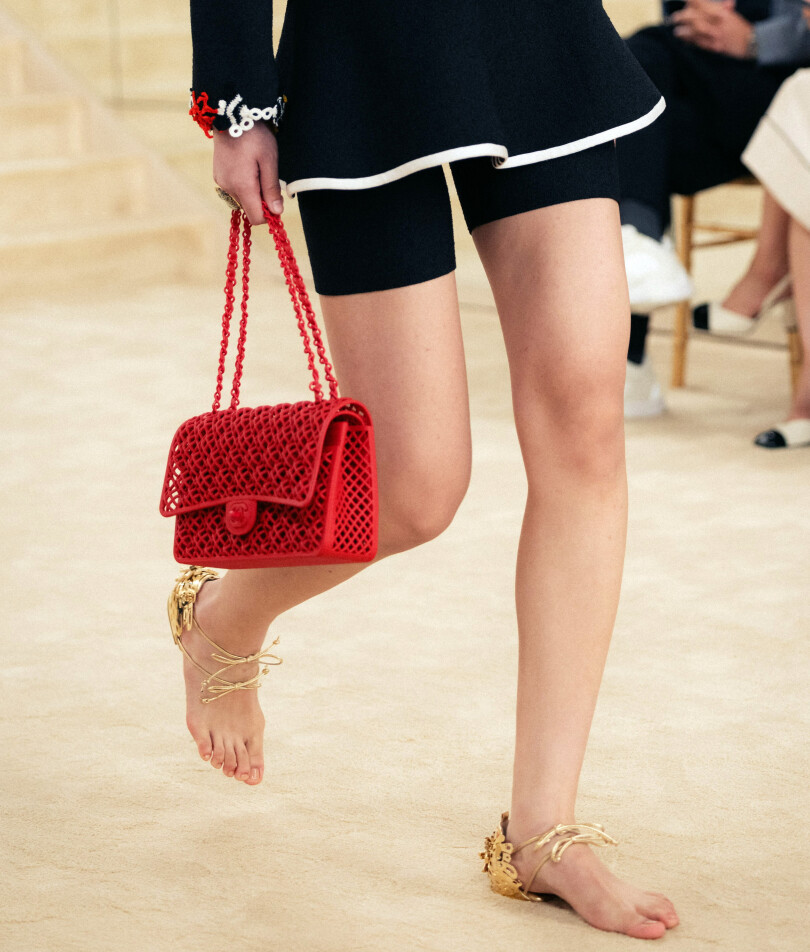
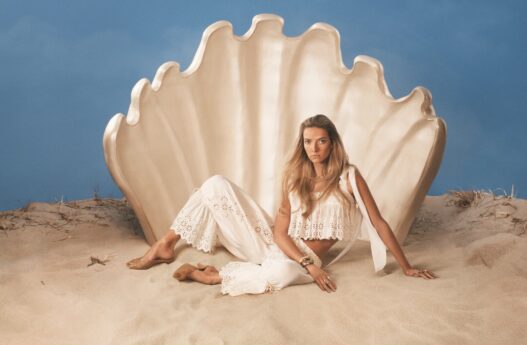
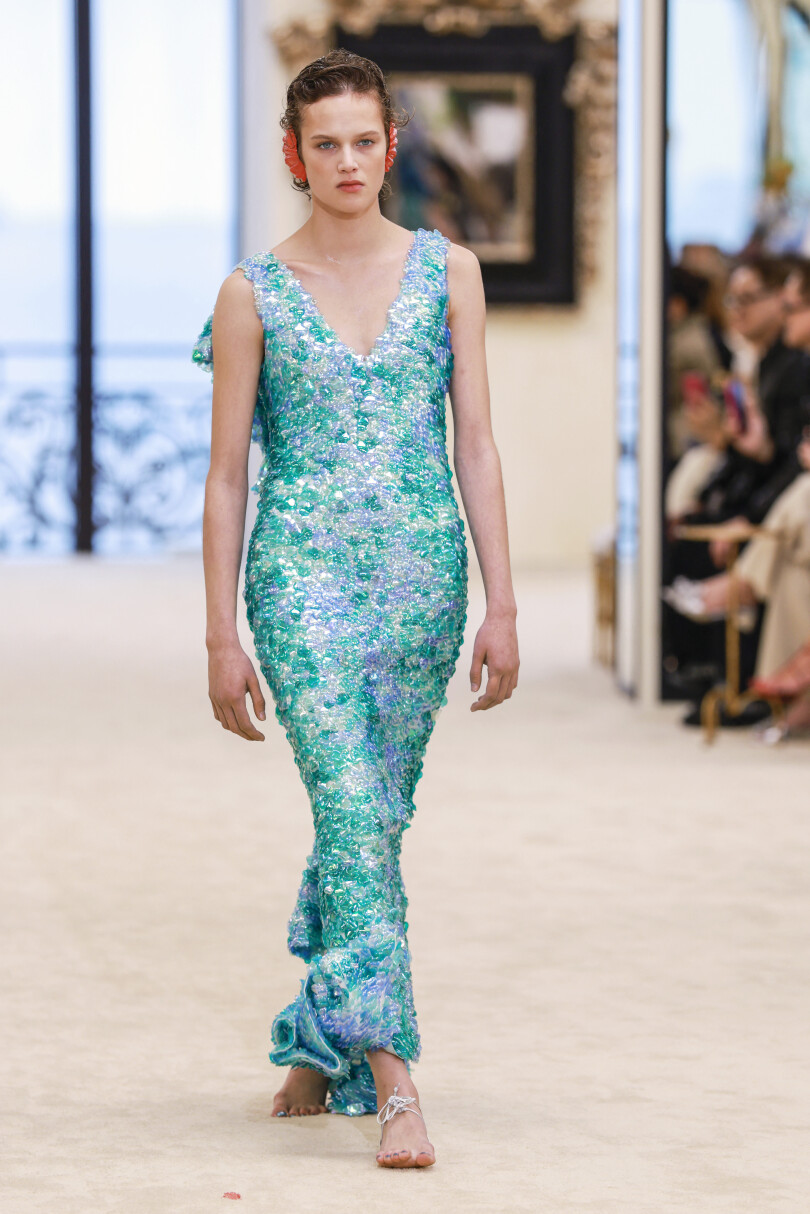
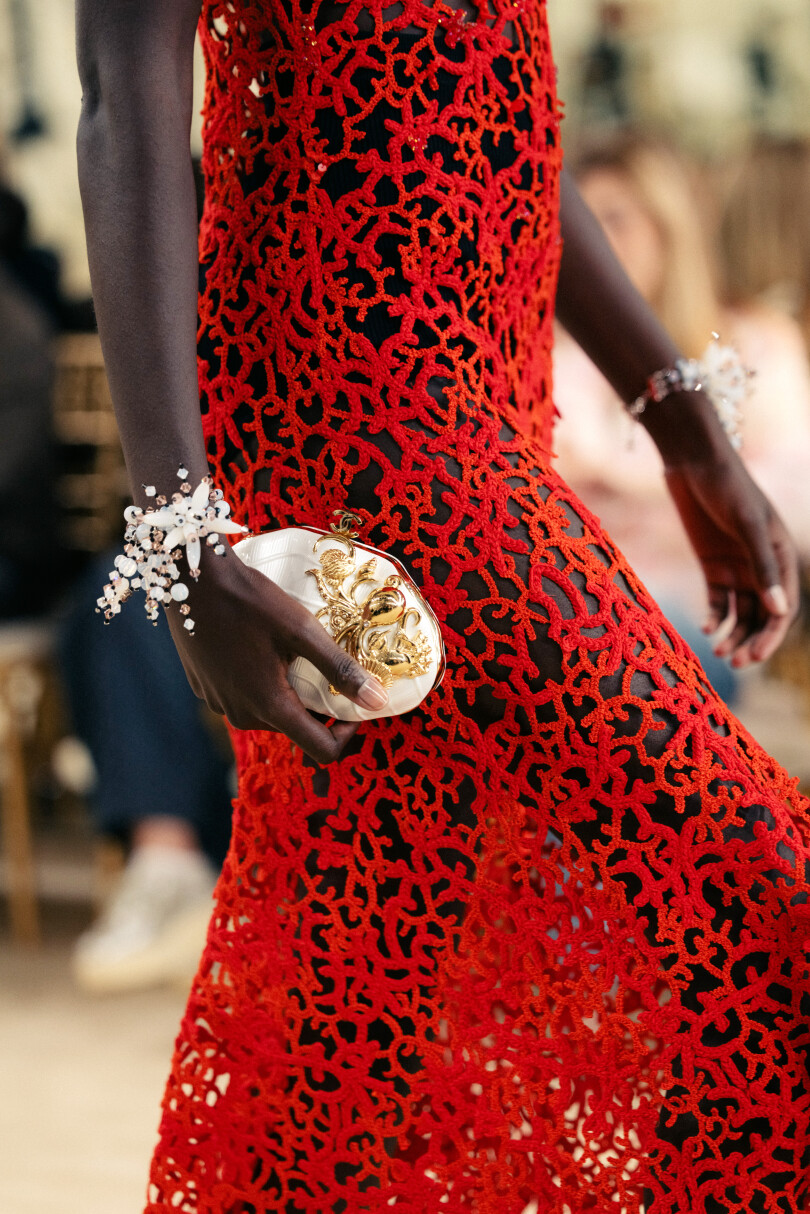
We think of those idle hours when the day stretches lazily into night and sand drifts into the living rooms. But what runs through the show, even more profoundly, belongs to the realm of myth. A mermaid appears—or rather, she surfaces everywhere. In the iridescence of a dress embroidered like scales, in the wet sheen of the fabrics, in those shell jewels that seem to have just been plucked from the water.
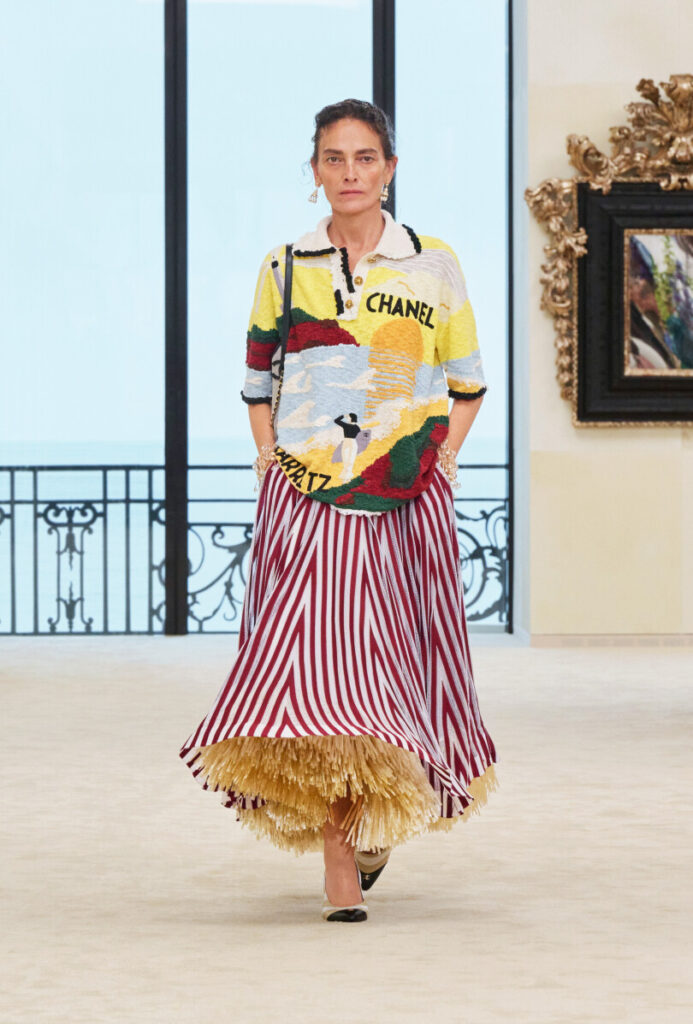
Inspired by an Art Deco fresco seen by the artistic director on the Biarritz lighthouse, this figure becomes a kind of muse. She embodies an elusive femininity, neither entirely terrestrial nor entirely marine. In this, Matthieu Blazy reveals himself as much as a storyteller as a couturier. The double C itself ceases to be a simple symbol: it becomes structure, motif, almost the skeleton of the garment. As if it were necessary to return to the origin of forms to rediscover their necessity.
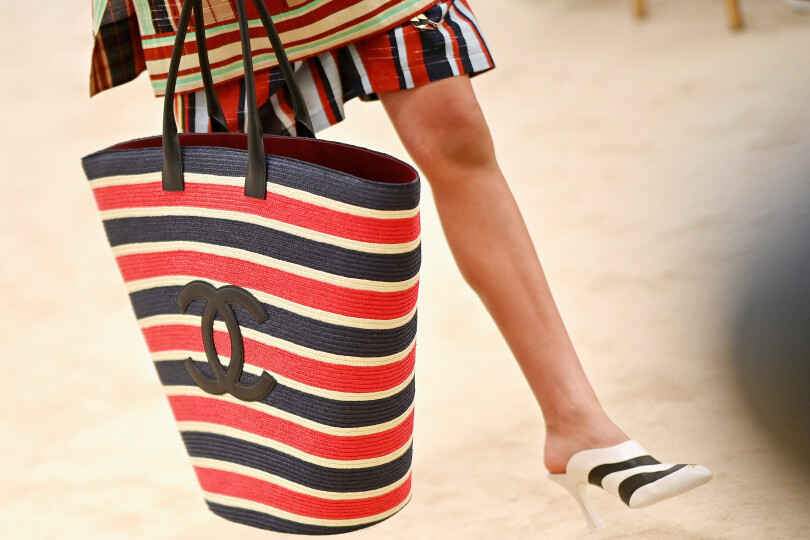
Inspired by an Art Deco fresco seen by the artistic director on the Biarritz lighthouse, this figure becomes a kind of muse. She embodies an elusive femininity, neither entirely terrestrial nor entirely marine. In this, Matthieu Blazy reveals himself as much as a storyteller as a couturier. The double C itself ceases to be a simple symbol: it becomes structure, motif, almost the skeleton of the garment. As if it were necessary to return to the origin of forms to rediscover their necessity.
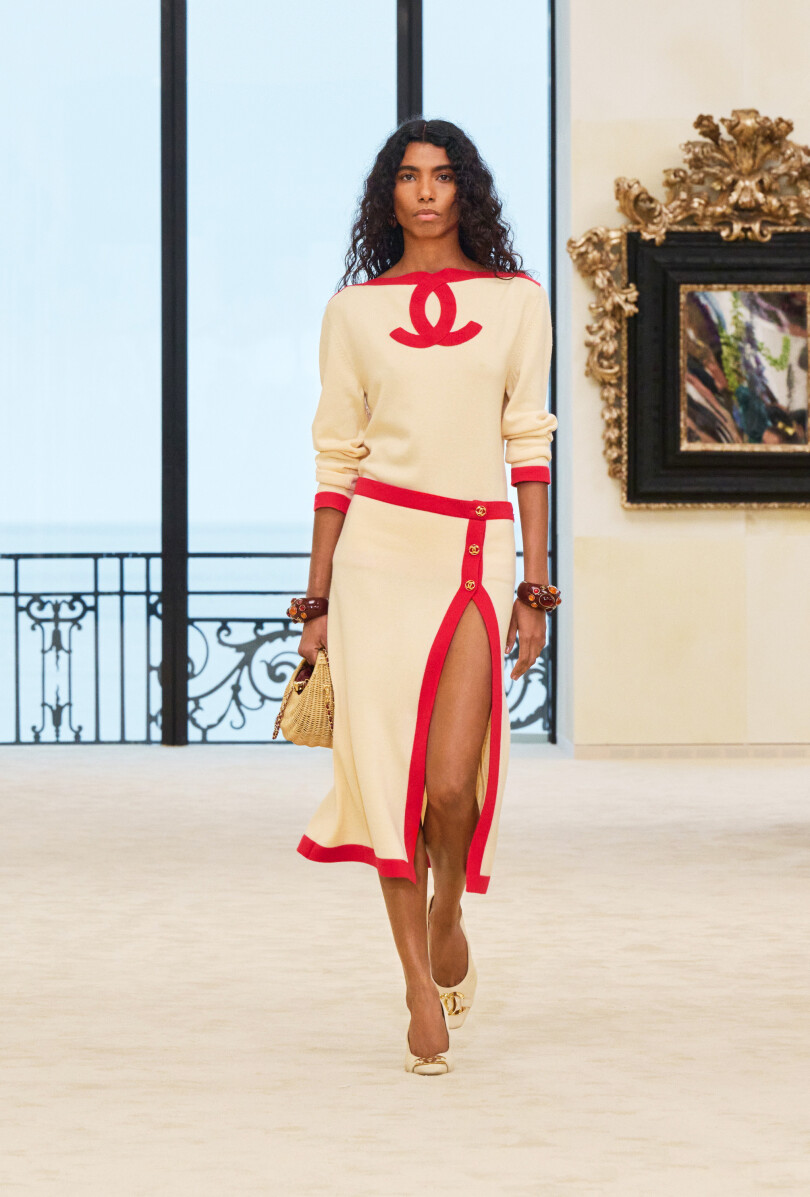
And then, suddenly, the obvious choice emerged: the little black dress. Created in 1926 by Gabrielle Chanel, it appears here enhanced with a spectacular bow in the back, a detail long hidden in the archives. Blazy sees it as a revenge dress before its time, almost a declaration of social emancipation. Black, says Chanel, “knocks everything out”: it levels, it cuts through, it asserts.
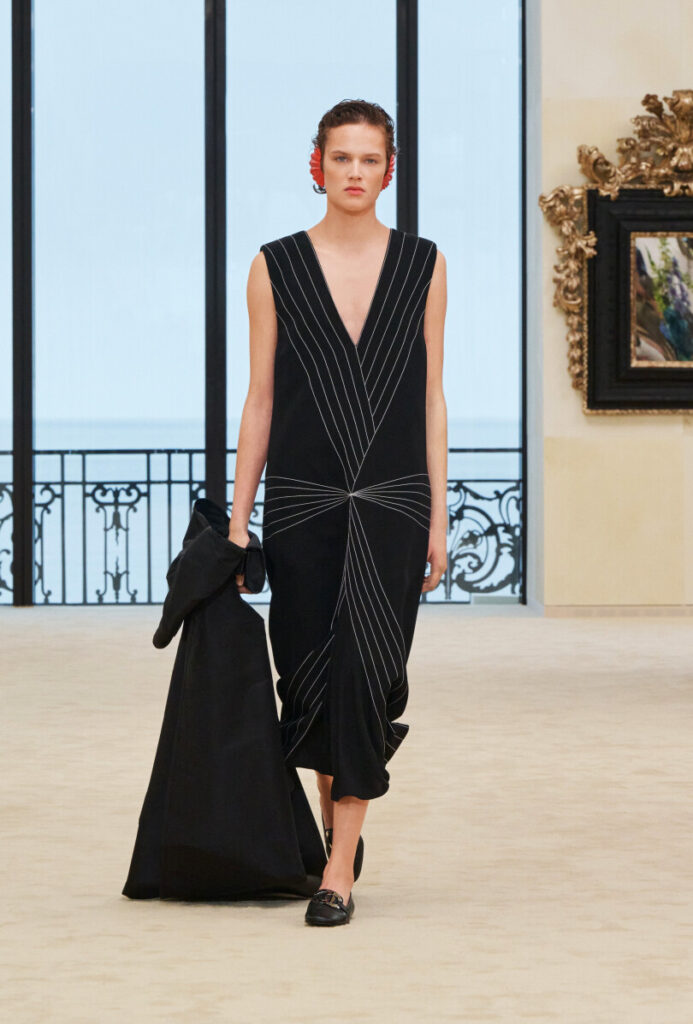
By juxtaposing different eras, local roots, and its rich imagination, Matthieu Blazy has made a remarkable entry into Chanel’s Cruise universe. In Biarritz, he didn’t simply revive a heritage; he set it in motion, as if swept away by the great winds of the Atlantic.