



|
Neubauer Artists LLC
Getting your Trinity Audio player ready...
|
What does a mermaid wear when she’s off duty?
Like the great folklorists of yore, I found myself contemplating this question over a Diet Coke under woven light fixtures and draped plant fronds at a bustling Mediterranean restaurant in Chicago. Unlike those writers, I, however, have the pleasure of chatting with a mermaid on this July day. Or at least someone who plays one onstage. I am talking about Zara Larsson, the pop phenomenon who is chiseling her place on the Mount Rushmore of Swedish imports, right alongside ABBA, Robyn, and IKEA.
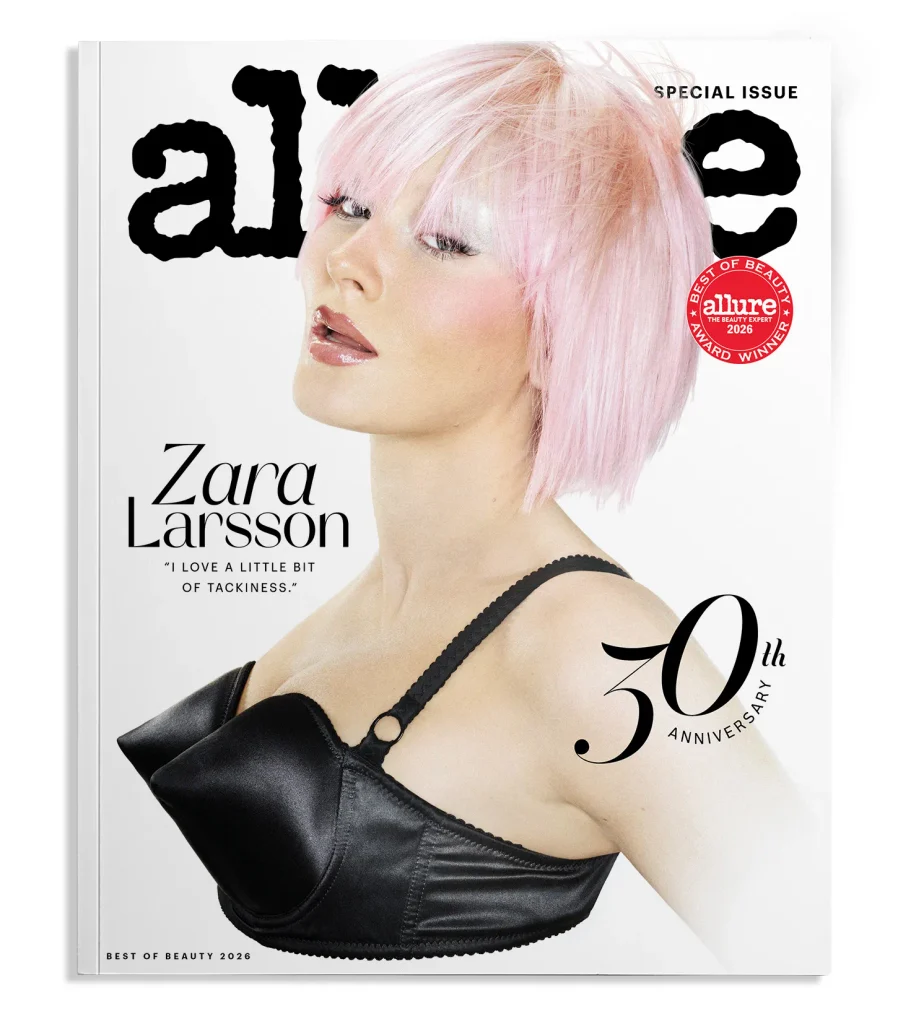
Until this moment, when we are face to face in a small two-person booth, I had imagined that Larsson was some sort of fairy-tale being—always sparkling. I ask if her more-is-more aesthetic is a calculated middle finger to the clean girl look du jour. “No, I’m slightly tacky. I love a little bit of tackiness,” she says matter-of-factly, as one would announce the weather. “I love the sleazy [look]. Like Snooki, she’s on the mood board for sure. Paris Hilton, like night out when it’s five a.m., that shit. I’ve never been drawn to the clean girl.”
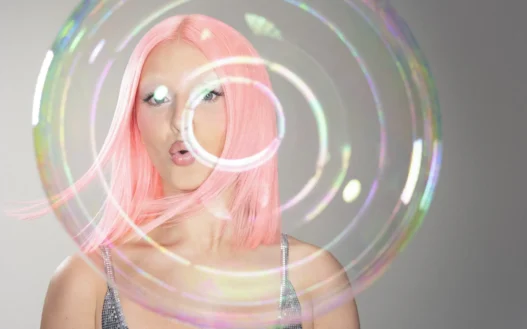
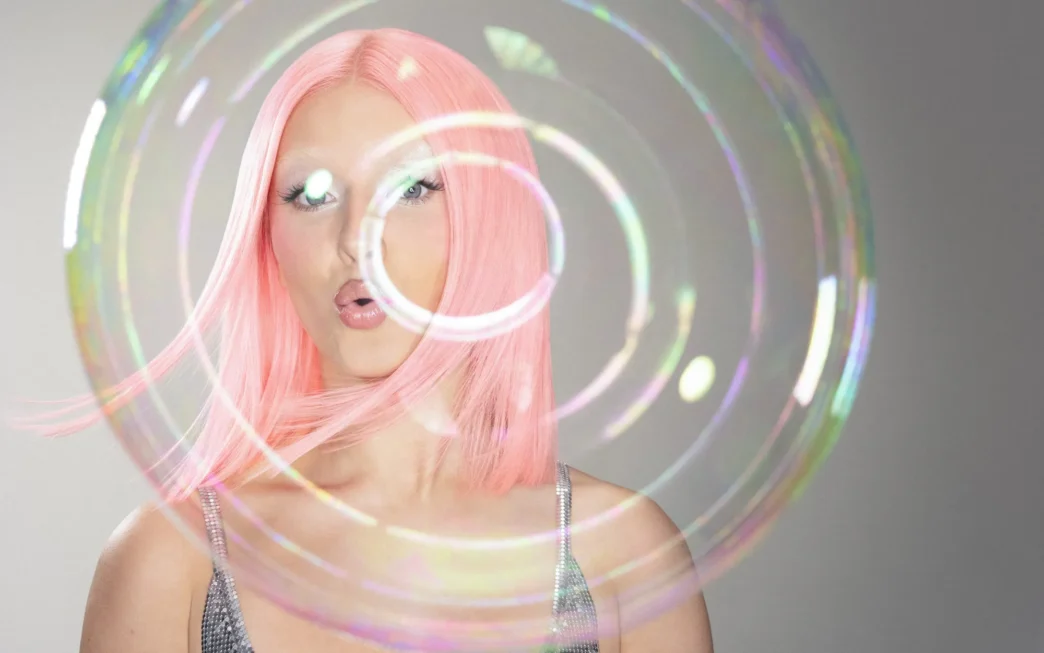
There’s nothing minimal about Larsson’s presentation. Tracks upon tracks of extensions to create anything-but-effortless beachy waves, marine life-inspired makeup, and enough body glitter to dust a few acres of a Swedish forest combine to create Zara Larsson, the pop star. In case you need even more visuals, her current Midnight Sun (also the title of her latest album) aesthetic was inspired by an appearance she made on RuPaul’s Drag Race. “The keychains, the glitter, my little Zen top, the sparkles, the platform shoes… I was just like, That is Midnight Sun,” she says.
“I love the sleazy [look]. Like Snooki, she’s on the mood board for sure… I’ve never been drawn to the clean girl.”
But back to my original question about her off-duty look. I note that today this mermaid wears a neon-pink, three-quarter-length-sleeve shirt over a demurely stoned bralette, white Bermuda shorts, and flip-flops. Oh, and a fresh spray tan. Larsson’s hair is pulled back into what I assume is an everyday low ponytail (except it reaches more than halfway down her back). Unlike her high-saturation, hypermaximalist, onstage glamour, she’s free of face gems and Technicolor eye shadow—bare-faced, save for a neutral lip combo. Revlon ColorStay Longwear Lip Liner in Nude (of course, I had to ask) and a Glossier clear gloss. (She purchases the gloss in bulk to keep in her bags and jackets. “She’s my girl,” she says.)
Larsson is fresh off a flight from Sicily. Come this evening, she’ll perform at The Vic Theatre for one of Lollapalooza’s Aftershows, a more intimate venue, before she takes to the outdoor stage set tomorrow. For both, she will be in full concert regalia, performing tracks from Midnight Sun, including its title track, which earned Larsson her first Grammy nomination for Best Dance Pop Recording, among other confections from her extensive discography.
As an agenda-waving LGBTQ+ representative, I’ve been in the trenches for The Pop Girl since birth. So, I’m keenly aware of the stigma against performers who style themselves as Larsson does: flashy, unabashedly over-the-top, a practitioner of grown-up-but-girlish whimsy. And yet what might read as superficial to the untrained eye belies intentionality and artistry. And Larsson is committed to her vision—to her world. “In a way, I have always seen myself as a performer, and I think that’s where my love is,” she says. “But as I grow older, I’m also an artist, and I think that’s a little bit of a difference, a performer and an artist… I want to build a world, an identity, a universe, a sound, a feeling.” That’s what she and her team of creatives, notably her photographer and director, Charlotte Rutherford, and makeup artist of around six years, Sophia Sinot, have achieved.
“It makes me so fucking happy to look out into the crowd,” she says, “or even in my tagged photos on Instagram, and I see that people do the makeup—they wear the glitter, they have a little dolphin.” (The dolphins are a nod to the ironic social media trend where people would share pessimistic captions overlaid on an image of leaping dolphins with audio from “Symphony,” her song with Clean Bandit.) “People are tapped into the artistry of it. And the songs are part of that universe, [but it’s about] more than having one song that streams really well, [and] nobody knows anything about me or what I do, which I felt like before.”
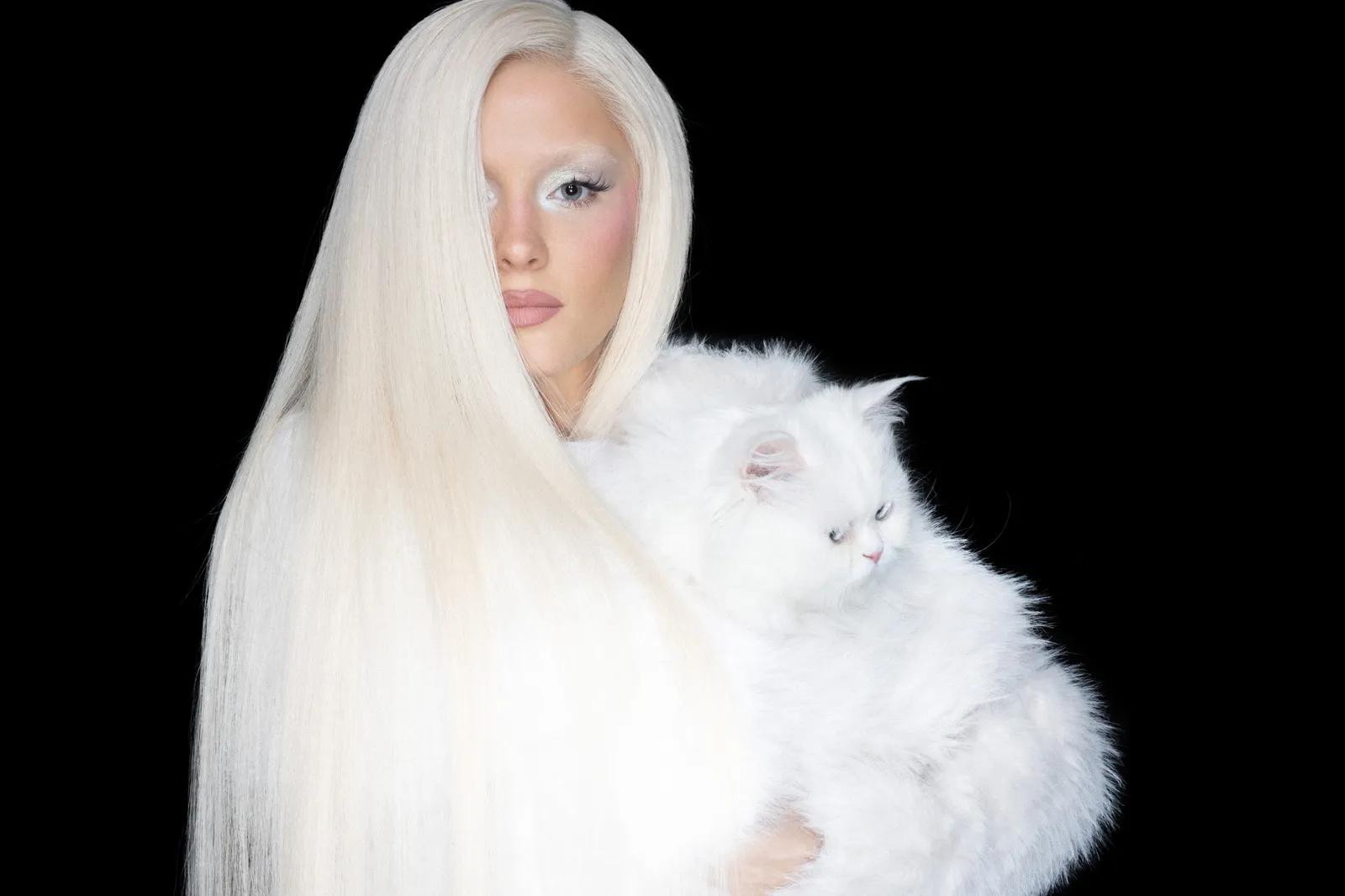
Of course, she’s talking about her escape from the Khia Asylum, which, for those with sub-12 hours of daily screen time, is a sort of liminal space for pop girls with a hit or two, but still lacking lasting mainstream commercial success—a holding chamber for those in a “flop era.” In fandom culture, the Khia Asylum represents one of the greatest challenges any artist might face in the 21st century: irrelevancy.
Simply scrolling TikTok or Instagram in the last year, you might assume Larsson’s career is one meteoric shot into the spotlight—an overnight sensation propelled by clicks and charm. (Really, though, she just loves social media; more on that later.) But the reality is this: Larsson, 28, has been in the game for quite some time. For almost 20 years, in fact. Born near Stockholm, Larsson had her first brush with fame in 2008, when she was 10 years old, after winning Talang, Sweden’s iteration of the Got Talent franchise. Four years later, she landed a record deal. “Even before the talent show, I was doing voiceovers and acting and was in musicals,” she says. “My life, internally, doesn’t feel that different. But then, of course, there are a lot of new eyes on me now, especially in the US.”
“It makes me so happy to look out into the crowd, or even in my tagged photos on Instagram, and I see that people do the makeup—they wear the glitter, they have a little dolphin.”
Indeed, this might be the biggest moment in Larsson’s career to date. A simple search of her name unfurls a long list of headlines. Most of them include “viral” in one way or another. There’s Alysa Liu’s exhibition skate to the remix of PinkPantheress’ “Stateside” (on which Larsson is featured) at the Milano Cortina Winter Olympics, or Google’s nod to the aforementioned dolphin meme: Two dolphins leap across the screen for any Zara Larsson-related inquiries. Her single “Lush Life” went viral in November 2025 over 10 years after the song was released—the catalyst for a dance challenge to the song, with TikTok posts using the track reportedly amassing upwards of 14.5 billion total views.
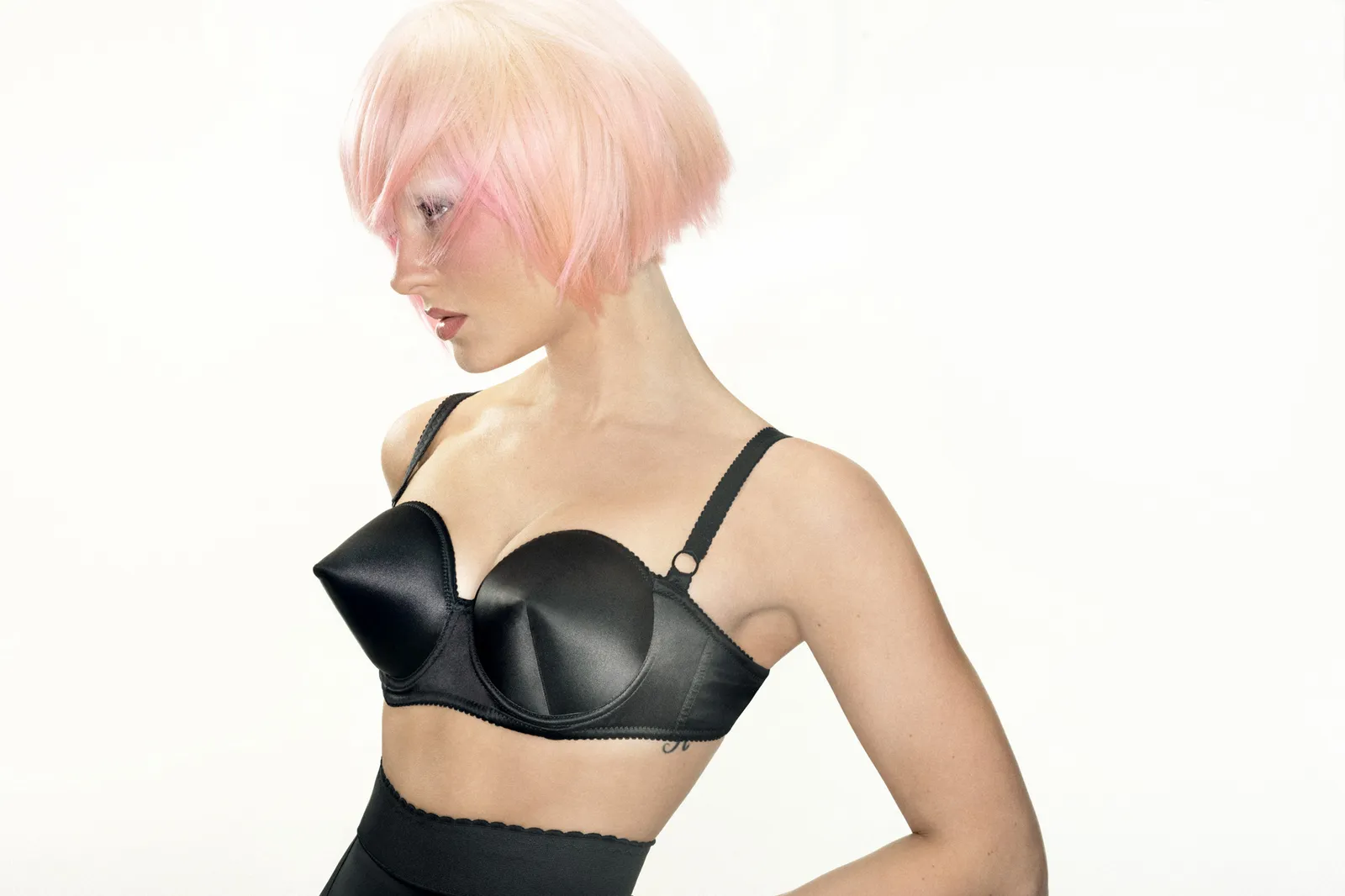
Behind the glitter, there is a sense of poetic vulnerability within Larsson that comes out in our conversation, specifically regarding her career’s ups and downs. She told me about the first stop on the US leg of her tour in February, a venue in Portland, Oregon. The stage was “a fucking pizza slice,” she says. Small. It felt too small for her band and dancers. For someone with ambition as far-reaching and deep as the ocean, the stage was misaligned with where she imagined she’d be at this juncture in her career. And from that misalignment arose insecurity. Insecurity that’s all-too-relatable in this digital age, when social media exists as a highlight reel for achievement—not a mirror to reality. “It’s not that it’s embarrassing, but I felt like, ‘Ugh, it would be so much nicer if I was playing arenas right now,’” she says. “Do I want to post pictures of the theaters I’m in?” Her dream is to perform in arenas—high-octane stage productions that can match her explosive stage presence and vocals. She adds, “I think it’s just a disconnect when you have that vision for yourself, but in reality you’re not there. But it’s gonna be fun for people to follow me along on that journey.”
“I think it’s just a disconnect when you have that vision for yourself, but in reality you’re not there.”
But now, Larsson is more in control than ever. In her own words, Midnight Sun is more “her” than anything she’s created before. She recently changed record labels (“It’s all love,” she says, but mentioned needing a change). She says she wants to reintroduce herself as Zara Larsson the seasoned artist—not Zara Larsson the child star. “I don’t want to go into a studio or sit at a meeting and feel like I’m 16,” she says. “And I don’t think anyone who worked with me did that on purpose. They wanted to really help me, but I think it made me feel like I couldn’t trust in what I was wanting to do—or even actually entertain the thought of what I wanted to do because I thought, Well, what do I know?” She has the singing voice, but now she’s pushing herself to use her voice as a full-fledged artist—weighing in on everything from stage lighting to writing more of her own music. And there’s little doubt, from what I gathered, that this burgeoning creative control is fueling the Larsson renaissance.
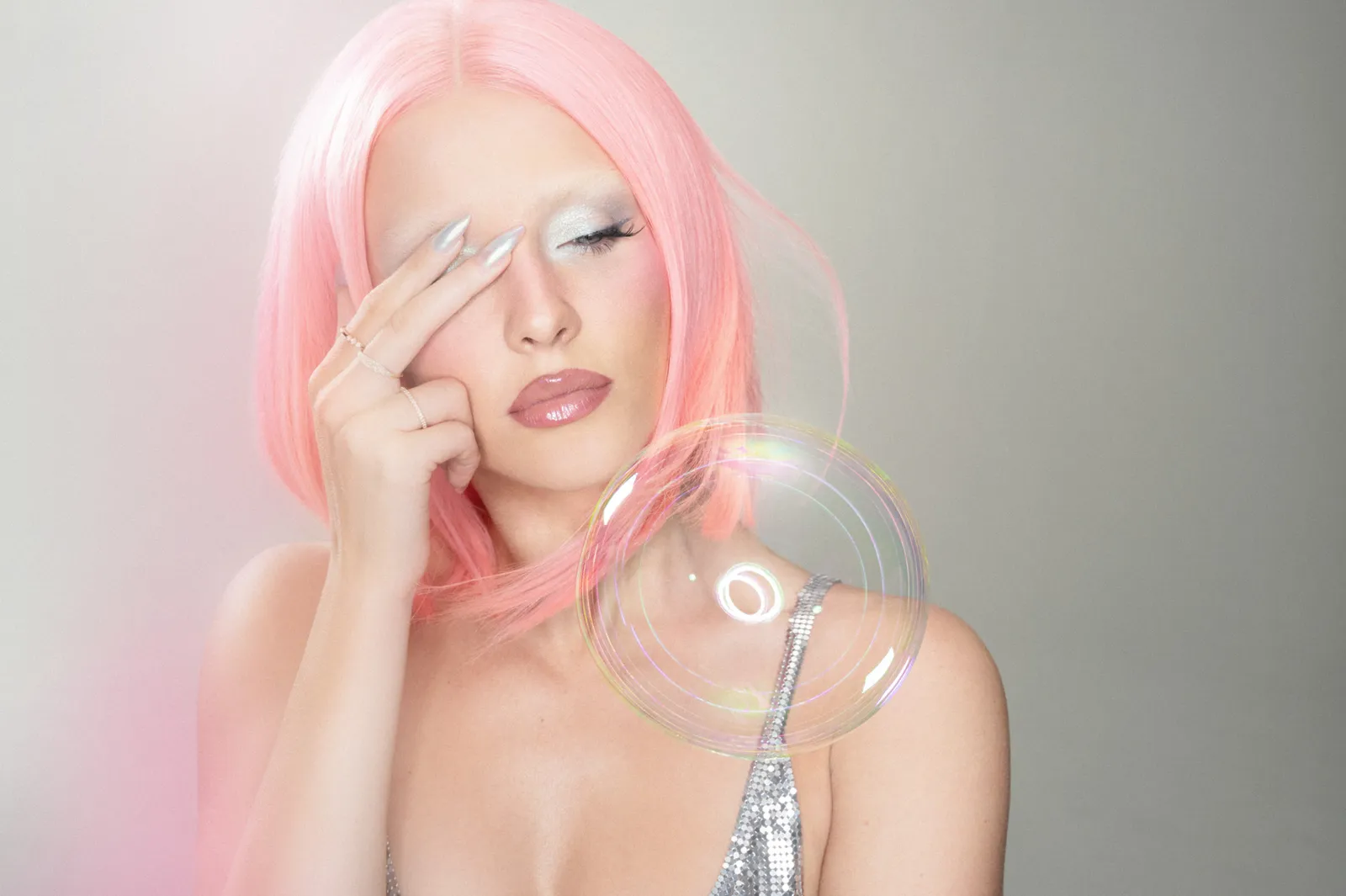
I take a post-interview respite before my night with Larsson backstage. As I sip a lukewarm (plastic) glass of rosé beside the Chicago River, my eyes wander across the cityscape. I spot a gaggle of Lollapalooza attendees dawdling along the sidewalk in their festival attire. Taking diligent notes: “Diesel belts and an array of Pantone earth tones/beiges/neutrals/browns,” I write. Then, I realize something. Beyond her talent, hustle, and web browser-leaping dolphins, there’s little wonder as to why Larsson stands out amongst her cohort. She bucks the norm, opting to throw a shimmer, chain, or rhinestone on anything that enters the world she’s crafted. She’s as hard to miss as a Lisa Frank coloring book atop a West Elm coffee table.
When Larsson appears, the world takes notice. As evidenced by my arrival at The Vic Theatre. Upon seeing the theater’s marquee, my Uber driver exclaims, “Zara Larsson is here!?” As I walk toward the venue, I encounter a mother and her daughter who have driven from Michigan to see Larsson perform. After Lollapalooza, they intend to travel abroad to see her once more. The girl, no older than seven, does the “Lush Life” dance for me, hoping Larsson will bring her onstage during the show. The Midnight Sun universe and the community Larsson has carefully nurtured are now in front of me. And as I expected, there’s a shit-ton of glitter.
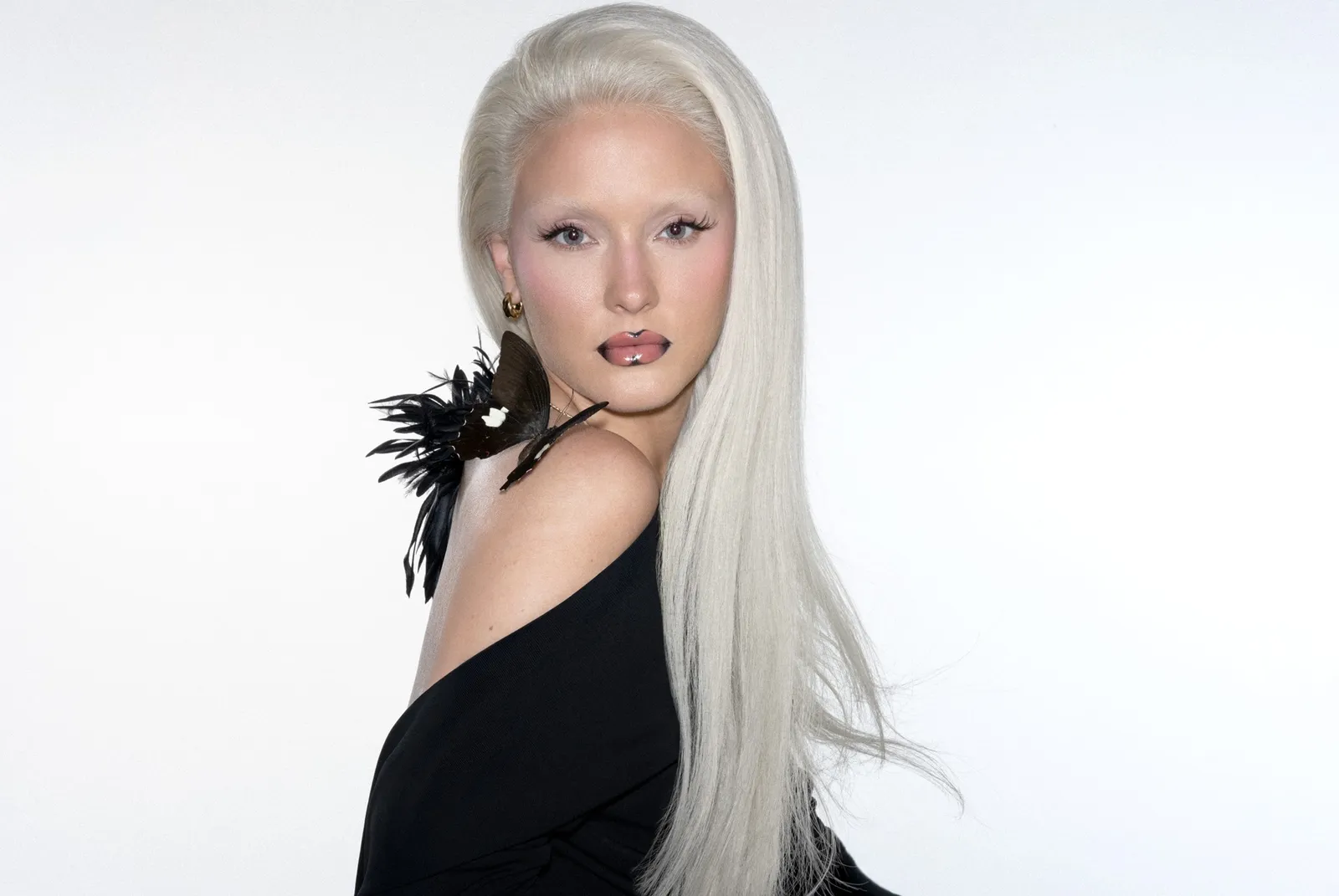
Backstage, Larsson’s feet rest on a vanity beside an enormous makeup kit that contains, if my math is correct, 16 blending sponges. She holds a cup of miso soup in one hand and her phone in the other, as a hairstylist blows out her hair. Earlier in the day, Larsson told me she’s addressing her screen time habits (she’s been reported to log 16 hours a day) by doing the New York Times crossword. (Yes, she tackles it on her phone, but spiritually, I understand where her head is at, because I’m also in screen time recovery.) Her fingers tap away as her long hair is pinned in rollers.
At this moment, I witness Larsson’s creative voice in action. She coordinates her vision with her team, firmly but collaboratively, sourcing opinions from the room—without compromising. Larsson inspects her makeup in a pink hand mirror, debating whether or not to line the waterline (ultimately, it is), as makeup artist Sophia Sinot freehands a cheetah-print motif on her eyelids with Caia liquid eyeliner. “She knows what she wants,” Sinot later tells me. Now Larsson is deciding between two outfits, one for this evening at the Lollapalooza Aftershow and the other for tomorrow’s daytime performance. “It’s too simple,” she says of one option. Larsson outlines her priorities for the room: “cunty,” good for shaking ass (duh), and appropriate for “Midnight Sun.” She lands on a magenta beaded skirt and a lilac bra with sequined floral appliqués, and it’s back to the crossword. “Fish eggs,” Larsson asks the room. “Roe!” I exclaim.
“I want to build a world, an identity, a universe, a sound, a feeling.”
At one point, Larsson disappears from the room to film a now-viral TikTok. “Did you have good lighting?” someone asks. “Hella,” she responds.
It’s a bit jarring to see the laid-back woman I met earlier in the day fully realized as pop star Zara Larsson. In beauty, the word “transformation” is tossed around so often that it’s become insufferably trite, but observing Larsson emerge for her performance leaves me stumped for an alternative. The seemingly everyday person with whom I watched TikToks and waxed poetic about the symbiotic relationship between the LGBTQ+ fans and pop girls now stands onstage, surrounded by blinding lights (and bubbles at one point), to sing with masterful control and laser-focused intonation throughout splits, ass-shaking, and virtuosic hairography.
As a mermaid gains her tail upon making contact with water, it seems Zara Larsson becomes someone else entirely when she makes contact with a microphone. And as the bronze sculpture of another Nordic sea beauty—Edvard Eriksen’s The Little Mermaid—stares longingly across the waters of Copenhagen, Larsson looks on unflinchingly, too. Instead of a young prince or, you know, legs, she yearns for something else with equal fervor: more. Bigger, louder, sparklier, and now, irrefutably herself.
Watch Inside Zara Larsson’s Makeup Appointment
Go behind the scenes with Zara Larsson as she gets ready for her Allure cover shoot. In this episode of Standing Appointment, Zara sits down for a glamorous makeup session sharing her inspiration behind her cover look. Watch as her makeup comes together from start to finish before she steps in front of the camera.