




|
Neubauer Artists LLC
Getting your Trinity Audio player ready...
|
A radical shift is taking place at Jerusalem’s holiest site, writes Nicolas Pelham, our Middle East correspondent
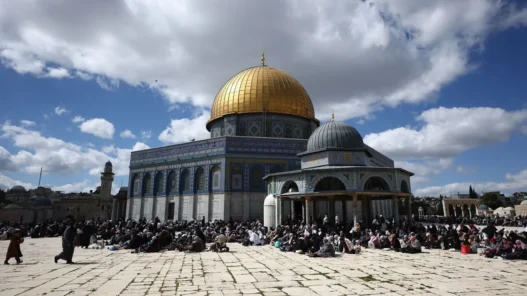
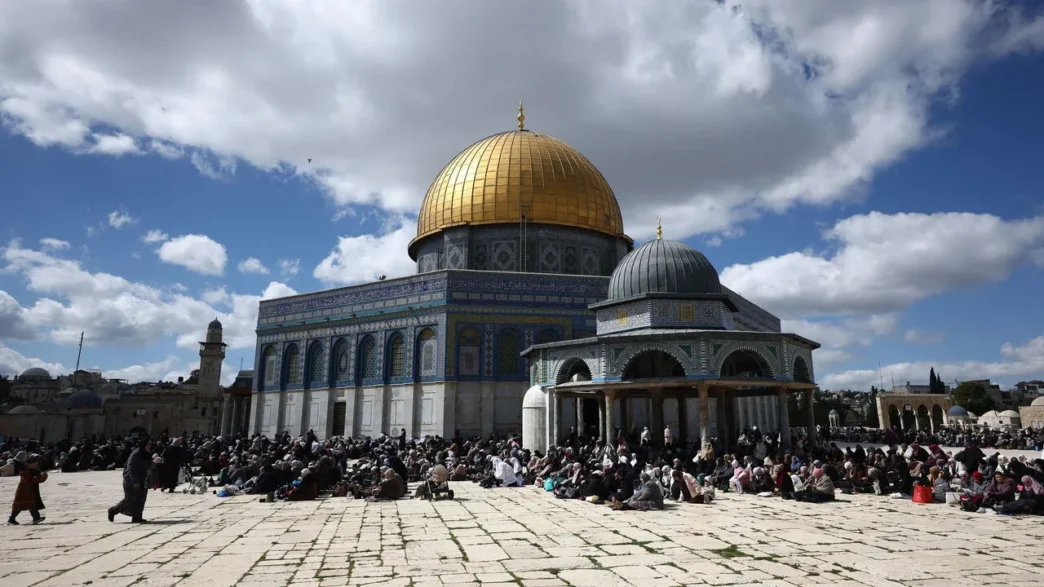
I have been to the Western Wall in Jerusalem many times. On previous visits, I recognised the rituals on display. This time, however, as I joined Jewish worshippers circling the Dome of the Rock (pictured above) and the site of the biblical temple, I felt flummoxed. There were unfamiliar new rites and songs. Men and women prostrated themselves full-length on the paving stones by the eastern gate, facing the golden dome with its Quranic inscriptions and mosaics dating to the first century of Islam. In front of the gates of the al-Aqsa mosque, where Muslims believe the Prophet Muhammad ascended to heaven, they danced and sang of rebuilding the temple on its ancient site.
A new creed is taking shape atop one of the world’s most contested holy places. Out goes the Judaism of the past 2,000 years, in which God’s presence extends across the world and the faith has universal reach. In comes a cult that seeks to revive Jewish power as it existed before Titus, son of the Roman emperor, conquered Jerusalem in 70AD and destroyed its temple. If those at the wall have their way, the old calendar of fasts and prayers mourning the temple’s destruction will give way to a faith of animal sacrifices, priests and a transformed Temple Mount. Arnon Segal, a journalist and activist, points at the landmarks of the new cult. There we’ll build the altar, the seat of the Sanhedrin (the supreme Jewish court in temple times) and the house of the nasi, or head of state, he explains.
Such ideas are almost as old as Israel itself. Hours after Israel captured East Jerusalem in 1967, the army’s chief rabbi, Shlomo Goren, is said to have proposed blowing up the Dome of the Rock. Mr Segal’s father belonged to the Jewish underground, an armed wing of the settler movement in the 1980s that also plotted an attack on the Dome. But for decades such ideas remained on the fringe. Traditionalists, including Israel’s chief rabbinate, prohibited Jews from praying on the esplanade and posted notices at its entrance warning against entering the biblical holy of holies. After 1967 the status quo agreement with the Waqf, the Muslim religious authorities, reinforced the arrangement: only Muslims were permitted to pray there.
When Mr Segal first ascended the Mount, in 1999, he told me only one other person accompanied him, and he was allowed a mere seven metres from the gate. Police watched Jewish visitors closely. Anyone caught silently praying risked arrest. On occasion he was detained. But despite denials from the prime minister, Binyamin Netanyahu, that has changed. Itamar Ben-Gvir, Israel’s hardline national security minister, whose wife, Ayala, is a prominent temple activist, has led worshippers in prostration. Sometimes they carry flags and sing Hatikvah, Israel’s national anthem. On September 27th Jerusalem’s chief of police said Jewish prayer was permitted. When I visited, hundreds had gathered, singing prayers and dancing in front of al-Aqsa. An activist from a West Bank settlement near the Palestinian city of Nablus wore a T-shirt depicting an army bulldozer. It carried the liturgical verse “It is pleasant to praise you” (le-shabeach), rewritten as “It is pleasant to level (le-shetach) you”.
While encouraging Jewish prayer on the Mount, the authorities have tightened restrictions on Muslim access. The precise age limit varies: sometimes those under 35 are barred; sometimes those under 75. The only two Muslim worshippers I found on the esplanade both carried walking sticks.
Compared with the thousands of Jews who flock to the Western Wall during Sukkot, the Feast of Tabernacles, the Temple perambulators remain a small minority. But they see themselves as a vanguard. They have powerful support in government, parliament and the army. At the foot of the esplanade, I watched an activist persuade a policeman to put on a skullcap and perform the Sukkot ritual of waving a palm frond. Mr Segal speaks of a Jewish awakening that is rewriting rabbinic Judaism and transforming the faith.
The immediate challenge is to Islam’s third-holiest site. Its official custodian, King Abdullah of Jordan, appears powerless to protect it. The Palestinian population around the Old City is being chased away. Jewish religious hymns play at full volume in the streets of what Palestinians regard as their capital. Israeli flags and placards hang above streets urging passers-by to feel Jewish. During festivals, the old cotton market becomes a synagogue. The butchers’ market has already closed for lack of custom. “This lot don’t buy from Arabs,” says Nassar, watching a wave of Jewish pilgrims pass his souvenir shop in the bazaar.
The consequences ripple far beyond the Mount. The new creed envisages Israel’s present republic as merely a stage on the way to a theocracy governed by a rabbinic council, a descendant of King David or even a high priest. They want a revolution to replace the Supreme Court and the remnants of a secular democratic state with a Sanhedrin that adheres to the precepts of Jewish law. They seek to possess the land, not share it (as Muslims and Jews did until the post-colonial age). They mull plans to evict its indigenous Palestinians. And some revel in a global rise of anti-Semitism as a way to shrug off dependence on foreign powers. “They’re not interested in negotiations,” says the Old City shopkeeper. “The future is only war.”