
|
Neubauer Artists LLC Getting your Trinity Audio player ready... |
The Qantas Group has today announced a strategic restructure which supports its historic fleet renewal program and strengthens its core businesses in Australia and New Zealand.
- The closure of intra-Asia airline, Jetstar Asia, enables the Qantas Group to recycle up to $500 million in capital, supporting its historic fleet renewal progra.
- 13 Jetstar Asia Airbus A320 aircraft to be progressively redeployed to Australia and New Zealand bringing more low fares and more local jobs
- Only 16 intra-Asia routes will be impacted by the closure of Jetstar Asia with no changes to Jetstar Airways and Jetstar Japan services into Asia. All of Jetstar Airways international services in and out of Australia remain unchanged.
Closure of Jetstar Asia
Despite delivering exceptional customer service and operational reliability; Jetstar Asia has been impacted by rising supplier costs, high airport fees, and intensified competition in the region. This has fundamentally challenged the low-cost airline’s ability to deliver returns comparable to the stronger performing core markets in the Group.
Jetstar Asia will continue to operate flights for the next seven weeks on a progressively reduced schedule, before its final day of operation on 31 July 2025.
The closure of Jetstar Asia only impacts the intra-Asia routes operated by the airline from its base in Singapore. It does not impact Jetstar Airways’ domestic and international operations in Australia and New Zealand or Jetstar Japan. Jetstar Airways will continue to fly from Australia into Asia including to all its popular destinations across Singapore, Thailand, Indonesia, Vietnam, Japan and South Korea.
Qantas Group CEO Vanessa Hudson said: “Jetstar Asia has been a pioneering force in the Asian aviation market for more than 20 years, making air travel accessible to millions of customers across Southeast Asia.”
“We are incredibly proud of the Jetstar Asia team and the work they have done to deliver low fares, strong operational performance and exceptional customer service. This is a very tough day for them. Despite their best efforts, we have seen some of Jetstar Asia’s supplier costs increase by up to 200 per cent, which has materially changed its cost base.”
“I want to sincerely thank and acknowledge our incredible Jetstar Asia team who should be very proud of the impact they have had on aviation in the region over the past two decades.”
Jetstar Asia customers with existing bookings on cancelled flights will be offered full refunds and the Group will look to reaccommodate customers onto other airlines where possible.
All affected Jetstar Asia employees will be provided redundancy benefits as well as employment support services. Qantas is also actively working to find job opportunities across the Group and with other airlines in the region.
Singapore remains a critical hub for the Qantas Group as its third largest international airport. Qantas also offers connections from Singapore through nearly 20 codeshare and interline partners to a variety of destinations across Asia.
With the support of Qantas, Jetstar Asia will continue to meet its financial obligations to suppliers, employees and customers.
Recycling of capital to drive improved returns and support fleet renewal
Disciplined allocation of capital is a key pillar in the Qantas Group’s Financial Framework. The closure of Jetstar Asia will unlock up to $500 million in fleet capital to be recycled into the Group’s core businesses and improve long-term returns.
Jetstar Asia’s 13 mid-life A320 aircraft will be progressively redeployed to core markets in Australia and New Zealand to support fleet renewal and growth and create more than 100 local jobs and more low fares, including replacing leased aircraft in Jetstar Airways’ domestic operation to reduce its cost base. Some of the aircraft will also help accelerate fleet renewal in Qantas’ regional operations that service the critical resources sector in Western Australia.
These strategic fleet decisions come as Qantas receives its first Airbus A321XLR later this month and the first Project Sunrise A350-1000ULR in calendar year 2026.
“We are currently undertaking the most ambitious fleet renewal program in our history, with almost 200 firm aircraft orders and hundreds of millions of dollars being invested into our existing fleet,” Ms Hudson said.
“We’re making disciplined decisions which recycle capital across our business and prioritise it to stronger performing segments as well as strategic growth initiatives like Project Sunrise.”
Financial impact of the closure of Jetstar Asia
The closure of Jetstar Asia will result in one-off redundancy and restructuring costs as well as the non-cash expensing of historical foreign currency translation losses[1] from equity reserves and asset write-downs from consequential changes in the Group’s fleet structure.
The combined impact is currently estimated to be approximately $175 million with approximately a third in FY25 and the remainder across FY26, which will be taken outside of underlying earnings.
The direct pre-tax cash impact will be approximately $160 million, predominantly in FY26, including unwinding Jetstar Asia’s working capital. This will be materially mitigated by working capital benefits from growth in Jetstar Airways utilising the redeployed aircraft, and from consequential tax adjustments impacting tax payments across the Group in FY26 and future years.
Key Group financial update for 2H25
The performance of Jetstar Asia deteriorated in the second half and is expected to post an underlying EBIT loss of $25 million.
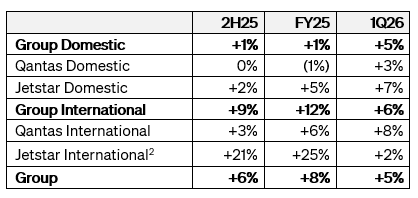
Group Domestic capacity growth for the half is lower than previous guidance, largely due to Cyclone Alfred in March, which impacted flying across large parts of Queensland. The disruptions from the Cyclone will have a $30 million impact on earnings.
Group International capacity for the half is expected to grow by 9 per cent, 3 per cent lower than previously guided due to the impact of industrial action on Qantas’ Finnair wet lease.
The Group continues to see strong demand across Domestic and International and expects unit revenue and capex to be in line with previous guidance.
Capacity outlook
(vs prior corresponding period)
The following table provides capacity guidance, which includes the impact of the closure of Jetstar Asia.
Foreign exchange translation reserve losses (non-cash impact). Impact at end of May 2025 of ~$65 million, and will be subject to change based on foreign exchange movements until the Jetstar Asia entities are wound up.
Meanwhile, South Korean regulator rejects Korean Air-Asiana mileage plan over unclear terms
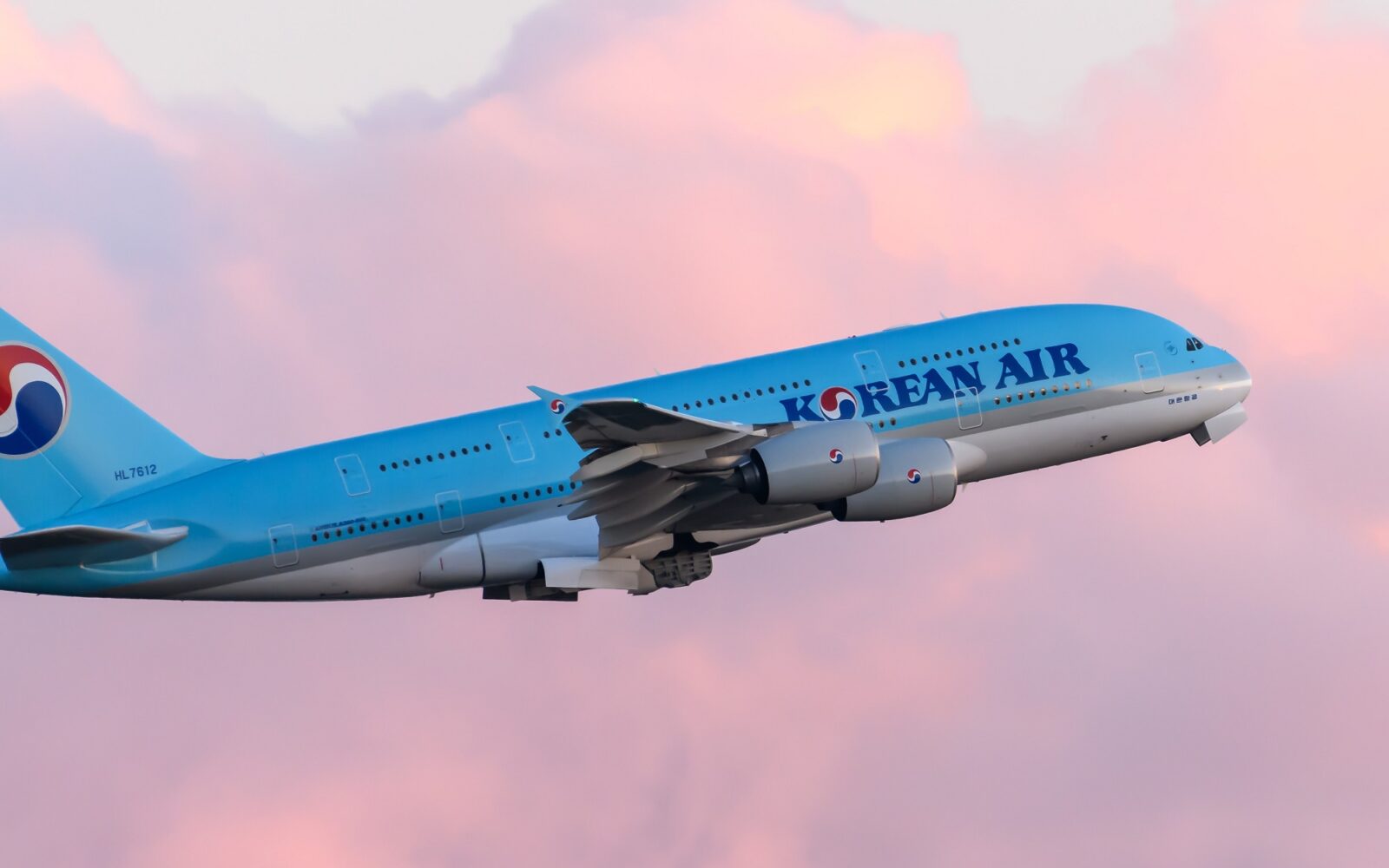
South Korea’s Fair Trade Commission (KFTC) has rejected a proposed mileage integration plan submitted by Korean Air Lines and Asiana Airlines, citing a lack of clear information and concerns over consumer benefits.
The regulator announced that the plan, submitted by the airlines on June 12, 2025, did not meet the requirements needed for a formal review, according to Yonhap News Agency.
“There were shortcomings in the proposed mileage redemption plan compared to what Asiana Airlines previously offered,” KFTC said in a statement seen by Yonhap News Agency. “In terms of the proposed mileage integration ratio and other explanations, we found the submission insufficient to initiate a full assessment.”
The Korean regulator chose not to reveal the specifics of the proposal, mentioning that it plans to hold discussions with stakeholders and experts at a suitable time after changes are implemented.
According to Yonhap News, the main issue in the plan is the conversion of Asiana Airlines miles into Korean Air miles post-merger, which could impact how travelers can use their current rewards. Although flight miles are anticipated to be exchanged at a 1:1 rate, miles gained through credit cards and partner programs could be valued lower because of different calculations.
The KFTC asked Korean Air to quickly update the proposed plan before sending it again, Yonhap News Agency’s report concluded. The mileage program is one of the KFTC’s mandatory conditions. The rejection will stall the review, likely delaying the full corporate integration beyond the planned October 2026 timeframe.
In November 2020, Korean Air signed a deal to acquire a controlling stake in Asiana Airlines, with the goal of forming the 10th largest airline in the world by fleet size.
In February 2022, the KFTC approved Korean Air’s purchase of a 63.88% stake in Asiana Airlines. The acquisition was completed in December 2024, and Asiana Airlines is now functioning as a subsidiary of Korean Air.
This is not the first time airline mergers have raised concerns over loyalty program integration. A notable example is the 2010 merger between United Airlines and Continental Airlines. The two carriers integrated their loyalty programs – United Mileage Plus and Continental OnePass – into a single MileagePlus program.
In that case, miles were also converted on a 1:1 basis. However, some loyal Continental flyers criticized the new program for reduced upgrade opportunities and less favorable elite status benefits.