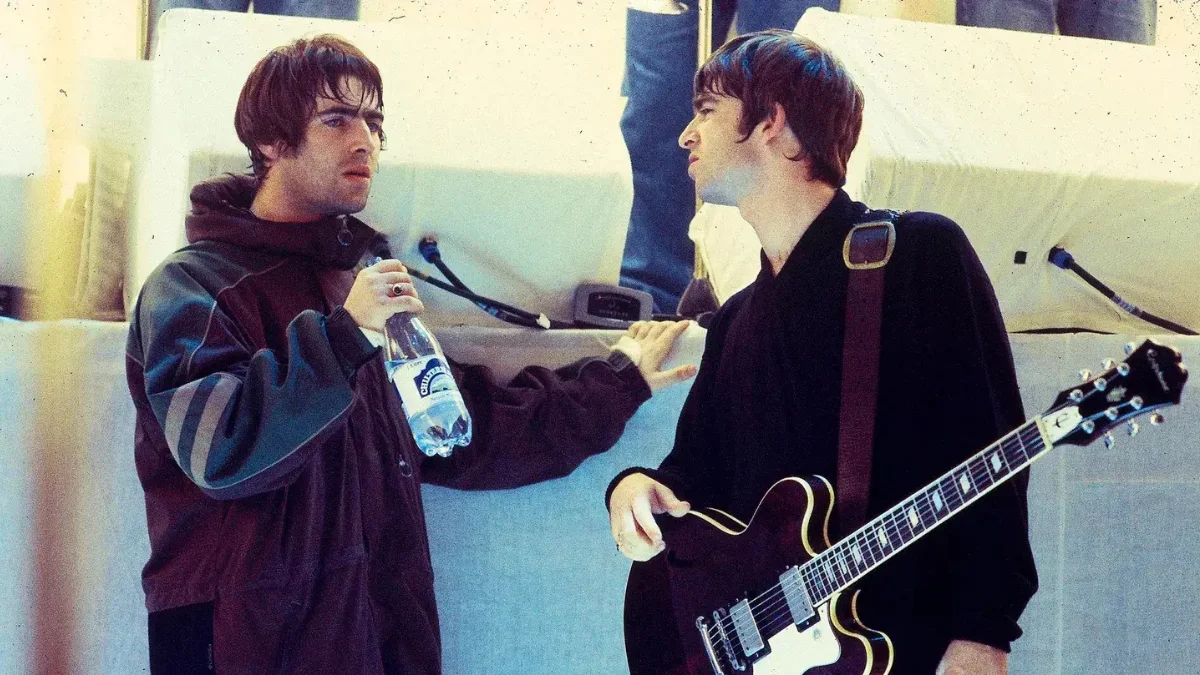
Oasis. Photo: Redferns
|
Neubauer Artists LLC Getting your Trinity Audio player ready... |
The Epiphone EJ-200 represents an unrepeatable moment in recent cultural history: when a group from Manchester managed to capture the spirit of a decade and translate it into songs that, three decades later, remain universal.
The global market for music memorabilia is experiencing a new boom, and this week it’s proving it once again with a piece brimming with symbolism: Noel Gallagher’s Epiphone EJ-200 , one of the most recognizable instruments from the golden age of Britpop. Sotheby’s auction house has confirmed its sale in an event that aims to attract both institutional collectors and private investors who see music as an increasingly sophisticated alternative asset class.
The guitar isn’t just an object: it’s part of Oasis’s creative DNA . It was used to compose several of the songs on (What’s the Story) Morning Glory?, the 1995 album that redefined contemporary British pop. With over 22 million copies sold worldwide, the record not only cemented the UK’s cultural leadership in the 1990s, but also spawned a catalog of hits like
“Wonderwall” and “Don’t Look Back in Anger” that continue to generate millions in streaming, sync, and publishing royalties.
A cultural asset with a (still) affordable price
Sotheby’s initial estimate places the Epiphone’s value between $60,000 and $80,000, a range that, in market terms, is considered moderate. In a context where tangible assets linked to pop culture have experienced sustained appreciation with annual growth rates of between 8% and 12% in the high-end segment, according to market reports, this type of piece offers a rare combination of emotional value and financial potential.
The lot also includes items of significant documentary interest: an original manuscript of the lyrics to “Don’t Look Back in Anger” and a 12-string Rickenbacker guitar, both certified as having been used during the recording sessions at Rockfield Studios in Wales. Those sessions, completed in just 15 days, are part of the mythology of the music industry due to their efficiency and the subsequent cultural impact of the result.
The “Morning Glory” effect: figures that continue to resonate
(What’s the Story) Morning Glory? is not only a historic commercial success; it is also a case study in longevity in the music economy. In the UK, the album has been certified 18 times platinum, with over 5.4 million copies sold in that market alone. In the US, it reached number four on the Billboard 200, cementing the international expansion of Britpop.
Even more significant is its performance in the digital age: according to industry estimates, songs like “Wonderwall” have surpassed 1.5 billion streams on streaming platforms, generating recurring revenue that makes the catalog a long-term asset. In financial terms, this type of intellectual property can behave like a “cultural bond”: stable, predictable, and capable of appreciation.
From musical object to investment vehicle
The rise of memorabilia auctions reflects a structural trend: the financialization of culture. In the last decade, items linked to musical icons have reached record prices. Bob Dylan’s manuscript of “Like a Rolling Stone” exceeded one million pounds , while objects related to The Beatles have frequently surpassed half a million euros. Even items from hip-hop culture, such as pieces associated with The Notorious B.I.G., have made a strong entry into this segment.
This growth is due to several factors: the globalization of collecting, the entry of new types of buyers, including specialized funds, and the search for assets uncorrelated with traditional markets. In this context, instruments with verifiable provenance, such as Gallagher’s guitar, are positioned as premium assets within an expanding niche.
Beyond price: symbolic value
At 58, Noel Gallagher remains a central figure in the narrative of contemporary British music. Following the breakup of Oasis in 2009, his project Noel Gallagher’s High Flying Birds has maintained a constant presence in the industry, reinforcing his intergenerational legacy. Then came the surprise of seeing him together again with his brother.
However, the true value of this auction transcends the economic. The Epiphone EJ-200 represents a unique moment in recent cultural history: when a Manchester band managed to capture the spirit of a decade and translate it into songs that, three decades later, remain universal.
In a market where nostalgia is on the rise and authenticity is a scarce resource, the question is no longer how much this guitar is worth, but who is willing to pay to own a tangible fragment of rock history.
By: Francesco Fusi
About The Author