





|
Neubauer Artists LLC
Getting your Trinity Audio player ready...
|
At the core is the Pierre Legrain Hommage Collection, which pays homage to the renowned French illustrator, decorator, and key figure of Art Deco. Below, we speak to his great-grandson, Stéphane Cristol Barthès, on Legrain’s singular vision and how it aligns with that of Louis Vuitton, and take a closer look at the collection
Last year’s Milan Design Week ushered in a fresh chapter for Louis Vuitton. The House completed its exquisite interior universe, enriching its Home Collections with furniture, lighting, home textiles, objets d’art and tableware dedicated to the art of living – a philosophy that’s been threaded through its design language ever since 37-year-old Louis Vuitton introduced his first trunk in 1858, which marked an ever-evolving ambition to push the boundaries of creativity and innovation, materialising in creations where savoir-faire, form and function converge.
Now, Louis Vuitton continues to explore this storied legacy and the world of interiors with its latest launches that hone in on heritage, art and contemporary design, unveiled during 2026 Milan Design Week. At the heart of this newness is the Pierre Legrain Hommage Collection, which pays tribute to the legendary French illustrator and decorator, a defining figure of Art Deco and a cherished collaborator of Gaston-Louis Vuitton, a designer, innovator, collector, and the grandson of Louis Vuitton.
The collection – spanning furniture, decorative objects, and home textiles – builds upon the centenary of the 1925 International Exhibition of Decorative and Modern Industrial Arts (from which the term Art Deco was derived), in which Louis Vuitton participated. Through a contemporary lens, it revisits and reimagines Legrain’s unique vision.

It was the early 1920s in Paris. A new design movement had begun to take shape, embracing modern life in all its polished, ornamental and opulent splendour, moving away from the organic curves of Art Nouveau into a more geometric expression. High-grade materials, vibrant colours and meticulous craftsmanship became central to this style, Art Deco, as we know it today. Around the same time, Gaston-Louis Vuitton had been steering the House towards an uncharted creative realm and brought in Legrain, who had been pioneering in illustrations, bookbinding, and decoration.
“Pierre Legrain is an unclassifiable creator whose vision was firmly rooted in a radical modernity, often out of step with the sensibility of his time. His work stands out for its bold choice of forms and materials, guided by a pursuit of geometric simplicity in service of a precise aim: to bring forth objects that are both unexpected and deeply singular,” Legrain’s great-grandson, Stéphane Cristol Barthès, tells George V Magazine. “His style is inimitable. In this context, he appears to me as a kind of ‘researcher,’ exploring, with great freedom, an alternative idea of beauty.”
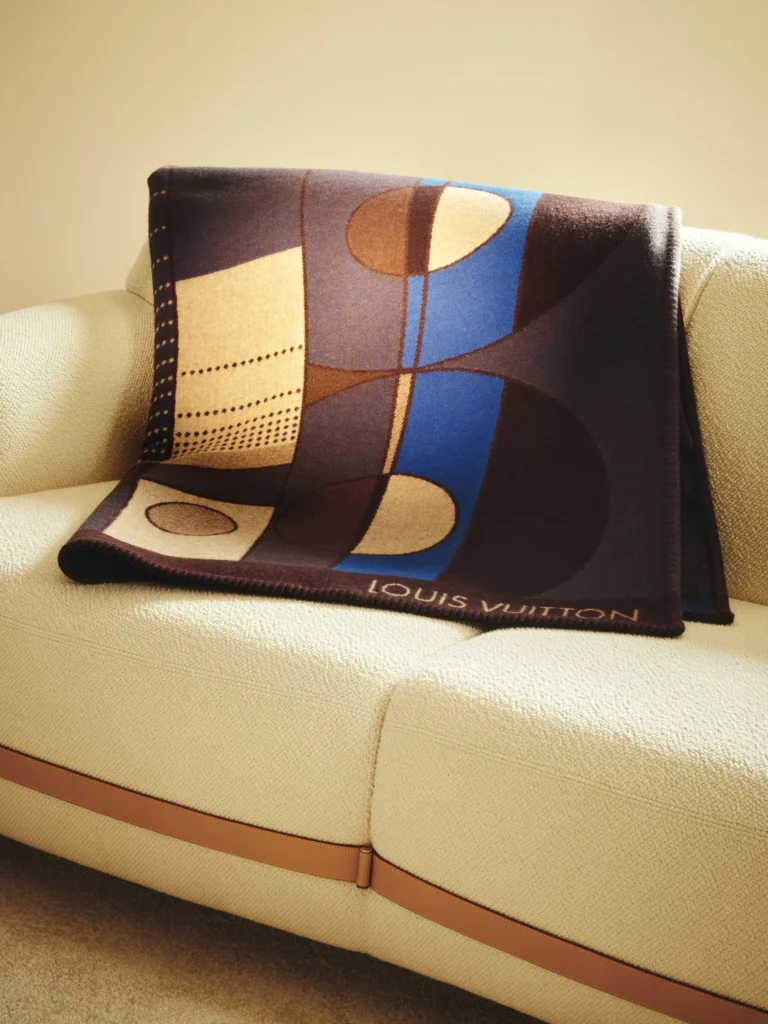
The creative relationship between Legrain and Vuitton, Barthès says, “goes beyond that of a simple patron and his designer.” “It seems to me to have been founded on a rather rare mutual understanding of what a true break in style could be,” he continues. Vuitton had a sharp eye for forward-thinking creatives, and his collaboration with Legrain blossomed into an authentic dialogue, as Barthès frames it: “On one side, a House driven by a very strong culture of excellence and attention to detail; on the other, a free creator with a deeply assertive vision.”
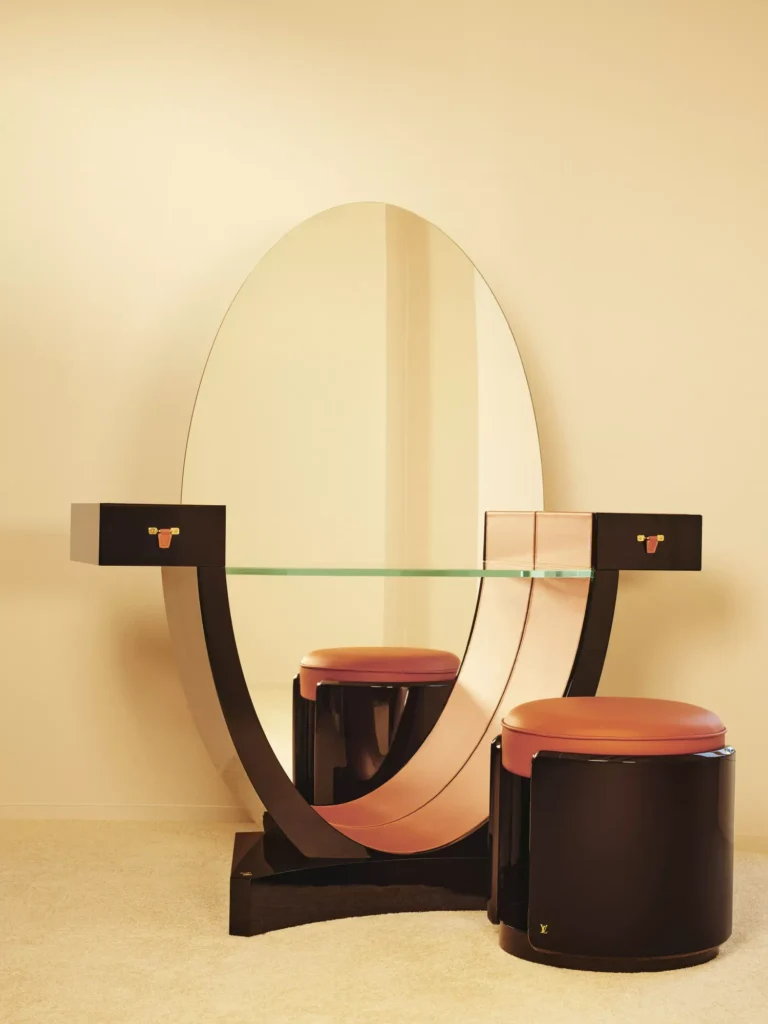
In 1921, Vuitton commissioned Legrain to create the very first furniture design for the House. What resulted was a sculptural, red-and-black wooden dressing table, complete with a sprawling, sphered mirror. A timeless piece emblematic of the decadent and sophisticated Art Deco spirit, Louis Vuitton is now reissuing the design in the Pierre Legrain Hommage Collection in lacquered wood, clad with buttery Nomade leather.
“His work in the dressing table is almost architectural: this functional object is treated like a totem, carrying a form of ritual. It immediately provokes surprise, which often characterises his creations. It is a work of art,” muses Barthès. “If this piece still resonates today, it’s precisely because it escapes its own time. It offers a vision of design that is both rigorous and sensitive, where the object becomes almost embodied, alive, occupying space with a strong personality.”
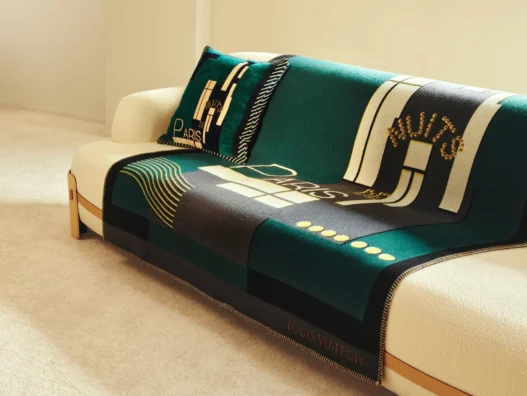
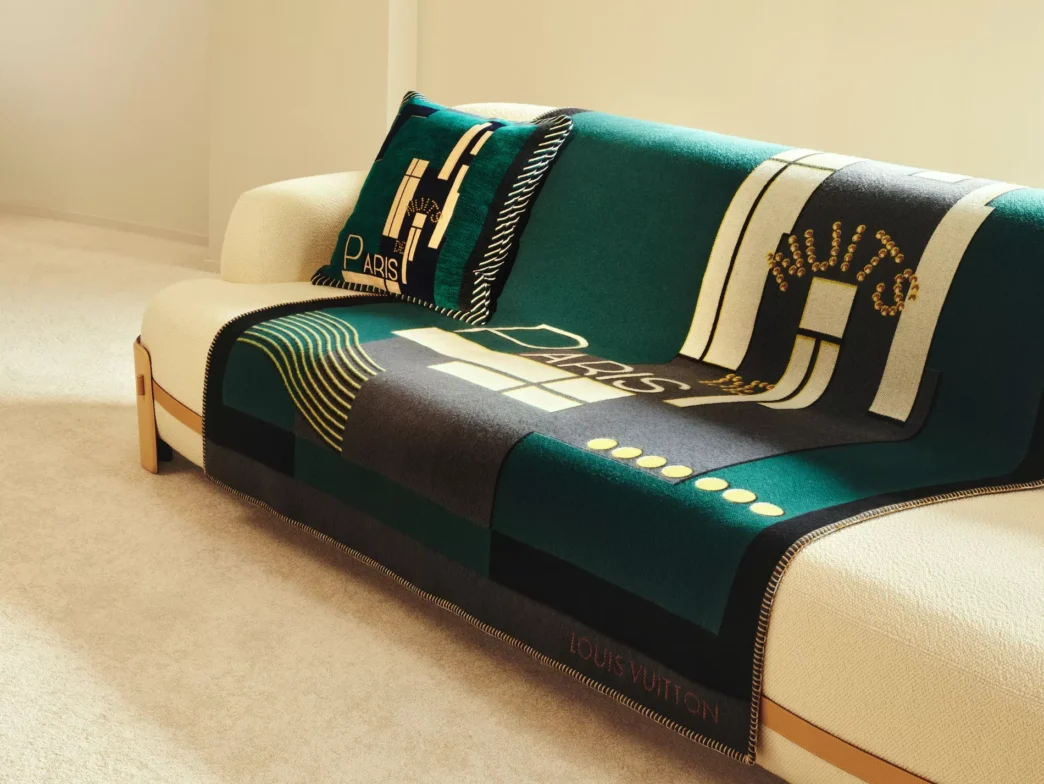
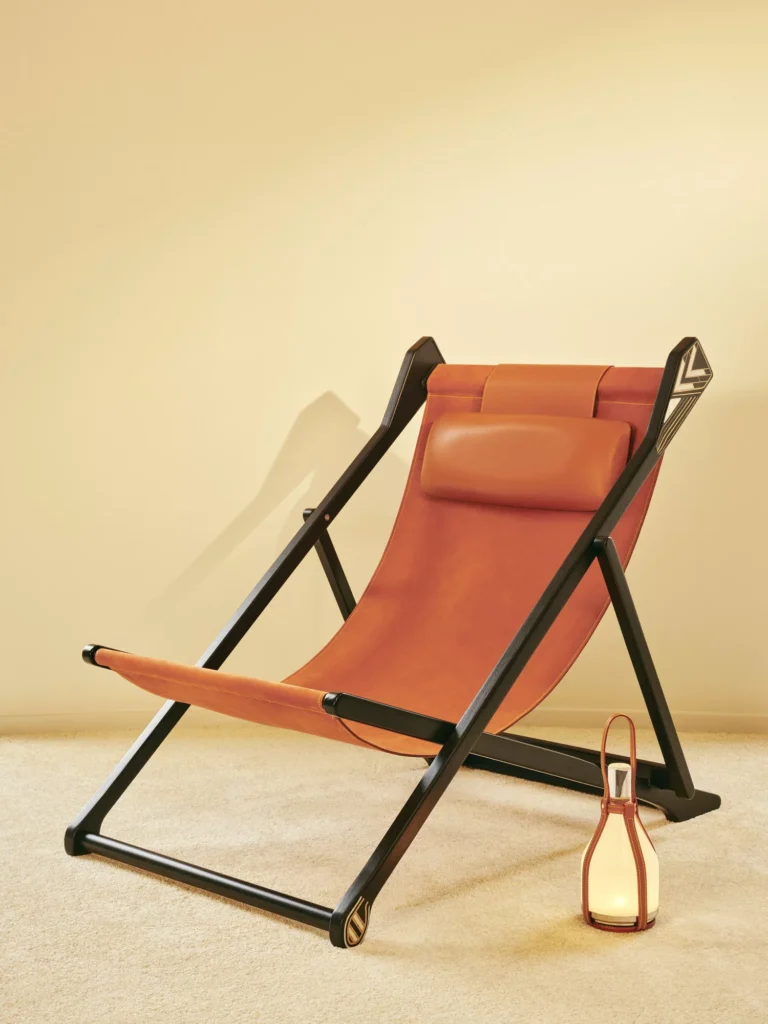
To boot, the collection houses additional pieces plucked from Legrain’s archives and created in collaboration with his heirs, including the ‘Chilean Riviera’ chair in oak, leather, and mother-of-pearl inlay, and a folding screen adorned with intricate wood marquetry. Elsewhere, Legrain’s remarkable, geometric-patterned book covers and bindings come to life in a range of kaleidoscopic home textiles, dancing across velvety throws and tactile rugs.
Pierre Legrain’s style is inimitable. In this context, he appears to me as a kind of ‘researcher,’ exploring, with great freedom, an alternative idea of beautyStéphane Cristol Barthès
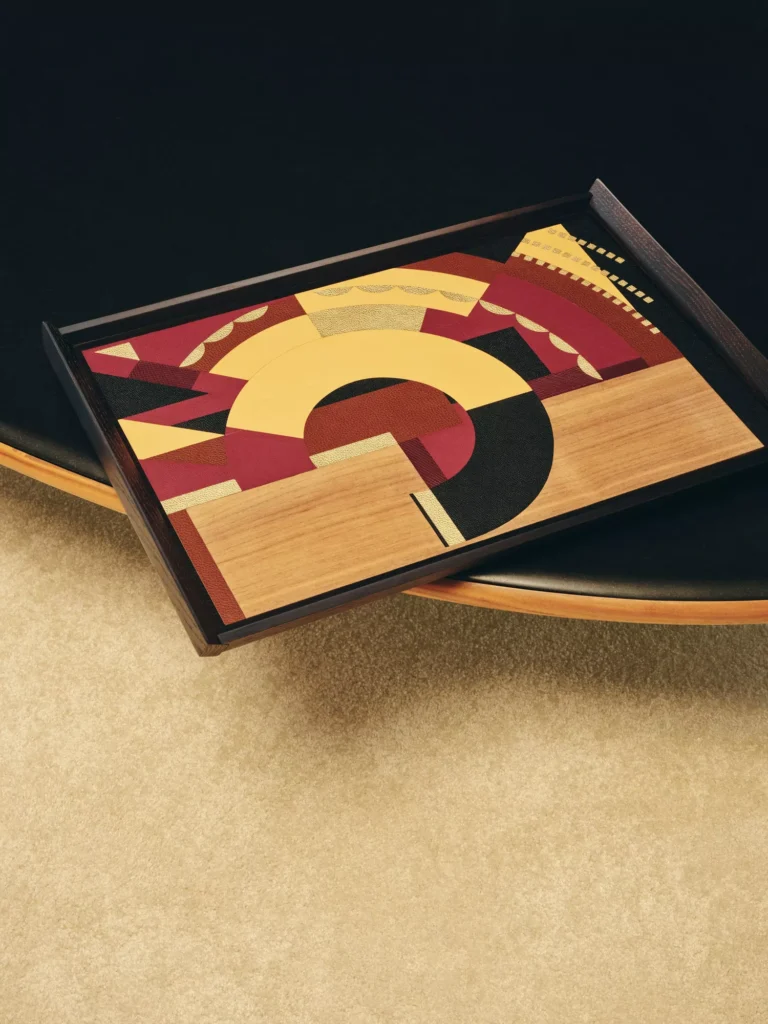
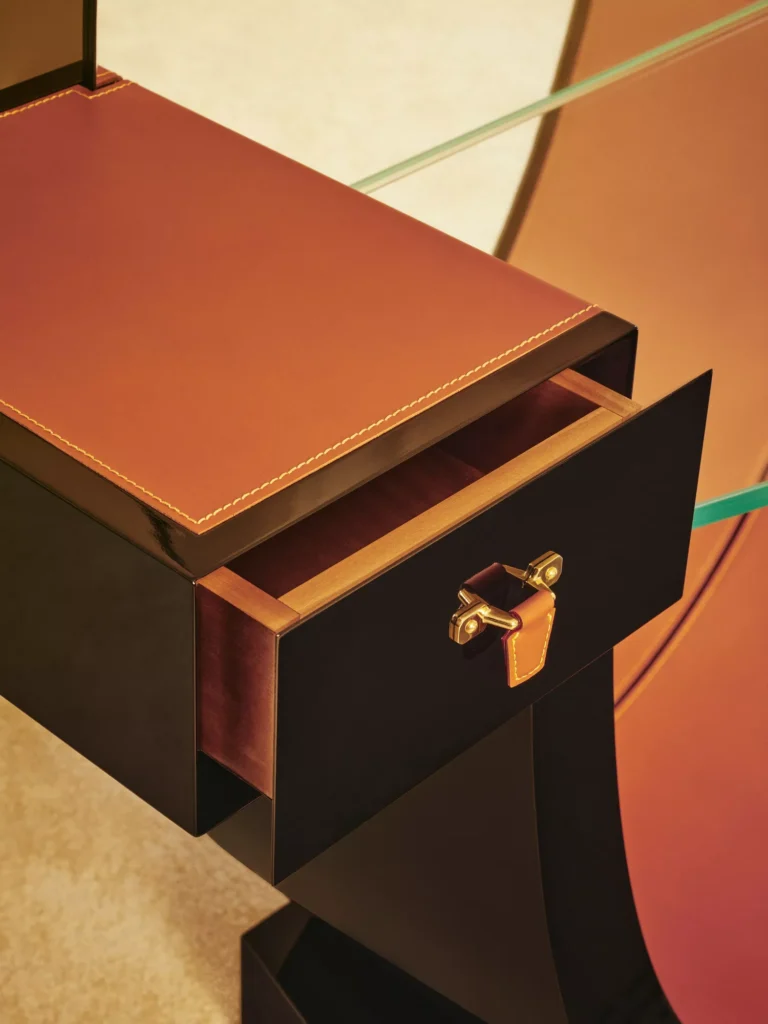
“What strikes me most is the accuracy of the interpretation. The aim is not to reproduce, but to extend a spirit,” Barthès says. “The pieces convey very well that formal rigour, that sense of proportion, and that attention to materials which characterise Pierre Legrain’s work. The legacy is not fixed; it is reactivated, set in motion. And that is precisely what makes it alive today.”
For Barthès, seeing his great-grandfather’s work celebrated by Louis Vuitton today is “a reminder that heritage is not only a memory, but a living presence, capable of inspiring, evolving, and engaging in dialogue with its time.” He adds: “Pierre Legrain passed away too soon, and it is now essential that his work continue to live on and be fully inscribed in the present.”
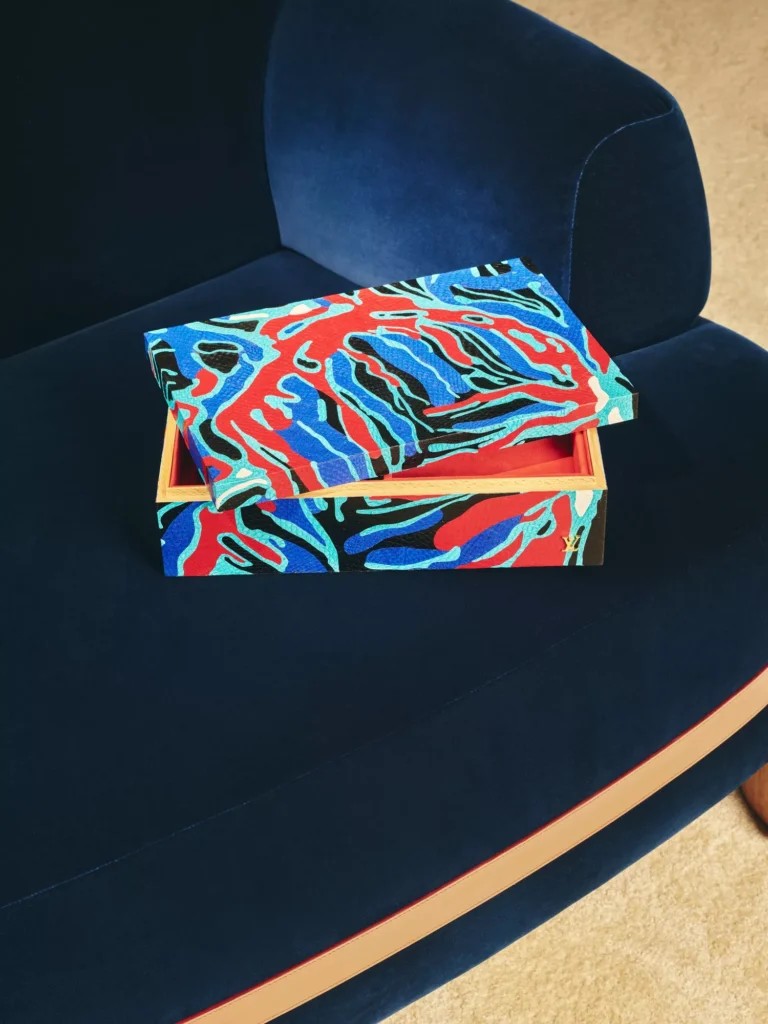
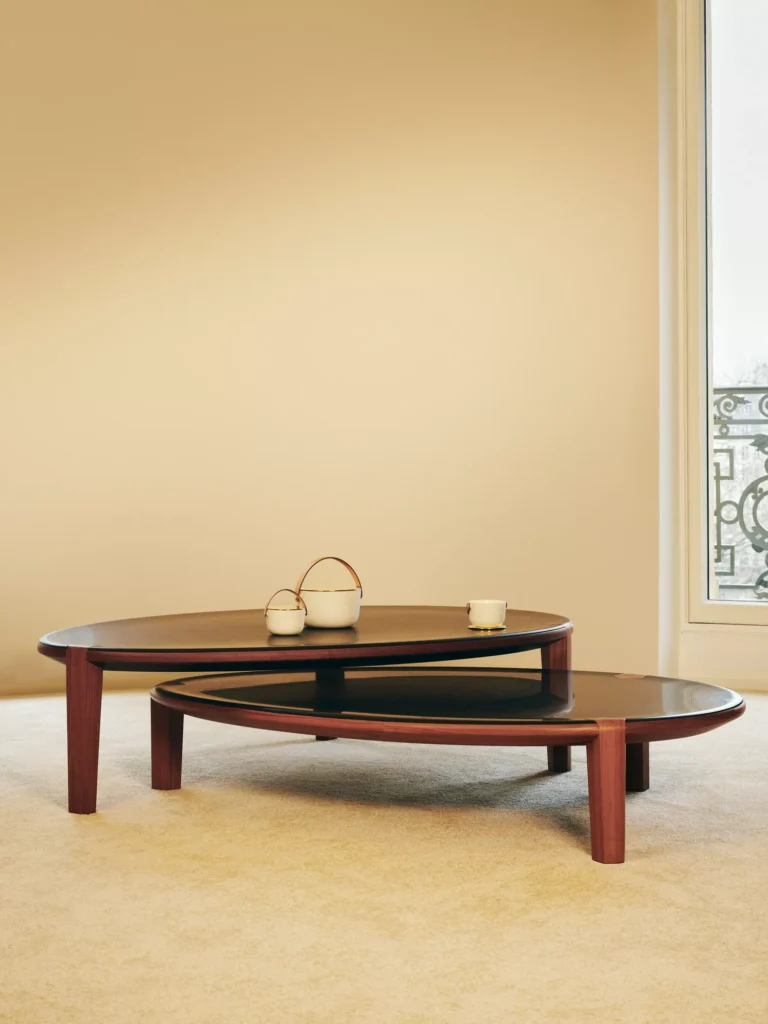
In tandem with the Pierre Legrain Hommage Collection, Louis Vuitton launches fresh additions to its sought-after Objets Nomades lineup, alongside other novelties that marry the House’s signature codes with exceptional craftsmanship and innovation. It has invited renowned designers from across the globe to lend their hands to original pieces, such as the ‘Aqua’ table, conceived by Franck Genser – an elegant creation whose black marble top recalls glistening water planes, while its contoured edges hark back to the iconic ‘Speedy’ bag.
Elsewhere, anchoring the Objets Nomades collection is the ‘Cocoon’ armchair designed by Estudio Campana. Initially introduced in 2015, this year the ovoid, suspended chair returns in a new resplendent attire, punctuated by a plush, iridescent fur finish whose shimmering, opalescent tones hint at the luminous glass facade of the new Maison Louis Vuitton Sanlitun in Beijing.
Much like it once did for Legrain, here, craftsmanship isn’t just a means of execution. It becomes a pure form of expression. As Barthès puts it: “Today, at Louis Vuitton, one finds that same exacting attention to detail, gesture, and material, where savoir-faire is inseparable from creation.”