

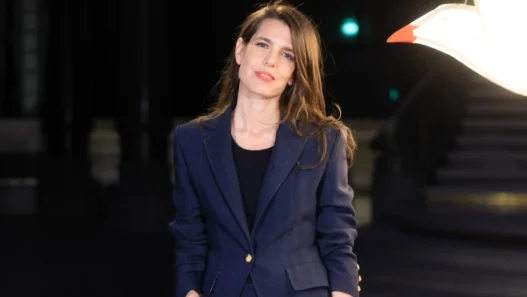


|
Neubauer Artists LLC
Getting your Trinity Audio player ready...
|
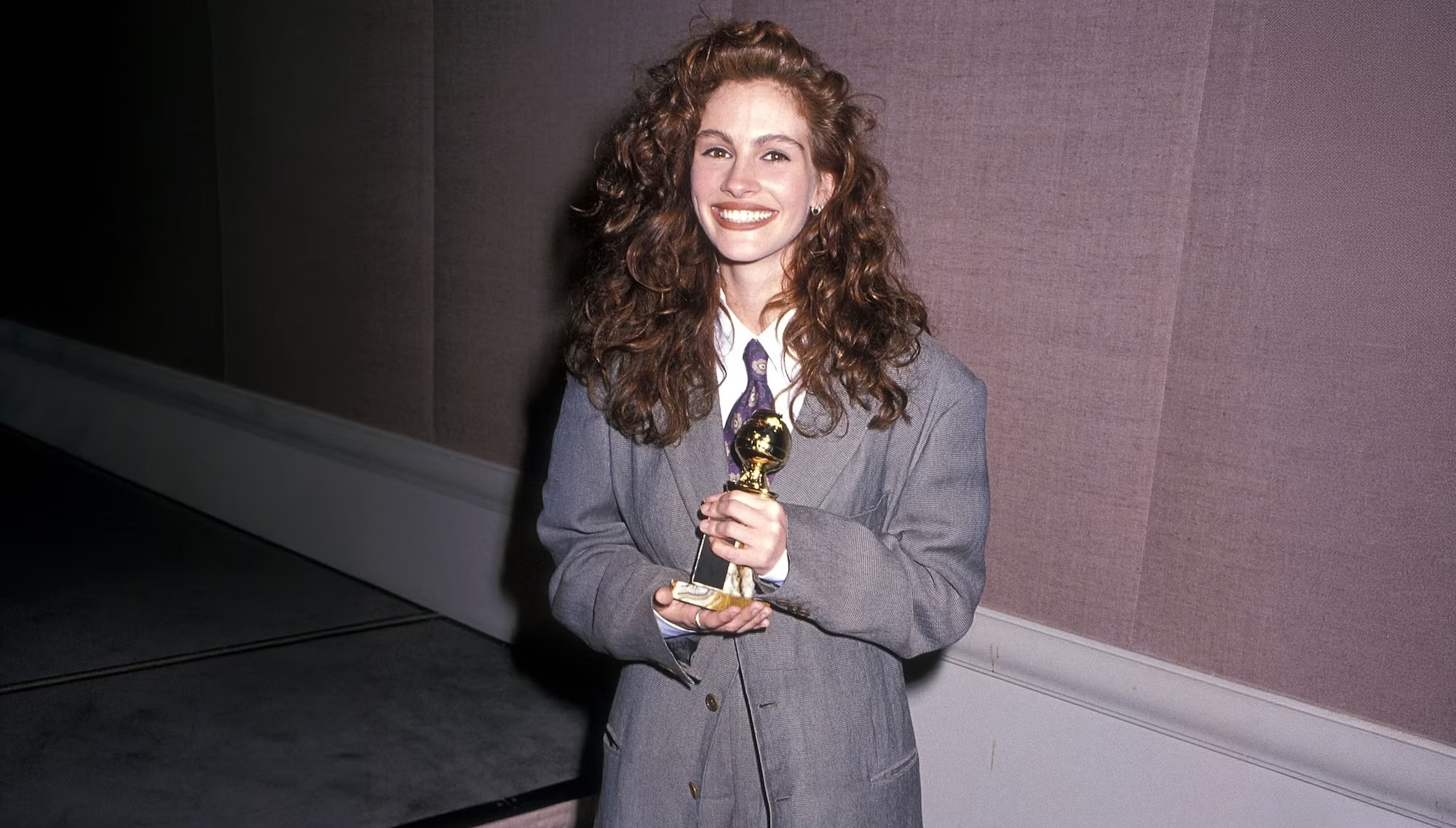
“I just love pants!” declared as she stepped out in a Giorgio Armani model at the Golden Globes in 1990. But women’s pants had a long journey to the red carpet. Ötzi, nicknamed the Iceman from the Stone Age (3500 BC), already wore trousers. To survive in the harsh conditions of the Alps, he wore two fur trousers. DNA analyses confirmed that they were made of domestic goat skin. However, the trousers were more like leggings or gaiters, they were not yet connected into one unit. Each pair of trousers was fastened separately to the waist belt with leather straps and tucked into shoes. Trousers later became widespread with the domestication of horses and during the migration of peoples. They were comfortable to ride in and also protected the riders’ legs from abrasion. They thus became mainly a men’s privilege.
Ban from the Emperor
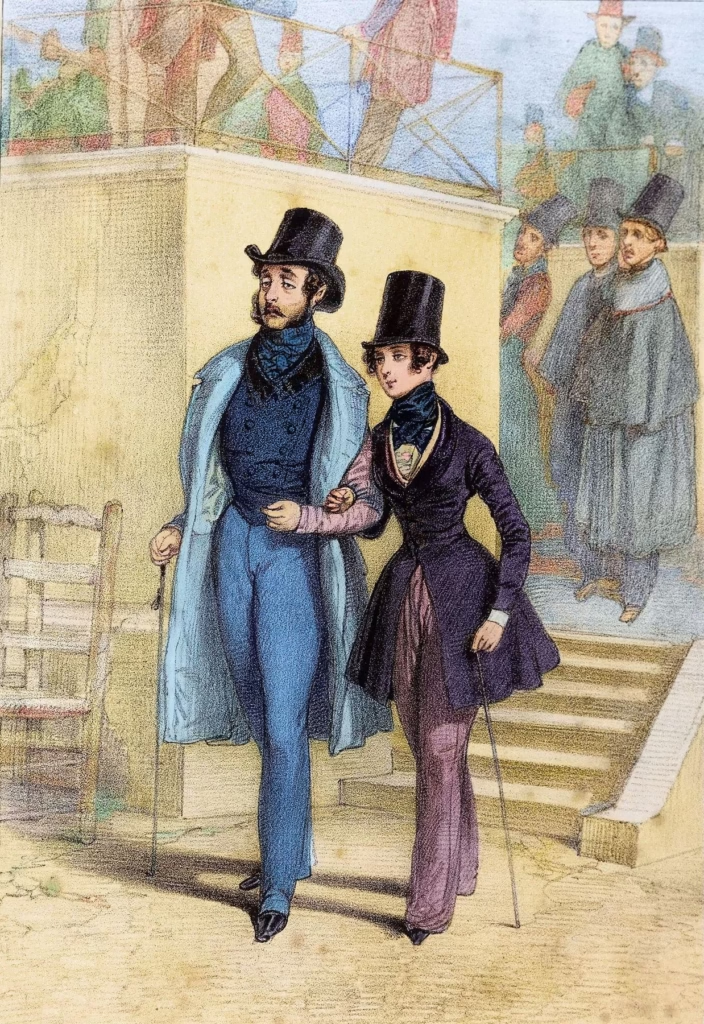
In our country, the fashion for long blouses, skirts and stockings survived even during the Hussite period. Gradually, men began to wear narrow trousers with multi-coloured trousers and bags on their natural legs, as well as loose models, the crotch of which fell deep to the knees. The first woman to wear trousers is the eccentric Swedish Queen Christina, who was raised as the heir to the throne, and so she put on men’s trousers in 1654 for a demanding journey to Rome.
“Kristýna was supposed to be the boss of the country, so she was allowed to ride in pants.”
In France, Napoleon banned women from wearing trousers by law, and in Victorian England, female workers caused a stir when they dared to wear men’s mining uniforms when their skirts got in the way while working in a quarry. The most famous promoter of trousers in the nineteenth century was the unconventional writer George Sand. She liked to shock and caused a stir thanks to her trousers. The pioneers of the new fashion were scorned by men and had to endure hostile looks from women. Sports helped change the situation. Since 1909, thanks to a special decree, women in France could take off their skirts when riding a horse or a bicycle, and since skiing was not comfortable in a dress either, the Hermès company launched the first trousers designed for female skiers.
To prison for pants
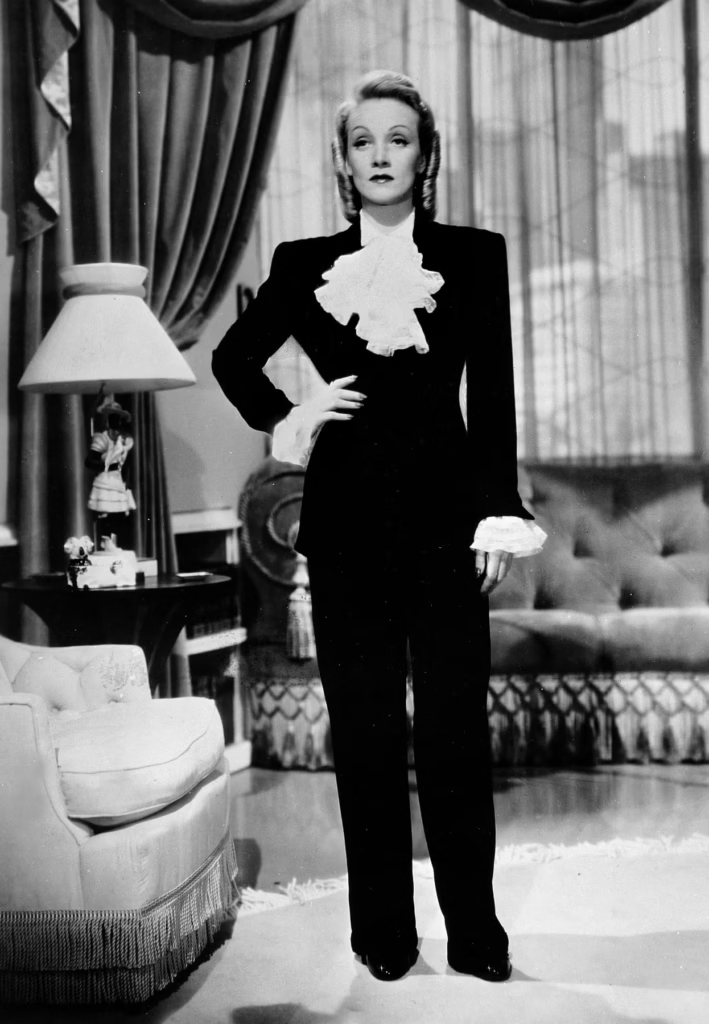
In 1926, Marlene Dietrich was given the role of a French assassin in the theater and, dressed in a silk trouser suit, she played a fierce modern woman unfettered by moral restraints. She was finally able to combine theater with her eccentric civilian image. However, when she walked around free-thinking Paris in her trousers in the early 1930s, the police arrested her for sedition! During the war, women already wore trousers as a matter of course. The men were at the front and left civilian clothes at home, including trousers, which were very useful for wives who now had to do men’s work.

During the war, men were left with work at home – and their trousers.”
But trousers only became a common part of the wardrobe during the denim revolution in the 1960s. Today, they are the most popular casual wear, but they also score points at social events. They are worn wide, narrow, with a high waist, as part of costumes or under a tunic. Sultan pants are out and capri pants are back. Summer simply calls for a return to styles inspired by the 1980s. A water-soluble model also appeared on the catwalks. Perhaps actress Katherine Heigl was wearing it when the tabloids caught her in just her underwear in the rain.