






|
Neubauer Artists LLC
Getting your Trinity Audio player ready...
|
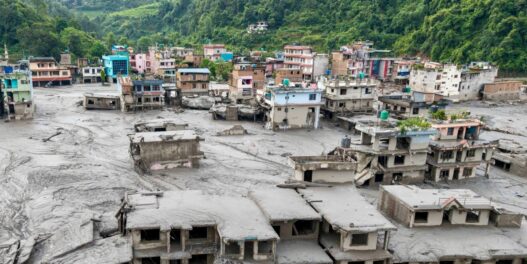
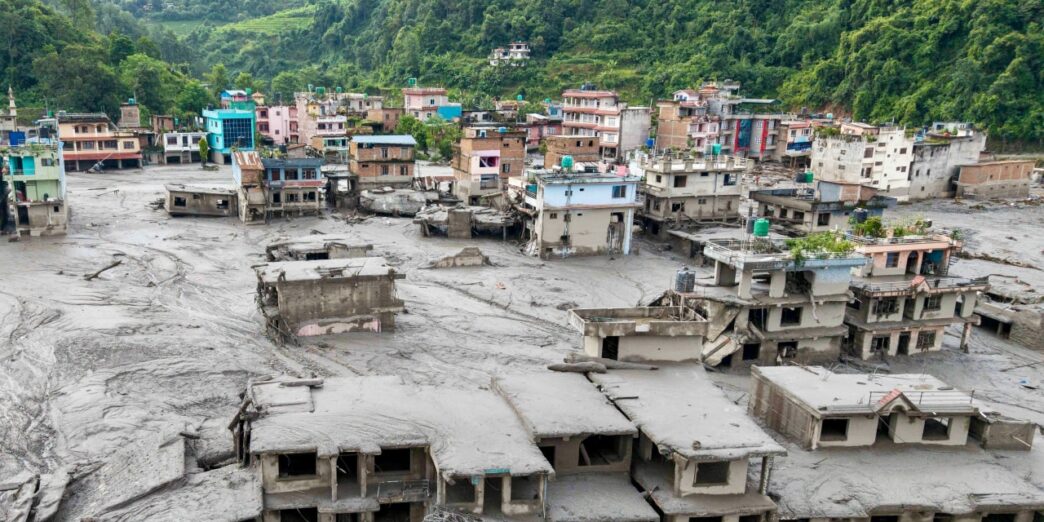
GYIRONG, Xizang, Aug. 30 (Xinhua) — Sixteen people have been confirmed dead and 546 others remain missing as of 6 p.m. Saturday after a mudslide struck Gyirong Port on the China-Nepal border in southwest China’s Xizang Autonomous Region on Aug. 26, according to the regional government. ■
BEIJING: China said the death toll from a mudslide that struck Tibet rose to 16 and 546 people were still missing, state media reported on Sunday (Aug 30), citing local officials.
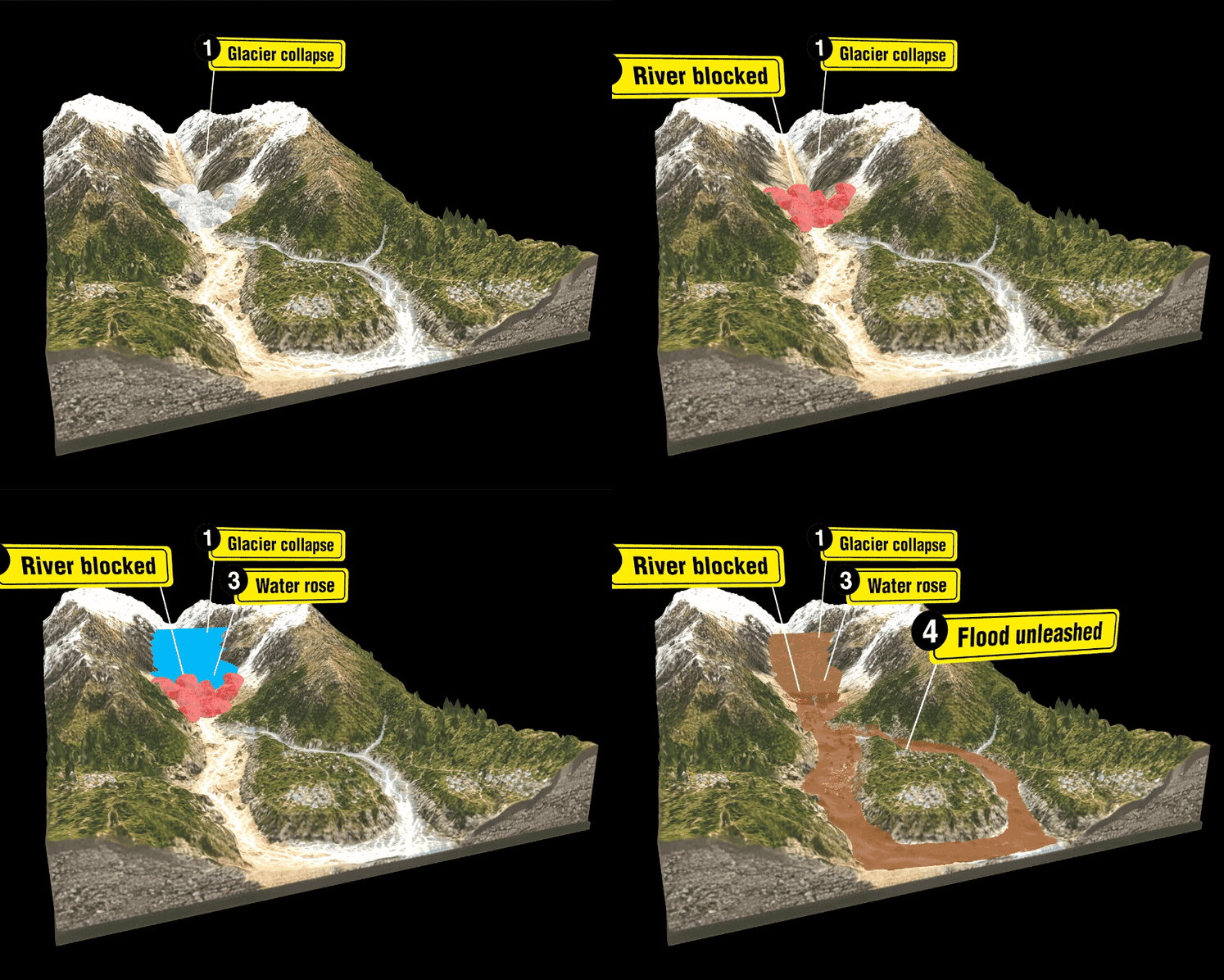
A devastating, tsunami-like wall of water tore through the border region between Nepal and Tibet this week, sweeping away entire villages.
Figures from Nepal and from Chinese authorities in charge of Tibet put the total number of missing close to 3,000, with 691 bodies recovered.
Chinese authorities increased the death toll on their side of the border from seven to 16 on Sunday and said 546 people were still missing, state broadcaster CCTV reported.
Of those missing, 261 were foreign nationals, CCTV said, including 104 from Nepal, 49 from India, 33 from Latvia, and 18 from the United States.
“Chinese authorities have notified the respective embassies and consulates of these countries in China,” CCTV said, citing officials.
“Following multiple rounds of comprehensive region-wide surveys, site-specific checks, and individual verifications at the border crossing”, there are no foreign tourists stranded in Gyirong County, CCTV added, referring to the county in Tibet hit by the mudslide.
Chinese officials also identified on Sunday the cause of the disaster.
Experts “concluded that at approximately 10.52am (Beijing Time) on Aug 26, a glacier on the southern slope of Lirung Peak in Nepal” fractured, triggering an ice-rock avalanche, Xinhua news agency said.
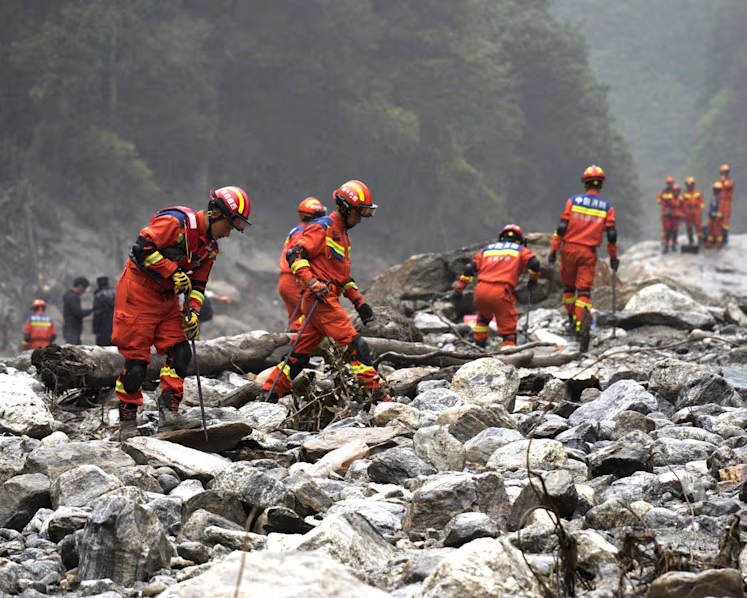
CCTV reported on Sunday that the first batch of relief supplies provided by China had arrived in Kathmandu, along with four Chinese tunnel rescue experts.
China has provided supplies including tents, blankets, sleeping bags, rations, first-aid kits, as well as other essential and medical supplies.
The supplies will be distributed to the front lines of the disaster areas to ensure basic living and emergency medical needs of those affected are met, CCTV reported.
In a breakthrough late Saturday, the Nepali army was able to insert a pipe into a tunnel at the Trishuli 3A hydroelectric site where workers are believed to be trapped.
“We have already started sending air through the small opening, and we will now begin excavation work and send the rescue team inside,” Home Minister Sudan Gurung said in a statement.
More than 100 workers may still be alive and trapped inside such tunnels, with rescue efforts focused on the Trishuli 3A and 3B sites.
HUGE GAP BETWEEN MISSING AND DEAD REFLECTS CHALLENGES RESCUERS FACE
The huge gap between the death toll and the number of people missing highlights the immense challenge facing rescuers as they push deeper into the devastated border area.
Gyirong Port lies deep in the Himalayas along China’s border with Nepal, and roads and communications at the port remain cut off.
Speaking to CNA, Colin Stark, a landslide expert and professor in the Department of Civil Engineering at National Taiwan University, said the true toll could take time to establish.
Stark said the immense amount of debris carried by the flood was likely to have buried many victims, while floodwaters and debris could also have carried casualties kilometres downstream.
“For these reasons, the number of missing is far, far higher than the number of confirmed fatalities,” he said.
CNA Explains: What caused the deadly Nepal-Tibet disaster?
Stark also expected the death toll to rise and believed most of those listed as missing could ultimately be among the fatalities.
He stressed, however, that this was “just a guess”, given the scale of the disaster and uncertainty over the fate of those still unaccounted for.
Many fatalities may never be confirmed, he added, as some bodies may prove impossible to locate.
Professor Liu Ko-Fei, also from National Taiwan University, told CNA that when such events occur, it can take months to “clarify the list of (people) injured and the death toll” and that it is “reasonable to expect the death toll to rise”.
Rescue teams also face difficulties in their searches, especially in places with “soft mud and a lot of boulders”. Their priority would also be those who are alive and can be “easily traced”.
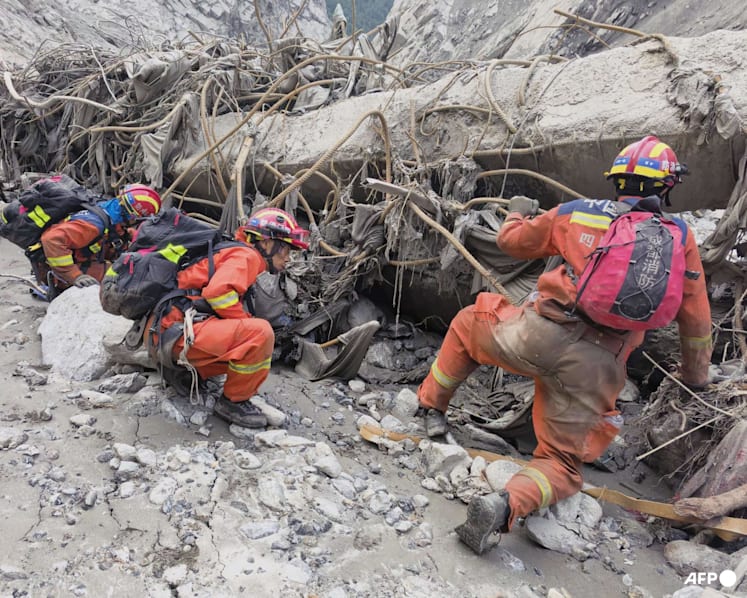
Thus, updating the list of people rescued would get slower as rescue teams are going into “difficult areas”, he added.
“The scale of the disaster is really large, the affected area is not just the 20 km long region,” said Liu.
“There will be prolonged psychological and economic damage.”
Satellite and drone imagery could also offer a crucial view of the disaster zone above.
Professor Liu Lin from the Chinese University of Hong Kong told CNA that remote sensing imagery taken from satellites, aircraft and drones can help trace the path of the debris flow, measure how fast it travelled and map which regions are buried by debris.
The imagery can also shed light on the possible trigger and source of the disaster, said Liu, who is a professor from the university’s Department of Earth and Environmental Sciences.
01:32 MinAs search and rescue operations continue in the Nepal-Tibet disaster, families on both sides of the border are anxiously awaiting news of their loved ones.
Comparing it with pre-disaster information on villages, buildings and roads can show which communities and structures were directly in the path of the debris flow.
“This is very helpful for estimating casualties and survivability and for guiding rescue teams to the right places quickly,” said Liu.
However, there are limits to what can be seen. As the number and locations of people in the affected area are not “directly countable” from remote sensing, other information such as census data, eyewitness accounts, travel records and video footage is needed.
“Ultimately, only people on the ground can determine who survived.”