






|
Neubauer Artists LLC
Getting your Trinity Audio player ready...
|
On this land where the blood of the victims of October 7, 2023, was spilled, just a few kilometers from Gaza, where the blood of Palestinians is still being spilled, Mazal Tazazo, 36, carefully recounted the hours of anguish she experienced during the terrorist attack launched that day by Hamas. She had come to dance at the Nova festival, and in the early morning, the celebration turned into a massacre. In this natural setting, 378 people out of 3,500 participants were murdered, one by one, by Hamas fighters.
Forty-four others were taken hostage and brought to Gaza, dead or alive. The site also became the epicenter of the sexual violence committed that day by Hamas. Wounded in the head, Tazazo hid under eucalyptus leaves and branches for hours. She pretended to be dead among the bodies of her friends, then concealed herself at the back of an abandoned car before being evacuated with other survivors. “A miracle,” she said with a smile that her eyes contradicted.
Paid by the Israeli Foreign Affairs Ministry, she comes to the site, which has become a memorial, three times a week to recount the circumstances of the attack to visitors. “People have to wake up!” she said on Monday, October 5, to a group of Indian influencers seated in a semicircle and surrounded by hundreds of photos of victims, their faces showing their stolen youth. “People in Europe, they don’t understand that they give our enemies the legitimacy to hate Jews, to hate Israelis,” she insisted a little later, in the shade of the eucalyptus trees, expressing both the absolute violence of the October 7 terrorist attack and her incomprehension at the loss of lives.
‘The world will never be the same again’: How October 7 changed Israel, Gaza and Australia
Three years after the Hamas gunshots rang out across southern Israel, the world is still living in the October 7 era.
In the lead-up to the attacks, Israelis were mostly consumed by their internal politics – specifically the Netanyahu government’s moves to strip power from the nation’s Supreme Court – rather than external threats. The Palestinian cause had faded from international attention. Just days before the assault, US President Joe Biden’s national security adviser Jake Sullivan described the Middle East region as quieter than it had been in two decades.
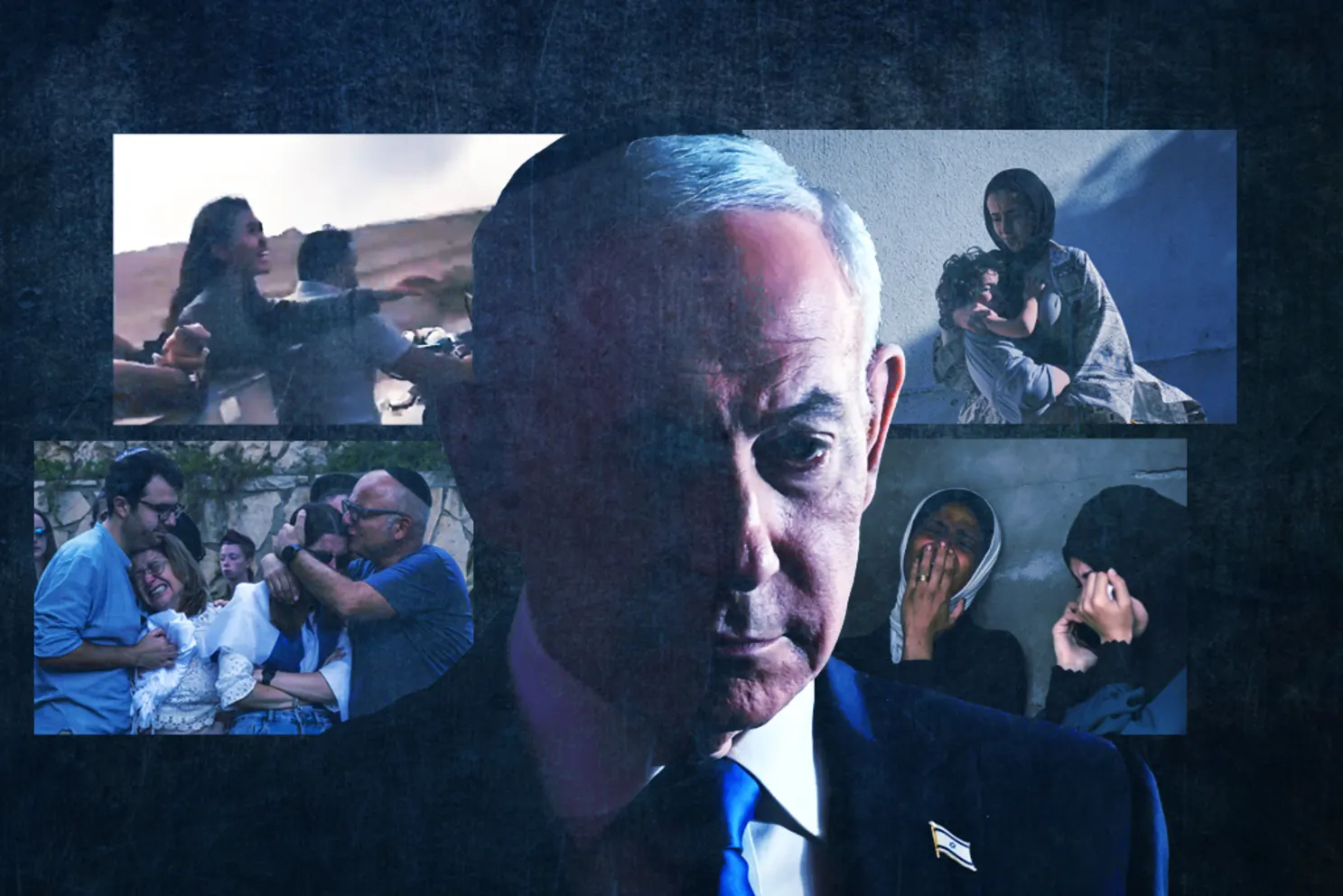
Then came the rampage. To help foreigners understand the scale of such an atrocity in a tiny country of around 10 million people, Israelis often point out that, in per capita terms, the casualty figure of 1200 people killed was 13 times greater than the fatalities of September 11. Two hundred and fifty people – including young children and grandmothers – were taken hostage into Gaza, sparking a mass protest movement to secure their release.
“October 7 was one of those cosmic moments when you realise the world has changed and will never be the same again,” Executive Council of Australian Jewry co-chief executive Alex Ryvchin says. “It brutally showed the world that the days of Jewish torment, of women dragged to captivity, of decapitation, pack rape and thrill killing, did not belong to history. They are with us now and probably forever. For those who hate Jews and long craved to see them get what was coming to them, October 7 was euphoric.”
The Israeli state’s failure to prevent, and adequately respond to, the worst terror attack in the nation’s history still rattles its citizens. “The main question we ask, and all of Israel asks all of the time, is: where was the army?” Danny Majzner, whose Australian-Israeli sister Galit Carbone was murdered in a kibbutz near the Gaza border, told this masthead ahead of the first anniversary of the attacks. Such questions remain unanswered two years later.
The void is largely because of Israeli Prime Minister Benjamin Netanyahu, who has vigorously blocked an independent commission of inquiry into the attacks, even as polls show three-quarters of Israelis back such a probe. The head of the Israeli military, plus the leaders of the nation’s internal and external security agencies (the Shin Bet and Mossad respectively), eventually lost their jobs following October 7, but Netanyahu remains in power despite overseeing the worst security failure in Israel’s history.
His reckoning will come on October 27, when Israelis go to the polls for the first time in four years. While Netanyahu’s popularity plummeted after October 7, he still has a shot of remaining prime minister if his ideologically diverse opponents cannot cobble together a winning coalition.
Among those running in the elections are at least nine Israelis drawn into politics through direct involvement with October 7, including relatives of loved ones taken hostage and those who risked their lives to save others.
The impending elections have heightened the blame game and the history wars. Israeli newspaper Haaretz last month published an explosive book extract claiming the leader of the United Arab Emirates had warned Netanyahu that Hamas was planning an operation just days before October 7. The Atlantic followed by reporting Egypt’s intelligence chief had visited Tel Aviv shortly before the attacks with a dire message about Gaza. Former security agency Shin Bet boss Ronen Bar last week said he would file a defamation lawsuit against Netanyahu, who accused Bar of failing to inform him about the attack.
The full story of what led to October 7, let alone its aftermath, is yet to be told. What is undeniable is that the assumption among Israeli political and military elites that Hamas had been contained and did not pose a major threat proved both hubristic and inaccurate.
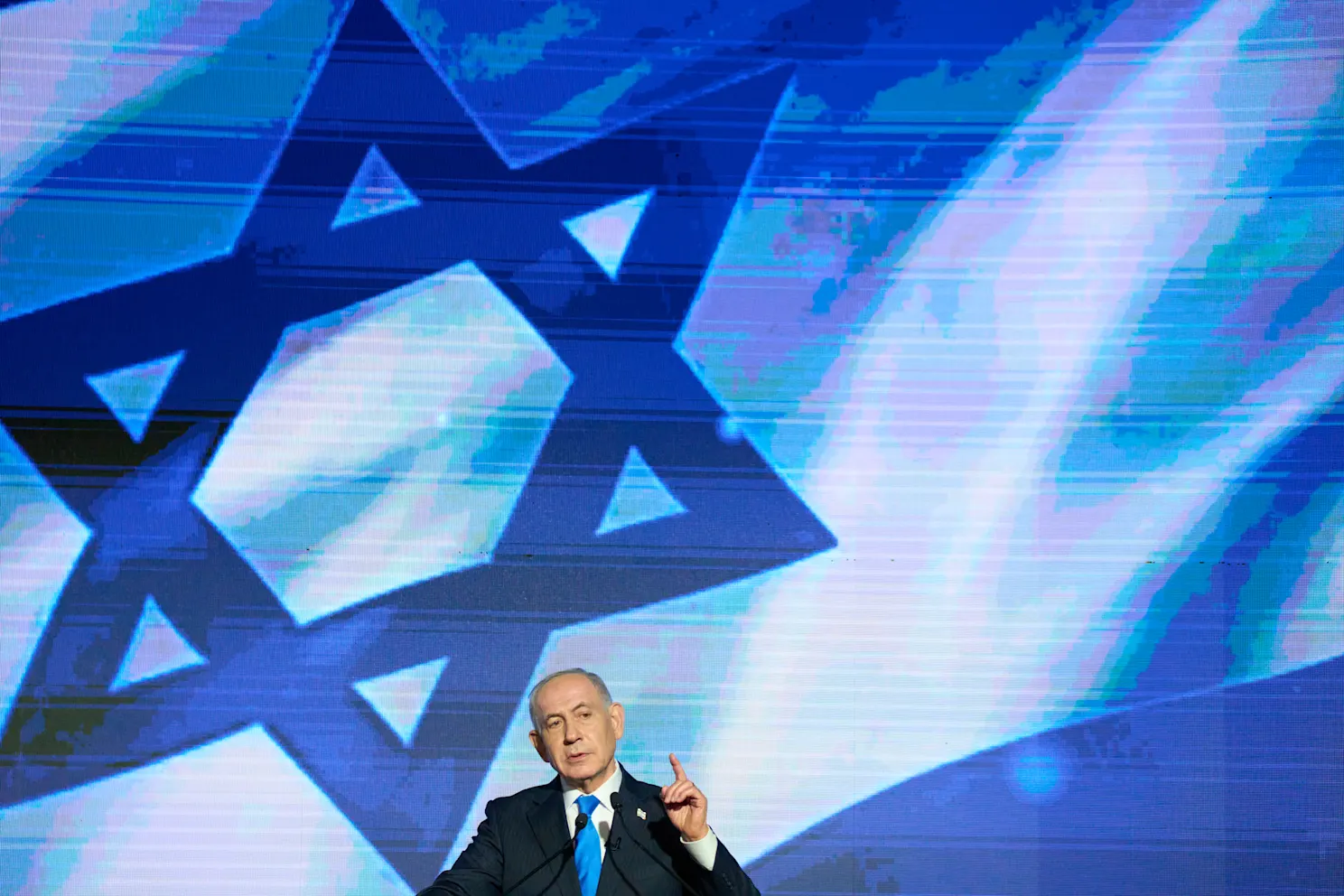
Regardless of whether Netanyahu wins or loses at the end of the month, there is no going back to the before times. No Israeli prime minister will allow Hamas to control territory on the Israel-Gaza border, nor will they allow Lebanese militant group Hezbollah to menace Israelis living in the country’s north. There is no prospect of a two-state solution in the forseeable future, despite a surge of world leaders recognising Palestinian statehood last year.
While Israel was always going to respond forcefully to the deadliest day for Jews since the Holocaust, the ferocity and duration of the subsequent war in Gaza shocked the conscience of citizens around the world. Images of dying children, buildings blown to rubble, and emaciated toddlers sparked global protests. Despite Israeli denials, to many the military response to October 7 seemed motivated by vengeance rather than self-defence.
The film Naza, a damning account of Israeli targeting practices based on anonymised interviews with soldiers who fought in Gaza, received a 25-minute standing ovation last month at the Venice Film Festival. A senior Israeli minister said he wanted to revoke the citizenship of the Israeli filmmakers on the basis they had betrayed their country.
The war in Gaza crippled Hamas militarily and killed most of the group’s senior leaders (including October 7 mastermind Yahya Sinwar) but the group achieved strategic goals. The war raised the profile of the Palestinian cause, scuppered the prospect of an imminent peace deal between Israel and Saudi Arabia, and helped turn Israel into a pariah state across the world. By the end of 2023, Israel was facing genocide charges in the International Court of Justice. Soon after, the International Criminal Court indicted Netanyahu for alleged war crimes, curtailing his ability to travel internationally.
Before October 7, life was difficult and demoralising for ordinary Palestinians living in the occupied territories. Now it is even more dire. Almost a year into a ceasefire brokered by US President Donald Trump, Gaza remains a humanitarian disaster. Around 1500 Gazans have been killed by Israeli fire since the ceasefire began, according to local health authorities – on top of the 73,000 estimated Palestinians killed during the war. “Life here is living in a tent filled with insects, mosquitoes, flies,” Gazan resident Asmhan Abdalraheem, 25, said recently. “You wake up in the morning bitten by insects; rodents attack children and the elderly.“
Trump’s peace plan for Gaza remains in limbo: an international stabilisation force has not entered the country and Hamas has not relinquished its weapons. In the West Bank, Israeli settler attacks on Palestinians have surged to horrifying levels.
Sarah Schwartz, executive director of the progressive Jewish Council of Australia, used the anniversary to call for sanctions against Israel. “Australia has a legal and moral obligation to act as Israel repeatedly violates the terms of the ceasefire with total impunity,” she said.
Any global goodwill Israel garnered on October 7 quickly evaporated as the war in Gaza ground on — including in the United States, Israel’s most important security ally. A Gallup poll in February found Americans’ sympathy for Palestinians edging ahead of Israelis nationally for the first time. A Pew Research poll in March found 60 per cent of all US adults hold an unfavorable view of Israel, up from 42 before the October 7 attacks. Cutting off military aid to Israel and imposing sanctions have become mainstream positions in the Democratic Party. Meanwhile, the rapper Macklemore was last month removed as an opening act for pop star Ed Sheeran’s US tour after using a set to perform a pro-Palestinian protest song and chant “Free Palestine”.
In Australia, anger at the Netanyahu government’s actions quickly melded with prejudice against ordinary Jews with no control over events in the Middle East. Infamously, protesters chanted intimidating slogans and burned Israeli flags outside the Sydney Opera House on October 9, 2023. Within weeks, prominent Jewish Australians were warning that antisemitism had gone “off the charts” as Jewish sites were vandalised and Jewish creatives doxxed.
Could this grieving political novice defeat Netanyahu? The polls say yes
On December 14 last year, the Jewish community’s worst fears were realised when two gunmen unleashed a massacre at Bondi Beach, killing 15 people in the worst terror attack in Australian history. Royal commissioner Virginia Bell is preparing to release her final report before Christmas.
The third anniversary of October 7 will be marked not only by Jewish community commemorations in Australian capital cities but several pro-Palestinian vigils. “Don’t let Israel steal the date,” states the poster for an October 7 vigil for Gaza to be held at Sydney’s Town Hall.
Zionist Federation of Australia president Jeremy Leibler decried the vigils as “an attempt to erase what happened on October 7”, arguing Palestinian casualties could be mourned on any other day of the year. “Surely, even after everything that has happened over the past three years, some things should remain sacred,” he lamented. But there is no such unanimity. The anger, division and grief unleashed by October 7 may have peaked, but have far from disappeared.
World marks three years of Israel’s genocide in Gaza
From New York and London to Melbourne and Berlin, vigils and marches demand an end to killing and accountability for Israel, as fragile ceasefire fails to halt Palestinian deaths
Thousands of people across the world took to streets, campuses and public squares on Wednesday to mark three years since the start of a war that a United Nations commission of inquiry and leading rights groups have concluded amounts to genocide against Palestinians in Gaza.
Groups supporting the Palestinian cause held vigils, marches, student walkouts and solidarity gatherings across Europe, North America, Australia and other regions, according to news agencies.
By media tallies, some 262 Palestinian protests and solidarity events took place in 37 countries around the anniversary, with more than 100 further events expected over the following weekend.
The largest turnouts were reported in the United States, Spain, Australia, Britain and Italy, with demonstrations also held in Germany, Canada, France, the Netherlands and elsewhere.
New York mayor challenges Washington
In New York, Mayor Zohran Mamdani issued one of the most forceful statements by a major Western political leader marking the anniversary, saying Palestinian suffering neither began nor ended on October 7.
Mamdani described Israel’s continuing assault on Gaza as a genocide and pointed to more than 74,000 Palestinian deaths, including more than 21,000 children.
He directly challenged Washington’s role, criticizing continued U.S. arms shipments to Israel.
“Three years later, we must refuse to accept a world in which occupation and apartheid continue,” he said, adding that American taxpayers were helping finance what he called Israeli war crimes.
New York also saw events marking both sides of the conflict, including Palestinian solidarity actions and Jewish memorial programs.
London students march for Palestine
In Britain, students marched through central London despite demands that no demonstrations be held on the anniversary.
Around 100 demonstrators marched from King’s College London toward University College London, chanting “Free Palestine.”
One group carried a banner reading: “Holocaust survivor descendants against Gaza genocide.”
Police imposed restrictions on the demonstration, and five people were arrested separately outside the Board of Deputies of British Jews.
Student protests advocating for Palestinian rights were also held in Edinburgh and Glasgow.
Australians demand arms embargo
Australia saw Palestinian vigils and commemorations in several cities.
In Melbourne, activists gathered outside the State Library of Victoria for a day-long vigil for Palestinians killed in Gaza. Palestinian flags covered parts of the grounds, and demonstrators displayed an image of Israeli Prime Minister Benjamin Netanyahu labelled a “Genocide Criminal.”
Muslim and Palestinian organizations called on the Australian government to impose sanctions and a two-way arms embargo on Israel.
Palestinian-Australian activist Tasnim Sammak, who said she had lost more than a dozen relatives in Gaza, told the ABC that Palestinians were still enduring death and destruction.
“The survivors are living in tents, trapped and without access to basic aid for their basic needs,” she said.
Türkiye marks anniversary nationwide
Türkiye marked the third anniversary with demonstrations and a nationwide series of solidarity events. In Ankara, the Ankara Palestine Solidarity Platform organized a “Free Palestine March for Gaza” on Wednesday evening, with participants marching from Kocatepe Mosque to Melike Hatun Mosque for a rally.
In Istanbul, five days of “Palestine Solidarity Days” opened at Üsküdar Square, running October 7-11 with exhibitions, discussions, concerts and displays documenting conditions in Gaza.
Organizers said related programs were being held across Türkiye’s 81 provinces.
Protests had begun ahead of the anniversary, with demonstrators marching from Taksim to Dolmabahçe on Sunday under the slogan “Freedom for Palestine, embargo on Israel.”
A separate demonstration was held Wednesday in Kızıltepe, in the southeastern province of Mardin.
Parliament Speaker Numan Kurtulmuş said Türkiye would continue to be “the voice of Palestine” and criticized countries he said had stayed silent over Gaza’s destruction.
Europe sees rallies and heightened security
Across Europe, police deployed extra officers as demonstrations and memorials took place, with multiple gatherings in Berlin, including rallies supporting Palestinian rights.
Organizations across the continent used the anniversary to renew demands for sanctions on Israel, restrictions on arms sales and greater humanitarian access to Gaza.
UN chief: Palestinian suffering must end
United Nations Secretary-General António Guterres marked the anniversary by making a direct appeal to end Palestinian suffering, which he said had been inflicted through massive loss of life, displacement and destruction.
“Their suffering, too, demands an end, now,” Guterres said.
“It is time for the ceasefire to become permanent. It is time to allow humanitarian assistance at scale.”
Guterres pointed to the deadlock holding up a lasting truce: Israel has refused to withdraw its forces until Hamas’s disarmament is verified, while Hamas has pushed for gradual disarmament rather than immediate surrender.
He called for a political path to lasting peace across the wider region.
Three years have left Gaza devastated
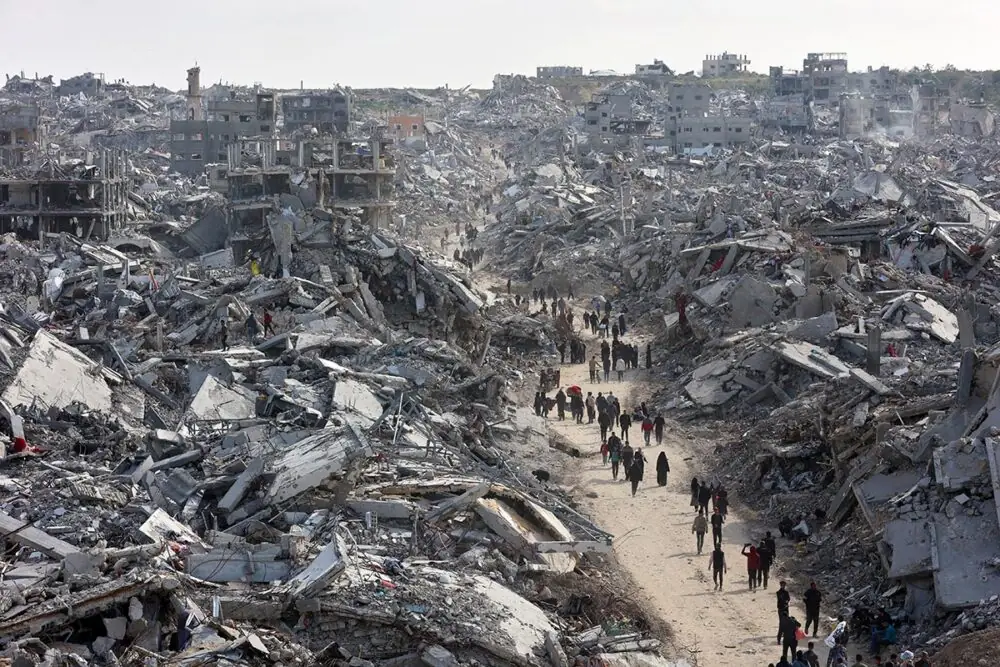
Behind Wednesday’s demonstrations were the staggering human and physical losses of three years of genocide.
Israel’s offensive has killed at least 74,245 Palestinians and wounded 175,267 since October 7, 2023, according to Gaza’s Health Ministry, whose figures the UN considers reliable.
More than 21,000 of the dead are children.
At least 10,000 people are missing, presumed dead beneath the rubble.
The war has destroyed about 90% of the territory’s infrastructure, with reconstruction costs estimated at $70 billion.
Most of Gaza’s roughly two million residents remain displaced or unable to return home, many living in tents or damaged buildings amid shortages of food, medicine, clean water and shelter.
A UN commission of inquiry and major rights organizations have concluded that Israel’s conduct in Gaza amounts to genocide, a determination Israel denies.
In November 2024, the International Criminal Court issued arrest warrants for Netanyahu and his then-defense minister, Yoav Gallant, over the alleged use of starvation as a method of warfare and the deliberate targeting of civilians.
The US-brokered ceasefire that took effect on October 10, 2025 has not stopped the killing.
Since it began, Israeli forces have killed 1,462 Palestinians and wounded 5,151, and the bodies of 836 people have been recovered, according to the Health Ministry.
The UN children’s agency, UNICEF, said that on average one child has been killed every day even under the truce.
Israeli strikes hit Beit Lahiya in northern Gaza and Khan Younis in the south on the anniversary itself, with medical officials reporting more dead and wounded.
For Palestinians inside Gaza, October 7 was less a day of commemoration than another day of survival.
Inside Israel
Netanyahu marked the day by vowing there would be “no Hamas rule in Gaza” and pledging to keep pursuing those behind the attack.
But the anniversary also brought renewed demands that he accept responsibility for the security failures that preceded it.
Protesters gathered outside parliament in Jerusalem demanding an independent inquiry, some carrying signs reading, “The people will remember October 7 on October 27” — a reference to the coming election.
Families of Israelis killed or abducted in 2023 have become among Netanyahu’s most vocal critics.
Anniversary transformed by Gaza
Three years on, Wednesday’s events showed how the meaning of the anniversary has expanded far beyond the remembrance of a single day.
For Palestinians and supporters of human rights and self-determination, it became a day to mourn the tens of thousands killed in Gaza and to demand an end to occupation, displacement and continuing Israeli attacks.
From student marches in Britain to vigils in Australia and demonstrations across the United States and Europe, Gaza was again at the center of streets and public squares.
And while world leaders spoke of peace and remembrance, protesters used the third anniversary to press a single message: that three years of Palestinian death and destruction must not harden into a permanent reality.

The Hamas terrorist attack on Israel on October 7, 2023, was the largest mass murder of Jews since the Holocaust. More than 1,200 lives were lost. Watch a report from Axel Springer Global Reporter Jan Philipp Burgard in Israel.