






|
Neubauer Artists LLC
Getting your Trinity Audio player ready...
|
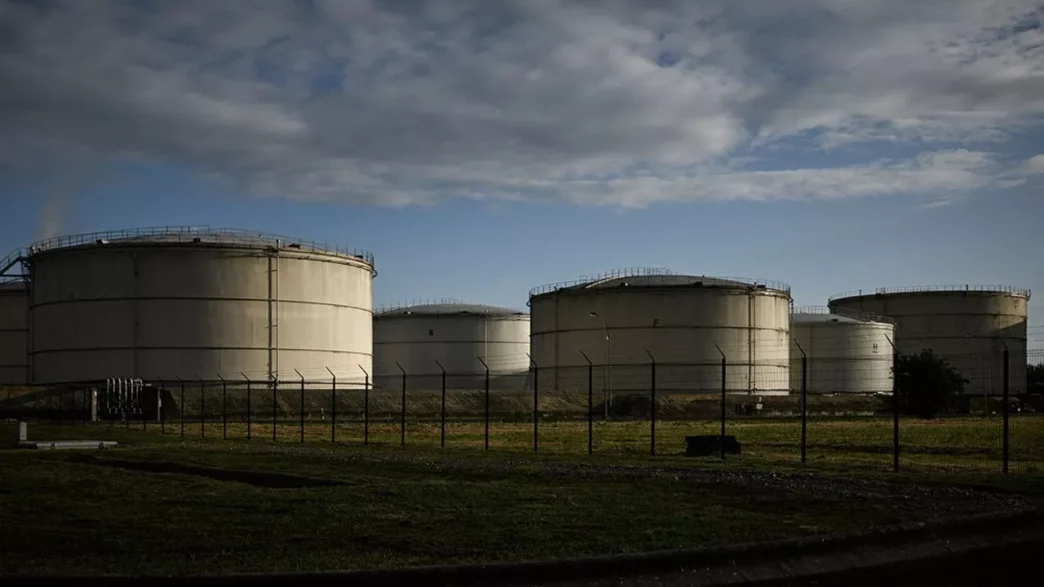
The G7 has decided to release 100 million barrels of oil and diesel to counter the threat of a US embargo. This measure, coordinated by the IEA, aims to stabilize markets without giving in to pressure from Washington.
The verdict came at the end of a video conference convened urgently by Emmanuel Macron, whose France is chairing the G7 this year: the group’s leaders agreed to the coordinated release, under the auspices of the International Energy Agency, of up to 100 million barrels of diesel and crude oil over four months, with an accelerated release to the market from the first twenty days.
Refineries in member countries are also encouraged to operate at full capacity and coordinate their maintenance schedules. Above all, the G7 has enshrined the commitment that mattered most to Brussels: “We have agreed that there will be no restrictions or export bans between G7 members,” Emmanuel Macron stated after the summit.
The French president presented the agreement as a solution for a collective thaw in tensions rather than a European capitulation to Washington. He argued that the G7 hopes to bring about a decrease in fuel prices.
Donald Trump, for his part, preferred to take credit for it on his Truth Social network. “Europe has just agreed to release a massive quantity of its abundantly stockpiled diesel fuel onto the market. The process will begin immediately,” he stated.
An ultimatum amid global shortages
To understand this seemingly consensual response, we must go back to the threat that preceded it. Diesel has become a geopolitical weapon. Between the blockade of the Strait of Hormuz, Russian refineries under bombardment, and China cutting off its exports, the price per liter soared to €2.24 at the end of September in the EU, a record high, while inflation in the eurozone climbed to 3.8%.
Across the Atlantic, the price per gallon reached $6.53. Donald Trump then activated the most sensitive lever for Europe: its dependence on American diesel, which accounts for half of its imports.
The threat was clear. Without the release of 100 million barrels of oil by France, Germany, and Italy, Washington threatened an embargo with devastating consequences for the European economy, agriculture, and transportation. The deadline: 20 days. A tight schedule that smacks of American domestic politics, just one month before the midterm elections on November 3rd.
Brussels raises its voice before negotiating
Faced with this ultimatum, the Commission minced no words. “We fully reject any embargo on diesel. It would benefit no one and would undermine our trust in the United States,” a spokesperson for the European Commission declared. But realpolitik quickly reasserted itself: the European executive stated it was “ready for collective action” through the International Energy Agency.
Paris had taken on the role of mediator, proposing a compromise of equal parts: 50 million barrels of European diesel, 50 million of crude oil mobilized via the IEA, in exchange for an American commitment not to impose unilateral restrictions.
Washington, through Treasury Secretary Scott Bessent, had not backed down. “Our European partners should accelerate the implementation of their existing commitments and immediately make additional volumes available to address the current disruptions,” he wrote on X, adding that “American farmers, transporters, and businesses should not have to bear the brunt of a global diesel shortage alone.”