




|
Neubauer Artists LLC
Getting your Trinity Audio player ready...
|
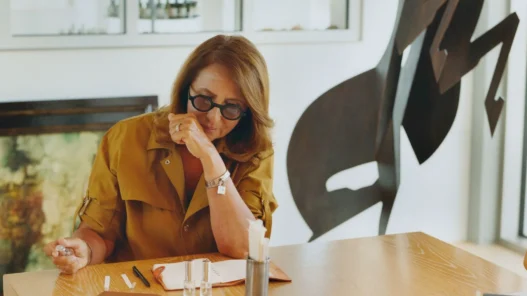
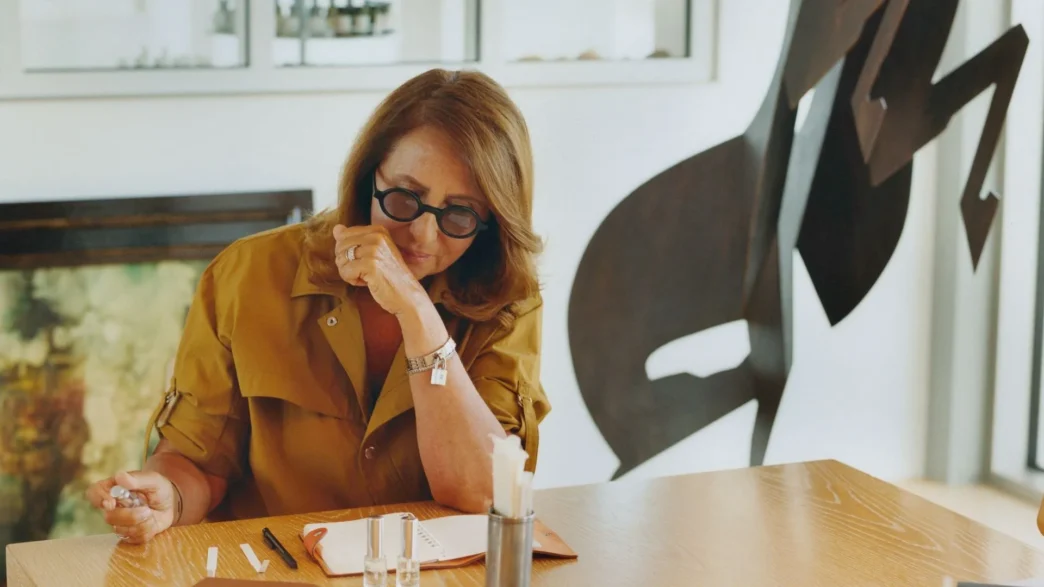
A chemist-turned-perfumer, Christine Nagel has quietly reshaped Hermès’ olfactory universe with her minimalist, emotion-led approach.
When you have a dream, you’re willing to do everything it takes to pursue it,” Christine Nagel says with conviction.
Nagel has been with Hermès since 2014, when she was first recruited to join Jean- Claude Ellena, then the house’s trailblazing in-house perfumer, as “créateur-parfumeur exclusif ”. When Ellena retired in 2016, Nagel became the sole in-house perfumer and took over the leadership of Hermès’ olfactory creation and heritage, one of the first women to hold such a prominent role at a major luxury house.
But, as Nagel tells me, it all started as a dream. An organic chemistry student at the University of Geneva, she recalls how her school’s laboratory looked out onto Firmenich (now called dsm-firmenich), a fragrance and taste company that fascinated her. “I wrote a short letter saying how intrigued I was by their research and by the presence of a Nobel laureate,” she says. Firmenich invited her to visit and offered her a place in their research laboratory even though she hadn’t finished her studies. She said yes immediately.
It was there that she discovered the profession of perfumer and quickly learned how hard it would be to enter it. When she applied for a perfumer role, she was turned down. “At the time, the profession was very male-dominated, and being a woman counted against me,” she says. “I was Swiss, whereas the profession was very concentrated in the South of France, often passed down within perfumer families. And I had a scientific background, whereas they wanted something more literary and classical.”
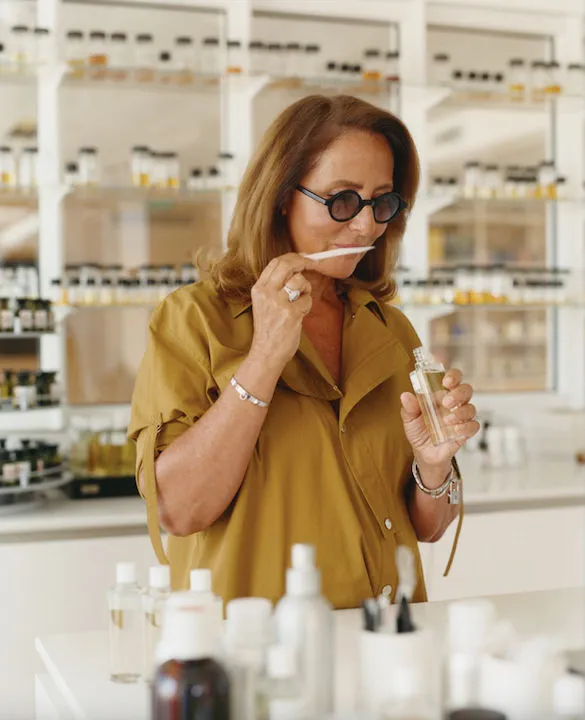
Instead, she was offered a position that was, in a way, the opposite of what a perfumer does. A perfumer imagines a fragrance, writes a formula and then obtains the fragrance. Nagel was asked to take an existing perfume and reconstruct its formula just by smelling it. Today, sophisticated tools can help decode formulas; but in her time, much of the work was still done by the nose, identifying ingredients down to their places of origin. She did that for 10 years before deciding it was time to finally live her dream.
“Luckily, a small company recruited me, saying they’d train me as a perfumer while I set up their chromatography department,” she says. She accepted at once. Master perfumer Michel Almairac trained her, having noticed her potential after smelling some of the fragrances she had developed. He taught her to work with a minimalist approach, using only what’s essential. “That helped me tremendously throughout my career. And today, working at Hermès, I’m in a house where this minimalist approach is everywhere. There’s never too much of anything; everything is refined. I’ve been lucky to have Michel as my mentor and teacher,” says Nagel.
At Hermès, Nagel has remarkable freedom. She has free rein over the subject of a new fragrance, with no price limits and no pressure to meet market briefs or rigid launch dates. Yet three elements remain crucial to her process. “First, I start from an emotion,” she explains. It might be linked to a journey, an encounter, a taste association or a story. “Second, I need to find a raw material – sometimes a dreamed-of material. I might have to ask for a special extraction, test it and refine it. Third, I put a lot of myself into the fragrance, but above all, I create an Hermès fragrance.”
That means distilling the values of Hermès into scent. Whether the house is working with silk, leather or any other material, it seeks the most beautiful materials in the world, and Nagel applies the same standard to her ingredients. She doesn’t pretend to have a recipe for success – “if I did, I’d use it every day,” she muses – but she does appreciate the way decisions are made at Hermès. The choice to launch a fragrance lies with just three people: Artistic Director Pierre-Alexis Dumas, Managing Director of Perfume and Beauty Anne-Sarah Panhard and Nagel herself. “This is an enormous gift,” she says. “The three of us decide together. That allows us to create perfumes with strong, distinctive signatures and to offer clients the possibility of wearing something truly different – and to do so with full freedom.”
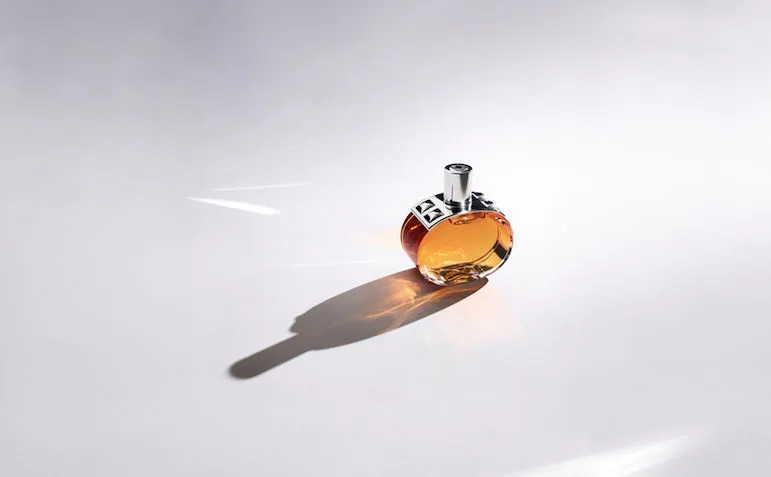
The house’s newest perfume, Barénia Pleine Fleur Eau De Parfum, continues the story of Barénia, launched in 2024 as Hermès’ first chypre fragrance – a scent classified by a distinct contrast between fresh citrus top notes, floral middle notes and an earthy base. The original paid tribute to the iconic Hermès Barénia leather and its tactile, sensual character, explicitly inspired by the carnal aspect of leather and by Nagel’s desire to create a chypre for the Hermès woman. For the chypre, she turned to a Beninese folktale that she loved as a child. “I loved fairytales from around the world, and there was one African legend that stayed with me,” she recalls. It told of a little boy living in a baobab tree who had a magical grain that could make anything sweet – even people’s characters.
Much later, while working on chypre structures, Nagel looked for a real fruit that could echo that idea and discovered the miracle berry. It contains a protein called miraculin that can make anything sour or bitter taste sweet. Its fruit extract had an apricot-like fragrance, which she used as a guiding note in her composition. “Chypre perfumes can sometimes be austere and classic, so the miracle berry offered a way to bring something delicious and more playful into that traditional structure.”
In Barénia Pleine Fleur, the golden, dried-apricot facet is paired with white lily. “When you have a bouquet and there’s a white lily, that’s often the flower you smell first,” she explains. Yet she was determined not to create an overly floral fragrance. “I found that when you associate white lily with orange blossom, you get something bright that doesn’t disrupt the underlying chypre structure – it illuminates it,” she says.
Unlike floral, woody or fruity perfumes whose names already suggest how they might smell, chypres remain slightly mysterious. “It’s an archetype of fragrance structure,” says Nagel. To build a chypre, certain elements are indispensable: a fresh top note, a floral bouquet, usually quite opulent, and oak moss and patchouli. For her, this creates a very elegant, refined structure – “very Hermès, in my mind.” Nagel is openly partial to chypres. “The line allows women to explore the chypre universe in different ways,” she says. “Once you start wearing it, you become quickly addicted to it.”