





|
Neubauer Artists LLC
Getting your Trinity Audio player ready...
|
Style Points is a weekly column about how fashion intersects with the wider world.
“That was my Rohmer gateway drug,” says Alexandra Tell of the 1986 film Le Rayon Vert (The Green Ray). “It captures this feeling of summer melancholy that I’ve never really seen so perfectly distilled before.” Her love of the film, and its inspiring fashion, spurred the writer and curator to create the @rohmerfits Instagram account, which has chronicled the ennui-beset, natural fiber-clad protagonists of the French director’s films.
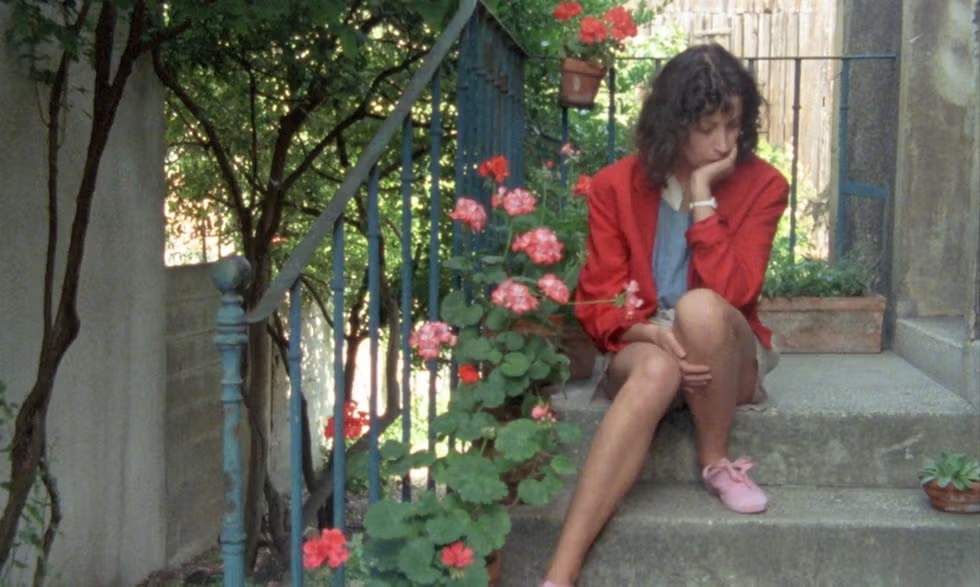
Marie Rivière in Le Rayon Vert.
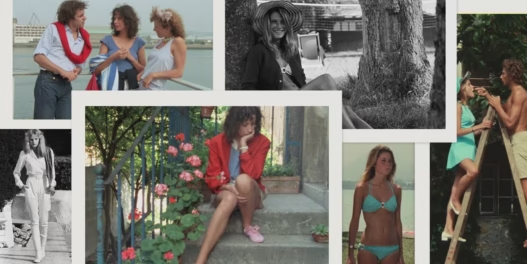
As cinephilia and fashion continue to cross-pollinate, the auteur has become a style touchstone. In 2023, with Barbiecore cresting, The New York Times encouraged “Éric Rohmer Summer” as a counterpoint to all the hot pink we were seeing on our feeds, while GQ has celebrated the undersung style statements of Rohmer’s male characters, an archetype the website called the “Rohmer Guy.”
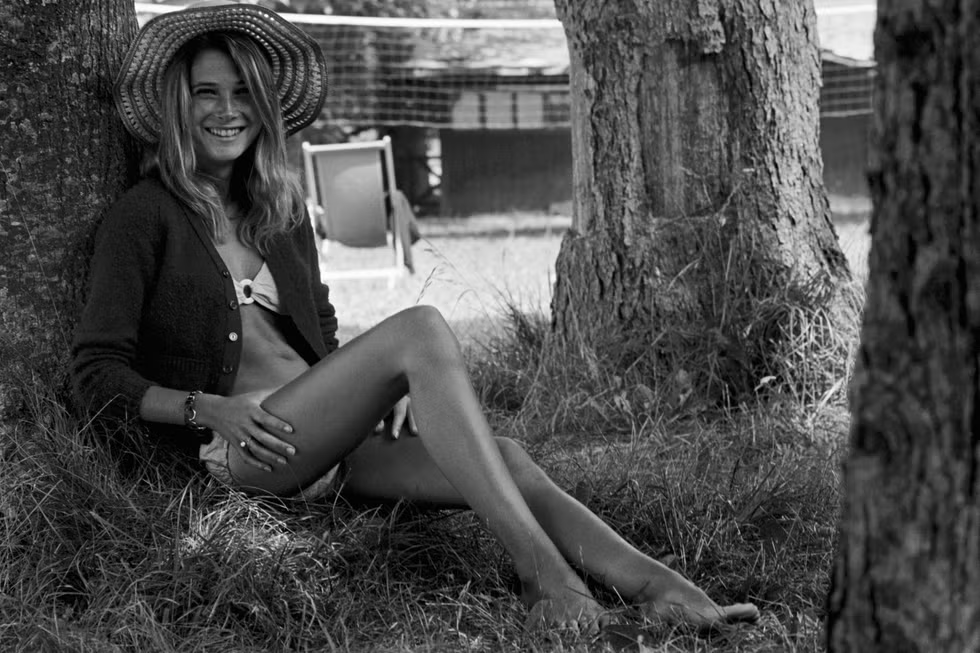
Laurence de Monaghan on the set of the movie Le Genou de Claire (Claire’s Knee), directed by Éric Rohmer.
But this summer might be the apex of Rohmer mania. McNally Editions released the first English translation of Rohmer’s novel Élisabeth in handsome, sherbet-colored paperback. Kaia Gerber has selected the book as the July pick for her Library Science book club (along with a restock of the club’s Claire’s Knee-themed T-shirts.) To coincide with the Élisabeth release, McNally Editions organized screenings of Rohmer’s Six Moral Tales at the American Cinematheque/Los Feliz 3 in Los Angeles, Metrograph in New York, the Music Box in Chicago, the Brattle in Cambridge, and the Roxie in San Francisco, in partnership with Janus Films. For those who prefer to stay in, Criterion Channel will also have 18 of the director’s films available for streaming this summer.
Rohmer’s public profile has perhaps never been higher stateside. “He was always kind of a director’s director,” says Tell. “Your favorite director’s favorite director that you’ve never heard of. Case in point, Noah Baumbach’s son is named Rohmer.” But now, with the rise of services like Letterboxd and Criterion Channel, the growing popularity of repertory cinemas, and the resurgence of physical media, “It’s cool to be into good movies,” she says. “Cinephilia [has] a certain cultural clout that I don’t think was there 10, 15 years ago. It was much more niche.”
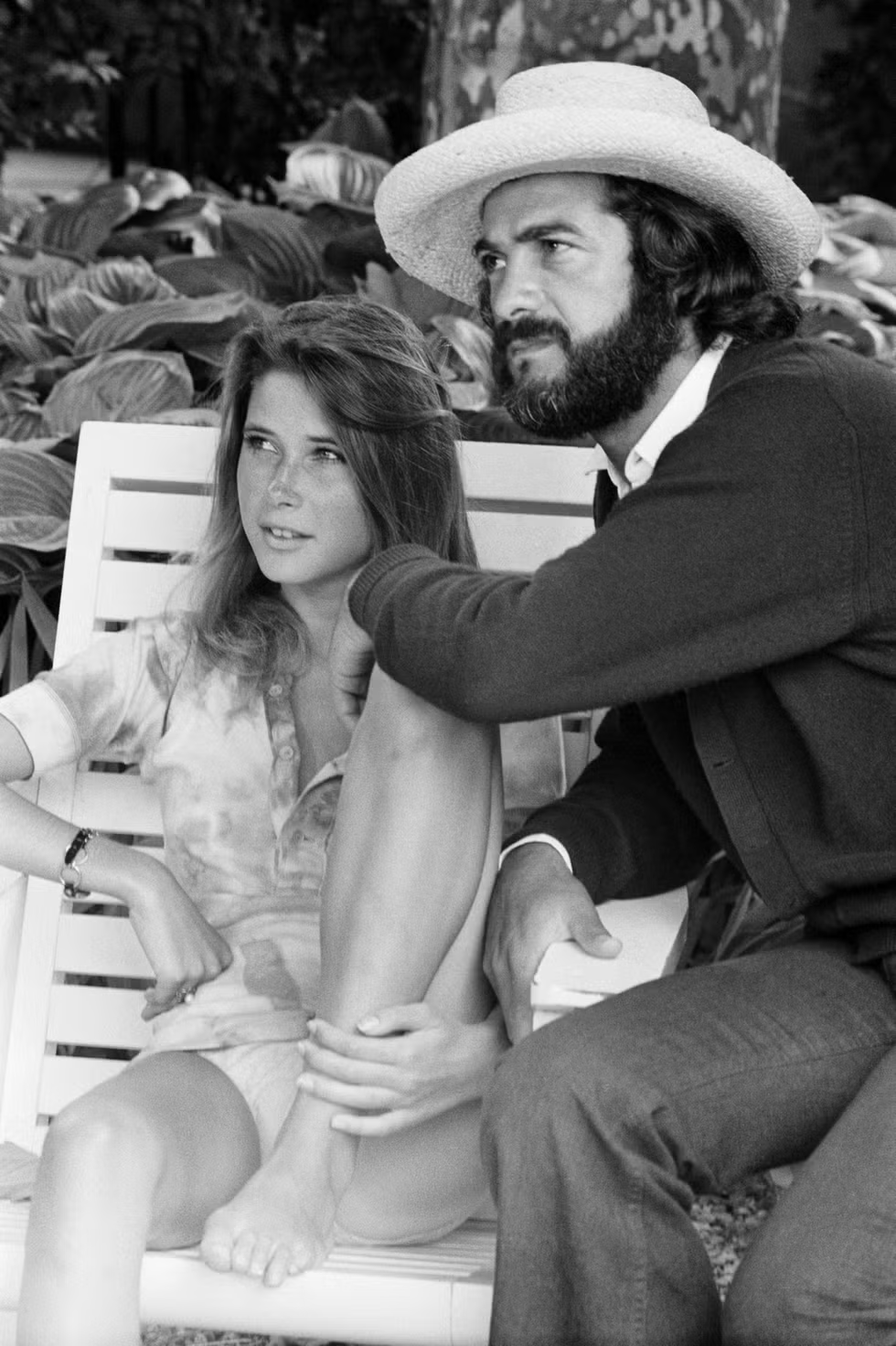
Laurence de Monaghan and Jean-Claude Brialy on the set of Claire’s Knee.
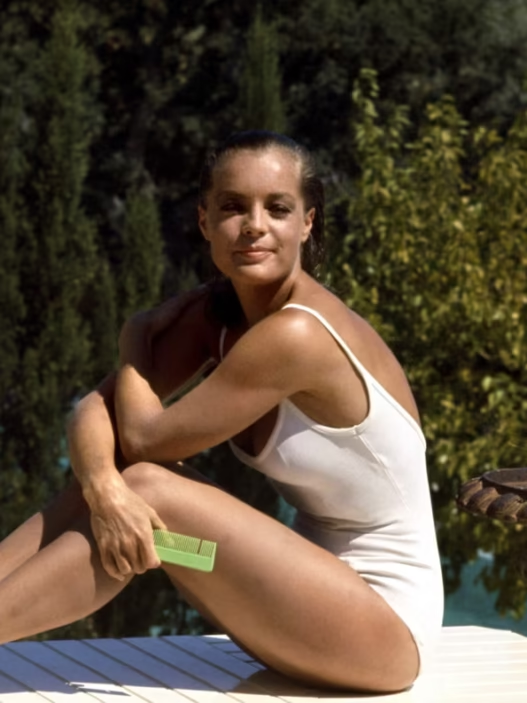
And the fashion of Rohmer’s films—along with their lush locations—is a major part of the appeal. While his characters may busy themselves with existential questions (or, in the case of The Green Ray’s Delphine, indecision over what region of France to explore during her substantial chunk of state-mandated vacation time), they always look untroubled and relaxed. Fast fashion and Spandex are not in their lexicon. They favor loose, bourgeois-bohemian cottons, breezy linens, and solid colors. And while there may be an occasional outré moment, their wardrobes are harder to pin down era-wise; Rohmer’s ’80s films, for example, don’t have the jarring style tells of the decade in the way, say, Valley Girl might.
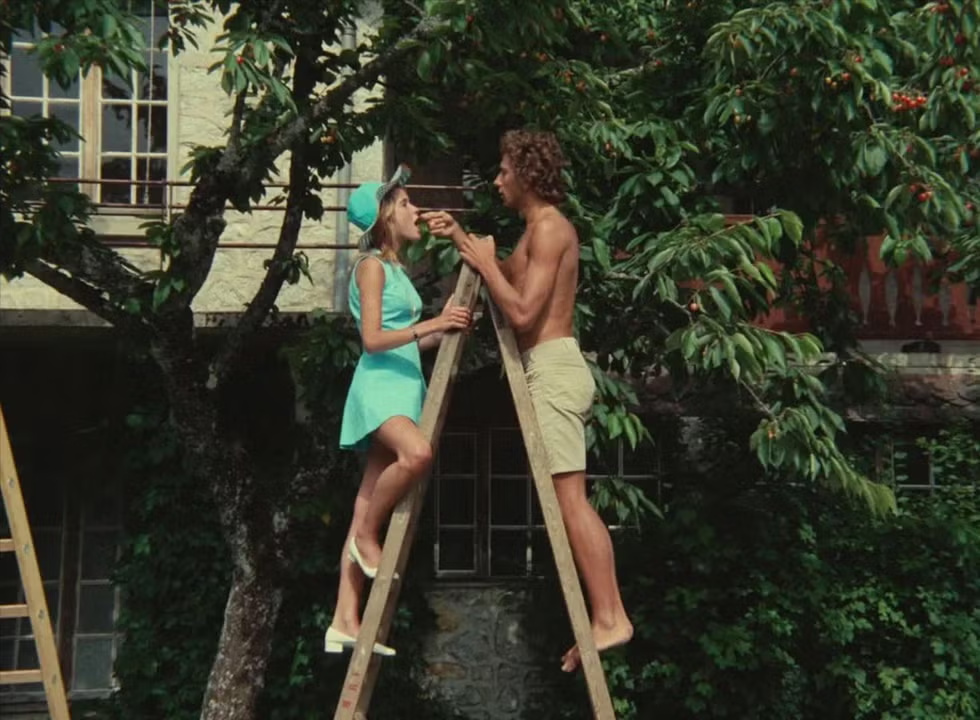
A scene from Claire’s Knee.
The lived-in quality of the clothes comes in part from the fact that Rohmer encouraged the actors to costume themselves from their own closets. And as the interest in “Euro summer” blazes on, these kinds of unaffected clothes look more and more appealing.
The characters, living as they are in the afterglow of what the economist Jean Fourastié dubbed Les Trente Glorieuses, or the prosperous post-World War II period in France, exist in a milieu that feels like a warm bath to modern-day American viewers, from the aforementioned Brie-sized blocks of PTO to the social stability that gives people the breathing room to fixate on obscure ontological questions.
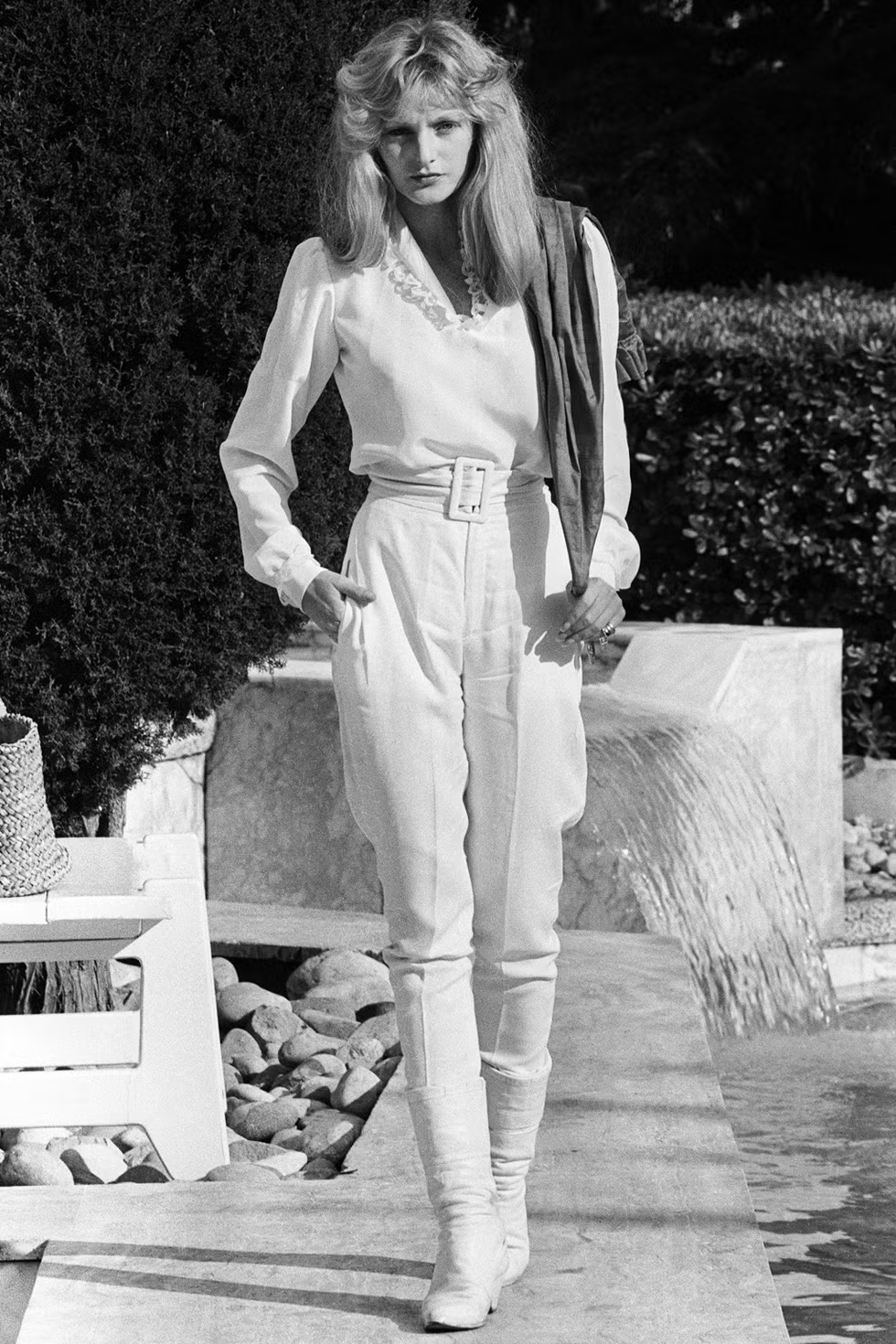
“There’s a real sensuousness to the filmmaking. I love the scene in Love in the Afternoon where Frédéric is going shopping for sweaters, and he’s feeling all of the fabrics and the cashmeres,” Tell notes. “There’s that tactility that I think he’s really interested in portraying through his films, and it comes out in the clothes.” Even when the characters are grappling with questions of faith and morality, “there is almost this lightness in the way that they’re approached.” She appreciates “the tension between the weight of the heavier existential themes and constantly seeing the lightness in life and the beauty of what’s around us.”
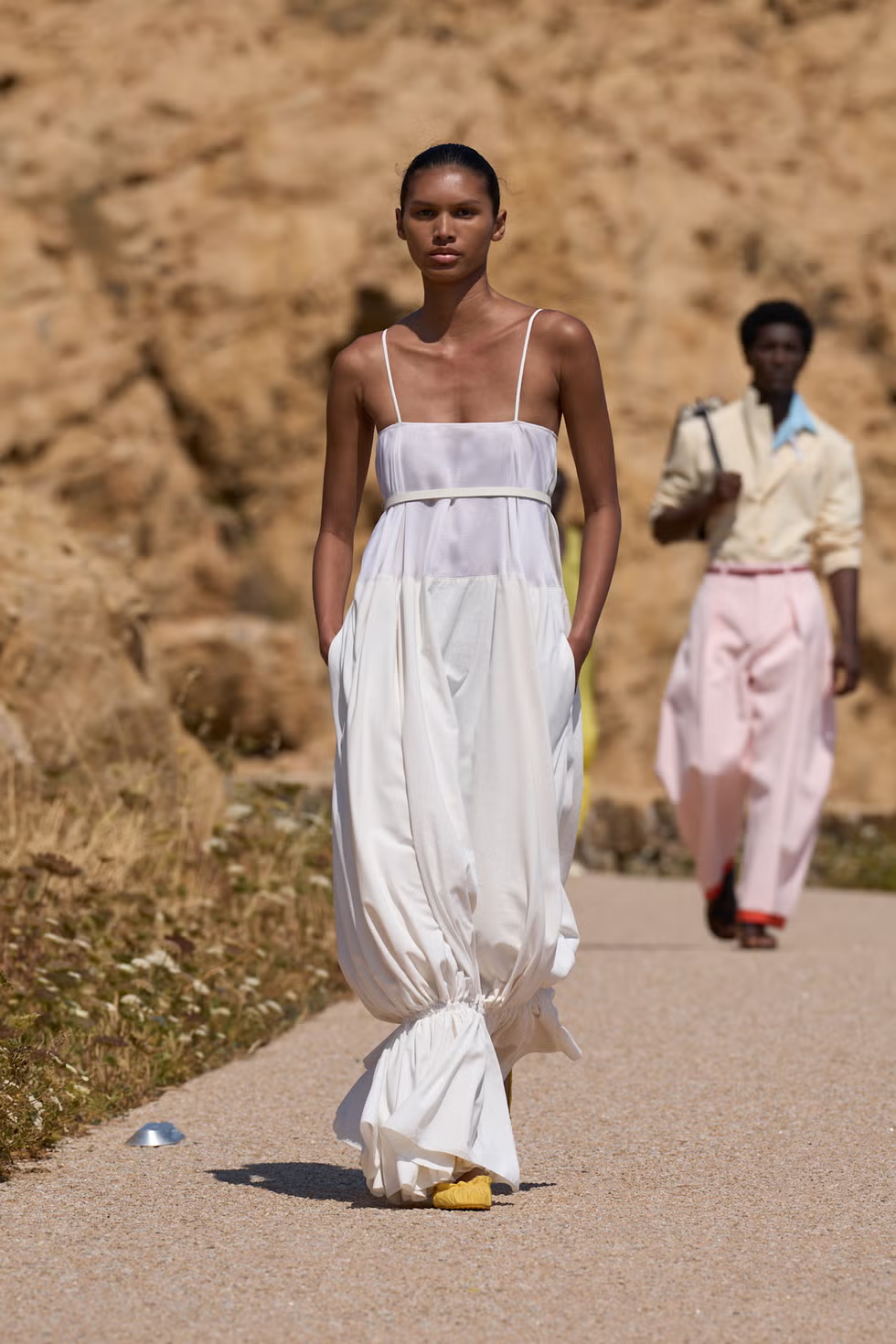
When Tell started the account, “I was looking for a way to not be spending so much time, ironically, looking at fashion Instagrams,” she says. “I was finding that those flattened my perception of what I liked, and I was losing any other reference. Everything was kind of becoming a visual sameness to me.” Since that time, fashion has more than caught up with Rohmer mania. Jacquemus’s spring/summer 2027 collection, shown in Corsica, had a similar lightness and vacation-readiness—though the clothes are a bit more revealing and showier than what a Rohmer character would wear. Chloé’s ad campaign for its “Chloé à la Plage” collection, starring Claudia Schiffer, was a nod to the director and his film Pauline à la Plage, while Advisry’s recent menswear show, titled “Four Moral Tales,” drew on his filmography as well. “There’s not much happening in the movies,” designer Keith Herron told WWD. “But it’s inspired by small decisions that don’t seem to hold much weight but reveal a moral character within humans. I wanted to see how I could translate that intricate simplicity into fashion.”
I note to Tell that the popularity of fashion Substack and many newsletters’ emphasis on simplicity, paring down, and capsule wardrobes might also be pulling people in a Rohmer direction. While Tell has mixed feelings about the concept of the capsule wardrobe, she does think that what makes it appealing is “this idea of, You’re feeling good in your life. You’re here to live your life and not to stress about what you’re going to wear.
“The people in his films have plenty to worry about. [But] clothes are not a primary concern. And because his characters are always on vacation, maybe it’s by default a bit of a capsule wardrobe.”