




|
Neubauer Artists LLC
Getting your Trinity Audio player ready...
|
The Experiences in Istanbul to live like the locals
Classic Turkish Breakfast
You can have simit bread with menemen, a delicious mixture of eggs, tomatoes and green peppers cooked over a low heat. The table is decorated with a variety of local jams, fresh fruits and nuts, providing a wide choice of sweet and savoury foods. To get such authentic delicacies, you should visit small neighborhoods in Istanbul such as Balat or Moda, where attractive cafes are spread with their own characteristics and the warmth they give to their visitors.


In these neighborhoods, locals gather to share their stories over a delicious breakfast, surrounded by an atmosphere as good as the food on offer. For a more panoramic experience, consider having a Turkish breakfast in Istanbul’s coastal neighborhoods such as Çengelköy, Ortaköy, Bebek or Rumeli Hisarı along the Bosphorus, the 30-kilometer-long strait that runs through the heart of Istanbul.
Crossing The Bosphorus By Ferry
Imagine yourself on a passenger ferry, cutting through the waters linking Europe and Asia. On this pleasant 20-minute journey across the Bosphorus, via the main hubs of Kadıköy and Üsküdar to Karaköy and Beşiktaş, locals simply enjoy eating simit bread while Istanbul’s famous seagulls hover around them to pick up pieces of the bread.
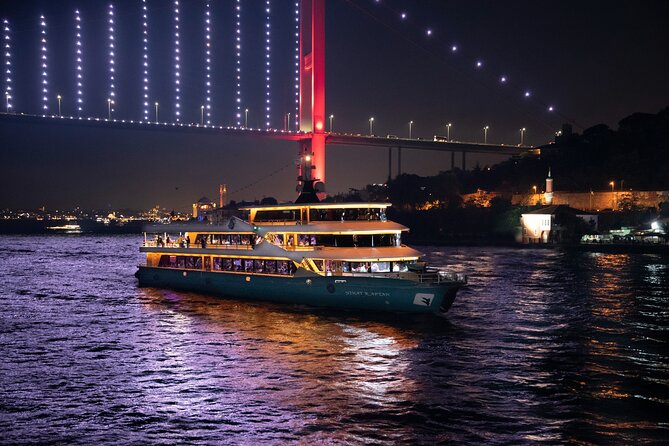
For a deeper exploration of the city, take a weekend Bosphorus cruise and see the green hills and picturesque coastal neighbourhoods, welcomed by the refreshing Black Sea breezes on your way.
Istanbul Antique Shops
Shopping trips in the Spice Bazaar and Bazaar are a journey into the history and essence of the city. Amidst a maze of shops and alleys, the Spice Bazaar offers an aromatic feast of exotic spices, teas and delicacies that have enticed merchants and locals alike since the days of the Ottoman Empire.
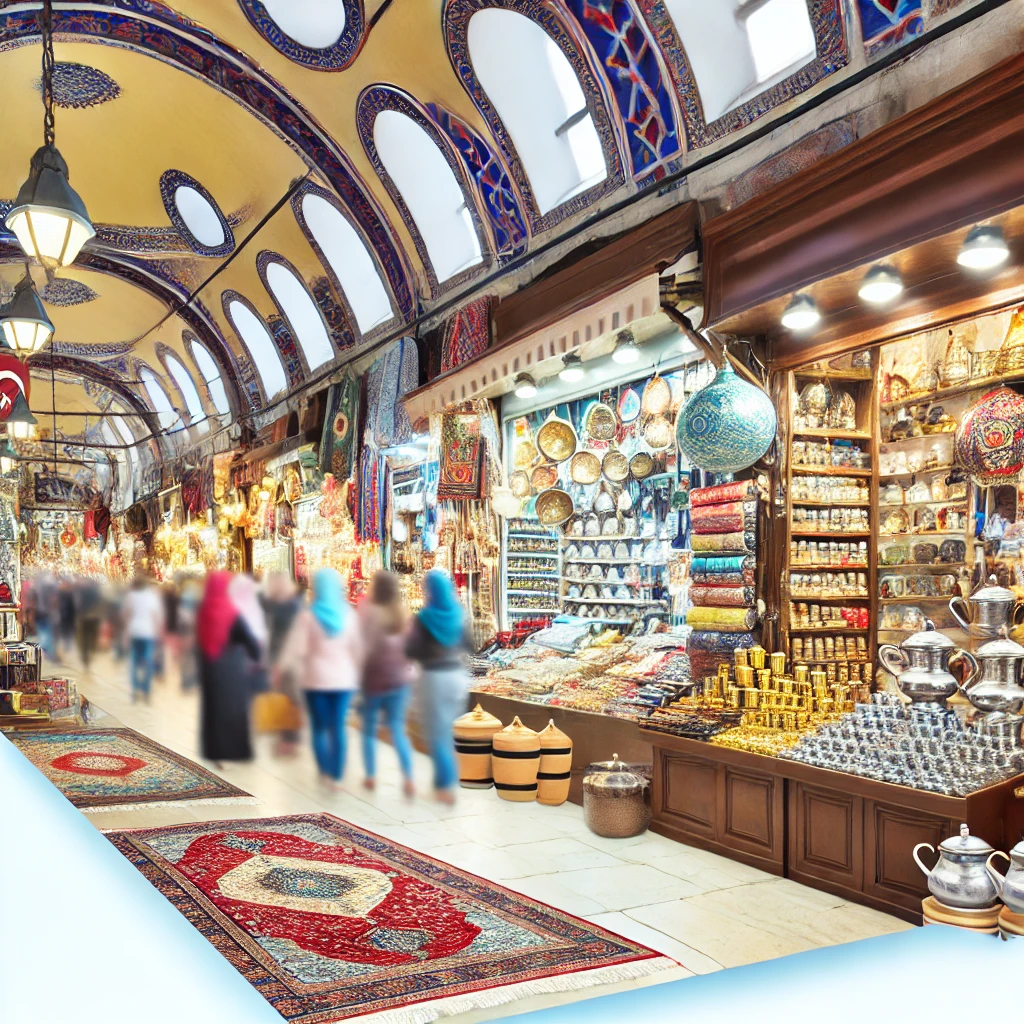
This blend of saffron, cumin and freshly ground Turkish coffee creates an unforgettable atmosphere, and likewise the Grand Bazaar, with its sprawling array of covered streets and hidden squares, stands as a testament to Istanbul’s vibrant society and thriving commercial mindset.
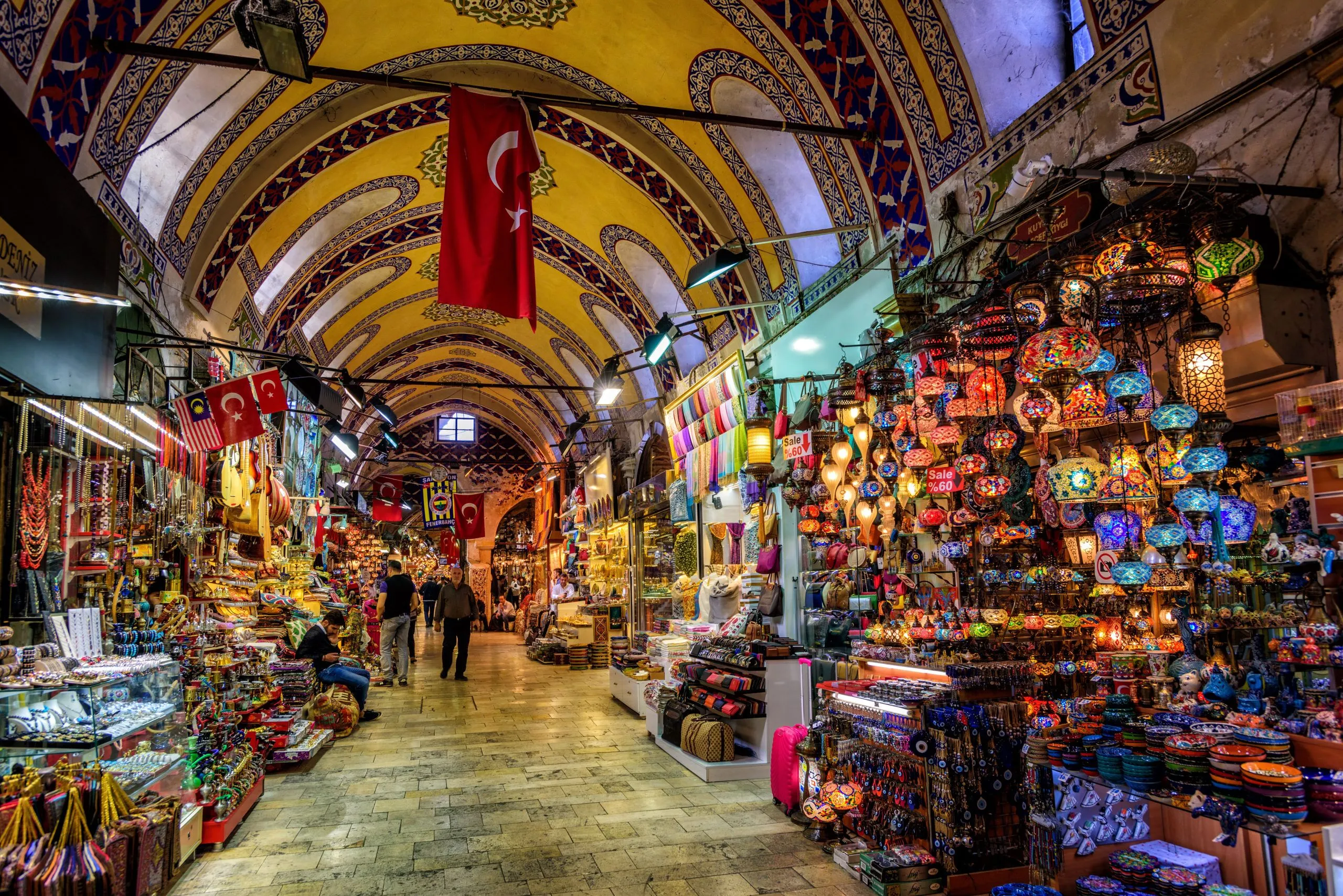
Here, shoppers can browse a range of treasures, from finely crafted textiles to timeless kilim rugs, aromatic Turkish bath products, and exquisite jewellery, each a testament to the city’s rich heritage of craftsmanship.
Enjoy Art And More Shopping At Tophane
Galataport, a thriving multi-faceted project, has quickly become a favorite destination for Istanbulites looking for diverse and fun experiences during their weekend leisure outings. Visitors to Galataport can check out the latest creations from local fashion designers, dine at seaside restaurants, and enjoy the stunning sunset behind the old city.
Apart from its commercial appeal, Galataport is a cultural hub, housing the recently reopened Istanbul Modern, an architectural masterpiece designed by renowned architect Renzo Piano. The museum, located in Tophane, showcases modern art and features both permanent and temporary exhibitions.
Explore A Night In Beyoglu
Istiklal Street is the city’s main European-style promenade, bustling with culture and nightlife, filled with restaurants, cinemas, art galleries and music clubs.

At the far end of Istiklal Street, Taksim Square is once again the cultural heart of the city, thanks to the renovated Atatürk Cultural Center, a mansion dedicated to the performing arts. You can catch a performance in the center’s main opera hall, shaped like a giant, bright red sphere, which hosts a range of operas, symphonies, and performing arts performances throughout the year.
Experience The Timeless Turkish Baths In Istanbul
Immerse yourself in the luxury of a Turkish bath, a must-do in these centuries-old baths, originally commissioned by the Ottoman sultans and elite. The Çemberlitas, Galatasaray, Cagaloglu, Harem Sultan and Kilicali Pasha baths are among the oldest Turkish baths in the city, which have survived the challenges of time.
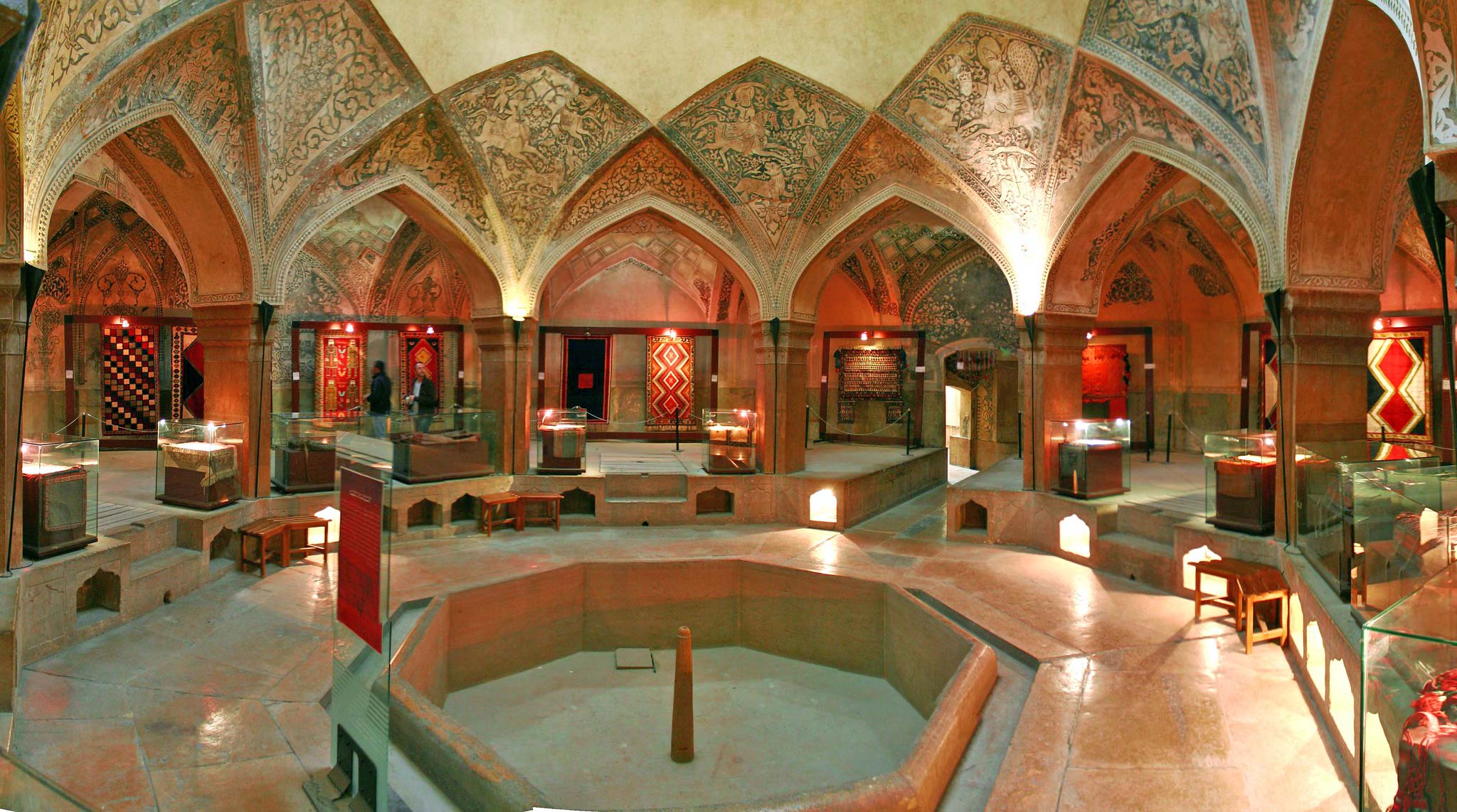
In addition to the baths, you can visit one of the five-star spas, many of which feature stunning marble bathrooms inspired by historical designs. While there are variations from one hammam to another, the ritual remains the same. Upon arrival, you’ll receive a luxurious cotton bath towel, a copper bowl and scented soap before entering the central steam room, where you’ll relax by your own private tub for 15 to 20 minutes, preparing your skin for a refreshing exfoliation.
Then, using a raw silk glove, an expert exfoliates and invigorates your skin, before finishing with a delightful foam massage, the culmination of pure relaxation.
Beyond Istanbul
Dream trip to Cappadocia
While the largest city is your gateway to the many unparalleled experiences Turkey has to offer, Cappadocia can also provide you with unparalleled memories when looking for adventure outside of Istanbul. Here’s how to ensure the best experiences of discovery while you’re in the “land of fairy tales.”

In The Sky Wake Up At Dawn For A Hot Air Balloon Ride
As the sun casts its golden rays over the unique terrain of Cappadocia, colorful hot air balloons take to the skies on an epic journey. As you ascend, you will be amazed by a stunning new view as you gracefully glide over these extraordinary land formations.
Discover Pigeon Nests
The enchanting 6-kilometre-long Pigeon Valley, which connects the beautiful towns of Uchisar and Goreme, offers a truly incomparable sight of the region’s many famous fairy chimneys, which are meticulously carved into bird dwellings.
Locals have long used pigeon droppings as a powerful fertilizer, contributing to the flourishing vineyards that support the region’s wine industry.
Above Ground
Visit the UNESCO-recognized rock churches
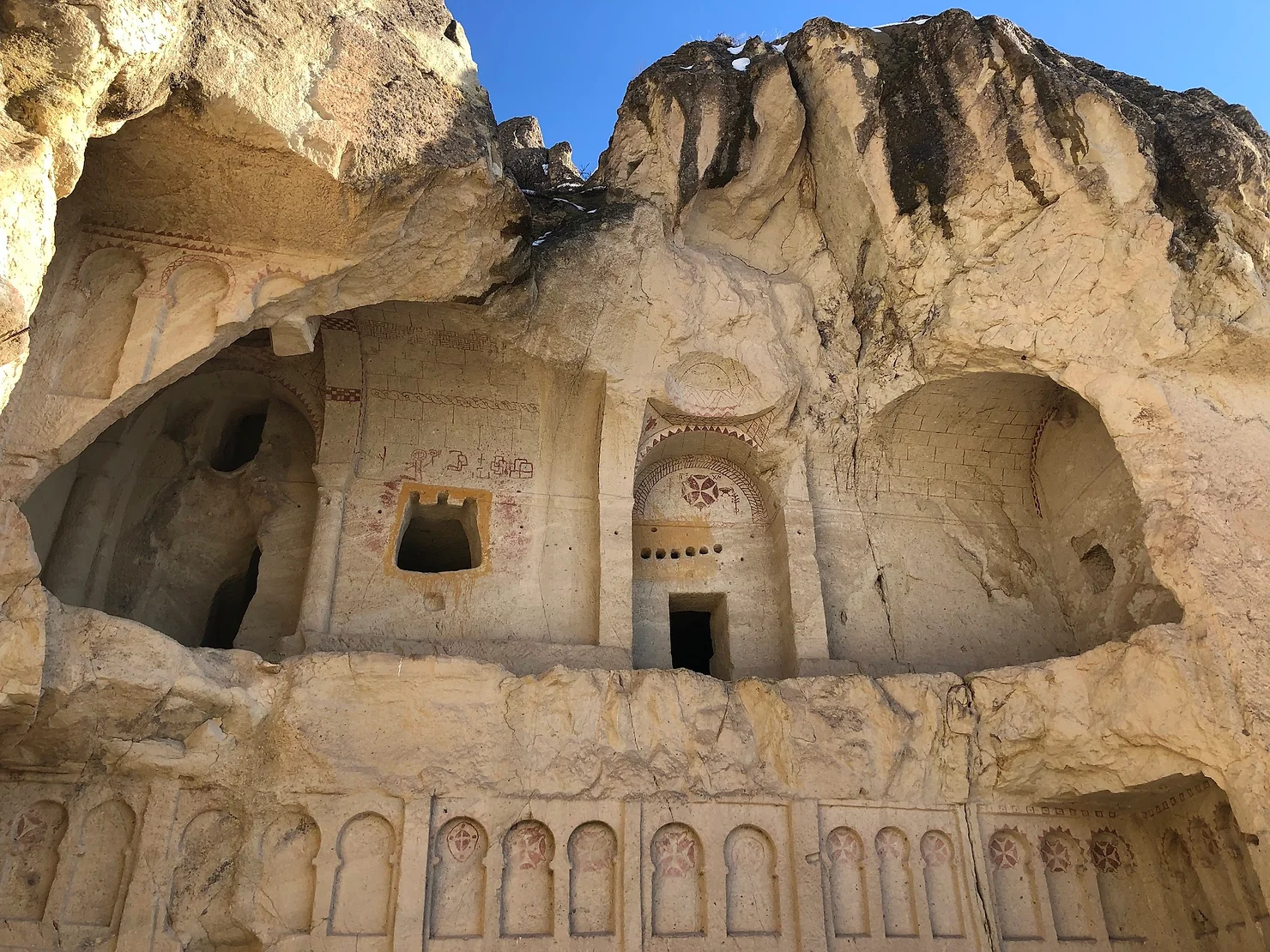
Dark Church is a monastic church dating to the mid-11th-century. The cross-in-square church has four columns, five domes, and three apses. Dark Church, along with Apple Church and Sandal Church, are known as the three “Column Churches” because of their architectural and artistic similarities. Dark Church was completed first by the workshop master. Then, apprentices built Apple Church and Sandal Church in a similar yet inferior fashion.
Monastic Complex
Dark Church was the main church for a monastic complex. With grandiose architecture and a prominent location at the head of Göreme Valley, the original monastery was built to impress and awe.
Dark Church (Turkish, Karanlık Kilise) is Cappadocia’s most famous and beautiful cave church. Located inside the Göreme Open Air Museum, this monastic church has bright, brilliant paintings on every wall.
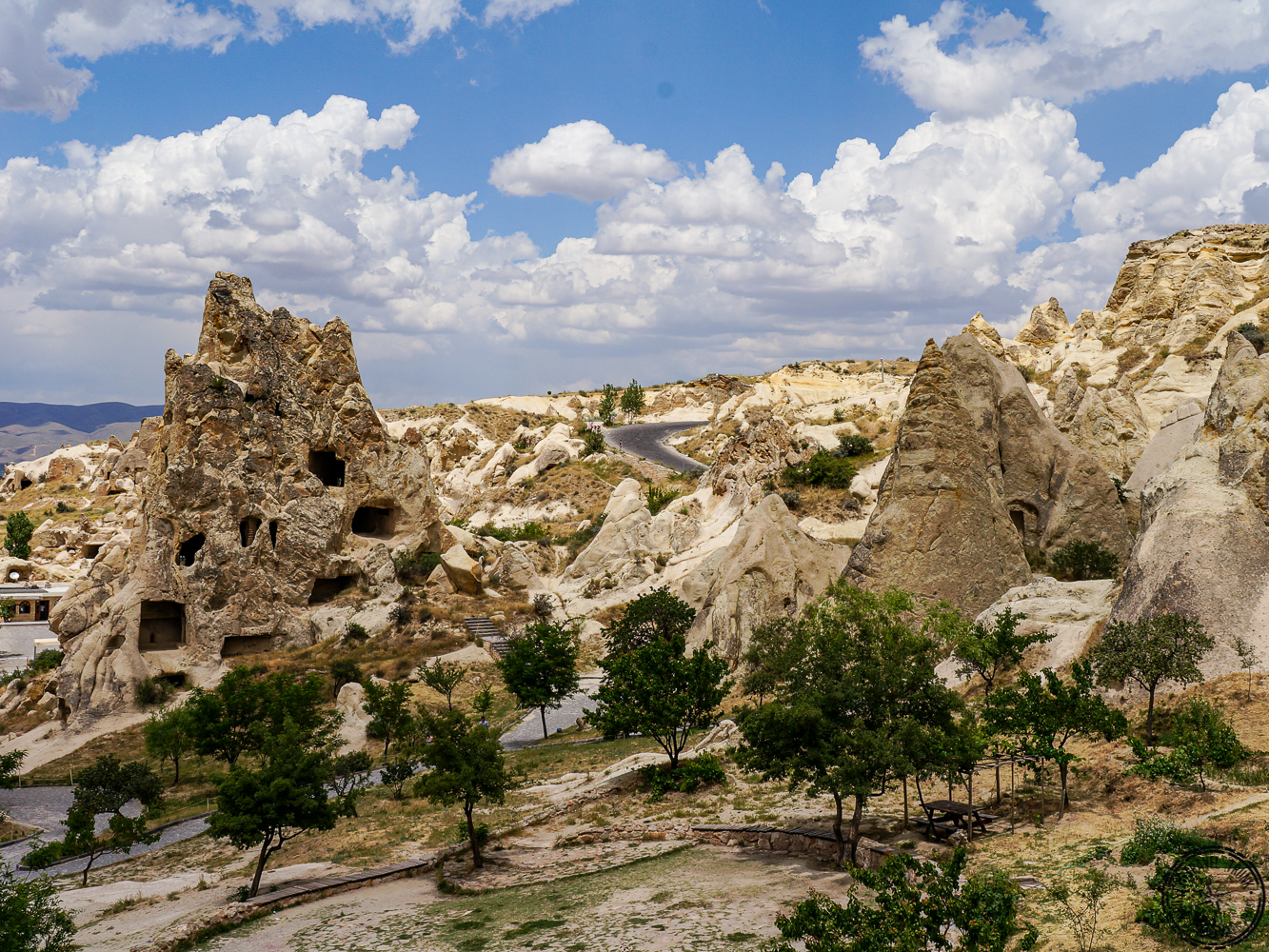
Step into the majestic interiors of churches dating back to the 10th and 11th centuries, meticulously carved into the soft rocks of the Goreme Open-Air Museum, part of the Goreme National Park and the Rock Sites of Cappadocia, recognized by UNESCO as a World Cultural and Natural Heritage Site.
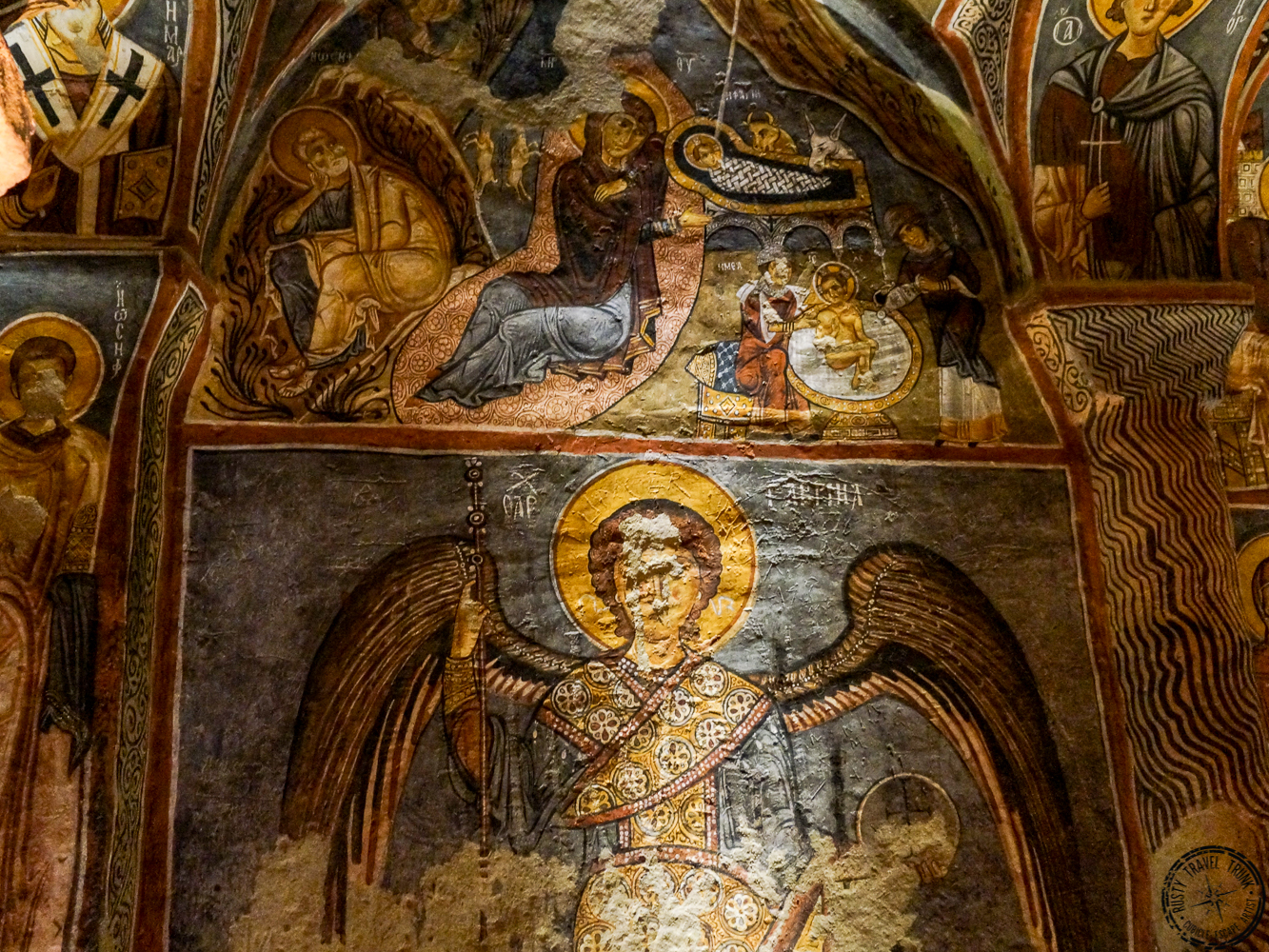
There are other rooms such as a dining area complete with table and benches and a kitchen, both of which actually look like what they used to be…surprising considering the crumbly rock from which all of this is carved. There was also the Buckle Church outside of the main enclosure, down the hill back towards Goreme.
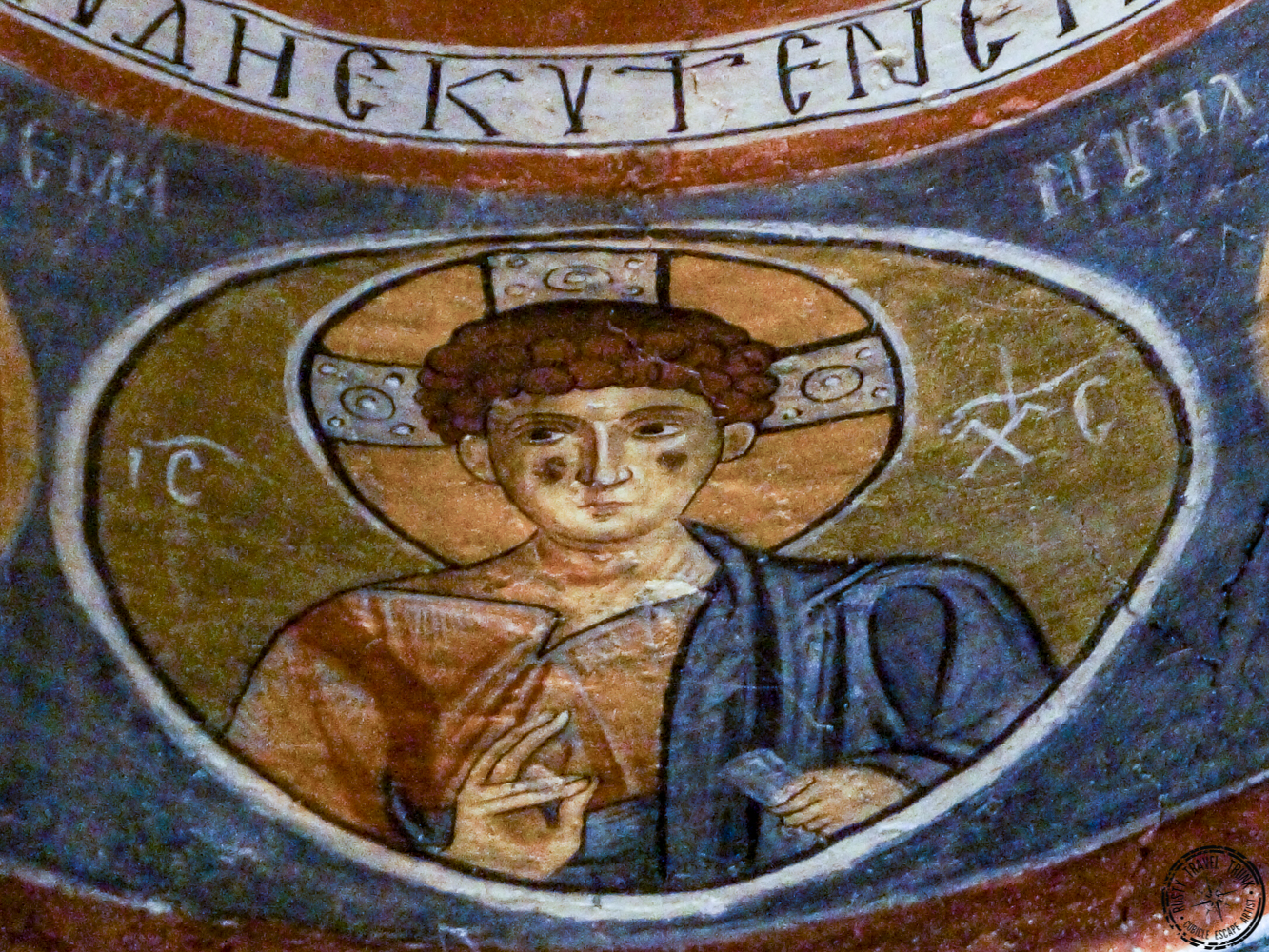
The entry price is included in the museum ticket so you may as well check it out. Inside is pretty large and there are even more fantastic frescoes. Worth a peek. On the walls of this open-air museum, biblical stories come to life through intricate frescoes, a fascinating canvas that stands as a testament to the enduring influence of Eastern Roman (Byzantine) art.
Modern History
The plaster of the lower wall contained lots of graffiti, the prayers of Greek pilgrims. The oldest graffiti is from 1629, though most date from the 1800s. After the population exchange in 1924, local Turkish farmers converted the room into a pigeon house by closing the entrances. This helped preserve the wall paintings.
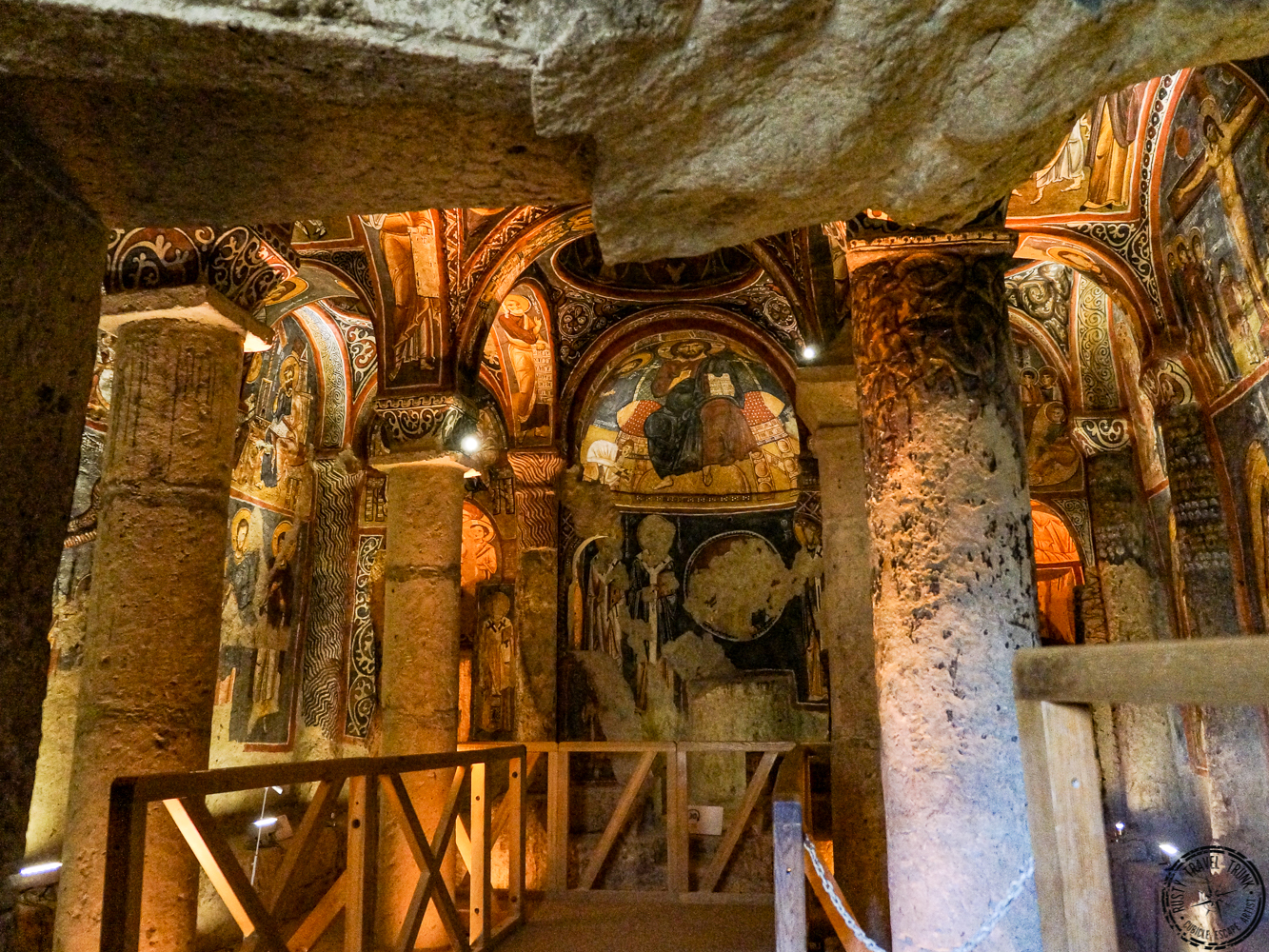
The church was opened to the public in the 1970s, and restored in the 1980s. The restoration rebuilt three of the church pillars and colored in the wall graffiti. A small section in the right apse still contains the white lines of graffiti scratches.
Cycling Along The Valleys Of Cappadocia
The region’s volcanic landscape offers rugged and attractive trails for cycling enthusiasts, and Cappadocia Guided Tours offer a good experience of cycling in the backcountry and wilderness and a selection of the best single-track and gravel mountain biking trails, all led by experienced local cyclists.
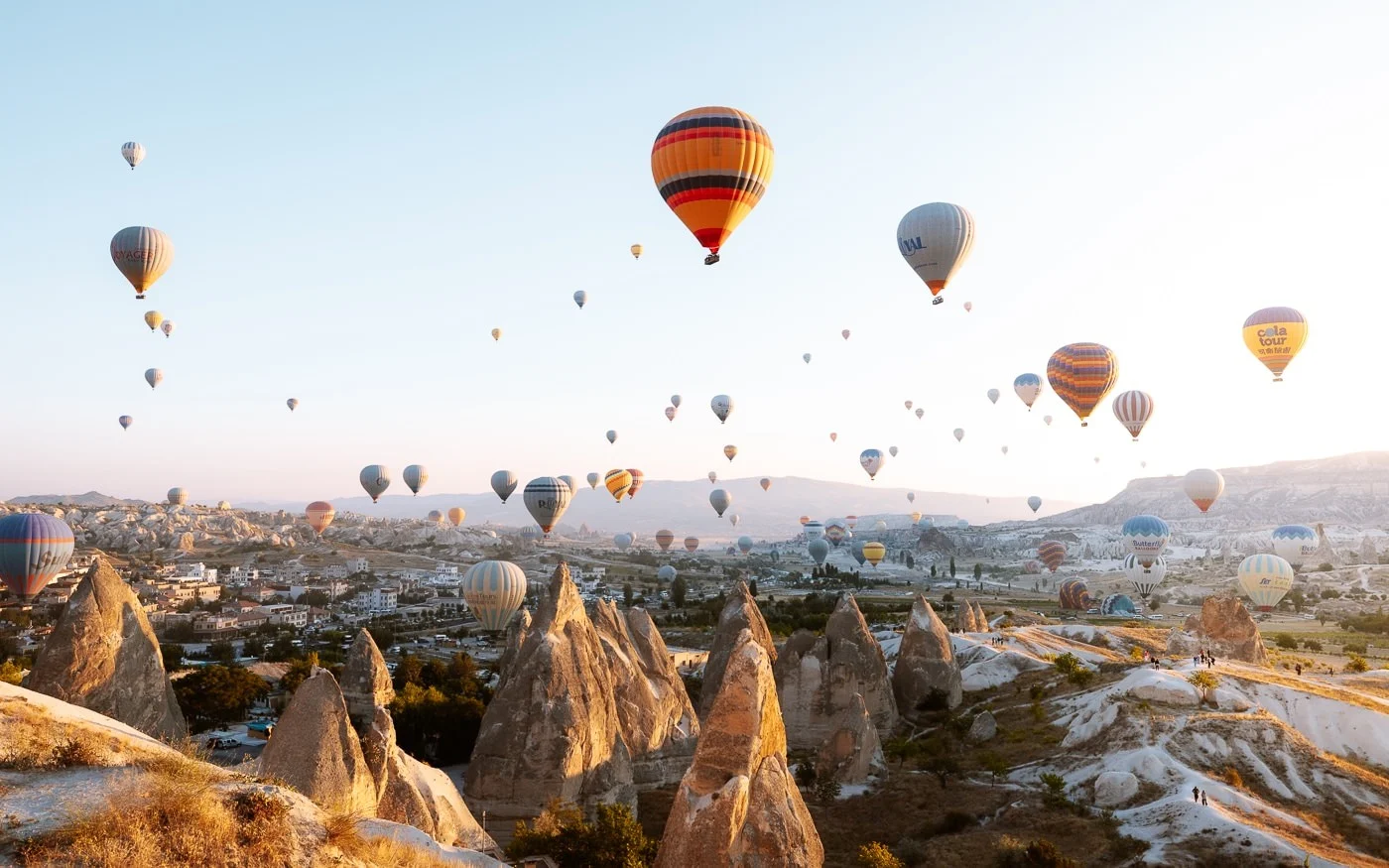
The valleys of Gurcundir, Swords, Love, Rose and Red Valley, as well as the valleys of Gumede and Uzungi, are among the sites that make Cappadocia the pinnacle of off-road cycling adventures.
Underground To The Underworld
Immerse yourself in Cappadocia’s architectural history by exploring its multi-layered underground cities. Of these underground wonders, the two largest, Derinkuyu and Kaymakli, offer a glimpse into the ingenuity of Cappadocia’s people in the past.
These two strange cities reveal vast labyrinths of passages and rooms, which were once home to thousands seeking refuge and survival in times of conflict.
The Luxurious Cave Havens
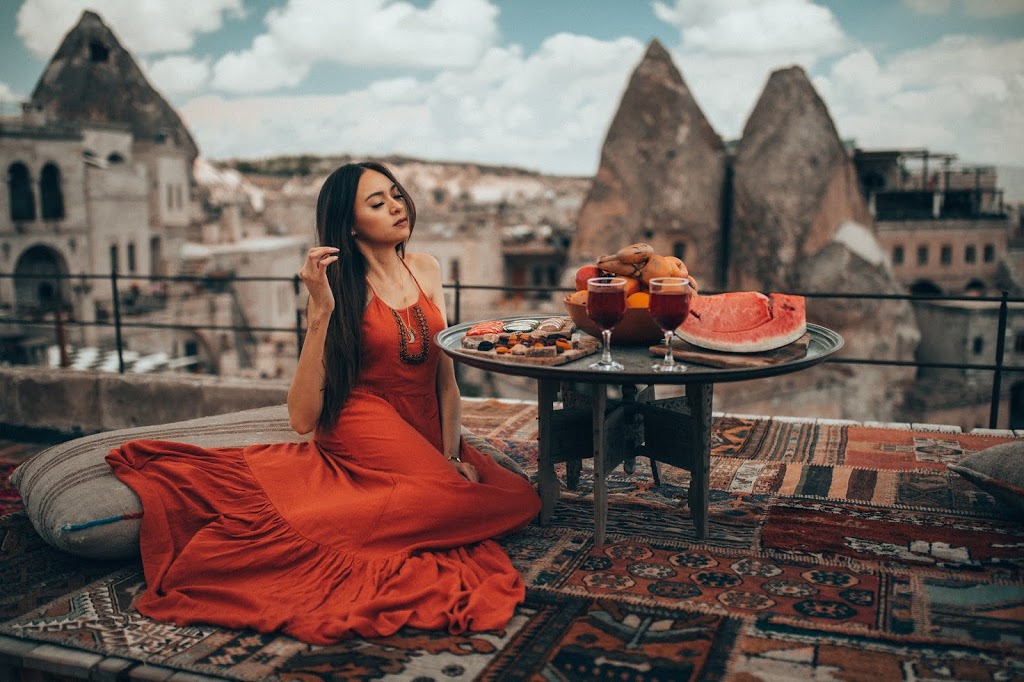
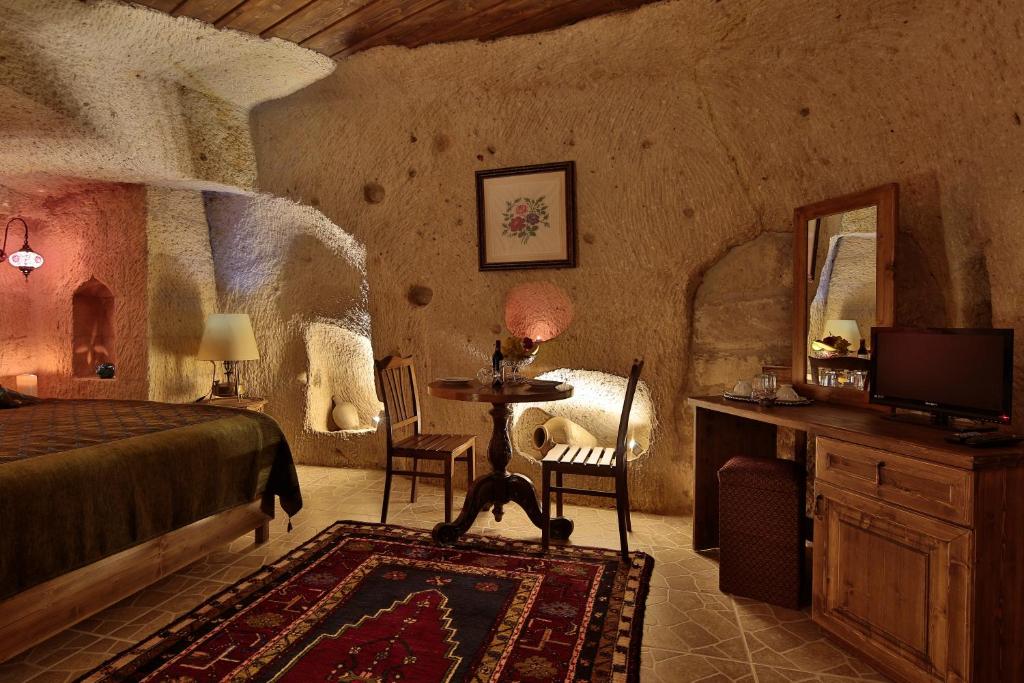
In Urgup and Goreme, you can stay in ancient dwellings that have been reconstructed today as luxury hotels. These residences offer upscale cave suites and panoramic terraces with infinity pools, making them the perfect place to watch the daily dance of hot air balloons as they rise into the sky at sunrise.
But beneath Cappadocia’s crumbling surface, a marvel of equally gargantuan proportions lay hidden away for centuries; a subterranean city that could conceal the whereabouts of up to 20,000 inhabitants for months at a time.

The ancient city of Elengubu, known today as Derinkuyu, burrows more than 85m below the Earth’s surface, encompassing 18 levels of tunnels. The largest excavated underground city in the world, it was in near-constant use for thousands of years, changing hands from the Phrygians to the Persians to the Christians of the Byzantine Era. It was finally abandoned in the 1920s by the Cappadocian Greeks when they faced defeat during the Greco-Turkish war and fled abruptly en masse to Greece. Not only do its cave-like rooms stretch on for hundreds of miles, but it’s thought the more than 200 small, separate underground cities that have also been discovered in the region may be connected to these tunnels, creating a massive subterranean network.
According to my guide, Suleman, Derinkuyu was only “rediscovered” in 1963 by an anonymous local who kept losing his chickens. While he was renovating his home, the poultry would disappear into a small crevasse created during the remodel, never to be seen again. Upon closer investigation and some digging, the Turk unearthed a dark passageway. It was the first of more than 600 entrances found within private homes leading to the subterrestrial city of Derinkuyu.
Excavation began immediately, revealing a tangled network of underground dwellings, dry food storage, cattle stables, schools, wineries and even a chapel. It was an entire civilisation tucked safely underground. The cave city was soon spelunked by thousands of Türkiye’s least claustrophobic tourists and, in 1985, the region was added to the Unesco World Heritage list.
According to Andrea De Giorgi, associate professor of classical studies at Florida State University, Cappadocia is uniquely suited to this kind of underground construction due to the lack of water in the soil and its malleable, easily mouldable rock. “The geomorphology of the region is conducive to the digging of underground spaces,” he said, explaining that the local tuff rock would have been fairly easy to carve with simple tools like shovels and pickaxes. This same pyroclastic material was naturally forged into the fairy-tale chimneys and phallic spires jutting from the earth above ground.
Getting To Cappadocia
A direct 90-minute flight from Istanbul will take you to Nevsehir or Kayseri, gateways to the vast Cappadocia region. From the airport, a 40- to 60-minute shuttle ride will take you to your hotel.