|
Neubauer Artists LLC Getting your Trinity Audio player ready... |
This megaproject is more than just a feat of engineering — it is a strategic milestone in China’s clean energy transformation, economic modernization, and ecological restoration.
From “Sea of Death” to sea of panels
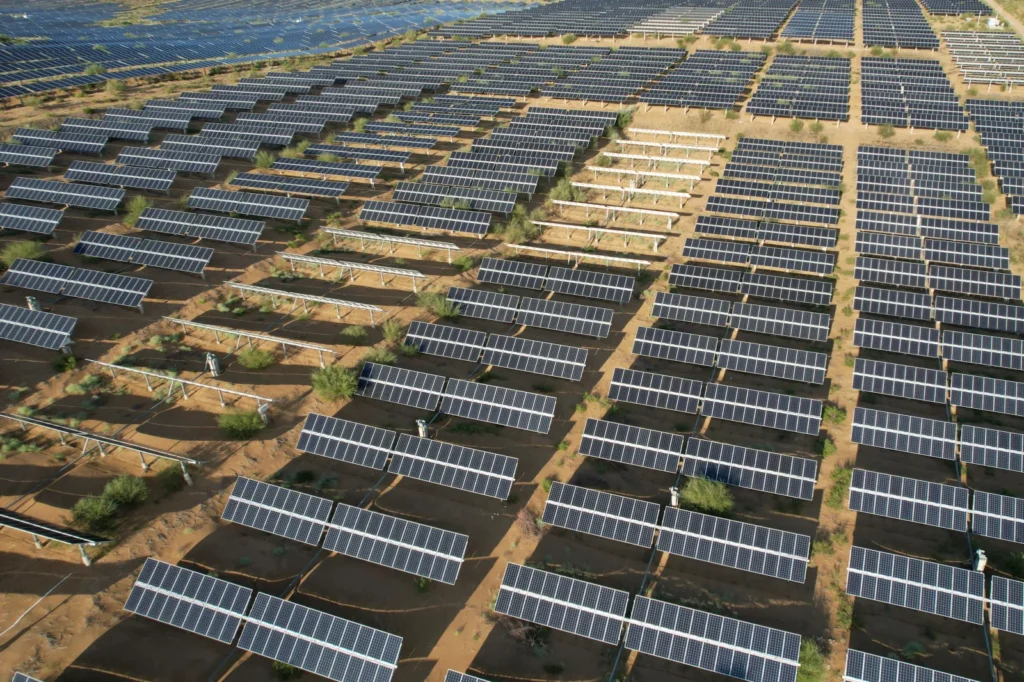
Once known as the “sea of death” for its inhospitable dunes and desolation, the Kubuqi Desert is being reimagined as a beacon of sustainability. Satellite imagery published by NASA and reporting by PV Magazine reveal a stunning transformation: long ribbons of photovoltaic panels now glisten where there were once only windswept dunes.
“The sandy and practically lifeless Kubuqi Desert in Inner Mongolia was long seen as a dead zone,” NASA stated. “Now its dune fields have become a sea of photovoltaic potential, transformed by a recent surge in solar installations.”
The desert’s flat topography, abundant sunshine, and proximity to major industrial centers like Baotou and Bayannur have made it an ideal hub for solar energy production. And China is seizing the opportunity with staggering ambition.
A 100-gigawatt vision
According to China’s National Energy Administration, the Solar Great Wall is designed to reach a generating capacity of 100 gigawatts — enough to power Beijing and surrounding provinces. For comparison, that’s roughly equivalent to the total electrical capacity of countries like Germany or the United Kingdom.
Spanning up to five kilometers in width, the solar corridor will not only supply clean power to northern China’s urban and industrial centers, but will also play a pivotal role in reducing reliance on coal and combating desertification.
The economic implications are equally significant. With an investment estimated at €87 billion, the project is expected to create over 50,000 jobs, offering a new lifeline to local communities and positioning Inner Mongolia as a renewable energy frontier.
A global solar superpower
The Solar Great Wall is emblematic of China’s broader clean energy strategy. In 2024 alone, the country’s total installed solar power capacity surpassed 880 gigawatts — more than any other country in the world. China not only leads in deployment but also dominates the global supply chain for solar panels, controlling around 80% of production.
While the United States and Europe debate industrial subsidies and clean tech tariffs, Beijing is steadily building the foundations of what may soon be a solar-powered supergrid, linking deserts, mountains, and coastlines into a unified renewable energy ecosystem.
China’s investments extend beyond solar. Offshore and onshore wind farms, energy storage systems, and high-voltage transmission lines are being deployed at an unprecedented pace. But the visual grandeur and symbolic resonance of the Solar Great Wall make it a powerful national showcase.
Ecological restoration as national strategy
Unlike many megaprojects driven solely by energy needs, the Solar Great Wall also has an ecological mission. The solar fields are being integrated with land restoration efforts to combat desertification — a pressing issue for China’s northern territories. By stabilizing sand dunes, reducing soil erosion, and even allowing limited vegetation to return, the project aligns with Beijing’s long-term vision of “ecological civilization.”
This integrated approach reflects a shift in Chinese policy, where energy infrastructure, environmental restoration, and economic development are seen as interdependent pillars of national rejuvenation.
Strategic and geopolitical implications
China’s energy ambitions are not confined to domestic priorities. With global demand for clean energy technologies surging, Beijing aims to turn its technological dominance into geopolitical leverage. Projects like the Solar Great Wall demonstrate not only technological prowess, but also the capacity to scale — a capability few other nations can currently match.
As the world grapples with energy insecurity, climate crises, and shifting supply chains, China is positioning itself as both supplier and standard-setter in the green transition. The Solar Great Wall is not just an energy project — it’s a message to the world: China will lead the next energy revolution.