





|
Neubauer Artists LLC
Getting your Trinity Audio player ready...
|
Hanna has been diagnosed with narcissism, a personality trait considered particularly toxic in relationships. She suffers from hurting people, but simply can’t stop.
Hanna knows perfectly well that she never wants children. Her partner doesn’t know this. He wants children with Hanna. When he imagines their future together, Hanna joins in. Then they both imagine how wonderful it would be with children and perhaps their own house. Hanna says she only loves the feeling that her partner can imagine all of that with her. That she is the woman he wants to have a house and a child with. It’s an affirmation and a flattery that Hanna doesn’t want to—and can’t—give up. Hanna is a diagnosed narcissist.
Experts estimate that one percent of Germans are narcissists – that would be roughly 832,000 people. Countless self-help groups and guides explain how to break free from a toxic relationship or how to deal with one’s own mother’s narcissistic traits. But what about the people on the other side of this dynamic? What about those people who seem to require a set of rules to live with? What about Hanna?
Professor Claas-Hinrich Lammers is a psychiatrist and psychotherapist specializing in personality disorders. According to Lammers, people with strong narcissistic traits are often aware of them. If a narcissist is in a trusting environment, they can speak very thoughtfully about their diagnosis. “Then it can be assumed that these are real things and honest accounts. I would only be skeptical if it were said that there were never any problems or conflicts.”
“My mother has always been a very cold person.”
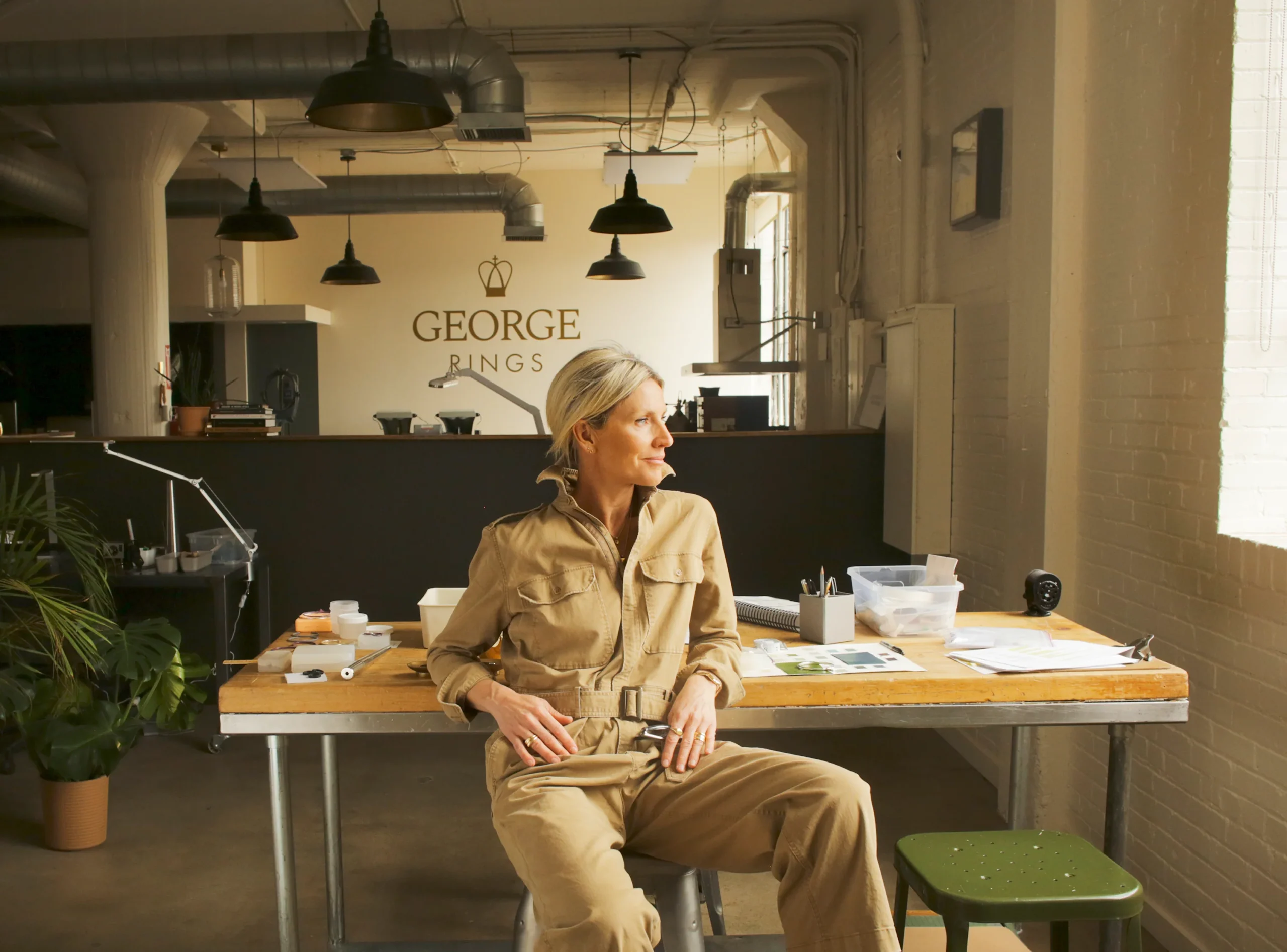
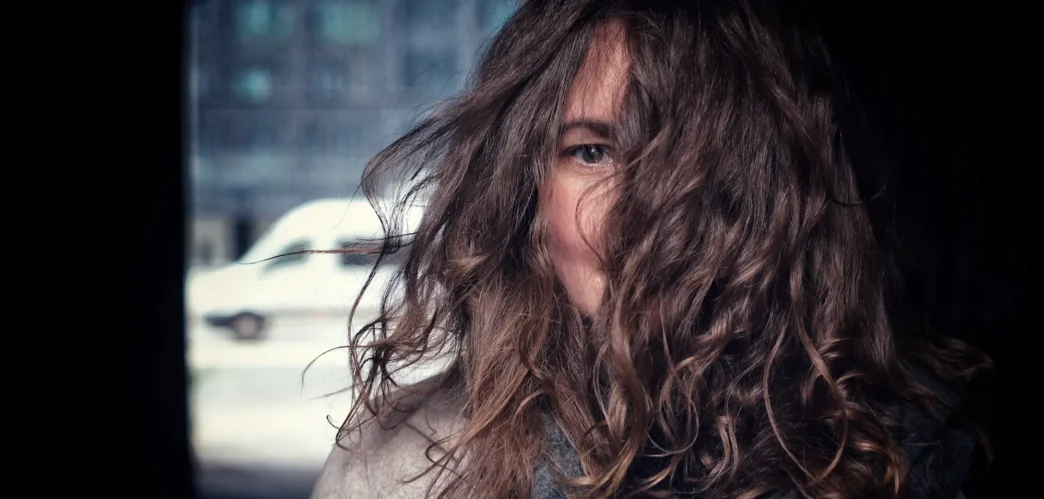
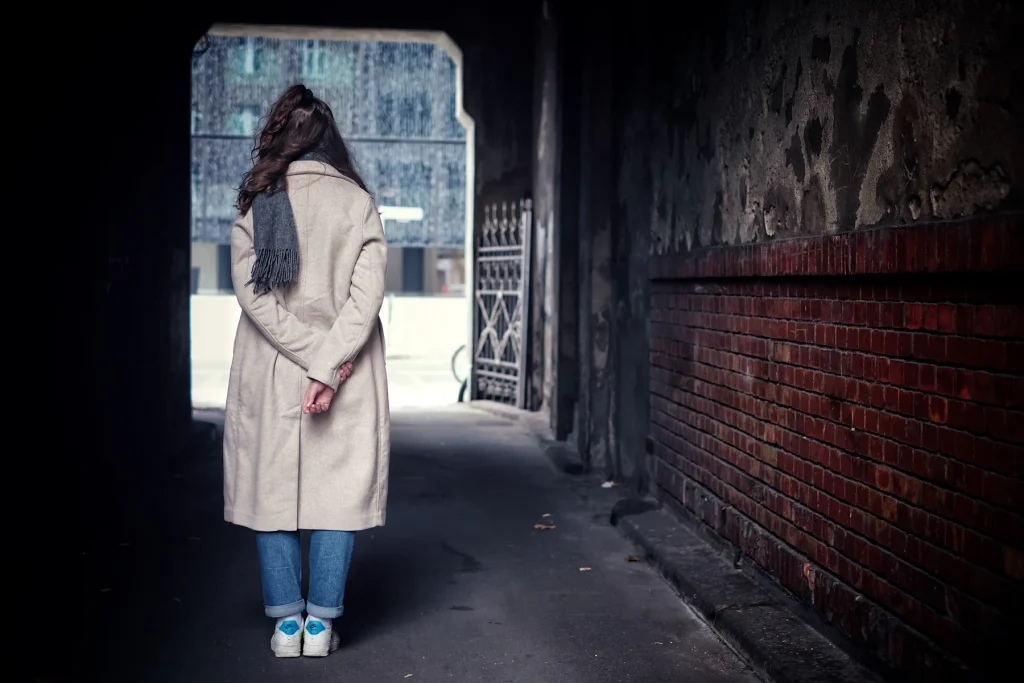
Hanna, whose real name is different, spoke to WELT about her narcissism. Transparency and honesty – in exchange for the anonymity she is granted. She still allowed herself to be photographed, of course, in such a way that people in her circle couldn’t recognize her. But she believes it’s a good thing if the text succeeds in allowing its readers, at least for a moment, a different perspective.
Hanna is 34 years old and lives in Berlin. She earns her living as a freelance graphic and web designer. Throughout the conversation, her voice remains calm and balanced. “My mother was always a very cold person,” Hanna says. “She never told me she loved me or was proud of me.” The pressure to perform was always immense. She was never good enough. Her mother once cut off her long hair—as punishment because Hanna didn’t behave the way her mother wanted. “My father would just say, ‘That’s just how she is, don’t get upset.'”
When Hanna was ten years old, her parents divorced. Hanna had to live with her mother – she moved out at 16. “There was only one moment when my mother was proud of me,” Hanna recalls. “That was when I graduated top of my class with my bachelor’s degree.” Today, Hanna knows that her mother herself is a narcissist.
According to Claas-Hinrich Lammers, there is always the scientific perspective on the origin of narcissism and the experience gained from working with patients. “They often speak of neglect and unloving, cold parents. Such experiences often have a formative influence.” However, memories can be deceptive, and this influence has not yet been sufficiently investigated from a scientific perspective. “What science has proven, however, is that in 50 to 70 percent of patients, the origin lies in genetics. Even if science has not yet fully understood exactly what is inherited.”
Narcissism is stronger
Hanna has always tried to be different from her mother. But too often, her narcissism gets the better of her. This is especially noticeable when it comes to dating and relationships. Hanna doesn’t use online dating platforms. “I’m afraid that men won’t find me attractive there. They quickly filter people based on looks, and I don’t have a chance to impress them in person.” She simply approaches men she finds attractive directly. And that has always worked for her and led to a date.
Talking to Hanna, it’s hard to imagine that this woman approaches men with such confidence. She seems rather shy, her voice more quiet than loud. “Eye contact is my strength. That’s how I win men over.” She can’t use that digitally and that puts her at a disadvantage. “It’s quite paradoxical,” Hanna says. “On the one hand, I’m so unconvinced that I’m lovable, yet I still have so much self-confidence to approach men directly.”
She doesn’t even consider herself particularly beautiful. “I compare myself to other women a lot and always come up short.” But she received compliments on her appearance from her father’s male friends very early on. This quickly made her realize she could use that to her advantage. “My self-confidence comes from the validation of others. Then it’s enough for me to be visually convincing; the main thing is to be convincing.” On dates, she then presents herself in such a way that her date is head over heels. That’s always very important to her, Hanna says. “Whether I find the man attractive or not, I want him to find me amazing.”
The moment the relationship turns sour
Relationships are a huge challenge for Hanna. She’s good at making men fall head over heels for her, but the longer she’s in a relationship, the more her self-esteem erodes. “I always want to be the undisputed number one.” But that can’t always be the case – and then there’s always a tipping point in the relationship. That’s when the initial infatuation fades. “When that phase ebbs away, I gradually become more dissatisfied because I’m not getting as much attention as I did at the beginning. If there are unmet expectations, however small, I start to get angry and spiteful, criticizing the other person and making accusations.”
Everyone is unfair to their partner sometimes, lies to them, or hurts them. “But for me, unfortunately, it becomes the underlying tone. It turns into a constant putting-down of the other person, and I’m just disrespectful.” Once the routine sets in, the relationship loses its excitement for Hanna. “I lose all desire for sex and don’t even want to touch my partner anymore.”
Recognizing a person with narcissistic traits is difficult. Narcissism is multifaceted and not necessarily loud, confident, and extroverted. There are three types of narcissism. “The grandiose narcissist struggles against a weak inner self. Outwardly, they appear very self-confident and are ambitious in their career. They become unstable when faced with failure or the slightest rejection,” explains Lammers.
“The vulnerable narcissist appears outwardly very insecure and rather introverted. Upon closer acquaintance, it becomes clear how difficult these people are; they often lack empathy.” Vulnerable narcissists have a very inflated self-image, believe that no one sees their true worth, and are easily offended. “The third type is the successful narcissist. They have no vulnerable core and no hidden feelings of shame. They experience no distress. Perhaps the most prominent example of this would be Donald Trump.”
Then Hanna threw objects at her partner
Hanna has always been the one to end relationships. She’s never been dumped by a man. Nevertheless, some memories weigh heavily on her. Many past relationships trigger feelings of shame and fear. “In my first real relationship, I was the worst person I’ve ever been,” Hanna recalls. When her expectations weren’t met, she became toxic, insulted her partner, and even cheated on him by sleeping with another man. Once, she threw things at him.
“I don’t believe that happy relationships last forever. I think there are these partners for a particular phase of life, and that’s okay.” She never enters a relationship with the intention of making it long-term or even forever. She doesn’t say this openly, though, because she doesn’t want to make herself seem less interesting. Hanna finds men who are already in relationships particularly attractive. Of her four relationships, only one man was single when they first met. “I like the feeling of being the exciting new woman; it makes me feel especially good. I’m the temptation, and I feel better about myself than just the man’s girlfriend.” She doesn’t feel guilty about it. “I should, but the good feelings outweigh it.”
As Hanna speaks, there are frequent moments when she pauses. Then it’s simply silent. She says she feels ashamed when she talks about these things. She suffers from hurting people, but she simply can’t stop. Her first boyfriend was the first to suggest that therapy would be good for her. At the time, she took it as an attack. “My first reaction was: ‘I don’t need therapy, I’m not crazy!'” When the same old problems resurfaced in subsequent relationships, Hanna decided to go to therapy after all. “Then I knew that none of it could be my partner’s fault.”
“The initial contact for therapy usually occurs due to other symptoms such as panic attacks or depression,” says Claas-Hinrich Lammers. “Often, family members also suggest that the patient seek help.” Only in the course of therapy does a narcissistic conflict then become apparent.
Hanna has completed three years of therapy and psychoanalysis. During this time, she was diagnosed with narcissism. It also emerged during therapy that her mother is a narcissist. With the diagnosis, Hanna was finally able to understand why her own behavior sometimes spiraled out of control. She is a vulnerable narcissist. She spoke openly about it with her current partner—or at least tried to. “He only half believed me when I said I had the diagnosis. He said it was easy to attribute my behavior to an illness.”
Hanna’s partner has a girlfriend and a child abroad. Even on their first date, he had clear expectations of Hanna. “He said I could only see him, no one else.” As she says this, she looks away, embarrassed, and thinks for a moment. “That’s awful, isn’t it? That’s really unacceptable.”
He was generally very jealous and controlling. She had ignored countless red flags—warning signs. But there are always reasons why people behave the way they do. Just like her, her partner had his reasons too. She’d never actually had partners who were truly good to her. “Sometimes I think I punish myself by putting up with partners who treat me badly. After all, I’m often awful to other people myself.”
There is no cure for Hanna
Therapy has enabled Hanna to reflect on her behavior and understand it better. Nevertheless, she still can’t control her outbursts. “I only ever realize the illness is taking over when it’s too late.” She can’t stop it. It’s triggered by the slightest slight or rejection. “Then I lash out verbally and become hurtful. I lose all clarity and become insulting.”
Suddenly, thousands of accusations were circulating – including things that happened long ago, says Hanna, and recounts an example. When Hanna was hiking with four friends, two of them were walking just ahead of her and two behind. It was a feeling Hanna couldn’t bear. She felt immediately offended and completely lost it. “I said some really hurtful things to my friends. Things I can’t take back.”
Hanna’s greatest wish in life is that she can one day prevent herself from crossing boundaries and losing her temper. “I wish I wouldn’t only realize what I’ve done when it’s too late. I want to learn to intervene beforehand and redirect these feelings.”
Patients can learn to manage their narcissistic traits. However, according to Lammers, the fundamental aspects of their personality remain unchanged. “There is no personality change, but rather a weakening of the narcissistic traits. That alone is a major challenge for those affected.”
Hanna can only truly be herself when she’s completely alone. Because if she opens up completely, she reveals her vulnerability, and then she becomes unpleasant because she’s no longer in control. “I have a great fear in life,” Hanna says. “Namely, that I’m even more evil than I think. That torments me, because that’s not how I want to be.”