








|
Neubauer Artists LLC
Getting your Trinity Audio player ready...
|
The fashion house has a very distinct aura, one in which effortless and polished must exist side by side. So, naturally, I spent hours packing and unpacking my suitcase, cycling through monochrome suiting and searching for precisely the right shade of camel before jetting off to Rome, the home base for Max Mara, in late April.
The reason for the trip—which I’ve had to keep hush-hush until today—was the unveiling of Max Mara Le Parfum Eau de Parfum, a scent that translates the brand’s signature second-skin sophistication into fragrance. It’s warm and woody with a floral twist courtesy of a tuberose note that smells lighter and more airy han its heady, intense stereotype. “My intention was to create a perfume for women. Just like the iconic Max Mara coat, we started with something masculine and turned it into something gorgeous and feminine,” says perfumer Fabrice Pellegrin.
His creation, a collaboration with fellow perfumer Marie Salamagne, places symbolism at its core. The bottle—with a cinched waist and belt—is an obvious nod to the coat that inspired it. The warm, woody, floral skin scent is a cloak of comfort, reminiscent of the brand’s iconic cashmere trench. And the base notes themselves, which include sandalwood and cedarwood, are stitched together like an impenetrable fabric. The result is a fragrance that feels intertwined with the brand’s DNA—elevated and sexy, but incredibly refined. And it’s shockingly made me a tuberose convert.
For my full review and to shop the just-launched fragrance, keep reading.
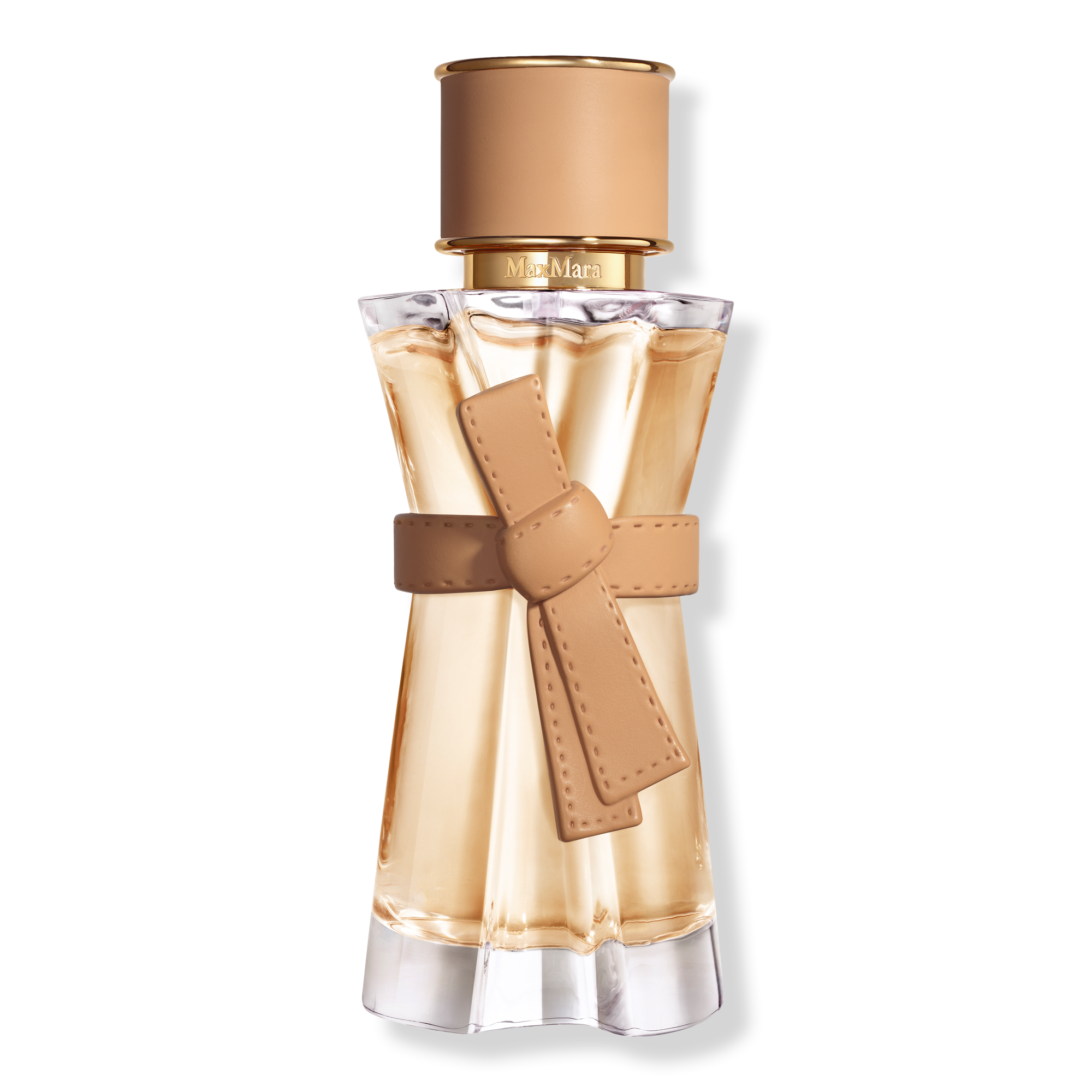
Max Mara
Le Parfum Eau De Parfum
What Does the Max Mara Le Parfum Smell Like?
Le Parfum is comforting, soft, and sexy. Or, in the words of brand ambassador Florence Pugh, “it actually smells like cashmere.” It’s one of those unique and comforting scents that 99.9 percent of people will gravitate towards. By looking at the ingredient list alone, though, I wouldn’t have guessed it. The top note is tuberose, which, for the unfamiliar, is traditionally a very visceral scent with a strong sillage and identifiable floral-meets-menthol intensity. The noses, however, were intent on rebranding tuberose. They extracted the creamiest-smelling portion of the flower and paired it with benzoin, an even creamier resin and a citrus to cut the bitterness. Ironically, it’s this combo that gives the scent that “cashmere” like vibe.You may like
 Our Team of Fragrance Snobs Unanimously Agree—These Are the 62 Best Scents of 2026
The base of the fragrance is composed of vanilla and amber notes, which suit my gourmand preferences, and it has a woodier composition, drawing on both sandalwood and cedarwood. The result is a scent that smells both intimately familiar and bizarrely unique. Regardless, it will have you coming back for a second, third, and fourth whiff.
Is Max Mara Le Parfum Eau de Parfum Worth It?
I am not lying when I say that a woman quite literally chased me out of a restaurant in the Hamptons to ask what perfume I was wearing. I couldn’t tell her at the time (sorry), but now that the embargo has lifted, I can confirm that said “incredible” smell is Max Mara’s Le Parfum. I’d also like to point out that this has not been a one-off experience. I get stopped at least once a day by a stranger on the street when I’m wearing this. And when my friends and family come over to raid my perfume collection? This is consistently the bottle they try to steal. Don’t worry: I stand my ground. This is one fragrance I refuse to part with.
Why Trust Marie Claire
For more than 30 years, Marie Claire has been an internationally recognized destination for news, fashion and beauty trends, investigative packages, and more. When it comes to the products Marie Claire recommends, we take your faith in us seriously. Every product that we feature comes personally recommended by a Marie Claire writer or editor, or by an expert we’ve spoken to firsthand.
Meet the Expert
Fabrice Pellegrin Perfumer
Fabrice Pellegrin, born and raised in Grasse, France, has perfumery running in his blood. He comes from a family of perfumers, jasmine pickers, and natural suppliers. His passion for perfumery is deeply rooted in the community and the landscape of Grasse. In his words, “The people of Grasse keep their knowledge preciously hidden, but when they do divulge it, they hand it over entirely.”
Fabrice started his career with Robertet and Mane, where he created iconic fragrances for prestigious brands such as Thierry Mugler, Diptyque, l’Occitane, and Hermès. He later joined Firmenich in 2008, where his success story continued with brands like L’Oréal, Clarins, Coty, and Puig. He has also worked with numerous exclusive niche brands like Armani Privé, By Kilian, Jo Malone, Courrège, Reminiscence, L’Artisan Parfumeur, and Dear Rose.
Fabrice’s expertise is not limited to his creative talent but also his mastery of natural ingredients and passion for Grasse’s perfumery heritage. He has been involved in developing natural products for over 15 years and divides his time between Paris and the research laboratories in Grasse. In his words, “Perfumery is constantly redesigning, rewriting, and setting trends.”
Fabrice is a generous teacher who believes in passing down his expertise to future generations. He believes that “It is important that we share our knowledge by exchanging ideas and being open. No one holds the truth.”
Despite his success and recognition in the industry, Fabrice remains grounded and connected to his customers. He cherishes contact with them, and many of them refer to him as their “lucky star.” Fabrice believes that “in our business, fate really does play a part. It dictates when we create something new and has a role in our timing, whether that be too early, too late or just right.”
Fabrice’s work speaks for itself, as his outstanding creativity and distinctive signature have contributed to the success of numerous signature fragrances. In 2017, he was honored with the French trade magazine Cosmétique Mag’s annual Oscar and named “Perfumer of the Year.” Fabrice’s passion for perfumery, mastery of natural ingredients, and dedication to passing down his knowledge make him a true inspiration in the industry.