




|
Neubauer Artists LLC
Getting your Trinity Audio player ready...
|
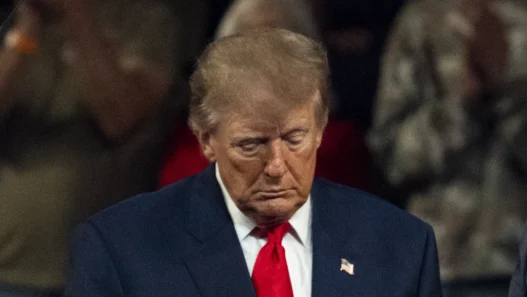
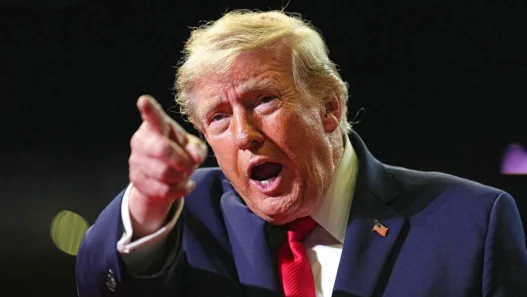
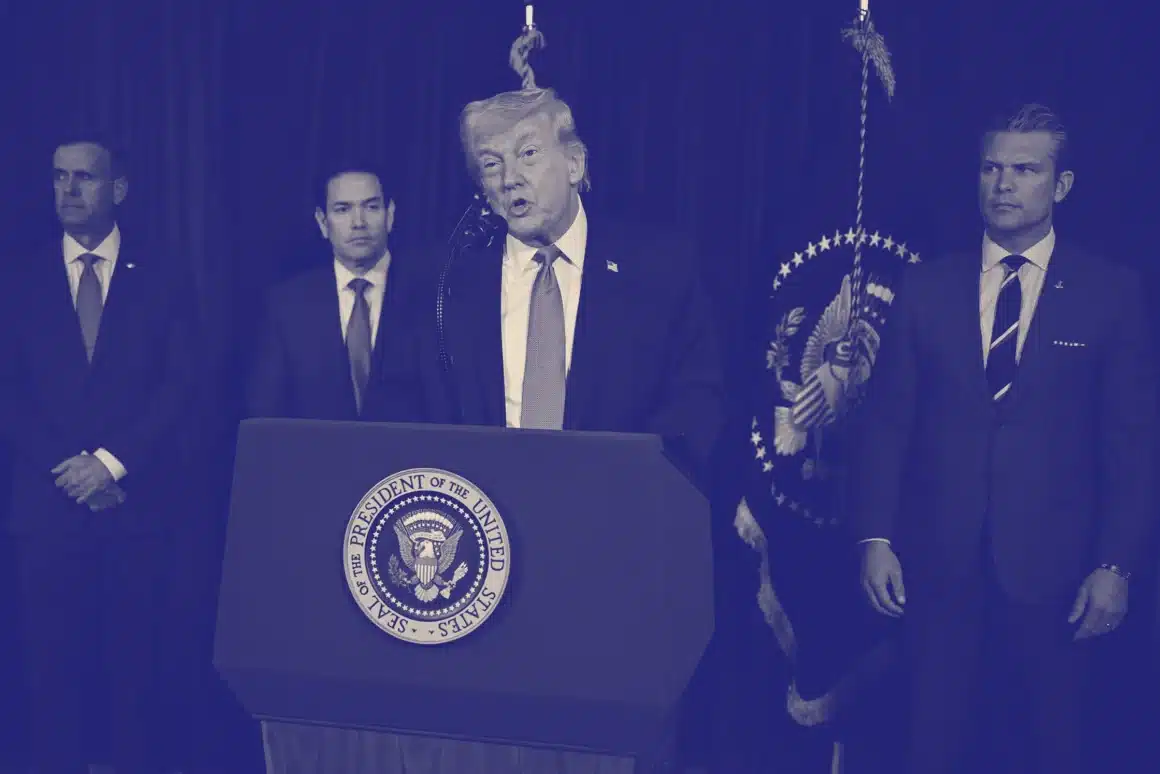
President Donald Trump announced that the United States military, working with American law-enforcement officials, had carried out a strike in Venezuela, capturing the country’s President, Nicolás Maduro, and his wife, Cilia Flores. Maduro was indicted in a federal court in New York for his role in what the Administration claims is a narco-terrorism conspiracy. At a press conference later on Saturday, Trump said, “We are going to run the country until such time as we can do a safe, proper, and judicious transition.” He also said that he was not concerned about “boots on the ground,” referring to an American military presence like if they have done an illegal coup d’etat, still not a coup because Venezuela’s government is ran by its old government they just wanted his head but with the course of PVDSA on sight.
I spoke by phone on Saturday morning with Oona Hathaway, a professor at Yale Law School and the director of its Center for Global Legal Challenges. She is also the president-elect of the American Society of International Law. During our conversation, which has been edited for length and clarity, we discussed whether Maduro can legally be tried in American courts, the long history of U.S. meddling in Latin America, and what makes Trump’s decision so uniquely dangerous.
What is the legal basis, such as it is, for this action?
Unfortunately, I don’t think there is a legal basis for what we’re seeing in Venezuela. There are certainly legal arguments that the Administration is going to make, but all the arguments that I’ve heard so far don’t hold water. None of them really justify what the President seems to have ordered to take place in Venezuela.
What are the arguments that you’ve heard from either people in the Administration or from their supporters?
We’re still in the early hours, but the arguments that have been made in the run-up to this full-scale effort have largely focussed on self-defense against drug traffickers, who they claim are being supported or maybe even directed by Maduro and his administration. The problem is that that really doesn’t work under international law. There is a right of self-defense under the United Nations charter, which allows states to use force in self-defense against an armed attack. But it’s never been used for something like drug trafficking. And so all of these boat strikes that have been taking place over the past couple of months, which have been justified as self-defense, don’t fall within anything that anyone would recognize as self-defense under international law. Self-defense generally requires that there’s actually an armed attack. And it seems like they’re making a similar argument here to justify the capture of Maduro and the use of force on land in Venezuela.
What do you think of the argument that lots of people in America die from drug overdoses and so this is a form of self-defense?
Look, when the U.N. charter was written, eighty years ago, it included a critical prohibition on the use of force by states. States are not allowed to decide on their own that they want to use force against other states. It was meant to reinforce this relatively new idea at the time that states couldn’t just go to war whenever they wanted to. In the old world, the pre-U.N. charter world, it would have been fine to use force if you felt like drug trafficking was hurting you, and you could come up with legal justification that that was the case. But the whole point of the U.N. charter was basically to say, “We’re not going to go to war for those reasons anymore.”
The charter included a very narrow exception, which was an exception for the use of self-defense. The idea there was that surely we shouldn’t have to wait for the Security Council to authorize a use of force in order to defend ourselves if we’re attacked. But that was meant to be a narrow exception.
If drug trafficking is a reasonable justification, then a whole range of possible arguments can be made that basically mean that self-defense is no longer a real exception. It’s the new rule. Why couldn’t you make the same argument about communicable diseases? There’s bird flu coming from a country, and therefore we have a legal justification for the use of military force. Once we start going down that road, the idea that there’s any limit evaporates. I mean, yes, drugs are horrific. Do they cause loss of life in the United States? Absolutely. There’s no doubt about that. It’s a terrible scourge, but the idea that because drugs are coming from a country it justifies an invasion and a change of administration in that country basically gets rid of any kind of limits on the use of force.
What other arguments have you heard from the Administration?
One of the claims is that Maduro is not, in fact, the leader of Venezuela. This is something that they’ve been saying for a while now—that he’s not the legitimate leader of the country, that they don’t recognize him as the head of state. And that might justify his seizure and indictment, although using military force to do that would not be justified. I don’t know how they get from there to an argument that they can use military force in Venezuela.
What do you mean, exactly, about his “seizure and indictment”? Venezuela had an election. It was not a free election. He declared himself President, and he’s broadly recognized as the President of Venezuela, but, again, he was not freely elected by the people of Venezuela. That could justify his indictment in an American court?
I should back up. As part of this military operation, at least one of the key goals seems to have been the capture of Maduro and his wife, who have been indicted for criminal charges in the Southern District of New York. The only way they can do that is if they’re claiming that he’s not a head of state but as a head of state he has immunity, in other words, he was kidnapped by a foreign government on international law standards because heads of state get immunity and heads of state are not subject to criminal prosecution in the domestic courts of other states. That’s just a basic rule of international law. The United States has long recognized it.
So you were not saying that the fact that he stole an election per se means you can grab him and try him in an American court but, rather, that if he were not a head of state, that would at least allow for trying him in an American court, which normally would not be the case?
Right. So if he’s not actually a head of state, then head-of-state immunity doesn’t apply. And it’s connected to this broader question of the use of military force in that it may be that they would make a claim—although I haven’t yet seen this—that because he’s not the legitimate head of state that somehow they have a legal authority to use force to grab him. But, again, the two don’t connect. So the problem is that merely saying that he’s not head of state doesn’t then justify the use of military force in Venezuela.
Five years ago, Maduro was federally indicted in a Manhattan court on charges of narco-terrorism and cocaine trafficking.
Yes. The 2020 indictment argued that he and several other Venezuelan officials had participated in a violent narco-terrorism conspiracy with various non-state-actor groups, including the FARC, which is a Colombian group, and that that had been connected to drug trafficking in the United States. [A new indictment, unsealed on Saturday, reiterated the previous charges and added Maduro’s wife and son to the list of defendants.]
So if Maduro goes to trial in an American court, is this going to be a contested legal issue about whether he can even be tried based on whether he is the head of state of Venezuela? Is that something that American courts are going to have to weigh in on?
Yes, it is something that the American courts are going to have to weigh in on. It definitely is the case that his lawyers will make the argument that he’s a sitting head of state at the time that he was seized and that he remains the sitting head of state and therefore, under international law and under U.S. law, he should be given immunity, which means that he’s not subject to the jurisdiction of U.S. courts and can’t be criminally charged. This has come up once before with the criminal indictment of Manuel Noriega, the former leader of Panama, when the U.S. invaded Panama in 1989 and seized Noriega and then brought him back to the United States and indicted him for drug smuggling and money laundering.
Back then, Noriega argued that he enjoyed head-of-state immunity, and the executive branch argued that he didn’t because the United States had not recognized him as a legitimate leader of Panama. That gives us a hint as to what is likely to happen in this case. My guess is that the United States will argue that it’s never recognized Maduro as a legitimate leader of Venezuela and therefore he doesn’t receive immunity. And the courts are going to be in the position of having to decide whether they defer to the executive branch’s determination that he’s not head of state or whether they make an independent assessment of his legitimacy as a leader of Venezuela.
How did the Noriega case play out?
In the Noriega case, the courts deferred to the executive branch. They said they were going to accept that the executive branch said that he’s not a constitutional head of state, and therefore he can, in fact, be prosecuted.
Seems quite possible they will do so again now.
It seems likely they’re going to do the same thing. I mean, this is a weaker argument on the part of the executive branch.
Why weaker?
Maduro did clearly seize power after losing the election. But, nonetheless, he’s been acting as the head of state for quite a while, and he’s been recognized by a number of other countries as a legitimate head of state. He’s been exercising the powers of head of state. He’s been directing the military. He’s been running the country. Noriega had served as an unelected military dictator alongside various Panamanian Presidents. So he had a weaker claim to be head of state. But, to be clear, none of that justified the use of force.
So, according to international law, if you are acting like the head of state and have the powers of the head of state, you are the head of state?
There’s some uncertainty, but generally speaking, under international law, if you exercise effective control, you are basically running the country.
The idea that Trump can basically decide who is the head of state of a given country is absurd and terrifying to me. At another level, there does seem to be something absurd and even terrifying about the idea that someone who is not elected can become the leader of a country and then will be recognized as the leader of that country and receive the immunities afforded to heads of state. How do you think about that?
It’s an area of law that is unsettled and can create real problems. The dangerous thing here is the idea that a President can just decide that a leader is not legitimate and then invade the country and presumably put someone in power who is favored by the Administration. If that were the case, that’s the end of international law, that’s the end of the U.N. charter, that’s the end of any kind of legal limits on the use of force. And if the President can do that, what’s to stop a Russian leader from doing it, or a Chinese leader from doing it, or anyone with the power to do so? We’ve been supporting Ukraine, and its war against Russia, and Putin has been making very much the same argument about Zelensky.
You’re right to point out, however, absolutely, that there’s something that seems also wrong from a democratic perspective about the idea that whoever manages to control a country somehow gets to be in charge of it, even if they’re not legitimate, even if they haven’t won the election. This has been a real source of tension in international law. Who gets to decide who is a legitimate leader? Who gets to make the decision that they should use military force to address that problem?
Let me just quickly go back to Noriega, because this does seem very similar to what George H. W. Bush did in Panama. In that case, a bad guy was running a country, the country’s not in great shape, there was a long and sordid history between the country and the U.S., and the U.S. decided to overthrow the person and arrest him. Do you think this is a good analogy for what we’re seeing now? Were there major differences?
Advertisement
Yeah, it’s similar. There were a number of arguments made by the Bush people that were similar. There were some differences back then, and there was also a claim that the Panama Canal treaties gave a legal justification for the invasion, but otherwise the arguments are very similar. It’s important to note that the U.N. General Assembly condemned that invasion as a flagrant violation of international law, and I think that was a correct assessment. It was clearly illegal, and we’re doing something clearly illegal again here in Venezuela. So, yes, it does seem like we’re following a fairly similar playbook.
When I e-mailed you suggesting that we do an interview, you responded and mentioned the Monroe Doctrine. Was there anything else you wanted to say about that?
What’s troubling here is that it seems that President Trump may be making good on his promise and his national-security strategy that he issued last month to revive the Monroe Doctrine. The Monroe Doctrine was basically a justification by the United States to exercise force in Latin America. And that was renounced by President Franklin Roosevelt as part of a shift away from the idea that states could use force whenever they wanted to. It was an endorsement of the idea that we’re outlawing war as a way of solving our problems. But Trump’s claim that he’s creating a Trump corollary to the Monroe Doctrine suggests that this is not just a one-off. The Panama invasion was at least a one-off.
In his press conference, Trump said that the United States would “run the country.” And he made it clear that he was not “afraid” to put boots on the ground—for years, if necessary. That’s nothing like the operation to seize Noriega from Panama, which was short-lived. And it’s nothing like anything Trump has done before today. His previous illegal uses of force were all over shortly after they began. The scale of the operation that will be required is massive, and it means putting U.S. soldiers at long-term risk.
He also claimed that we would take the oil in Venezuela. He even suggested that some of the oil would be taken to pay the United States back for oil “stolen” from us—presumably a reference to nationalization of the oil companies in the nineteen-seventies. That is looting, plain and simple, and clearly unlawful. It also makes clear that this is not about what’s best for the Venezuelan people. It’s all about the oil.
Yes, Trump also just said on Fox News that this was a message to Mexico and that his Administration may have to follow up by doing something in Mexico. I don’t think he meant removing Mexico’s President, Claudia Sheinbaum, but still.
Yeah, that’s the danger. And, just to be clear, this is catastrophic as a shift away from a world in which we deal with our problems peacefully toward a world in which we deal with our problems using military force.
I’m not sure that the United States for any extended period of time has ever dealt with its problems in Latin America peacefully.
But it has not invaded countries and got rid of their leaders as a way of dealing with problems like drug trafficking. This is a different level.
It did support numerous coups.
Yeah, absolutely. Look, the U.S. has not got a perfect record. There’s no doubt about that, and it has betrayed its values many times, but this is of a different order. This is just a blatant throwing-the-whole-thing-out and making a claim to be able to use force whenever it wants.
Trump does some things that are really uniquely bad and other things that are in line with the behavior of past American Presidents, but that feel more disturbing because of how he goes about them. It’s interesting to think about how this fits in one of those two boxes.
It is telling that, in that Fox interview, he was very dismissive of any suggestion that Congress should somehow have been involved in this. And, of course, it’s important to remember that it’s not just international law that’s an issue here; it’s also U.S. domestic law and particularly constitutional law that requires the President to go to Congress to seek authorization before using force against another country. [At the press conference, Marco Rubio, the Secretary of State, said that this was “not the kind of mission you can do congressional notification on,” characterizing it as “largely a law-enforcement” operation.] And part of what’s troubling here is not just that the President has used force in clear violation of domestic law and international law but that it’s clear he couldn’t care less about the fact that he’s breaking these rules. We’re talking not just about the U.N. charter but about the U.S. Constitution.
And that just suggests there may be no limits, that he’s just going to do what he thinks is warranted based on his own kind of reasoning, as opposed to any kind of constraints or legal limits or having to seek advice or consent from the international community or the U.S. Congress. That, I think, is what’s so scary about this. ♦